

Cosmetic Processing · Turnkey Line
Shampoo and Hair Conditioner Production Line
One line, two very different products. ProTrus engineers turnkey hair care plants that blend shampoo without foam and build conditioner emulsions that stay stable on the shelf—batch after batch, with the documentation your QA team needs.
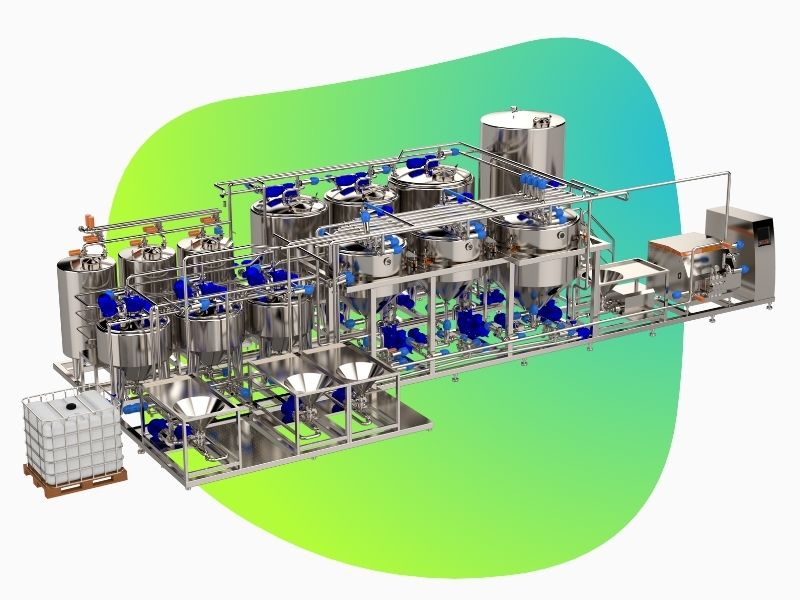
3D layout · vessels, piping and storage configured per project
Shampoo
Cold-process surfactant blending
Conditioner
Hot emulsification & homogenizing
Vacuum
Deaeration for clear, bubble-free fills
Control
PLC/SCADA recipes, CIP, batch records
How Shampoo and Conditioner Are Produced
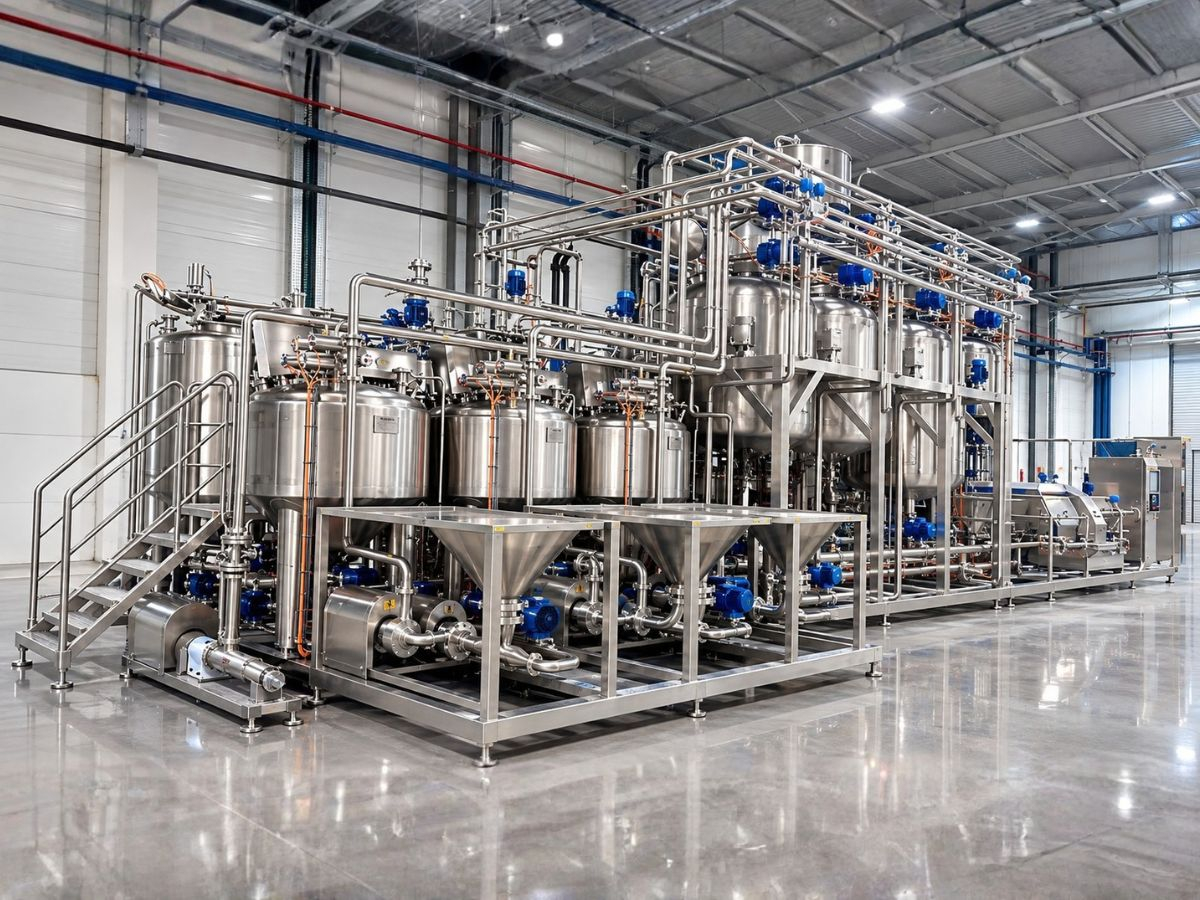
Shampoo is a surfactant system that must be blended gently; conditioner is an emulsion that needs heat, shear and controlled cooling. A ProTrus line is built for both routes—so you don’t have to compromise one product to run the other.
Route A · Cold blend
Shampoo production
Low-shear mixing keeps air out and viscosity on target.
Purified water is charged to the mixing vessel.
Surfactants such as SLES and cocamidopropyl betaine are added under low-shear mixing.
Conditioning polymers, pearlizing agents, preservatives and fragrance are dosed.
Viscosity is set with salt and the pH is corrected.
The batch is deaerated, released by QC and transferred to storage.
Route B · Hot emulsion
Conditioner production
Heat, homogenization and cooling create a stable gel network.
The water phase with cationic conditioning agents and the oil phase with fatty alcohols are heated separately.
Both phases meet in a vacuum emulsifying mixer and are homogenized.
Controlled cooling under gentle agitation builds the creamy structure.
Fragrance and heat-sensitive actives are added at low temperature.
The batch is tested and transferred to storage.
What Does the Production Line Include?
Every module is sized to your formulations and batch volumes, then delivered as one integrated, factory-tested system.
Water treatment
Reverse osmosis or demineralization for consistent, low-micro process water.
Phase preparation tanks
Separate heated water-phase and oil-phase vessels with precise temperature control.
Vacuum emulsifying mixer
High-shear homogenizer under vacuum for fine, stable conditioner emulsions.
Low-shear shampoo tanks
Gentle agitation for surfactant blending, pearlizing and viscosity adjustment.
Storage & filling interface
Holding tanks, hygienic transfer pumps and filtration ready for your filler.
CIP & PLC/SCADA control
Automated cleaning, recipe management and electronic batch records.
A failed batch costs more than the line that prevents it
Most hair care quality issues start in the mixing vessel. These are the five we design out from day one.
Foam and trapped air
Surfactants entrain air in seconds. Sub-surface additions, low-shear agitation and vacuum deaeration keep the product clear and your fill weights accurate.
Viscosity drift
Salt-thickened shampoos react to small dosing errors. Automated weighing and recipe-controlled salt addition hold every batch inside specification.
Pearl effect that never appears
Pearlizing waxes need the right melt and a controlled cool-down. Programmed heating and cooling profiles create the same shine every time.
Separating conditioners
Without proper homogenization and cooling, emulsions break on the shelf. The vacuum emulsifier builds a fine, stable structure that lasts.
Microbial contamination
Water-based products are vulnerable. AISI 316 stainless steel, mirror-polished surfaces and validated CIP cycles protect every changeover.
What you can produce on one hair care line
Switch between products with stored recipes and CIP cleaning in between. Planning a wider portfolio? Explore our cosmetic processing solutions and the hair dye production unit.
Clear shampoos
Transparent, low-haze formulas
Pearlized shampoos
Glycol distearate or pearl concentrate
2-in-1 shampoos
Cleansing plus conditioning polymers
Rinse-off conditioners
Cationic emulsions with fatty alcohols
Hair masks
High-viscosity, rich-texture treatments
Leave-in conditioners
Light emulsions and sprays
From formulation to first batch, with one partner
Our shampoo and conditioner line is delivered as a complete, ready-to-run solution. One team owns the design, build and start-up, so responsibility never falls between suppliers.
Formulation & capacity review
We start from your formulas, batch sizes, product mix and site constraints.
Process design & 3D layout
Vessel sizing, piping, utilities and automation are engineered and laid out in 3D.
Manufacturing & factory testing
Equipment is built, assembled and tested before it ships.
Installation, commissioning & training
On-site start-up, first batches and operator training—ready to produce.
2008
Founded — process engineering since
1 partner
From layout to commissioning
CE · ISO 9001
Marked equipment, certified quality processes
US-based
Serving manufacturers across the Americas
Frequently Asked Questions About Shampoo and Conditioner Production
Have a question about your formulation? Ask our process engineers.
Get a Quote
Build your shampoo and conditioner line
Share your formulations, batch sizes and packaging formats. We’ll design a hair care production line around them—not the other way around.
Share your products
Tell us what you make today and what you plan to launch.
Engineering review
Our process engineers assess formulations, volumes and site conditions.
Line proposal & quotation
You receive a configured line concept with a detailed quotation.
Prefer email? info@protrus.com
Request a quote for your hair care line
Fields marked * are required. We only use your details to respond to your request.