

Dairy Processing · Turnkey Lines
Process Technology for Dairy
Dairy processing equipment and turnkey lines for pasteurized milk, yogurt, ayran, kefir, cream cheese and white cheese, from raw milk reception to filling, CIP and utilities.
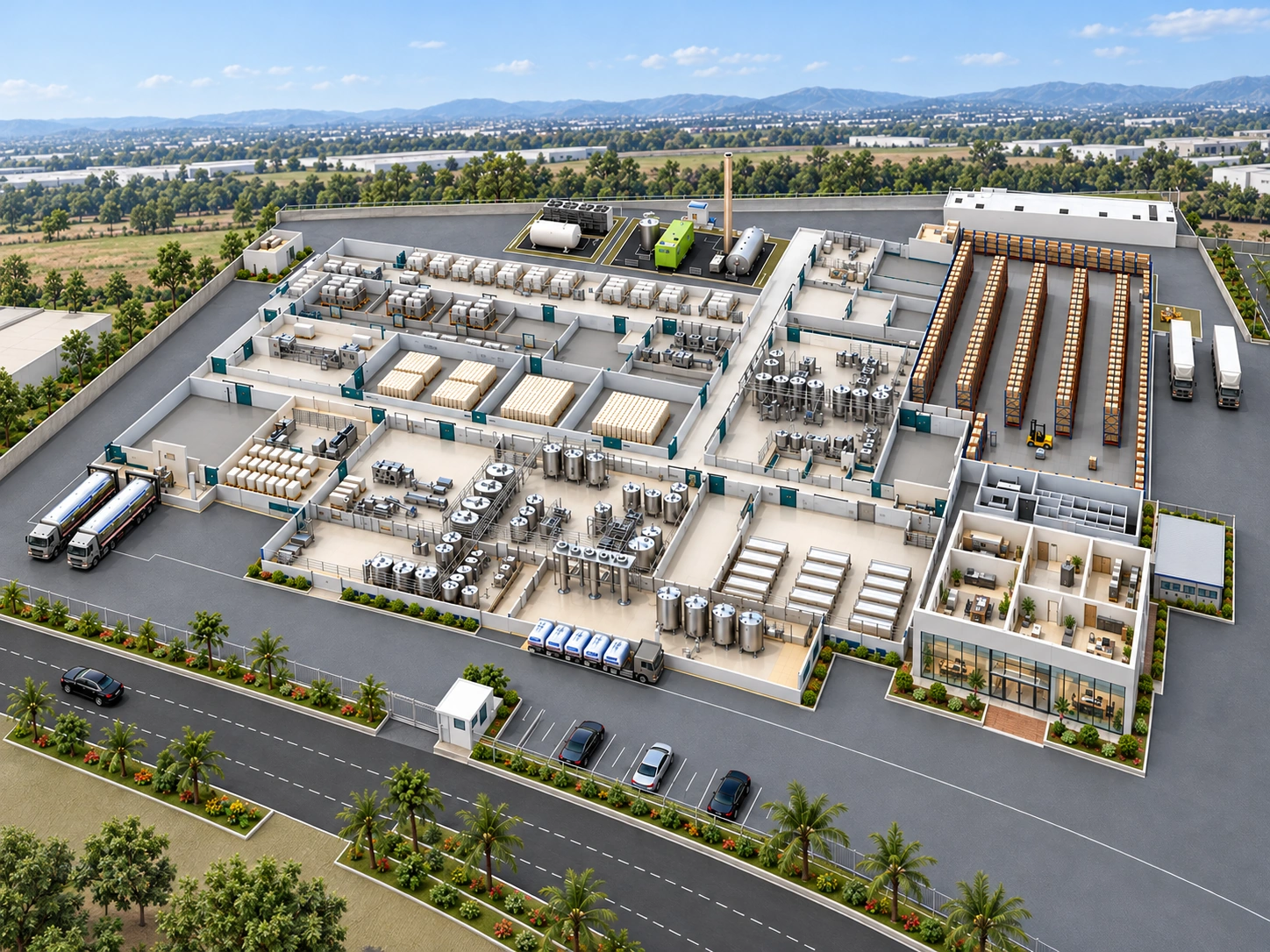
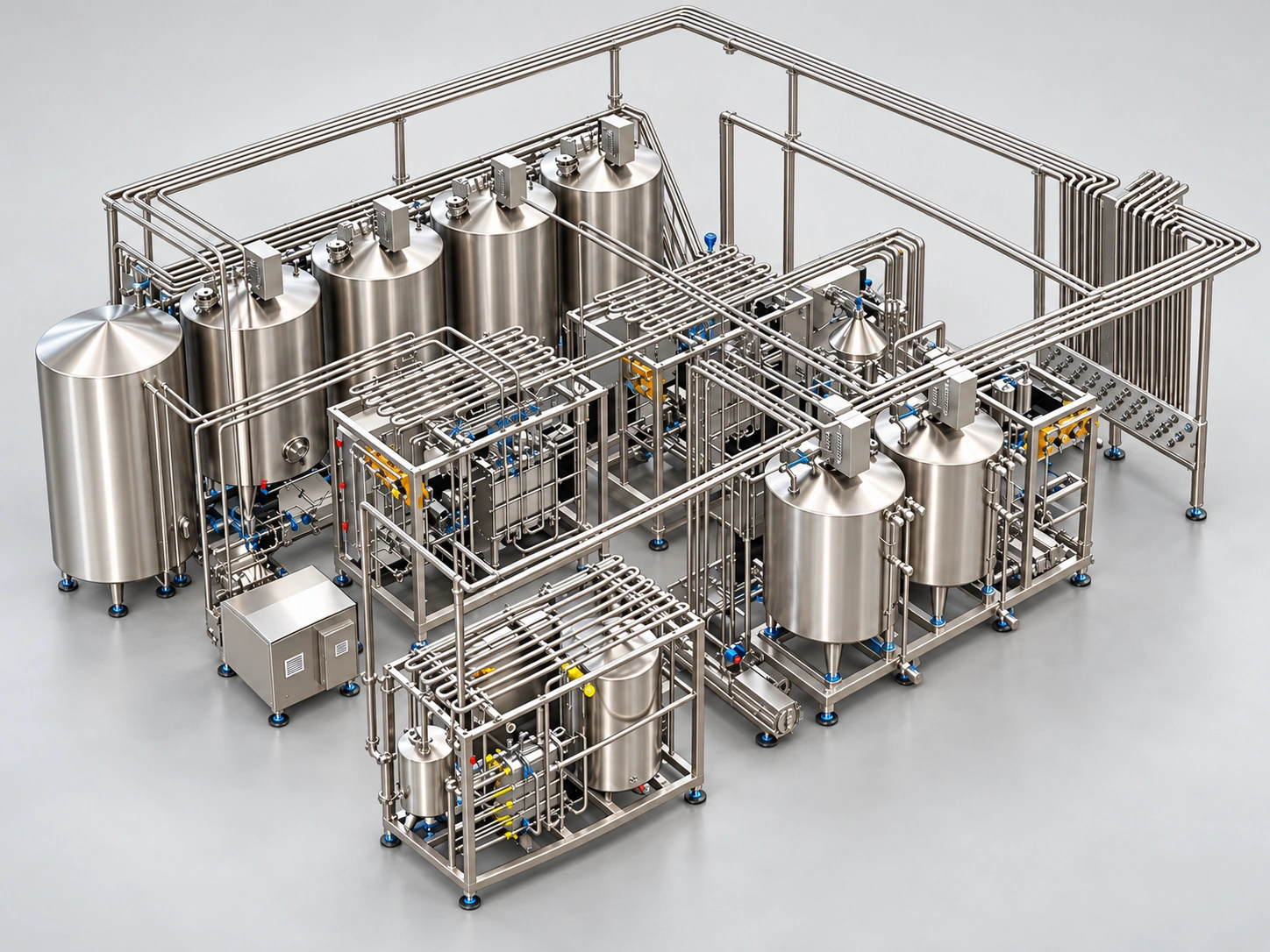
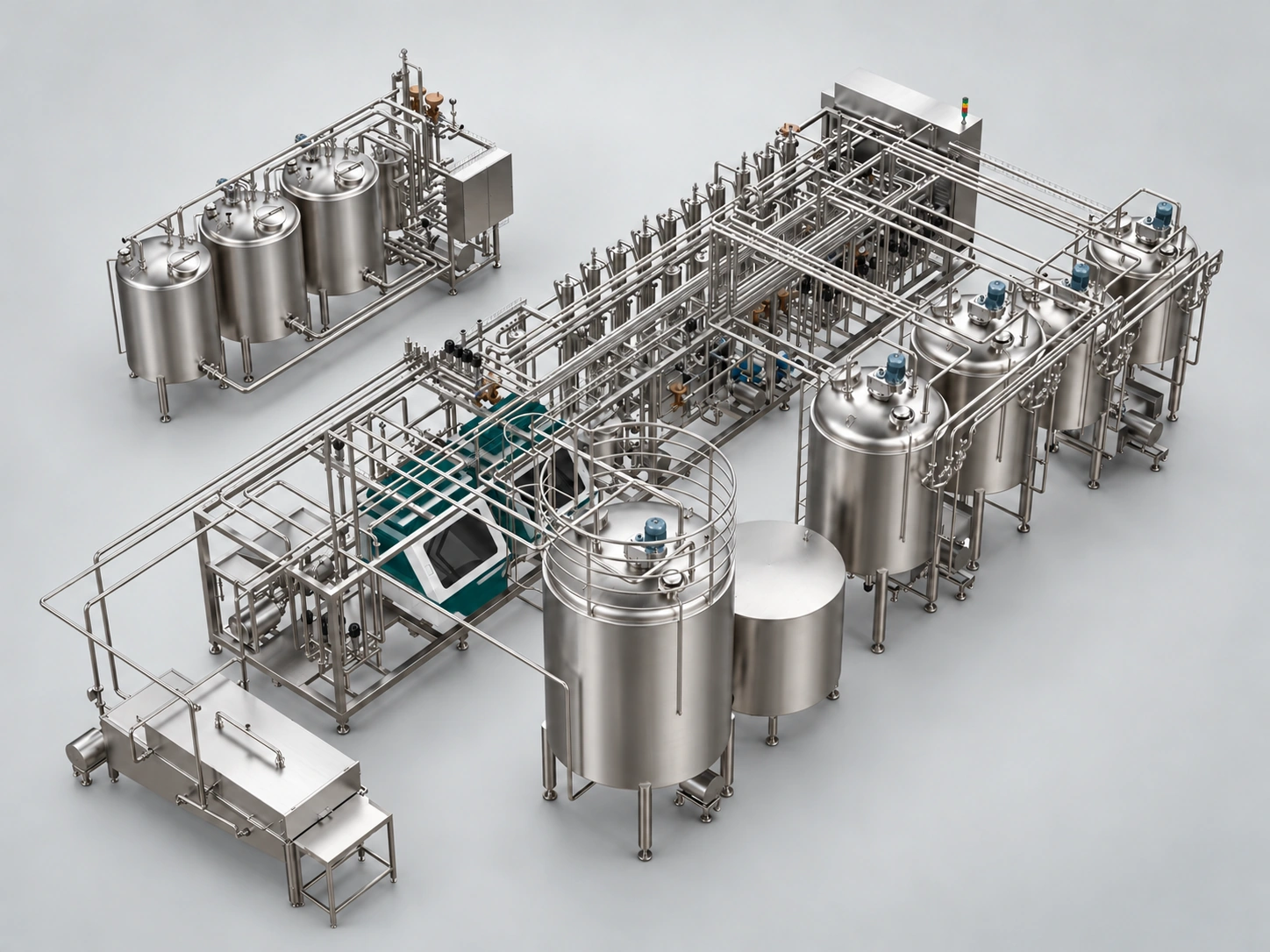
Complete dairy plant · reception, processing, filling, cold storage and utilities
Intake
Reception, cooling & raw milk storage
Heat treatment
HTST plate pasteurization with heat recovery
Separation
Skimming, clarification & in-line fat control
Downstream
Pasteurized storage, fermentation & cheese
How Milk Moves Through a Dairy Processing Plant
Every dairy product starts with the same raw material and the same first steps. Milk is received, measured, cooled and stored, then separated, standardized, homogenized and pasteurized before it is divided into product lines. Protrus designs and builds the stainless steel dairy processing equipment for each of these steps and integrates it into a complete turnkey dairy plant with hygienic piping, valve manifolds, PLC/SCADA automation and automatic CIP.
The numbers on this page follow the flow of milk through the plant, and each section explains what the machine does and the values it is designed for.
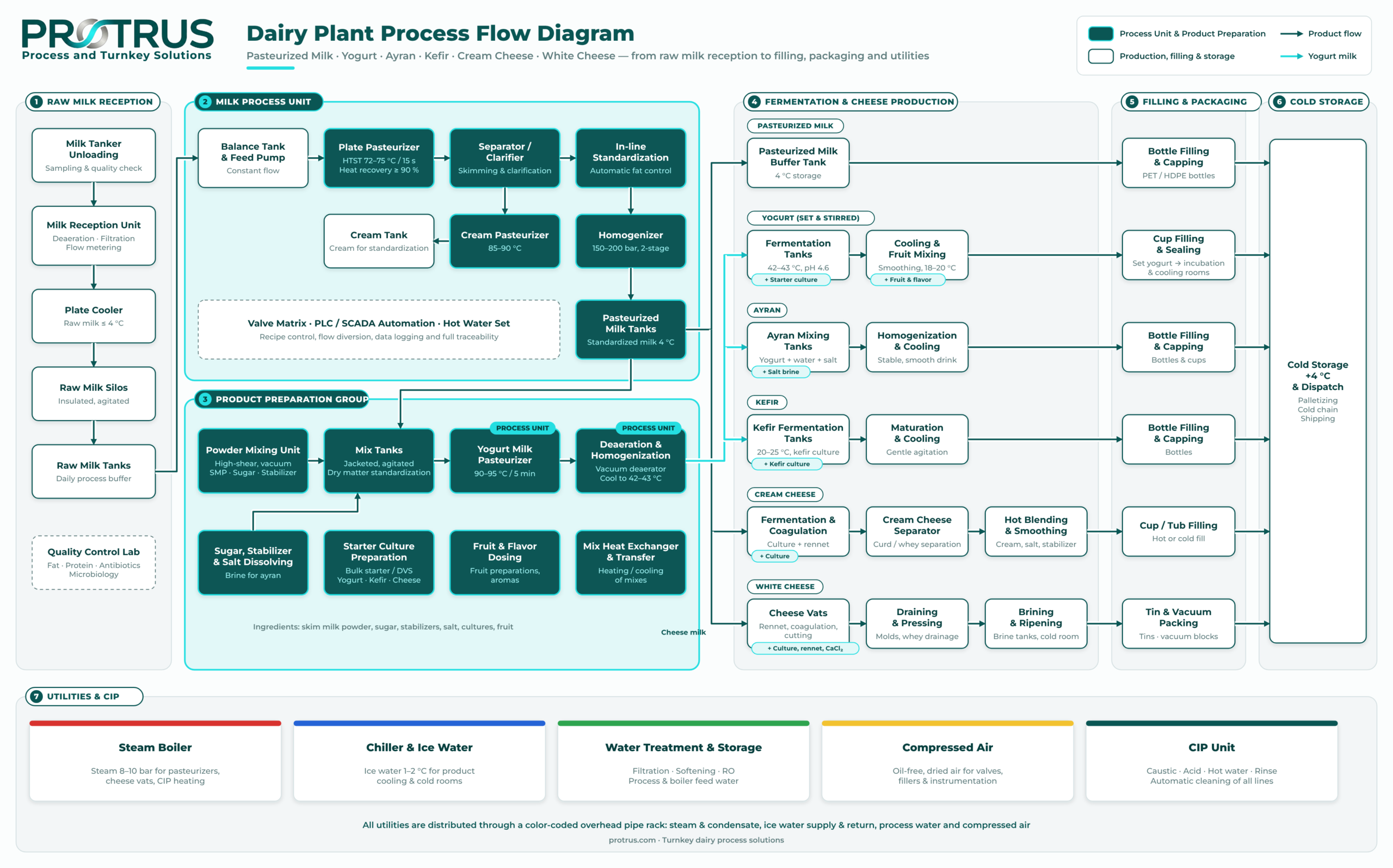
Dairy plant process flow: raw milk reception, milk process unit, product preparation, fermentation and cheese production, filling and packaging, cold storage, utilities and CIP. Click the diagram to open it in full size.
Dairy Products Made on One Integrated Line
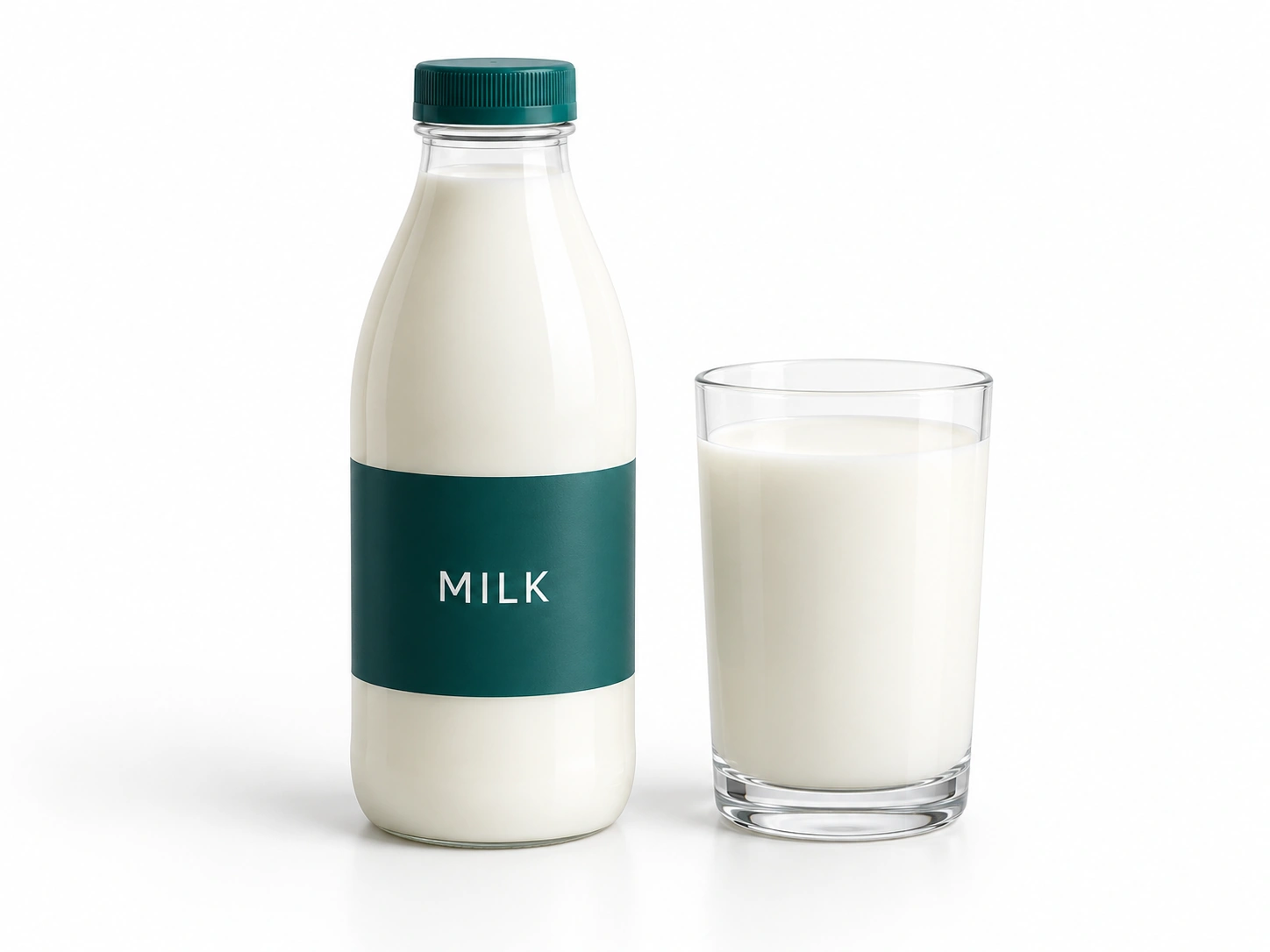
Pasteurized Milk
HTST 72–75 °C for 15 s, homogenized, bottled cold
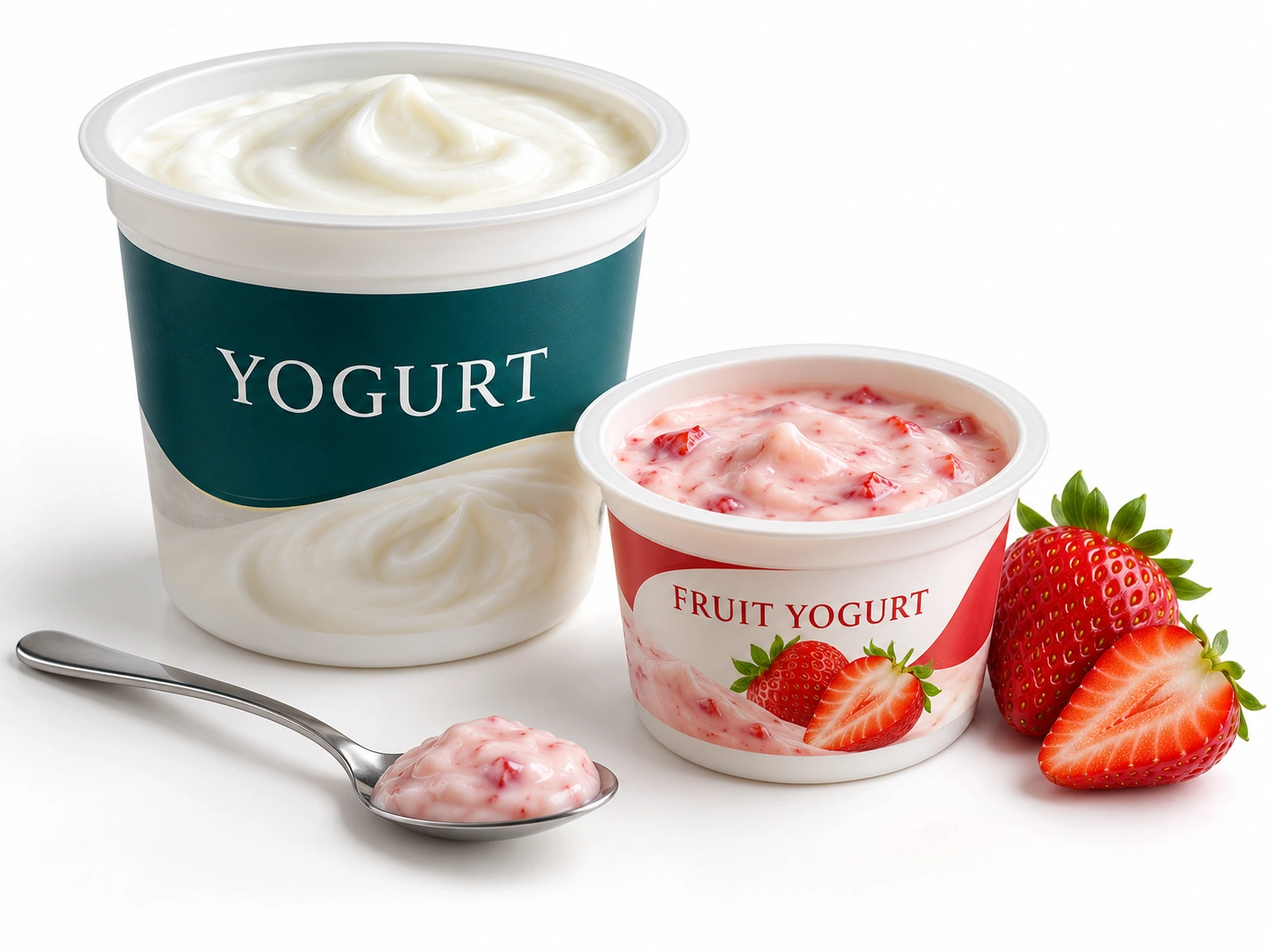
Yogurt
Set or stirred, fermented at 42–43 °C to pH 4.6
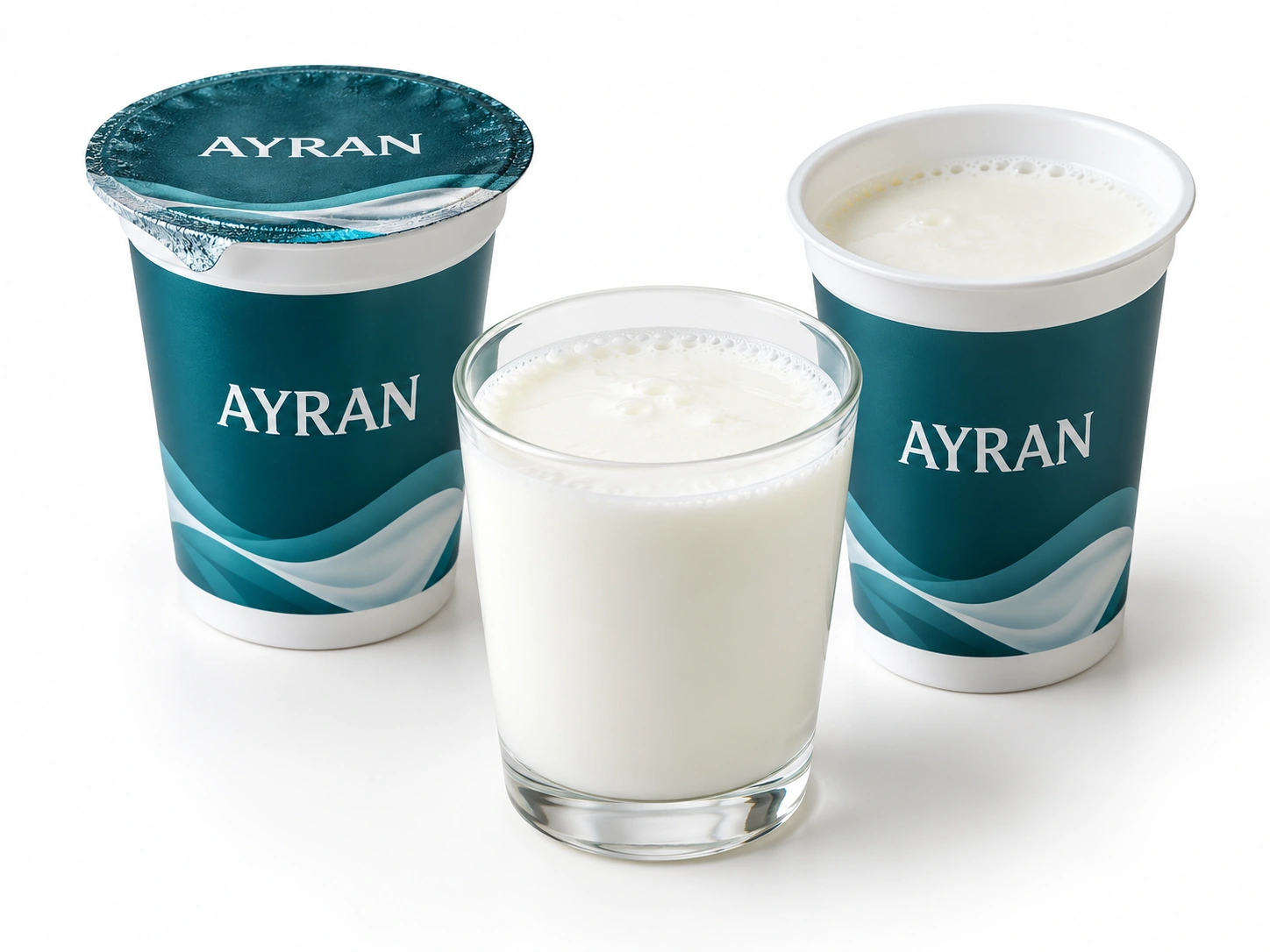
Ayran
Yogurt, water and salt, homogenized into a stable drink

Kefir
Fermented at 20–25 °C with kefir culture

Cream Cheese
Separated curd, hot-blended and filled into tubs

White Cheese
Vat-coagulated, pressed and ripened in brine
≥ 90%
heat recovery in the regenerative section
≤ 0.05%
fat in separated skim milk
±0.03%
in-line fat standardization
150–250 bar
homogenizing pressure
≤ 4 °C
storage from reception to dispatch
Steps 1–4
Raw Milk Reception and Storage
Raw milk quality cannot be improved inside the plant, only protected. The reception area removes air, filters and measures the milk, chills it to 4 °C (39 °F) or lower and holds it until production needs it.
Step 01 · Raw milk intake
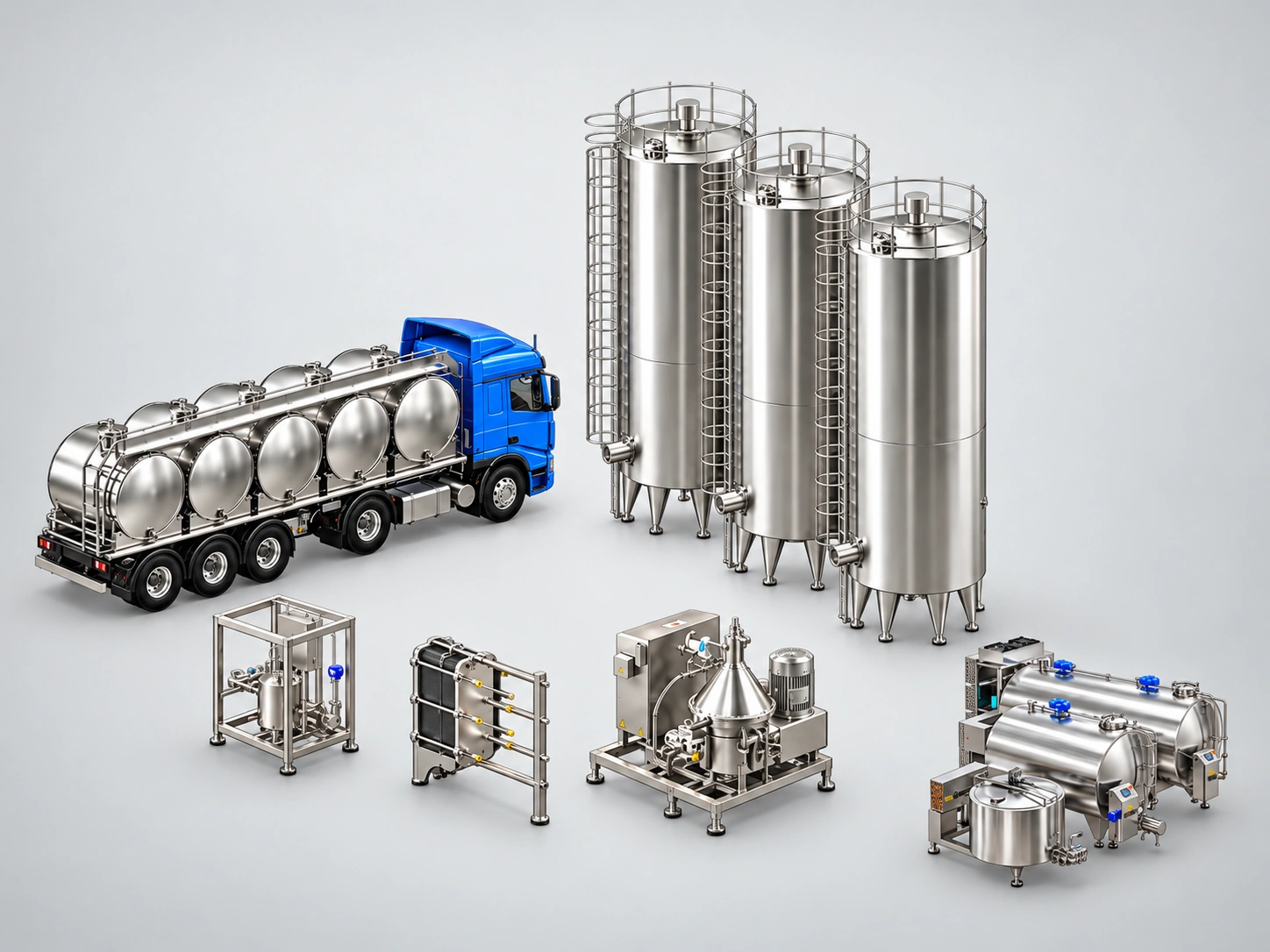
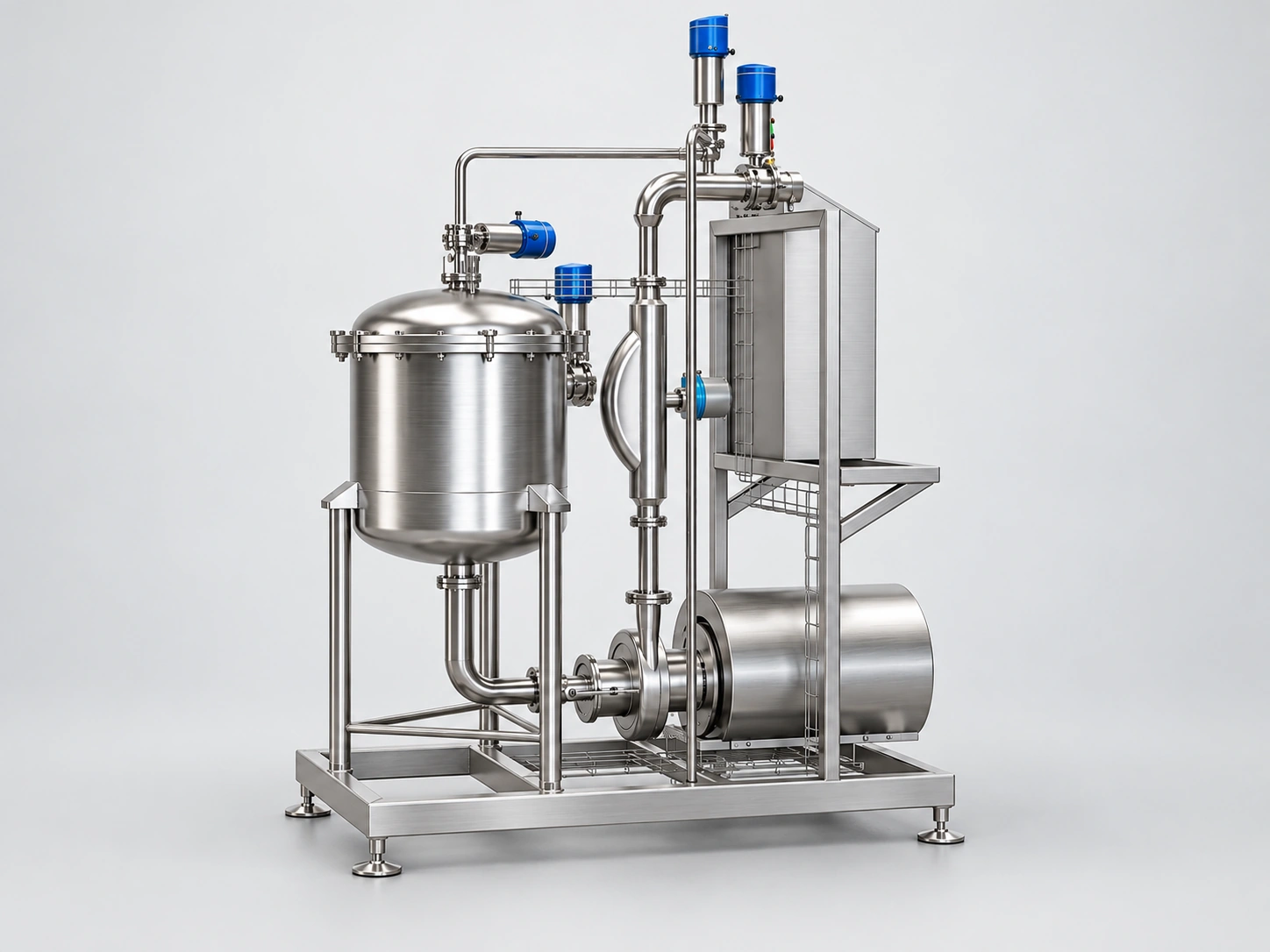
Milk Reception Unit
The milk reception unit is where the tanker connects to the plant. A sanitary centrifugal pump draws milk through a deaeration vessel, where entrained air separates before it can distort the flow measurement. A duplex filter removes straw, hair and sediment, and one basket can be cleaned while the other stays in service.
A magnetic-inductive or Coriolis flowmeter records the volume received from each tanker. That figure is the basis for supplier payment and for the plant’s yield balance, so an air-free, accurate measurement matters commercially as well as technically.
Key features

Step 02 · Raw milk cooling
Plate Heat Exchanger
Milk often arrives at 6–10 °C (43–50 °F) after transport. A gasketed plate heat exchanger cools it to 4 °C (39 °F) or below in seconds, with chilled water at 1–2 °C (34–36 °F) flowing in counter-current. The corrugated plates create turbulence even at moderate flow rates, so a compact frame handles a large heat load.
Plates can be added to the frame when capacity grows. The same technology appears throughout the plant for regeneration, heating and cooling of milk, cream and mixes.
Key features
Step 03 · Cold storage
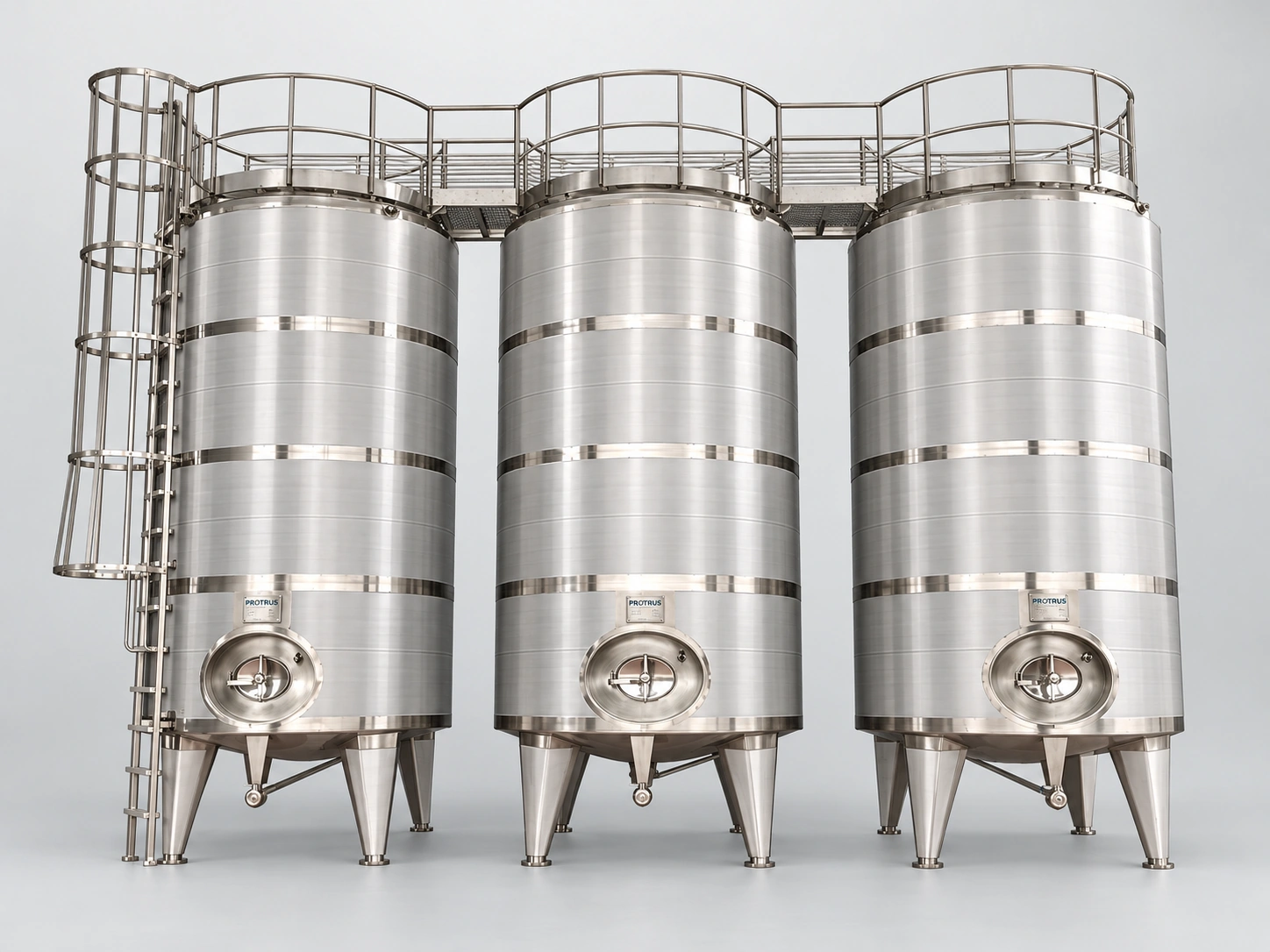
Raw Milk Storage Tanks
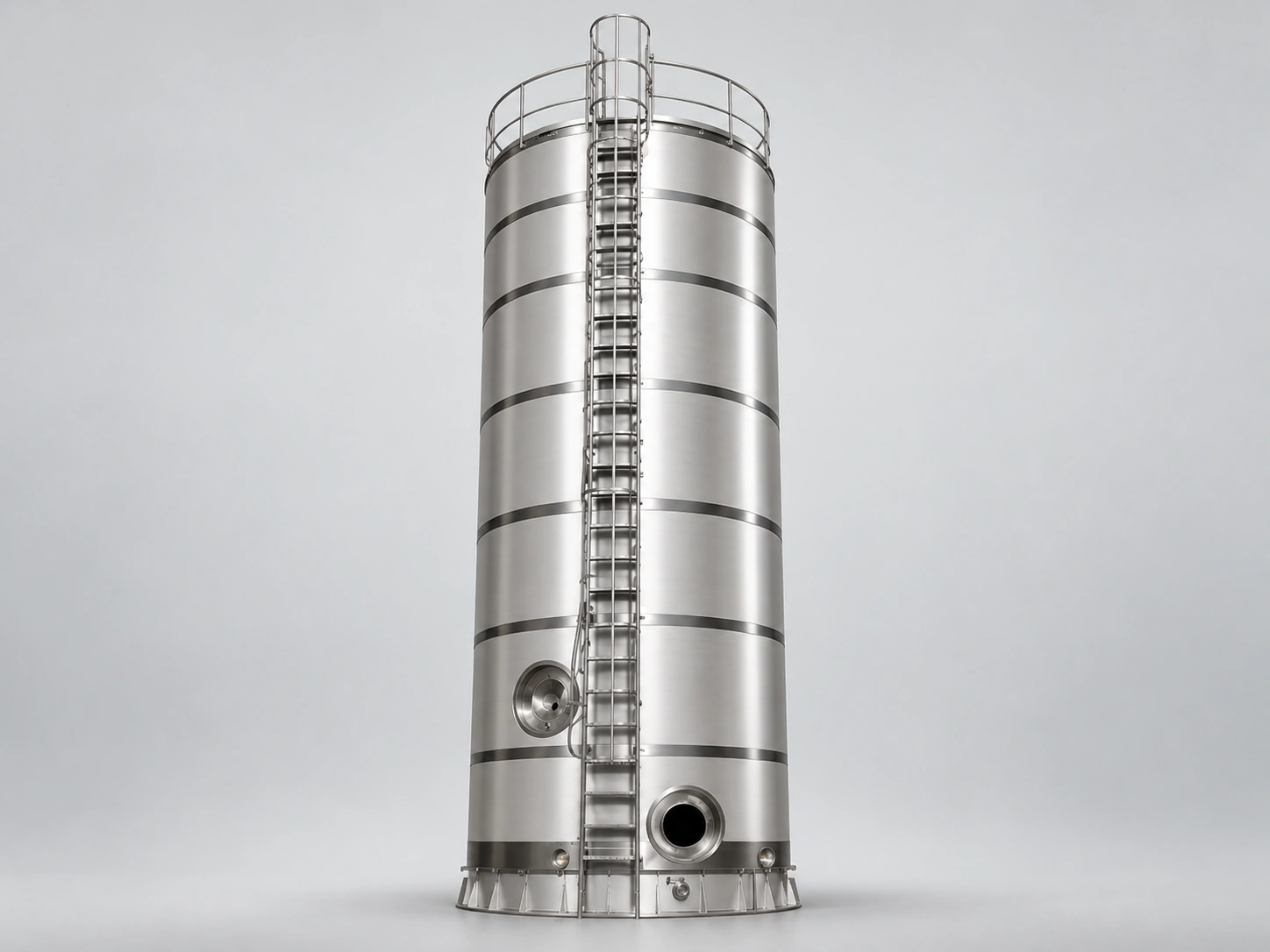
Raw milk silos and storage tanks separate tanker arrivals from the production schedule. Outdoor silos with weatherproof cladding commonly hold 25,000–150,000 L (6,600–39,600 gal); indoor tanks serve as the daily buffer in front of the process unit.
A slow propeller agitator keeps the fat evenly distributed without damaging the globules, and it starts only when the liquid covers it. Level, temperature and empty-tank probes report to the control system, and rotating spray heads clean the vessel during CIP.
Key features
Step 04 · Flow balancing
Buffer Tanks
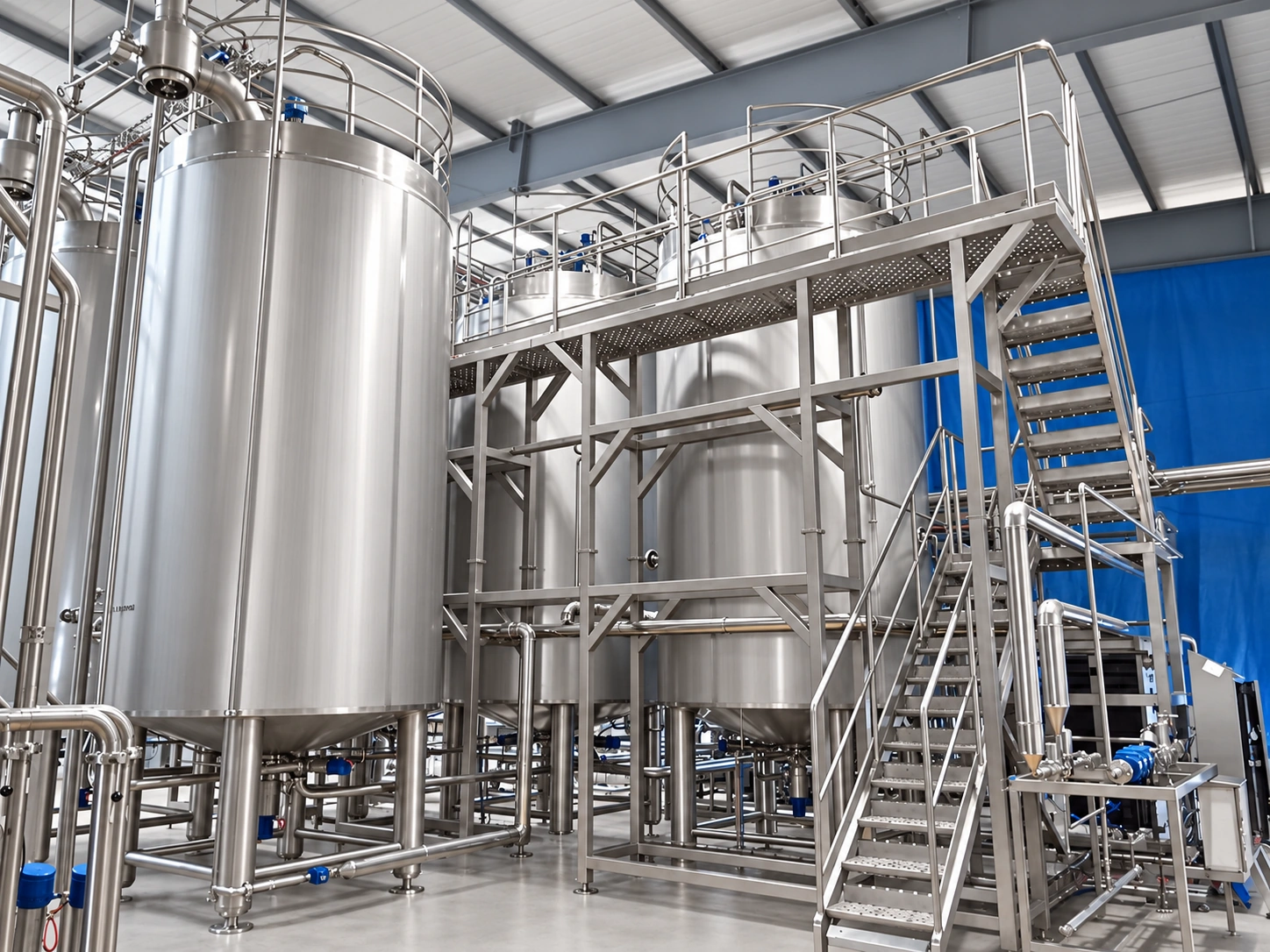
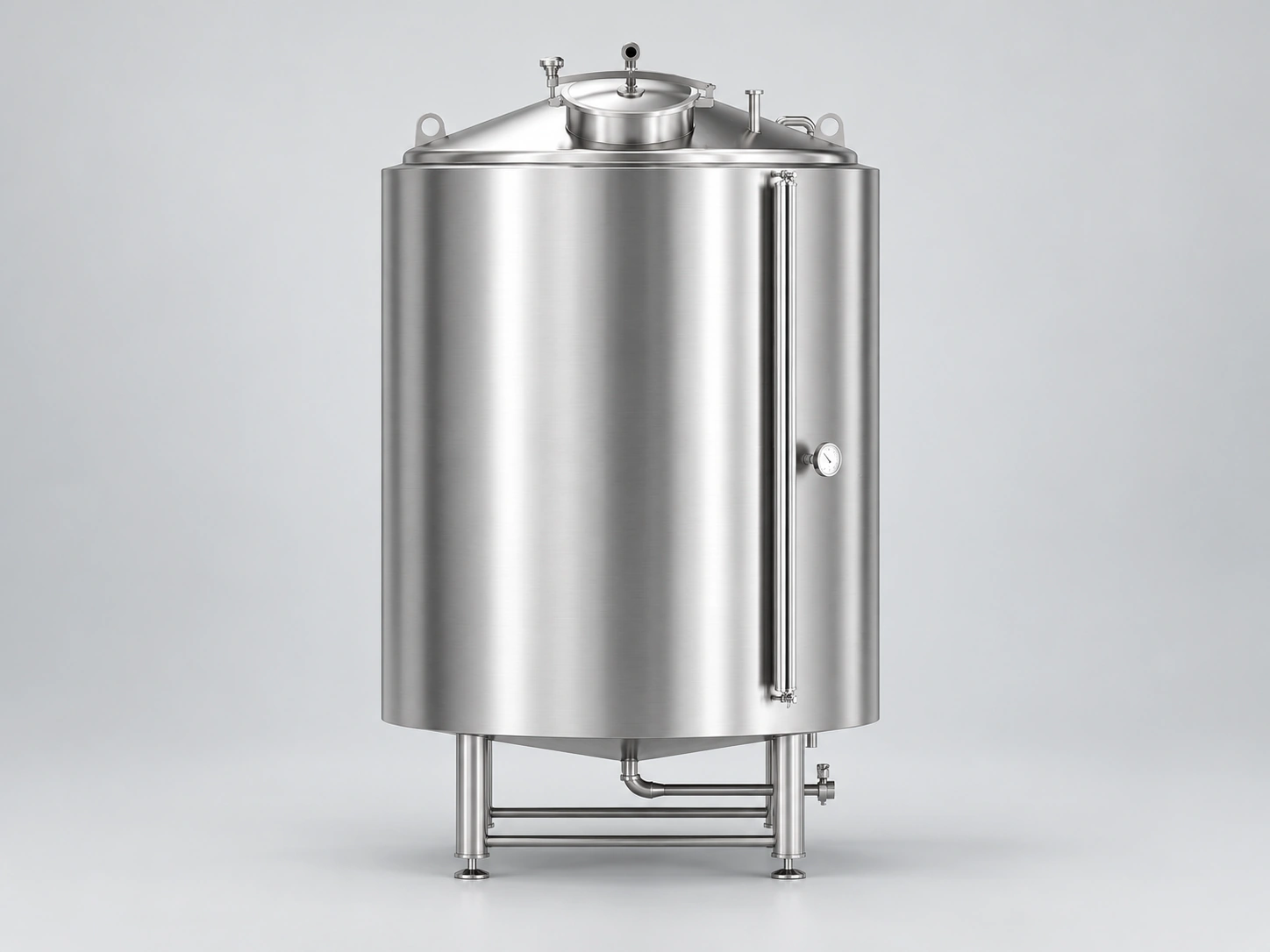
A buffer tank links batch operations with continuous ones. In front of the pasteurizer, the balance tank holds a constant liquid level above the feed pump, so the heat exchanger receives a steady flow without air. When the milk supply stops, the tank switches to water to push product out of the line and avoid burn-on.
Larger buffer tanks after heat treatment hold product until the filling machines need it, so a short filler stop does not interrupt pasteurization.
Key features
Quality control at reception. Before unloading, each tanker is sampled and tested in the plant laboratory for temperature, fat, protein, acidity and antibiotic residues. Only accepted milk enters the reception unit. Samples taken during processing and from finished products complete the record, so every batch can be traced back to the tankers that supplied it.
Product Preparation
Step 05 · Mixing and hydration
Mix Tanks
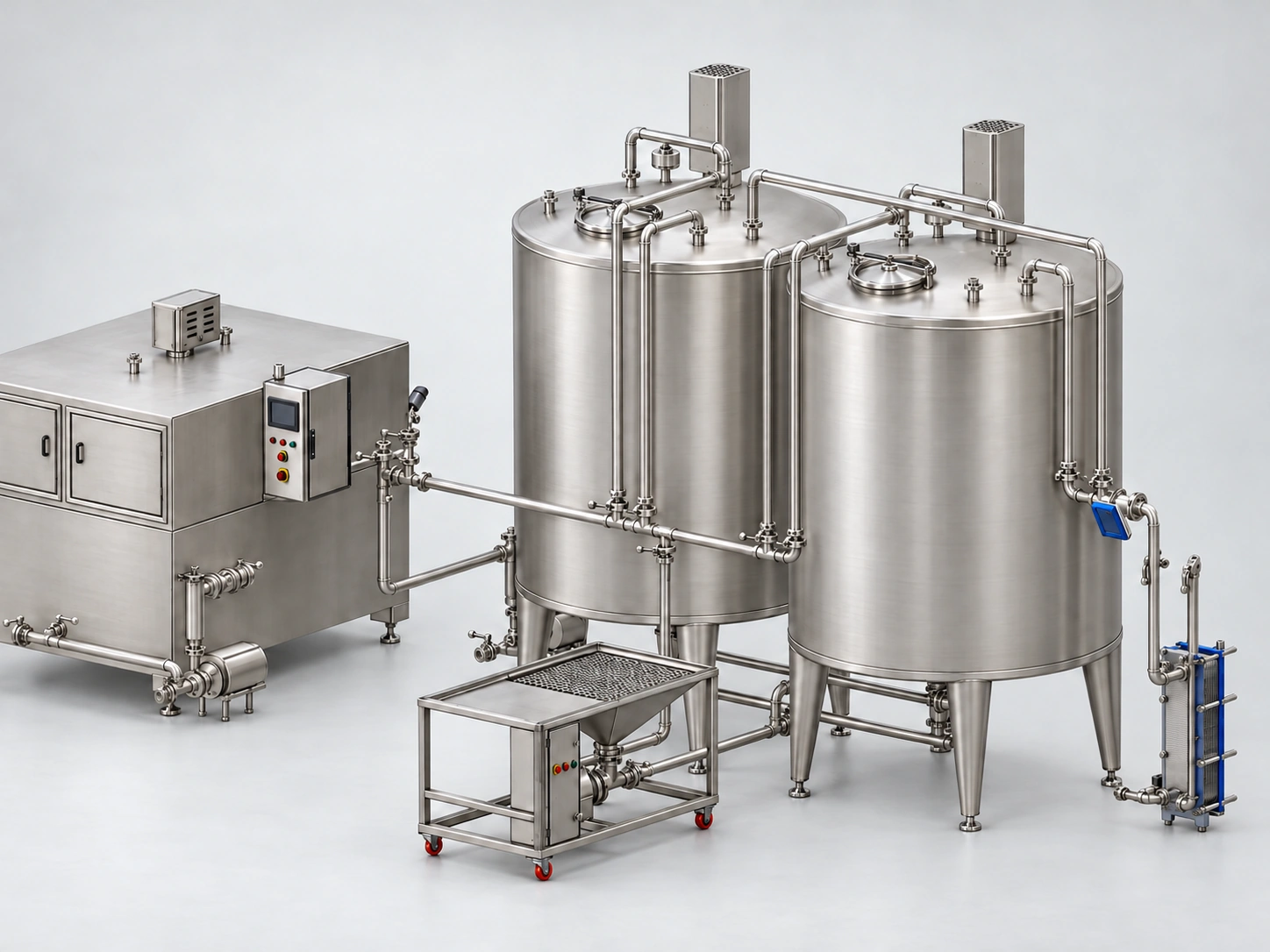
Yogurt, ayran and dairy desserts often need more dry matter, sugar or stabilizer than milk contains. A high-shear powder mixer under vacuum draws in skim milk powder, sugar and stabilizers and disperses them below the liquid surface, which prevents lumps and foam.
The mix then rests for 20–30 minutes in jacketed, agitated mix tanks so that proteins and hydrocolloids hydrate fully. For yogurt, total solids are usually raised to 14–16%. The jacket heats or cools the batch, and load cells or flowmeters control dosing. Scraper blades keep viscous mixes moving along the tank wall.
Key features
Producing milk from powder? See our recombined milk production line.

Supporting Preparation Units
| Unit | What it does |
|---|---|
| Sugar, stabilizer and salt dissolving | Dissolving tanks for sugar syrup and stabilizer solutions, and the salt brine dosed into ayran. |
| Starter culture preparation | Bulk starter tanks, or direct-vat-set (DVS) cultures dosed hygienically for yogurt, kefir and cheese. |
| Fruit and flavor dosing | Aseptic in-line dosing of fruit preparations and aromas into stirred yogurt after fermentation. |
| Mix heating, cooling and transfer | Plate or tubular heat exchangers bring mixes to process temperature and transfer them to fermentation. |
Steps 6–12
Milk Process Unit
Step 06 · The heart of the plant
Pasteurization and Standardization Unit
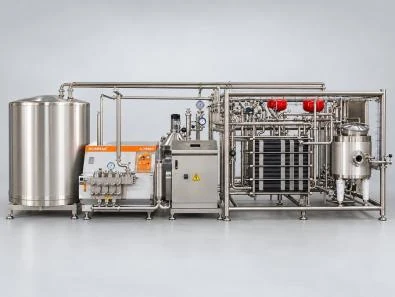
The pasteurization and standardization unit is the core of a dairy plant. It combines the balance tank, plate pasteurizer, deaerator, separator, in-line standardization, homogenizer and hot water set on connected skids controlled by one PLC.
Milk passes through in a continuous loop: preheating in the regenerative section, separation, standardization to the target fat, homogenization, final heating, holding and cooling. Surplus cream leaves through its own cream pasteurizer at 85–90 °C (185–194 °F). Recipes, temperatures, flow rates and CIP cycles are logged for every batch.
Step 07 · Heat treatment
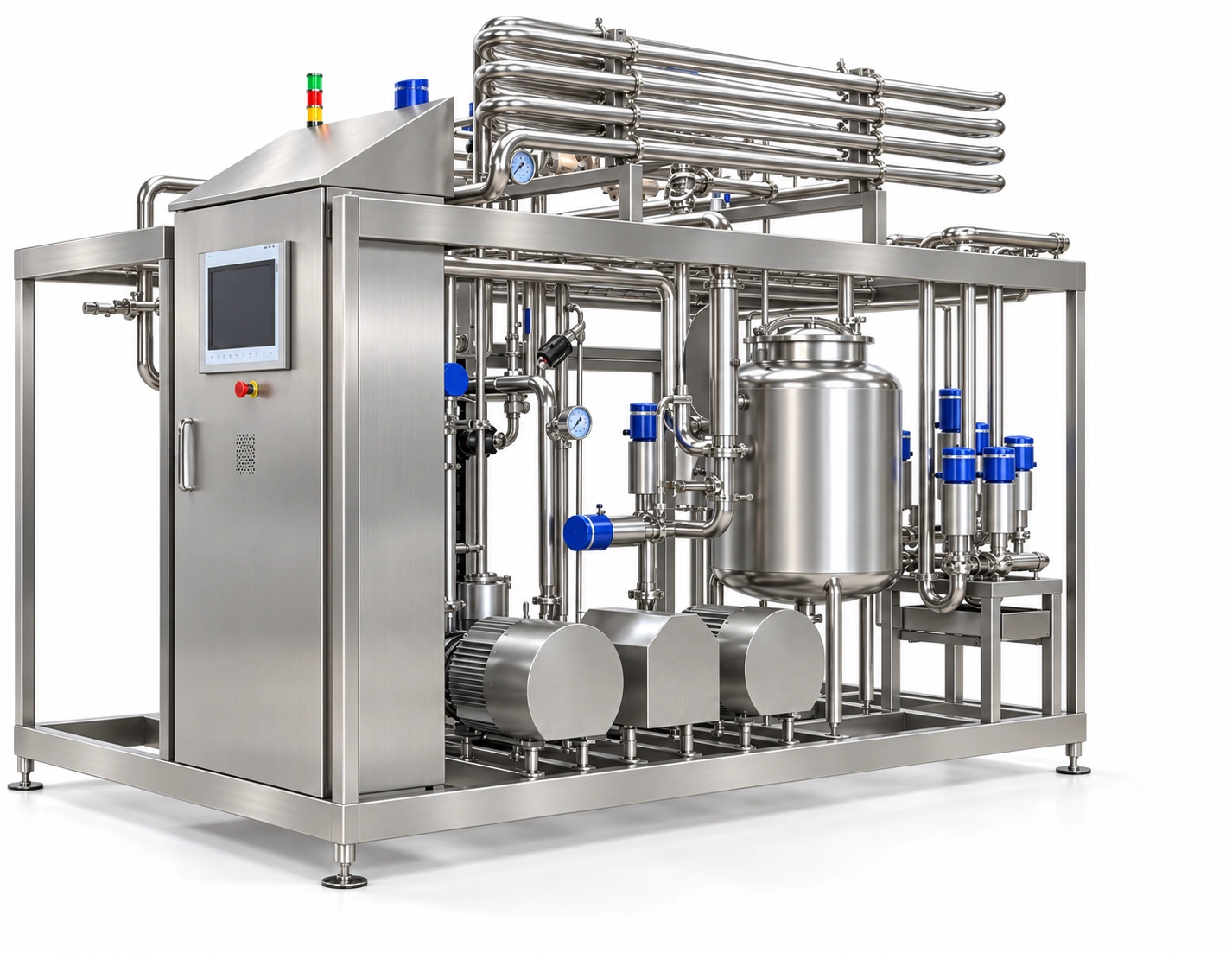
Plate Pasteurizer
HTST pasteurization heats milk to 72–75 °C (161–167 °F) and holds it for at least 15 seconds in a holding tube, meeting the U.S. PMO minimum of 161 °F for 15 s. Incoming cold milk is preheated by outgoing hot milk in the regenerative section, which recovers 90–95% of the heat. A closed hot water circuit heats the final section with only a few degrees of difference to the milk, limiting fouling.
If the temperature falls below the set point, a flow diversion valve sends the milk back to the balance tank. A booster pump keeps pasteurized milk at a higher pressure than raw milk, so a pinhole in a plate cannot contaminate the finished product. For yogurt milk, the same design runs at 90–95 °C (194–203 °F) for about 5 minutes, often on a shared skid with the homogenizer.
Key features

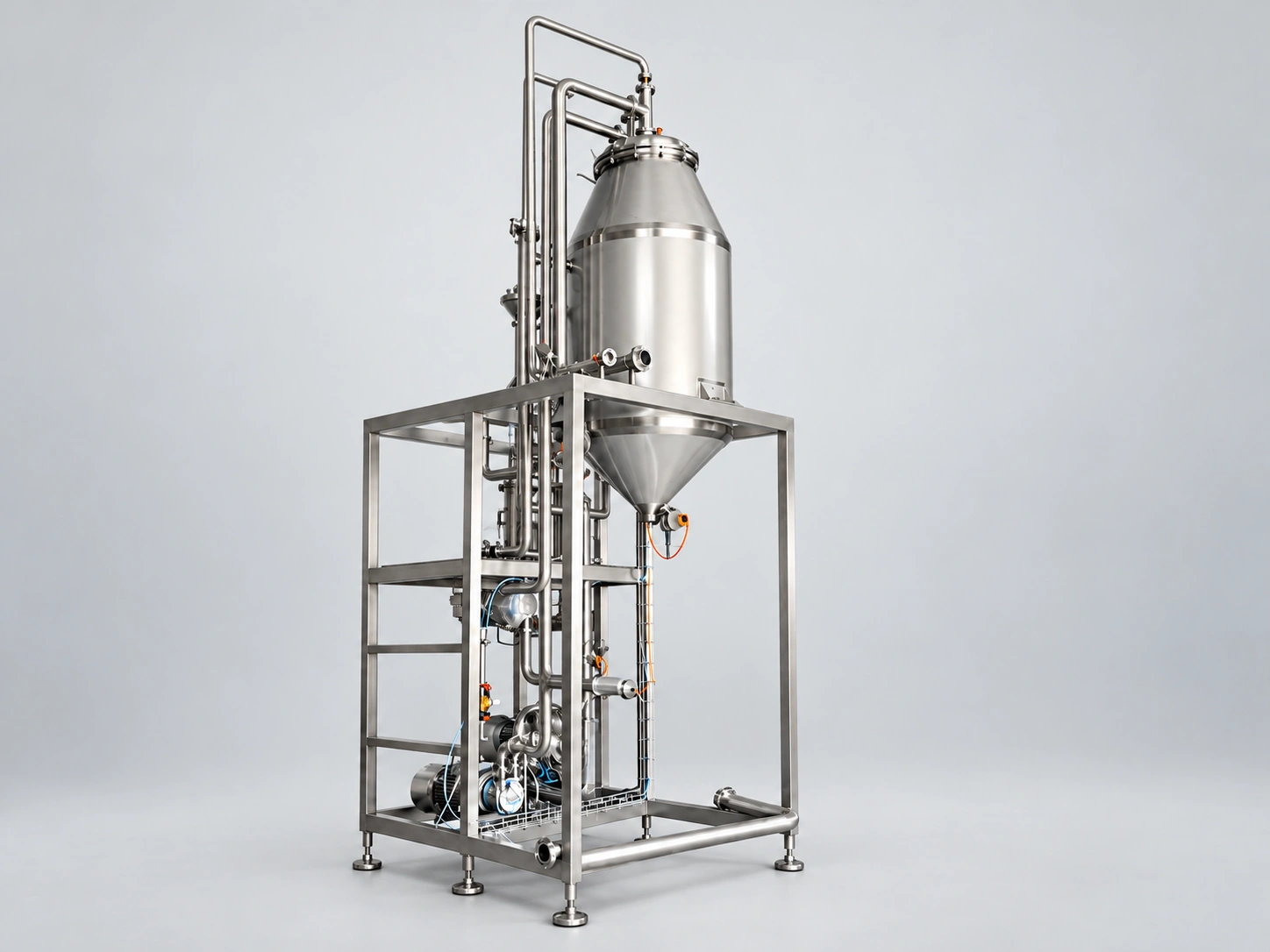
Step 08 · Air and odor removal
Deaerator
Air in milk distorts flowmeters and fat standardization, increases fouling in heaters, disturbs the homogenizer and causes foam in tanks and fillers. In a vacuum deaerator, preheated milk enters a vessel where the vacuum lowers the boiling point to about 7–8 °C (13–14 °F) below the milk temperature, so the milk flashes as it enters.
Air and volatile off-flavors leave with the vapor, and a built-in condenser returns the condensed vapor to the milk so no water is lost. For yogurt milk, deaeration before homogenization gives a smoother, firmer gel.
Step 09 · Skimming and clarification
Separator
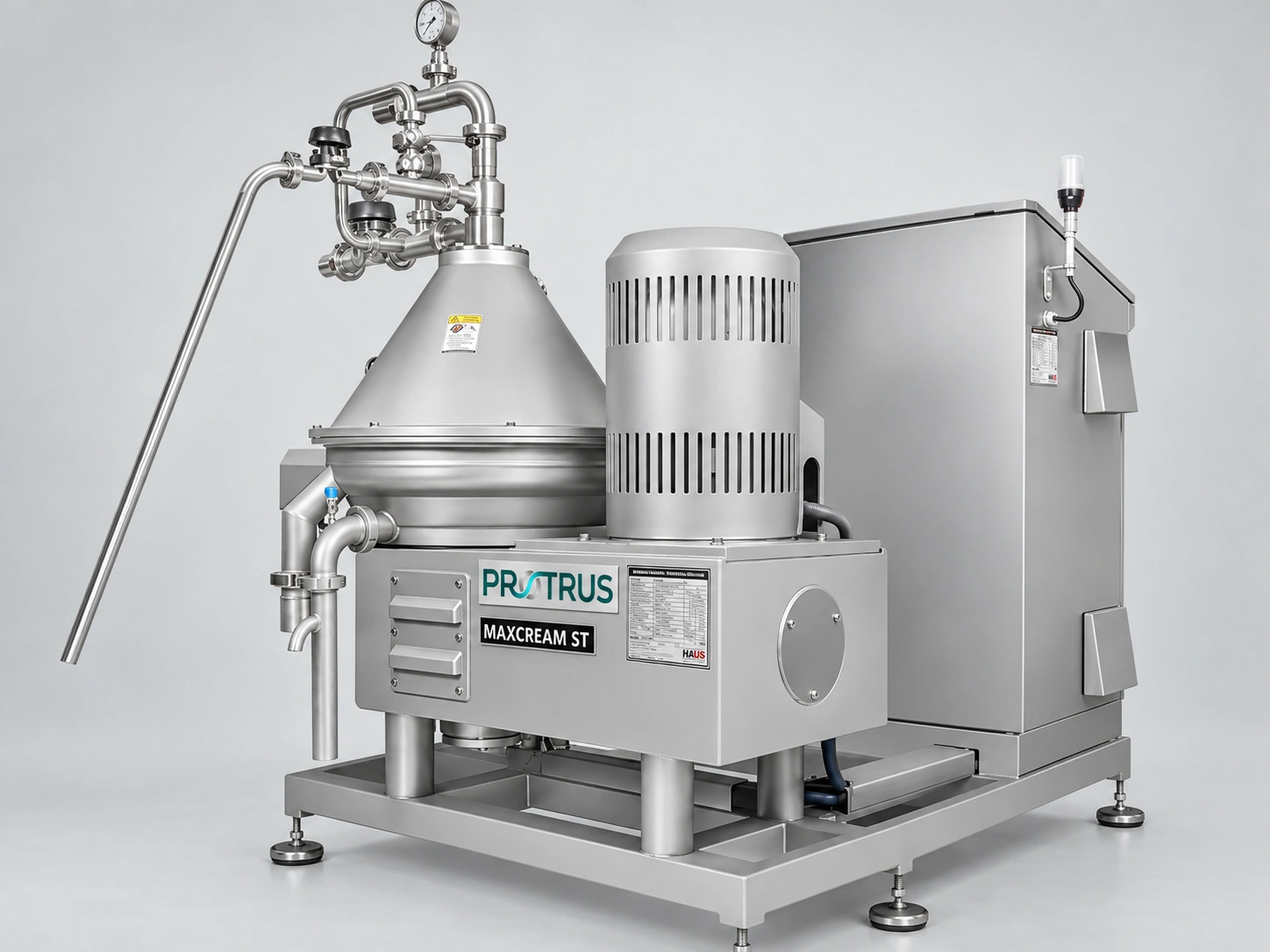
A disc-stack milk separator splits whole milk into skim milk and cream and removes impurities in the same pass. Milk enters the rotating bowl at 45–55 °C (113–131 °F); centrifugal force thousands of times stronger than gravity drives the lighter fat toward the center and the skim milk outward through the disc stack.
Skim milk leaves with 0.05% fat or less, and the cream fat content is adjustable for standardization and cream products. Solids collect at the bowl periphery and are discharged automatically at set intervals, so the separator can run through a full production shift. A clarifier works the same way without skimming.
Key features
Step 10 · Fat control
In-Line Standardization
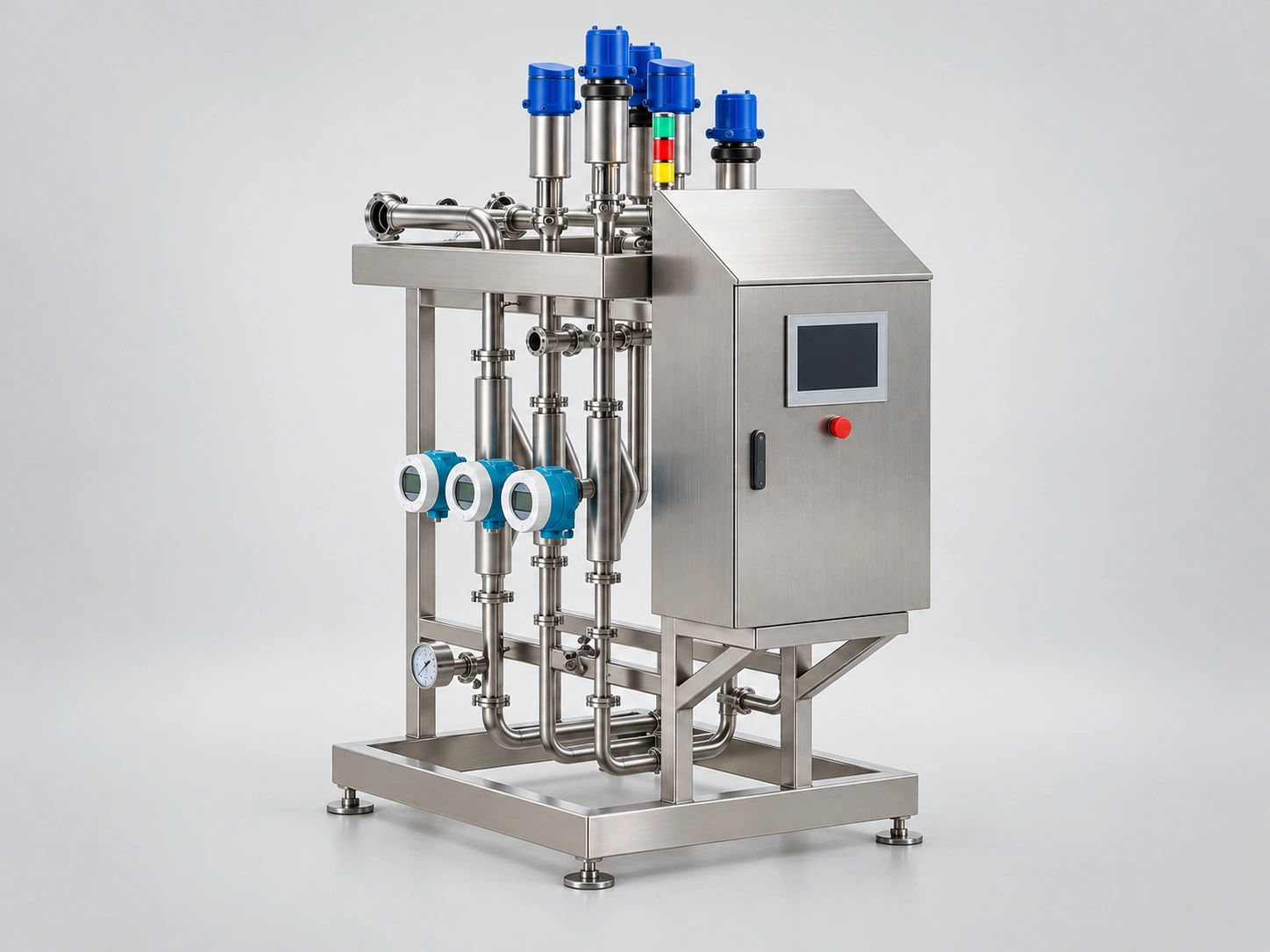
In-line standardization blends cream back into skim milk continuously, so milk leaves the separator at its final fat content and no batch correction is needed. Coriolis meters measure cream density and mass flow, and a control valve adds exactly the cream required for the target, for example 3.0% or 1.5% fat.
Typical accuracy is ±0.02–0.03% fat. Surplus cream goes to the cream pasteurizer and cream tank for cream products, butter or cream cheese. With the right sensors, the same skid can also standardize protein or total solids.
Turning surplus cream into products? See our cream and butter processing line.
Step 11 · Fat globule reduction
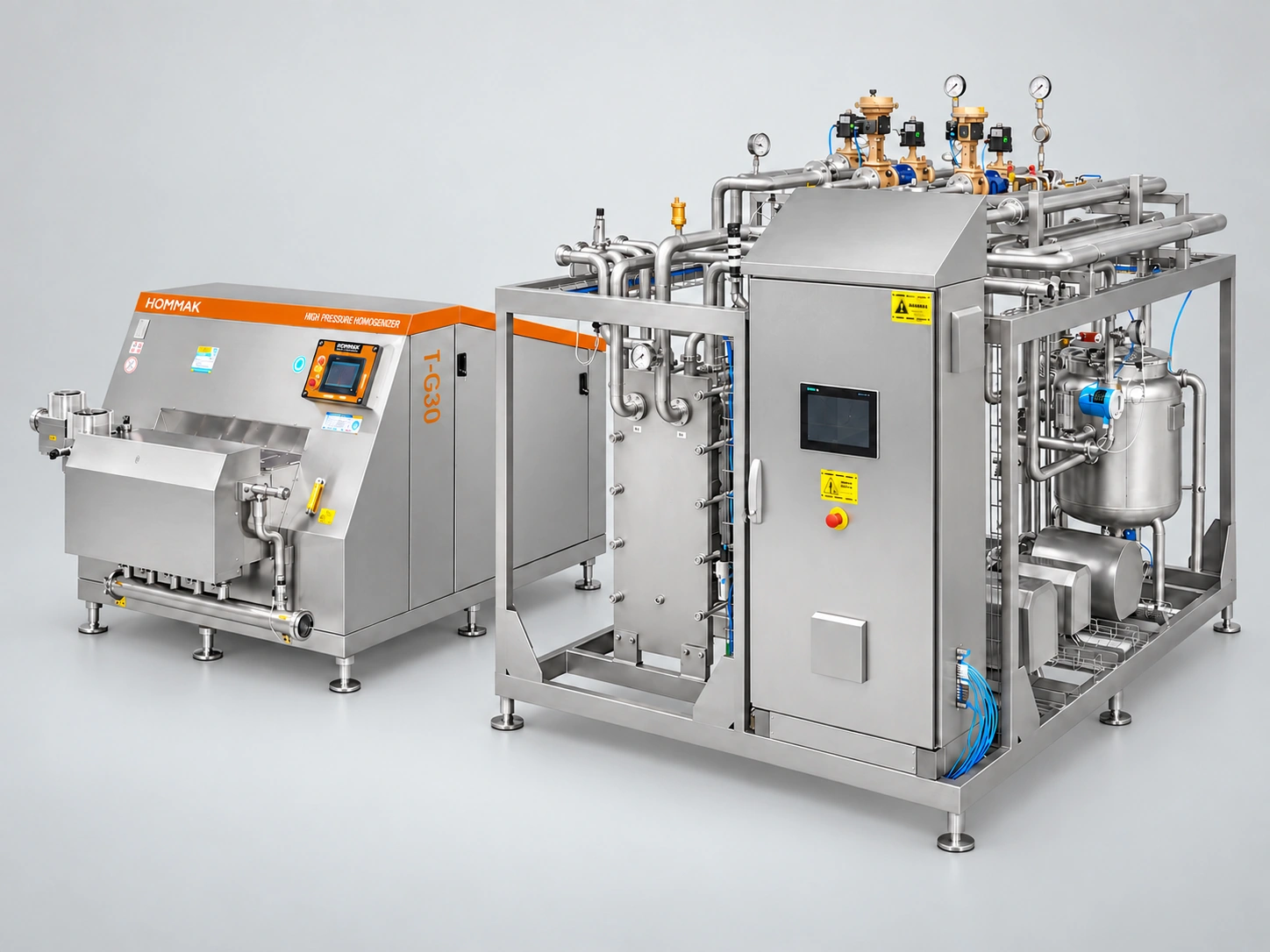
Homogenizer
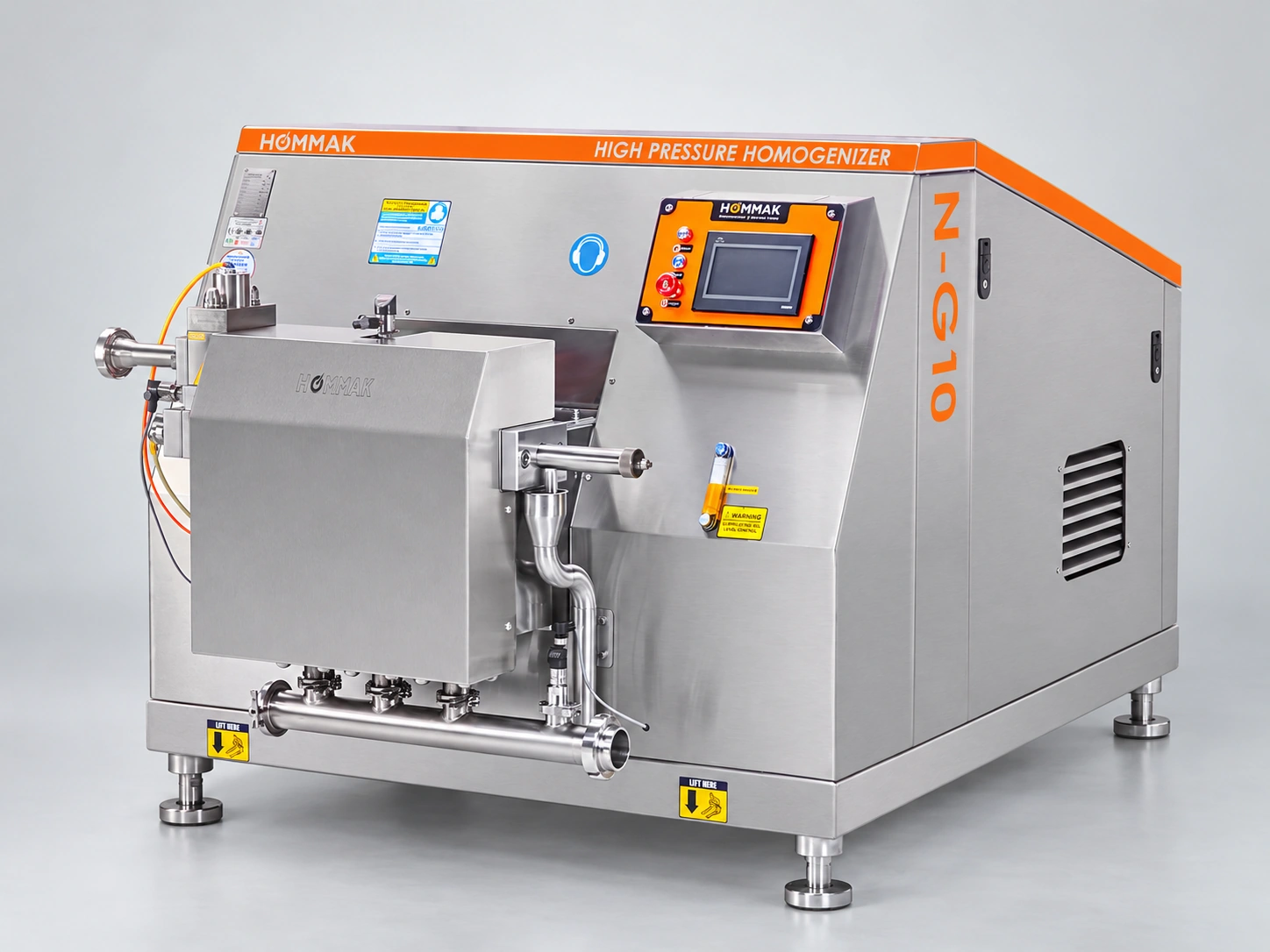
Fat globules in raw milk average 3–4 µm and rise to form a cream layer. A high-pressure homogenizer forces milk through a narrow valve gap and breaks the globules below 1 µm, so the fat stays dispersed. Two stages are usual: the first at 150–200 bar (2,200–2,900 psi) for market milk, or up to about 250 bar (3,600 psi) for yogurt milk, and the second at about 20% of that pressure to break up fat clusters.
Homogenization takes place at 55–70 °C (131–158 °F), normally between regeneration and final heating. Protrus lines use HOMMAK homogenizers with tungsten carbide valves and pulsation dampers.

Step 12 · Ready-to-fill storage
Pasteurized Milk Tanks
Pasteurized milk tanks store standardized milk at 4 °C (39 °F) or below until filling or further processing. They belong to the clean side of the plant, so they connect to the process through mixproof valves that keep pasteurized milk apart from raw milk and cleaning solutions.
Gentle agitation keeps the milk uniform, and a cooling jacket compensates for heat gain during longer holding. From here the milk goes to bottle filling, to product preparation or to the cheese vats.
Milk Buffer Tank, Fermentation and Cheese Production
Step 13 · Value-added products
Fermentation Tanks and Cheese Production
After the process unit, milk is divided by product. A milk buffer tank feeds the bottle filler, while yogurt milk and cheese milk go to their own sections. Fermentation tanks have polished interiors, insulated cooling jackets and slow agitators that first mix in the culture and later break the coagulum gently to protect texture. Cheese vats coagulate, cut and stir the curd under controlled temperature.
Related lines: yogurt production, ayran and kefir, white cheese and hard and semi-hard cheese.
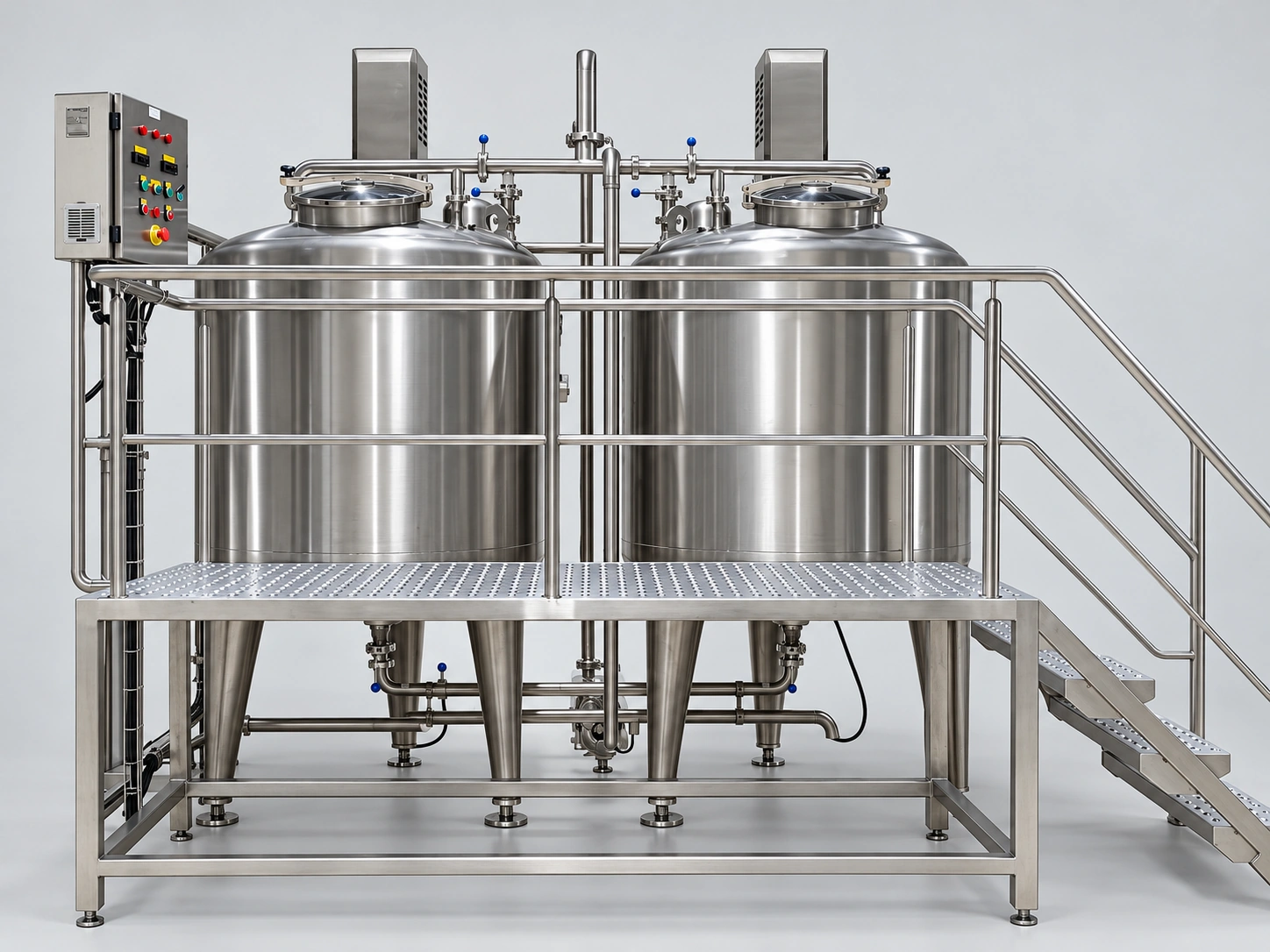
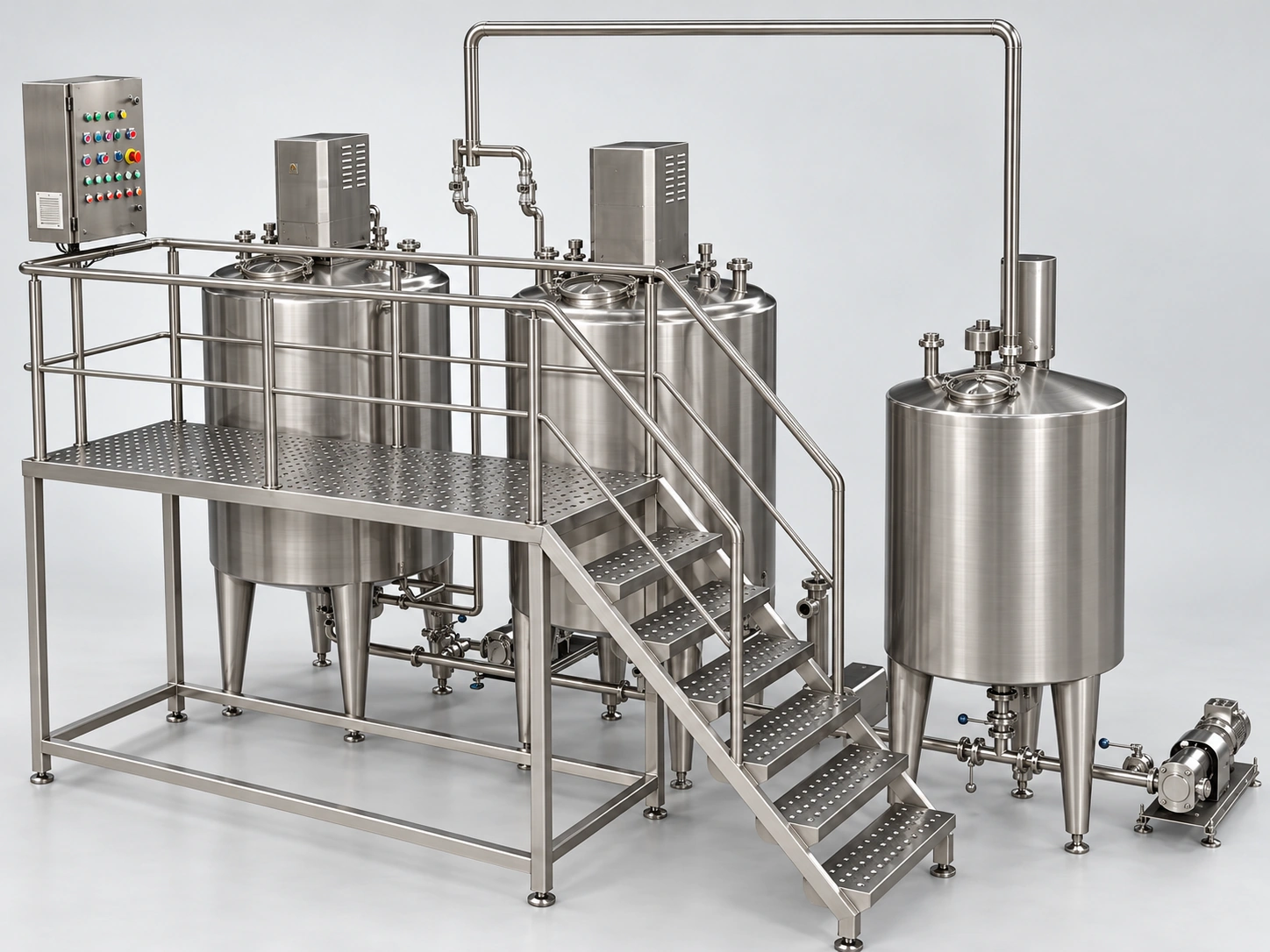
Recombined fermented product line: milk powder is dissolved and hydrated in mix tanks, heat-treated, homogenized and fermented into yogurt and ayran when fresh milk supply is limited or seasonal.
Dairy Products and Their Process Routes
| Product | Process route | Key parameters | Filling & packaging | |
|---|---|---|---|---|
| Pasteurized milk | Milk buffer tank → filler | 4 °C (39 °F) | Bottles, capping |
| Yogurt (set & stirred) | Culture dosing → fermentation → cooling, fruit dosing | 42–43 °C to pH 4.6; stirred yogurt cooled to 18–20 °C | Cups; set yogurt incubated in cups |
| Ayran | Yogurt + water + salt → homogenization → cooling | Salt brine dosed in-line | Cups, bottles |
| Kefir | Kefir culture → fermentation → maturation, cooling | 20–25 °C, gentle agitation | Bottles |
| Cream cheese | Fermentation and coagulation → curd separator → hot blending | Curd/whey separation; cream, salt, stabilizer | Tubs, hot or cold fill |
| White cheese | Cheese vats (culture, rennet, CaCl₂) → molds, pressing → brine | Coagulation, cutting, ripening in cold rooms | Tins, vacuum packs |
Steps 14–17
Process Technology Equipment for Dairy
The equipment between the main machines decides how safely a plant routes product, how reliably it cleans and how evenly it heats.
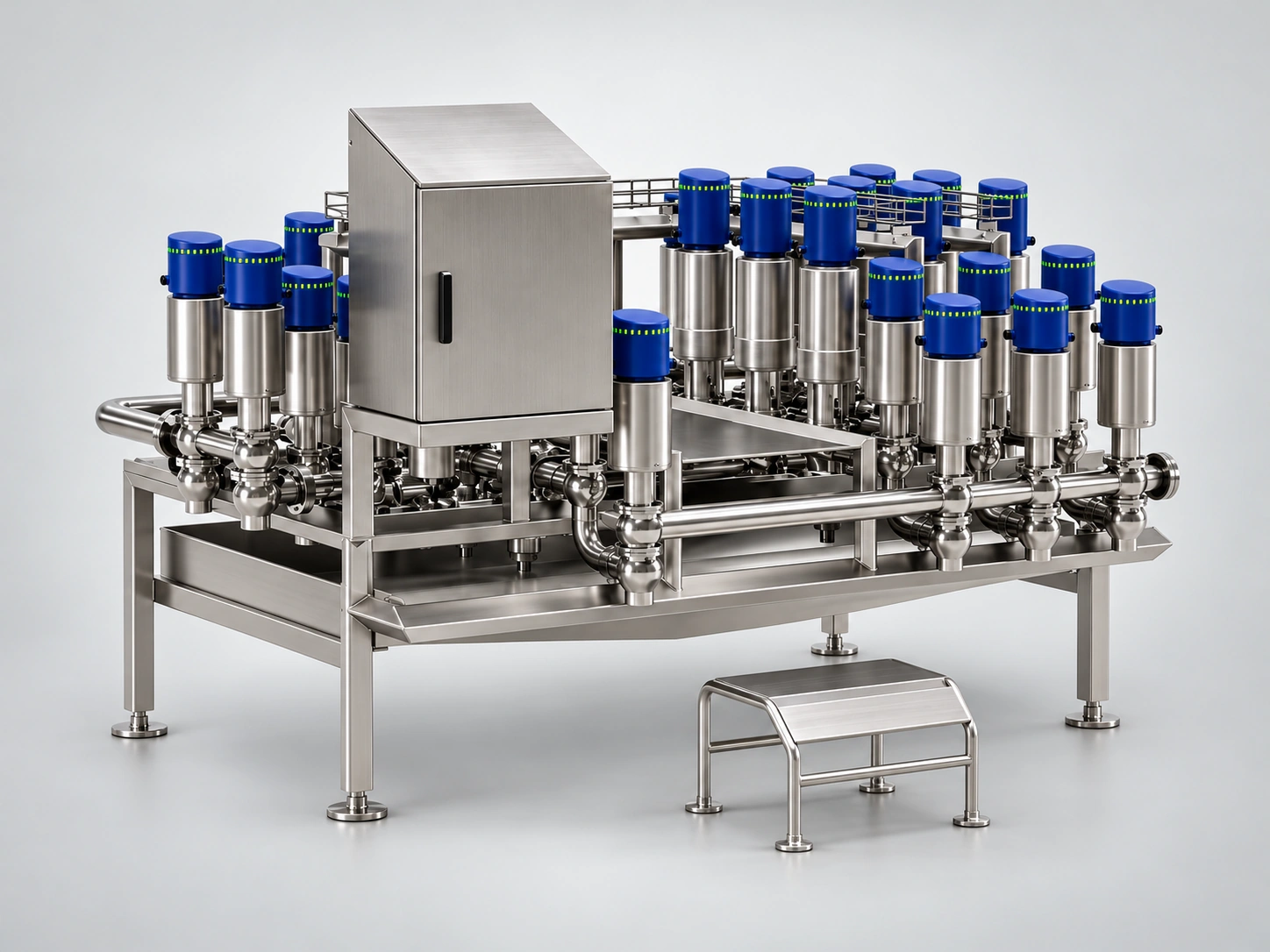
Valve Manifold
A valve manifold connects tanks, process units and CIP circuits through mixproof double-seat valves. Two independent seals with a vented leakage chamber let product and cleaning solution run in neighboring lines at the same time, and any leak shows at the drain. Control tops report each valve position to the PLC for automatic, documented routing.

Sanitary Stainless Swing-Bend Routing Panel
A swing-bend panel is the manual alternative to a valve manifold. Line ends terminate on a stainless panel, and the operator joins two ports with a removable U-bend, which leaves a physical break between product and CIP. Proximity sensors confirm the connection before the PLC starts a transfer. It suits smaller plants with few route changes.
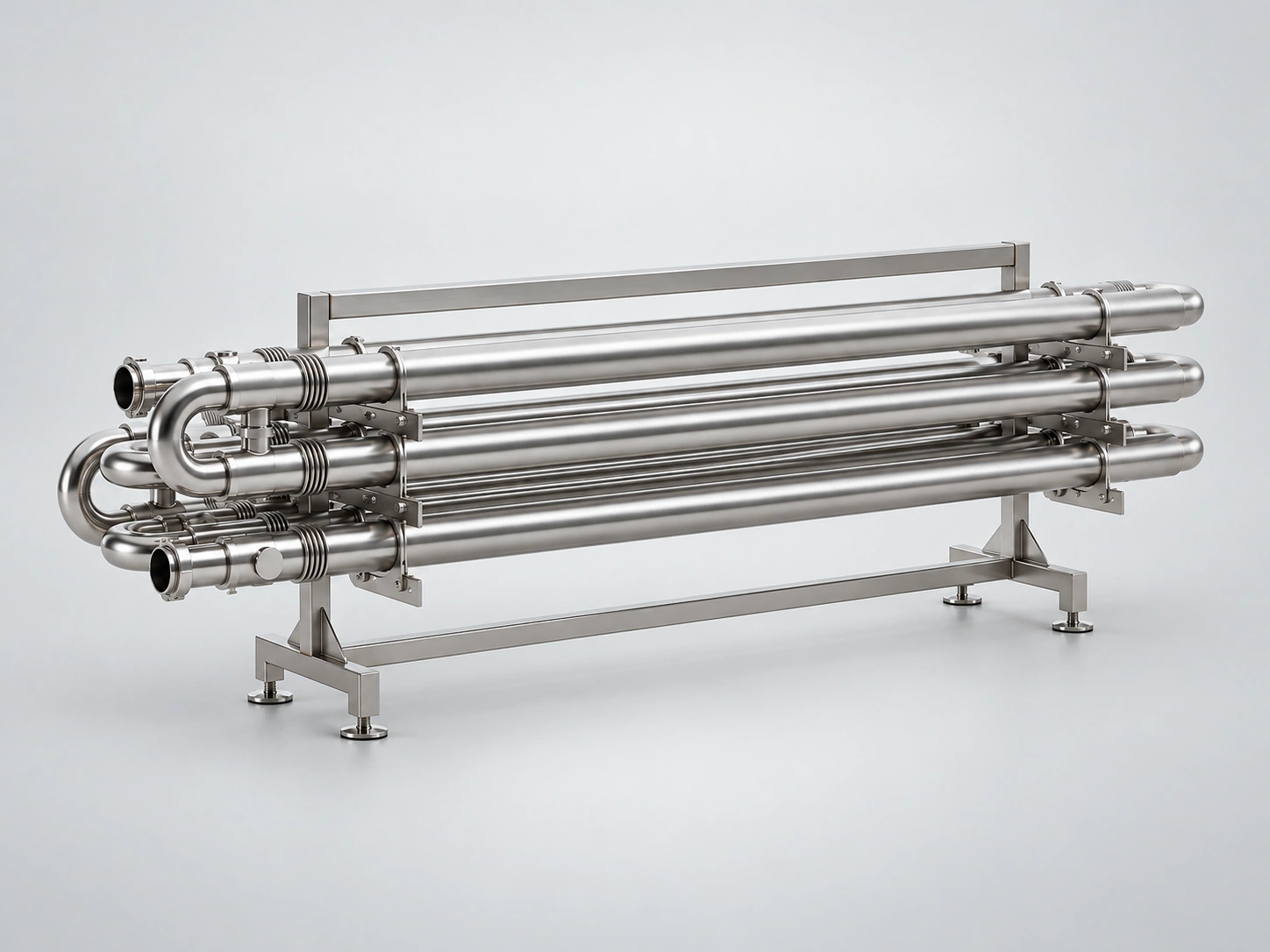
Stainless Steel Tubular Heat Exchanger
A tubular heat exchanger handles what plate units cannot: high viscosity, fruit pieces, fibers and long runs at high temperature. Product flows in the inner tubes and the service medium in counter-current around them. Wide channels and no plate gaskets allow higher pressure and longer runs between cleanings, for yogurt cooling, fruit preparations, cream, desserts and UHT.
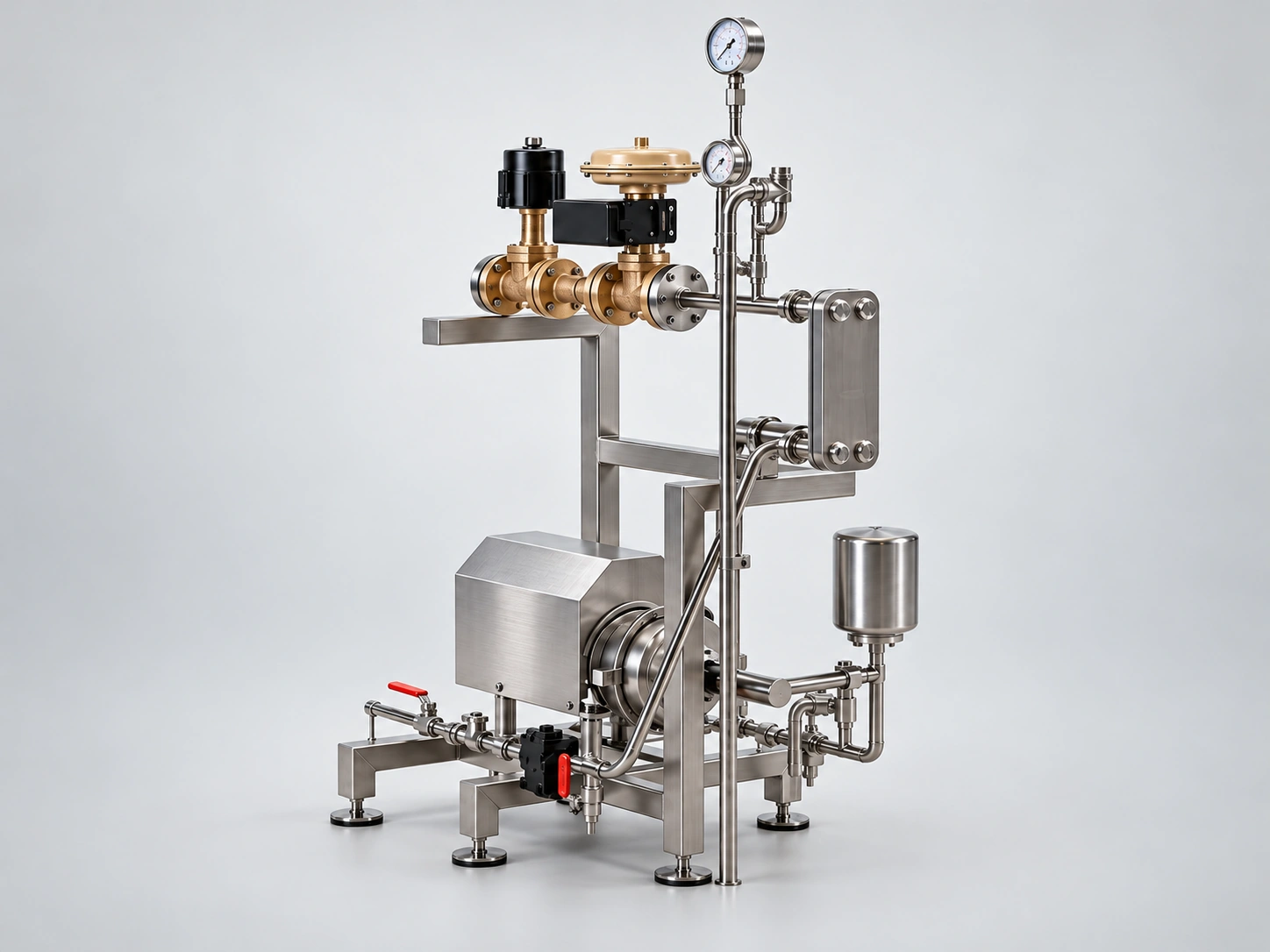
Compact Stainless Hot Water Generation Skid
Pasteurizers and mix tanks are heated with hot water instead of direct steam, which keeps the temperature difference to the product small and reduces burn-on. This hot water set heats a closed circuit with steam in a compact plate heat exchanger. A modulating steam valve and circulation pump hold the water within about ±0.5 °C (±1 °F), and condensate returns to the boiler.
Utilities and CIP. A dairy plant also needs steam at 8–10 bar (115–145 psi), ice water at 1–2 °C (34–36 °F), treated process water, oil-free compressed air and an automatic CIP unit that runs rinse, caustic, acid and hot water cycles with conductivity and temperature recorded for every circuit.
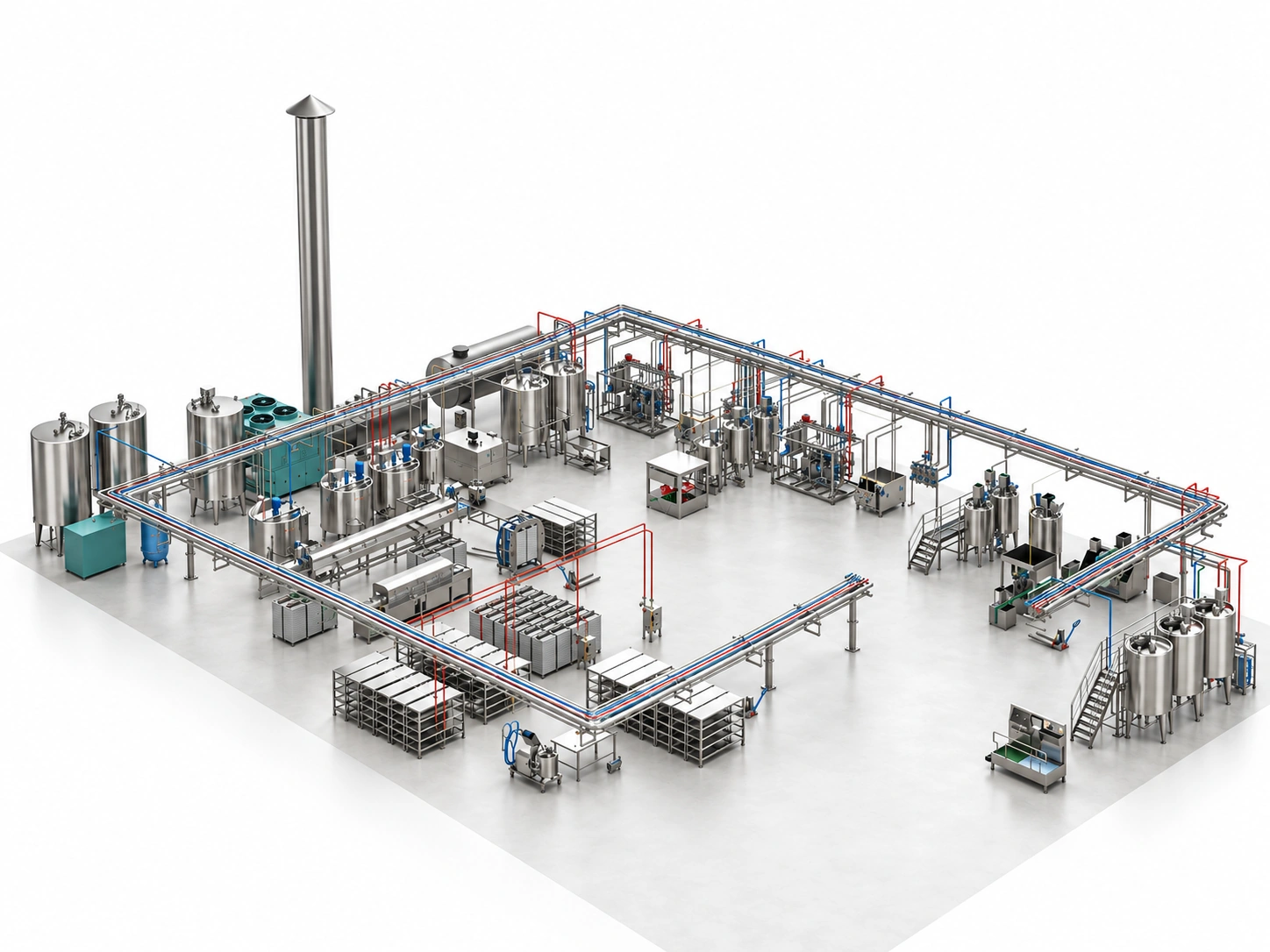
Turnkey dairy plant: reception, milk process unit, product preparation, fermentation, filling and utilities connected by hygienic piping, valve manifolds and automatic CIP.
Frequently Asked Questions About Dairy Process Technology
Have a question about your dairy plant? Ask our process engineers.
Get a Quote
Plan your dairy processing line
Planning a new dairy plant or expanding a line? Send us your products, daily milk volume and packaging formats, and Protrus will prepare a process layout and equipment proposal.
Share your products
Tell us what you produce today and what you plan to launch.
Engineering review
Our process engineers assess volumes, recipes and site conditions.
Line proposal & quotation
You receive a configured process concept with a detailed quotation.
Prefer email? info@protrus.com