

Dairy Processing · Butter
Cream and Butter Production Unit for Dairies of Every Size
From fresh cream to packed butter in one compact unit: pasteurize, ripen, churn, work and form, with full control over taste and texture.
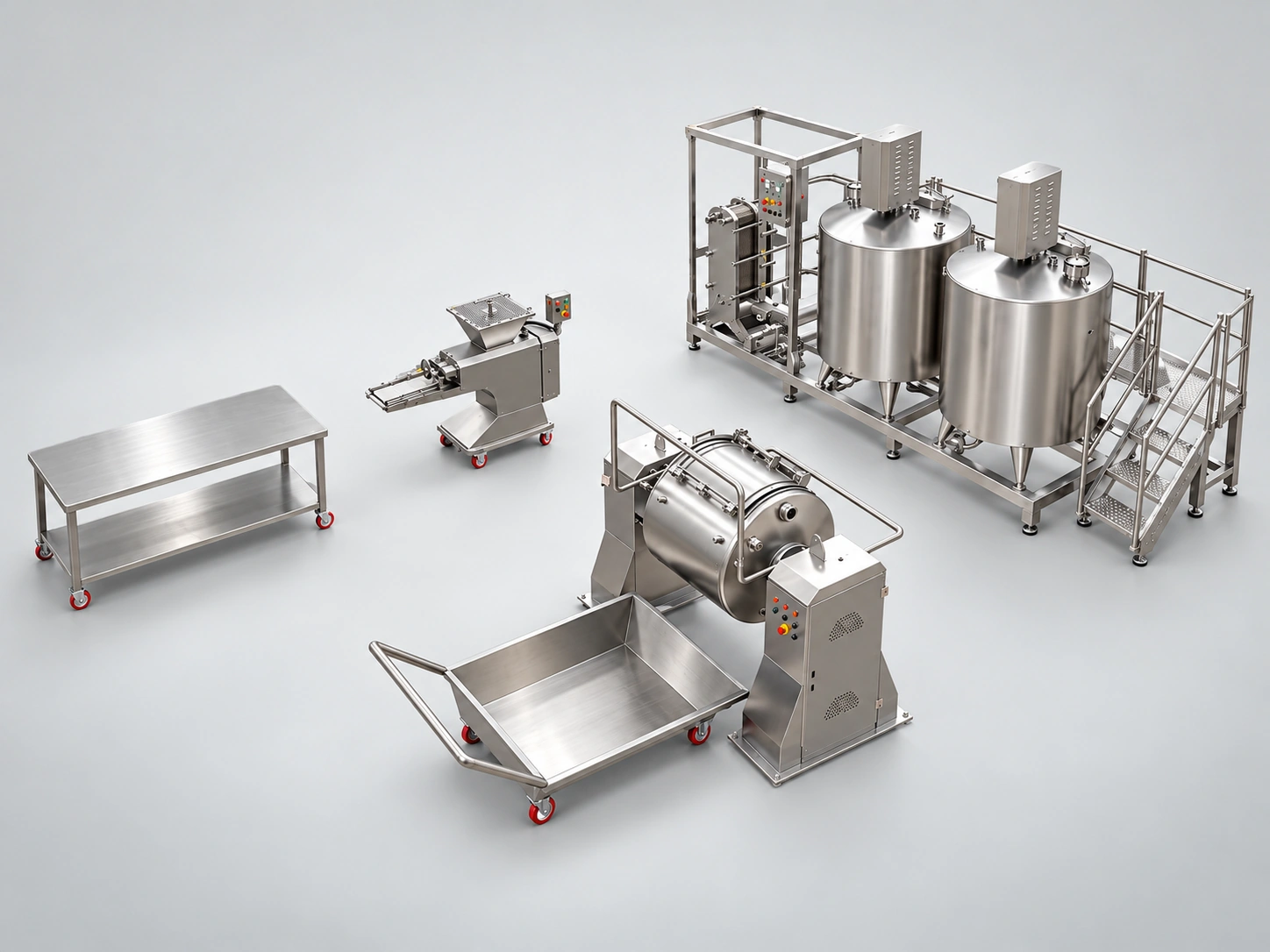
Pasteurizer and ripening tanks on a platform, batch churn with tray trolley, forming extruder and work table
Cream treatment
Pasteurized at 90–95 °C, ripened for 12–16 h
Batch churning
Butter grains of 2–5 mm at 8–14 °C
Salting & working
80–82 % butterfat, max. 16 % water
Forming & packing
Blocks, rolls and portions from 10 g to 5 kg
Every Step from Fresh Cream to Packed Butter on One Compact Footprint
Butter is made by turning a fat-in-water emulsion (cream) into a water-in-fat emulsion (butter). It sounds simple, but the result depends on how the cream is heated, how slowly its fat crystallizes and how the churn breaks the fat globules.
The Protrus Cream and Butter Production Unit gives a dairy, creamery or farm processor every step on a compact footprint: a plate pasteurizer and two jacketed ripening tanks on a common frame with service platform, a batch butter churn, a tray trolley, a forming and portioning extruder and a stainless work table. The same unit makes sweet cream butter, cultured (lactic) butter, salted or unsalted butter, and buttermilk as a valuable by-product.
80–82 %
butterfat, max. 16 % water in the finished butter
90–95 °C
cream pasteurization, 15–20 s (194–203 °F)
12–16 h
controlled cream ripening and crystallization
40–550 kg
butter per churn batch (88–1,213 lb)
Equipment in the Unit
A plate pasteurizer with ripening tanks, a batch churn with tray trolley, a forming extruder and a work table: four modules that cover cream treatment, churning, working and forming.
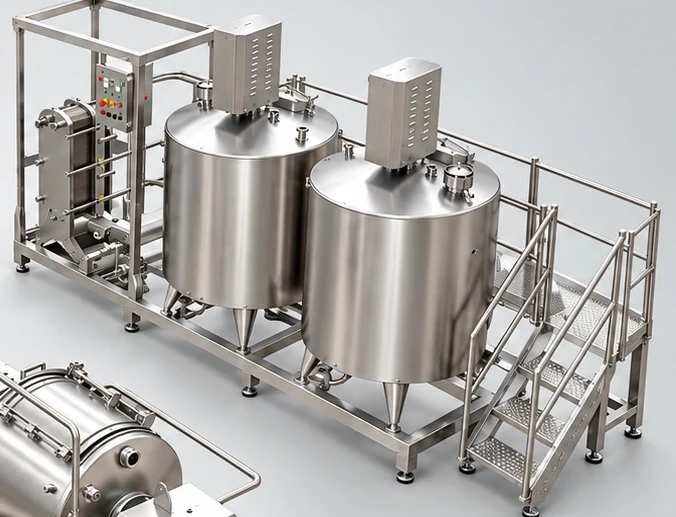
Pasteurizer and ripening tanks
A plate heat exchanger with regeneration heats the cream, holds it and cools it with ice water. Two jacketed, insulated tanks with slow agitators run the ripening temperature program; the platform gives safe access to manholes, sensors and culture dosing.
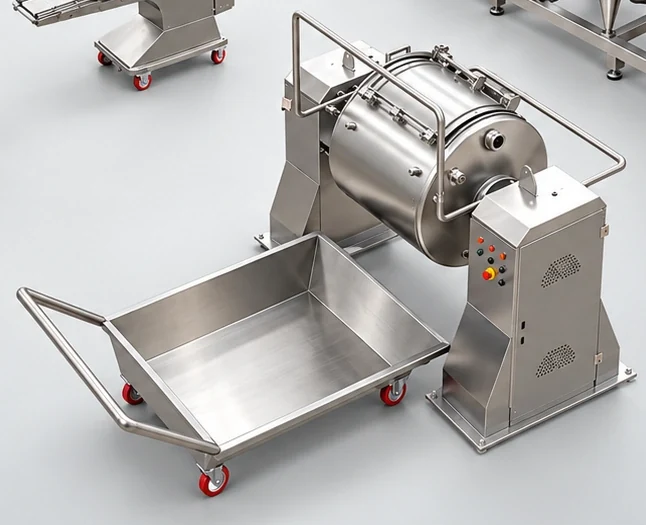
Batch churn and tray trolley
A cylindrical stainless drum with internal baffles rotates on a pedestal with variable speed drive. It churns, drains, washes, salts and works the butter in one vessel, then tilts to unload it into the trolley.
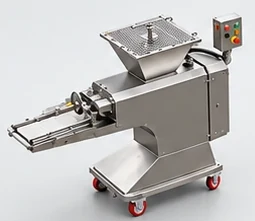
Forming and portioning extruder
A hopper feeds the butter to a screw that de-aerates and compacts it, then pushes it through a die. A cutter makes blocks, rolls or portions from 10 g to 5 kg (0.35 oz to 11 lb).
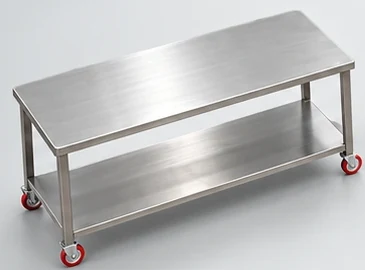
Stainless work table
A hygienic AISI 304 table on lockable castors for sampling, hand-forming, weighing and wrapping next to the extruder.
Batch or Continuous Butter Making?
Continuous butter makers churn cream in a fast-turning cylinder and work it in screw sections. They pay off from about 1,500 kg/h (3,300 lb/h) of butter and long runs of one recipe. A batch unit is the better choice for smaller volumes, for frequent changes between sweet, cultured, salted and flavored butter, and for artisan products where the operator judges grain size and texture by eye.
Final Products from a Cream and Butter Unit
One unit, one set of recipes in the control panel: switch from sweet cream butter to cultured butter from one batch to the next, and sell the buttermilk as a by-product.

Sweet cream butter
Mild, fresh cream taste; best for baking and export
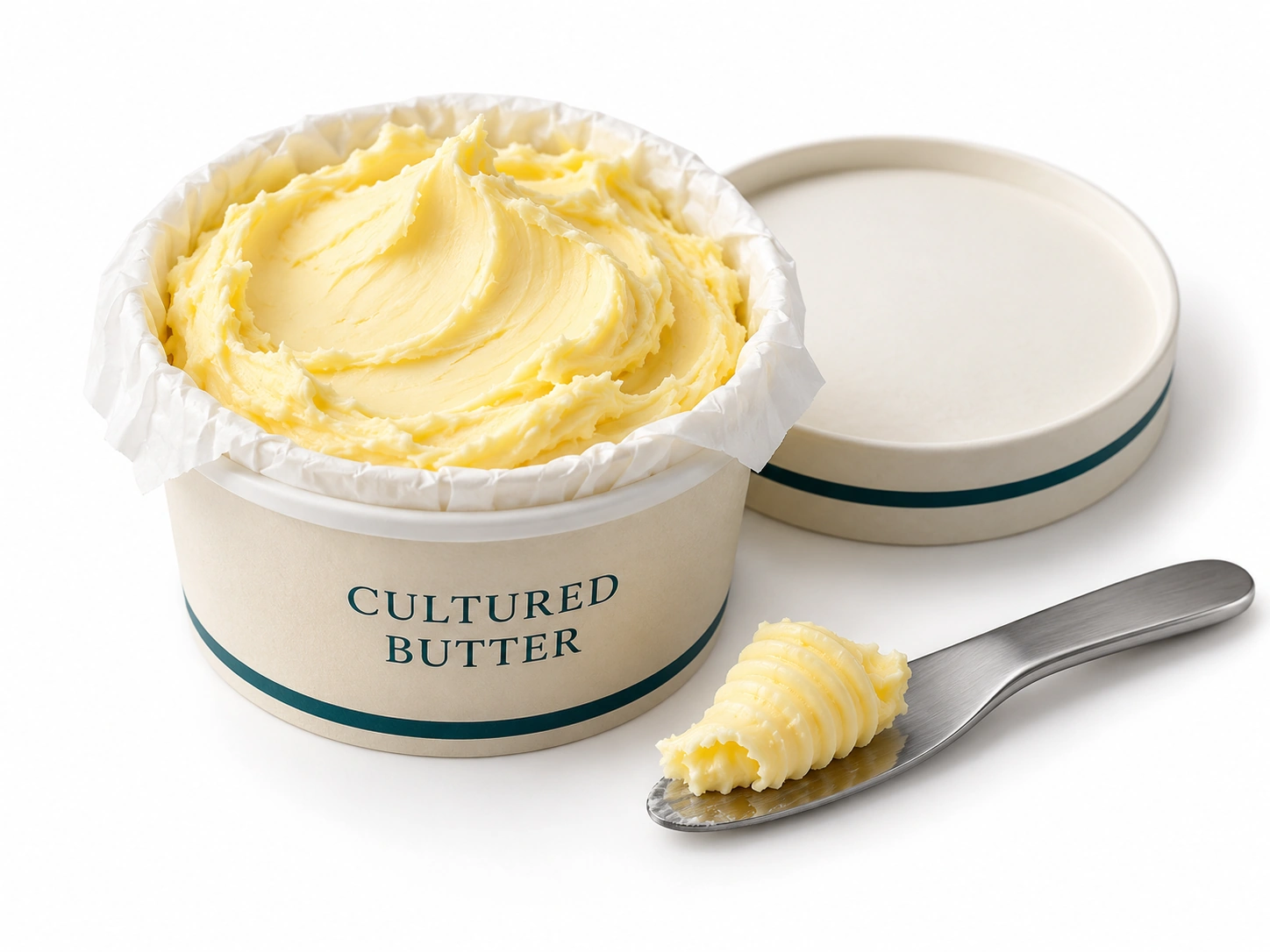
Cultured butter
Full, nutty aroma; longer flavor stability

Pasteurized cream
Retail and catering cream, cream for desserts

Buttermilk
For tanks, drinks, bakery or powder
Typical Recipes and Process Values
| Product | Cream | Ripening | Churning | Result |
|---|---|---|---|---|
| Sweet cream butter | 38–42 % fat, pH 6.6 | Cooling program 12–16 h, no culture | 10–14 °C (50–57 °F), 30–45 min | Mild, fresh cream taste; best for baking and export |
| Cultured (lactic) butter | 38–42 % fat + aroma culture | Acidification at 18–20 °C (64–68 °F), then cooling; pH 4.6–5.0 | 8–12 °C (46–54 °F), 40–60 min | Full, nutty aroma; longer flavor stability |
| Salted butter | Sweet or cultured cream | As above | As above; 1–2 % salt while working | Firmer taste, salt also limits microbial growth |
| Pasteurized cream | 18–40 % fat | Not ripened; cooled to 4 °C (39 °F) | No churning | Retail and catering cream, cream for desserts |
The Butter Making Process, Step by Step
Twelve steps in three zones, each with a temperature and time that decide the spreadability and flavor of your butter.
Zone A prepares the cream, zone B turns it into butter in the churn and zone C forms and packs it. All temperatures and times are recipe values in the control panel, so one unit can switch from sweet cream butter to cultured butter from one batch to the next.
- 1Cream intakeFrom separator or tanker; 35–42 % fat at 4–6 °C (39–43 °F)
- 2Plate pasteurizerRegeneration + hot water; 90–95 °C (194–203 °F), 15–20 s
- 3Cooling sectionIce water, cream cooled to 8–20 °C (46–68 °F)
- 4Starter cultureCultured butter only; mesophilic DL aroma culture
- 5Ripening tanks2 × jacketed, agitated; 12–16 h program
- 6Batch churn40–50 % filled, variable speed; 8–14 °C (46–57 °F), 30–60 min
- 7Buttermilk drainGrains 2–5 mm, sieve; buttermilk ≈ 0.5 % fat
- 8WashingOptional, chilled water at 2–4 °C (36–39 °F)
- 9Salting and workingIn the churn, vacuum optional; ≤ 16 % water
- By-product: buttermilkTo tank, drinks, bakery or powder
- 10Tray trolley and work tableUnloading, sampling; butter at 10–13 °C (50–55 °F)
- 11Forming extruderBlocks, rolls, portions; 10 g – 5 kg (0.35 oz – 11 lb)
- 12Packing and cold storeParchment, foil, tubs; 2–5 °C (36–41 °F) or −18 °C (0 °F)
- All temperatures and times are recipe values in the control panel, so the unit can switch from sweet cream butter to cultured butter from one batch to the next.
Hot waterPasteurizer heating, tank jackets
Ice water 1–2 °CCooling section, ripening jackets
CIPPasteurizer and ripening tanks
Churn cleaningHot-water rinse + detergent
Control panelRecipes, temperature logs, batch reports
Process flow of a Protrus batch cream and butter production unit. Buttermilk leaves the churn as a by-product; dashed boxes are options. Values are typical. 1 L = 0.264 US gal · 1 kg = 2.2 lb.
Process Steps
Zone A · Steps 1–5
Cream treatment and ripening
Cream intake (1). Cream with 35–42 % fat comes from a separator or a tanker at 4–6 °C (39–43 °F). Higher fat means less buttermilk and a shorter churning time.
Pasteurization (2–3). 90–95 °C (194–203 °F) for 15–20 s destroys pathogens and enzymes and releases natural antioxidants that protect the butter from oxidation. A vacuum deaerator can be added for cream with feed off-flavors.
Culture (4). For cultured butter a mesophilic aroma culture (Lactococcus and Leuconostoc strains) is dosed into the tank. It lowers the pH to about 4.6–5.0 and forms diacetyl, the typical buttery aroma.
Ripening (5). The fat must partly crystallize before churning. A temperature program of 12–16 h, chosen from the hardness (iodine value) of the season’s milk fat, sets the ratio of solid to liquid fat and therefore the spreadability.
Zone B · Steps 6–9
Churning and working
Churning (6–7). The drum is filled to 40–50 % and turned at 8–14 °C (46–57 °F). Air bubbles break the fat globule membranes, free fat glues them together and butter grains of 2–5 mm form after 30–60 min. Buttermilk with about 0.5 % fat is drained through a sieve.
Washing, salting, working (8–9). Optional washing with chilled water removes buttermilk residues. Salt (1–2 %) is added, then slow rotation works the grains into a smooth mass and disperses the water into droplets below 10 µm. Water is adjusted to max. 16 %.
Zone C · Steps 10–12
Forming and packing
Forming and storage (10–12). The butter is unloaded into the tray trolley at 10–13 °C (50–55 °F), formed in the extruder, wrapped and stored at 2–5 °C (36–41 °F) for weeks or at −18 °C (0 °F) for months.
Unit Sizes, Design and Hygiene
Three standard sizes share the same layout and controls, from a farm creamery to a regional dairy.
Typical Unit Sizes
| Unit size | Compact | Standard | Large |
|---|---|---|---|
| Churn drum volume | 200–400 L (53–106 gal) | 600–1,000 L (159–264 gal) | 1,500–2,500 L (396–660 gal) |
| Butter per batch | 40–90 kg (88–198 lb) | 130–220 kg (287–485 lb) | 330–550 kg (728–1,213 lb) |
| Ripening tanks | 2 × 300–500 L | 2 × 1,000–1,500 L | 2 × 2,500–4,000 L |
| Cream pasteurizer | 500 L/h (132 gal/h) | 1,000–1,500 L/h | 2,000–3,000 L/h |
Design and Hygiene
Frequently Asked Questions About Butter Production
Have a question about your cream volume or butter types? Ask our process engineers.
Get a Quote
Plan Your Butter Line with Protrus
Tell us your cream volume per day, the butter types you want to make and your package formats. Our process engineers will size the pasteurizer, ripening tanks and churn, and send you a flow diagram, a 3D layout and a budget offer.
Prefer email? info@protrus.com