

Dairy Processing · Ice Cream Mix
Ice Cream Mix Production Unit
From dry powders and fresh cream to a cold, aged mix that is ready for the freezer, in one hygienic, automated line. Protrus designs, builds and commissions every step, from ingredient intake and fat melting to pasteurization, aging and CIP.
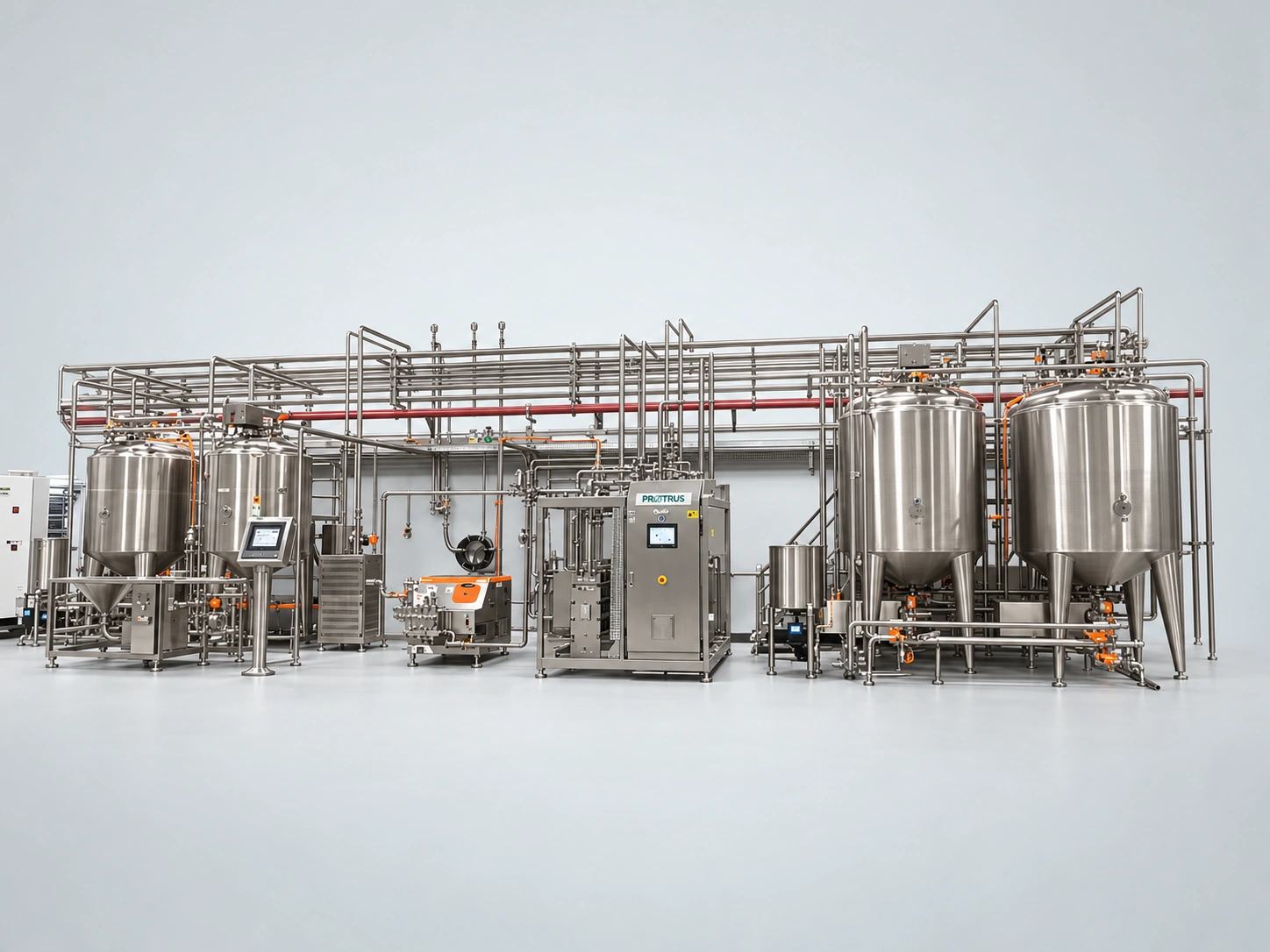
Complete mix processing system · mixing, homogenization, pasteurization and aging
Mix preparation
Powders dissolved, fat melted, every batch weighed
Pasteurization
Homogenized at 140–200 bar, held at 80–85 °C
Aging & flavoring
2–5 °C for 4–24 h, flavors dosed after aging
Utilities & CIP
Hot water, ice water, CIP and one PLC system
One Hygienic Line from Ingredient Intake to the Freezer
Every ice cream, gelato or sorbet starts as a liquid mix. Its quality is fixed long before freezing: how completely the powders dissolve, how fine the fat globules are, how well the mix is pasteurized and how long it rests at 2–5 °C (36–41 °F).
A Protrus ice cream mix production unit covers all of these steps, from ingredient intake and fat melting to homogenization, pasteurization, aging, flavoring and CIP, and delivers the mix to your continuous freezer or filling line.
- 1Liquid intakeMilk, cream, water, syrups; flowmeter or load cells
- 2Fat meltingButter, AMF, vegetable fat at 45–60 °C (113–140 °F)
- 3Powder dissolvingHigh-shear mixer or vacuum; SMP, sugar, stabilizers
- 4Batch mixing tanks50–65 °C (122–149 °F), weighed recipe, 15–30 min
- 5FiltrationDuplex strainer, 0.5–1 mm mesh
- 6PreheatingPlate HX, regeneration to 70–80 °C (158–176 °F)
- 7HomogenizationTwo-stage, 140–200 bar; 2nd stage 30–40 bar
- 8Pasteurization80–85 °C for 15–25 s, holding tube, flow diversion
- 9CoolingRegeneration + ice water to 2–5 °C (36–41 °F)
- Option: UHT route135–140 °C (275–284 °F), 2–6 s; aseptic long-life liquid mix
- 10Aging tanks2–5 °C (36–41 °F), 4–24 h, slow agitation
- 11Flavor tanksColors, flavors, purées added after aging
- 12Mix transferLobe or centrifugal pump to freezer or filler
- Fat crystallizes, proteins and stabilizers hydrate: smoother texture, better whipping and slower meltdown.
- Continuous freezerDraw −5 to −6 °C (21–23 °F), overrun 60–120 %
- InclusionsFruit, nuts, sauces; ingredient feeder
- Filling / extrusionCups, cones, tubs, sticks, bulk
- Hardening−35 to −40 °C air, core to −18 °C (0 °F)
- Cold store≤ −25 °C (−13 °F), dispatch
Hot water / steamHeating, sterilizing
Ice water / glycolCooling, aging jackets
CIP unitCaustic, acid, hot water
Compressed airValves, pneumatics
PLC / SCADARecipes, batch records
Process flow of an ice cream mix production unit. A: mix preparation, B: heat treatment, C: aging and flavoring, D: downstream freezing interface (dashed), E: utilities and CIP. Values are typical ranges; final settings depend on recipe, capacity and local regulations. Select a stage to see its equipment.
Typical Ice Cream Mix Compositions
Fat, milk solids-not-fat (MSNF), sugars and stabilizers set the body, sweetness and meltdown of the finished product. One mix unit can run all of these recipes; the batch tanks, homogenizing pressure and aging time are adjusted per mix.
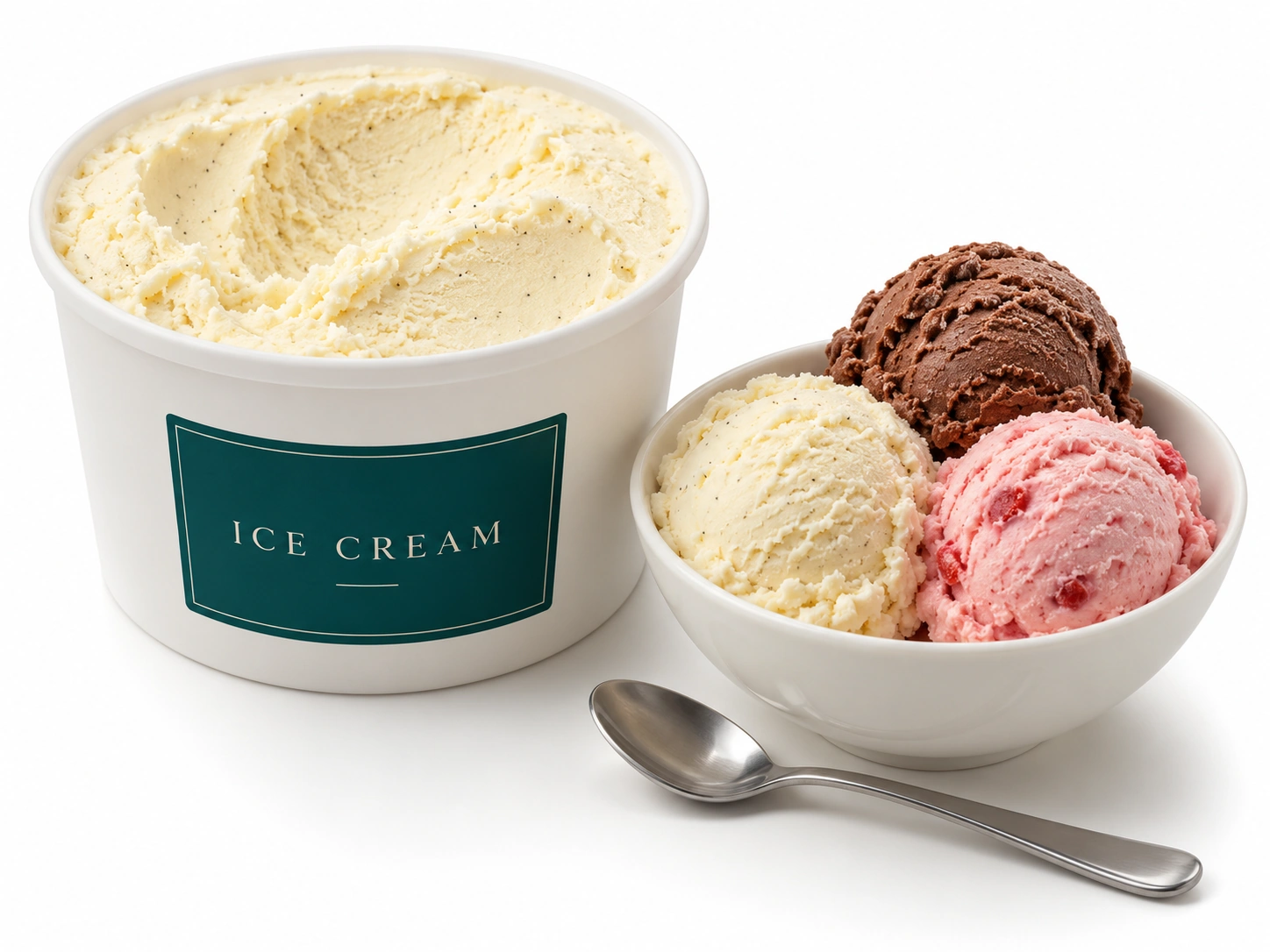
Premium Ice Cream
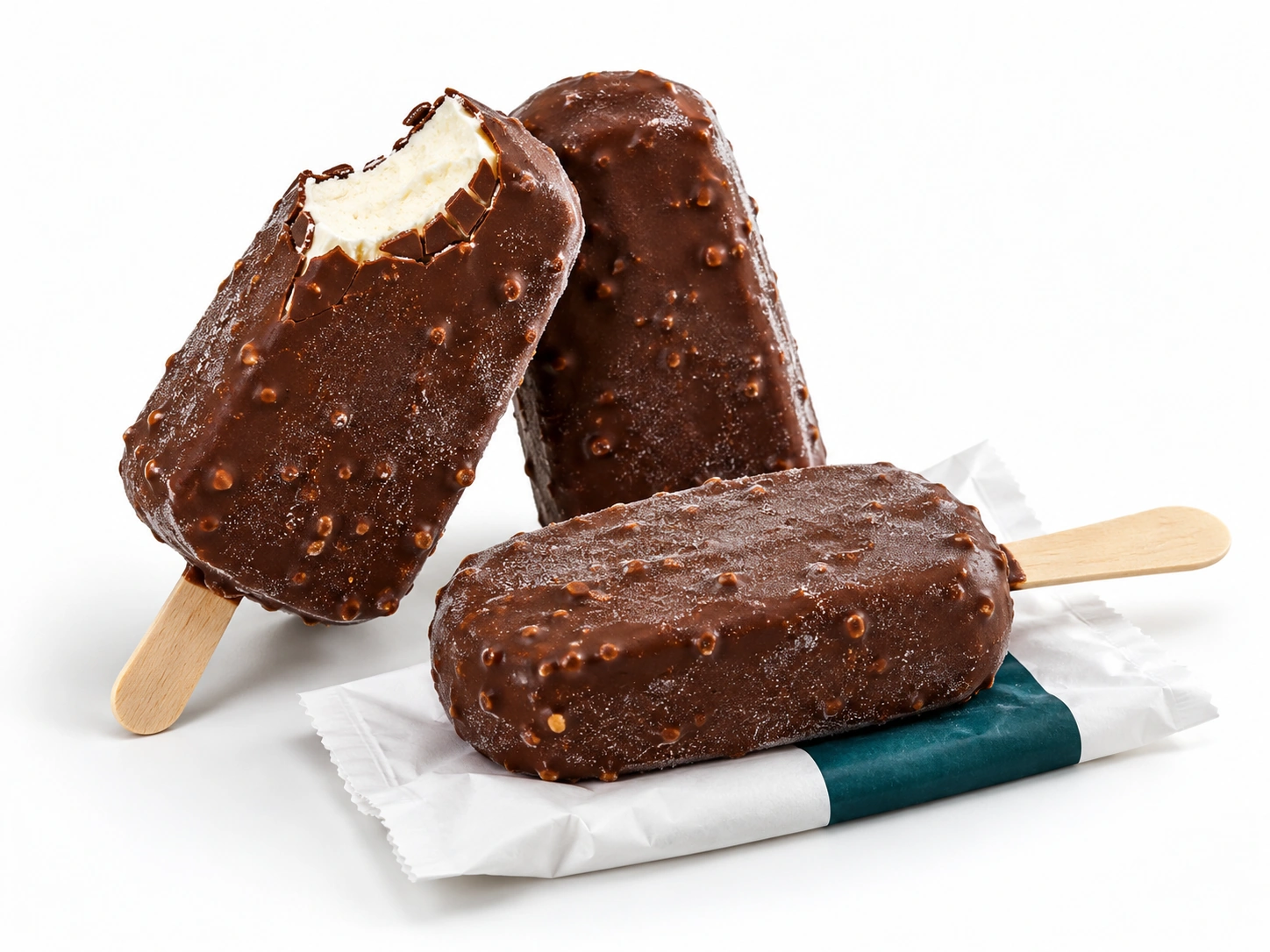
Stick Ice Cream
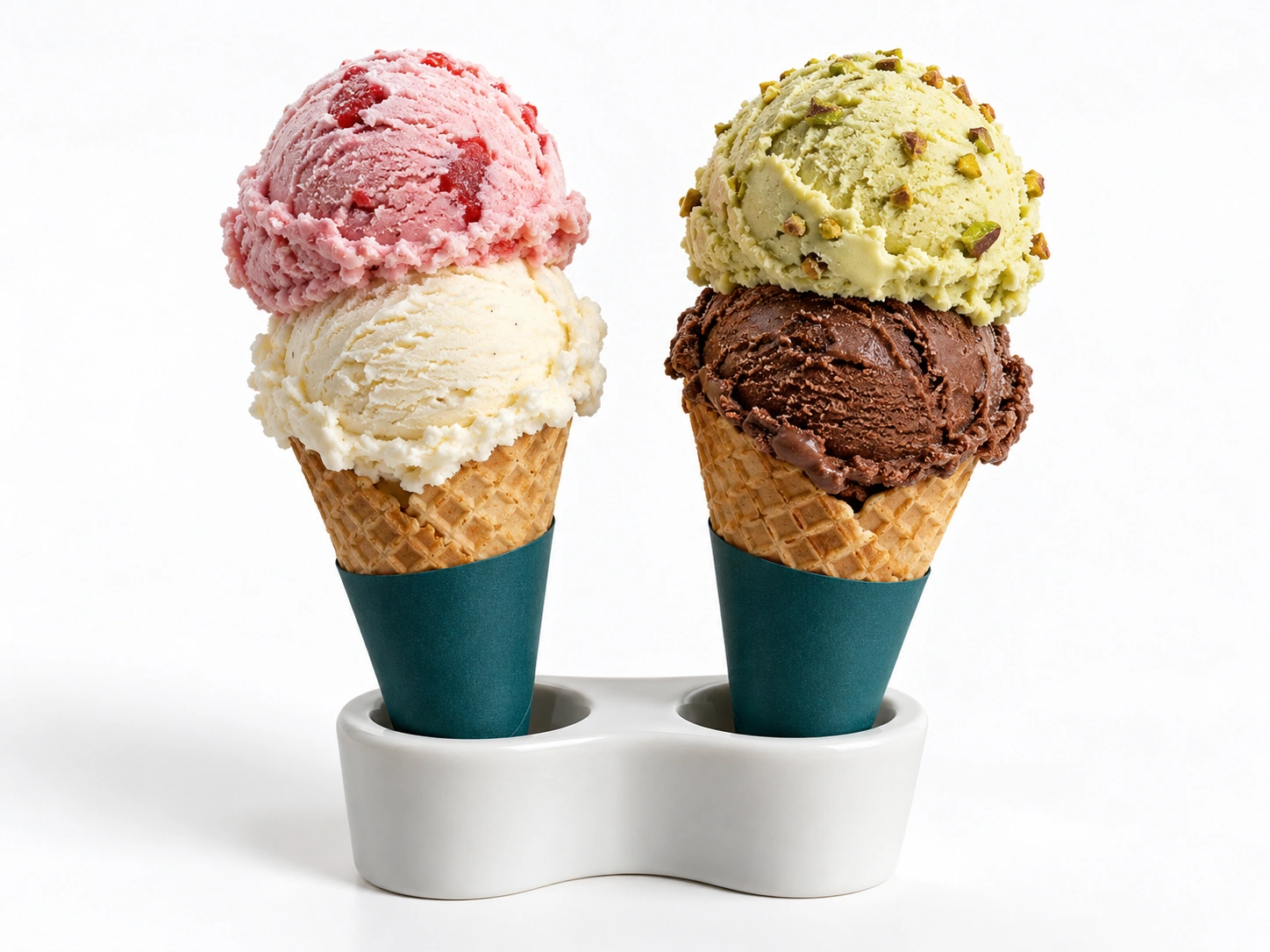
Ice Cream Cones
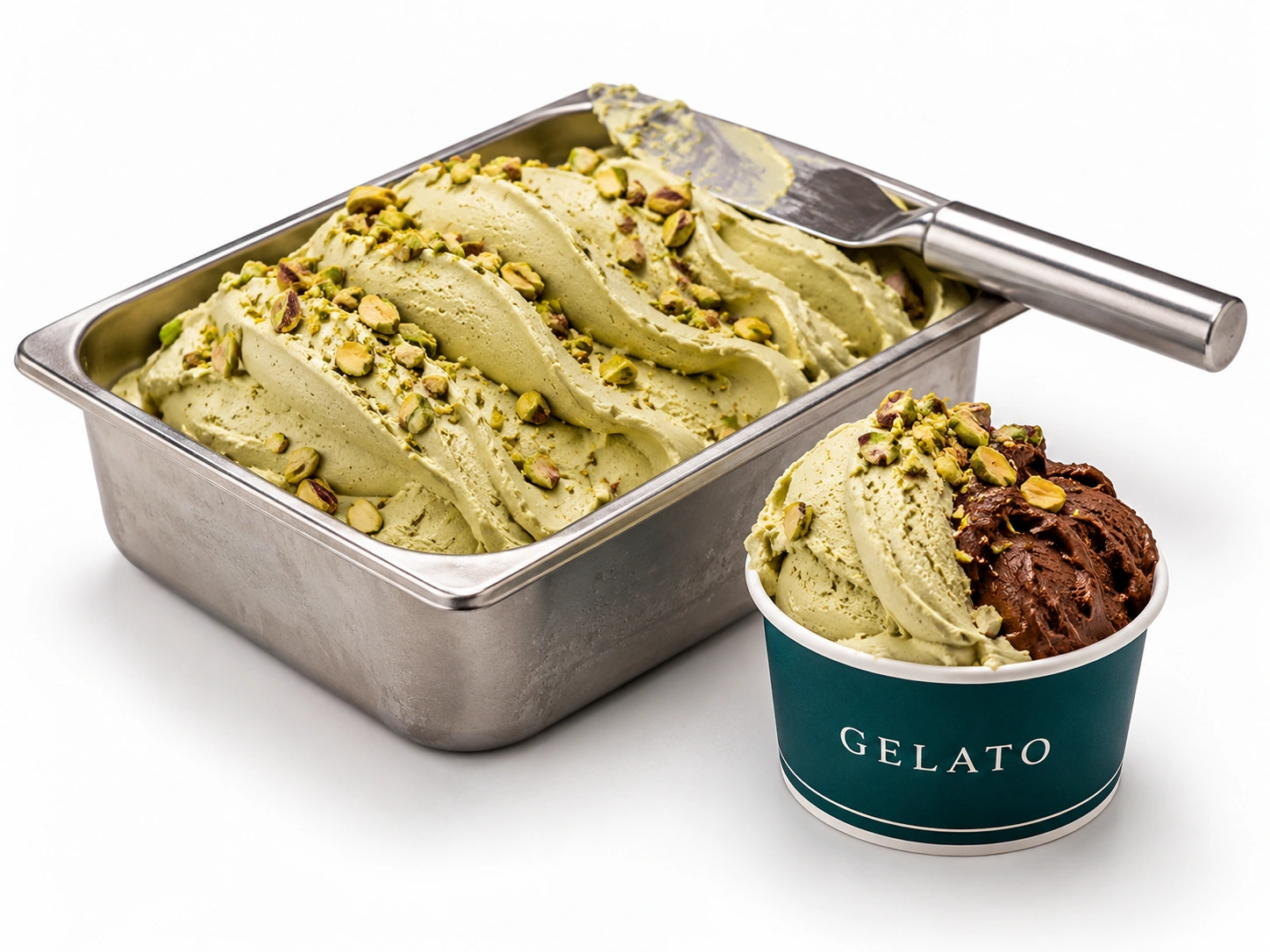
Gelato
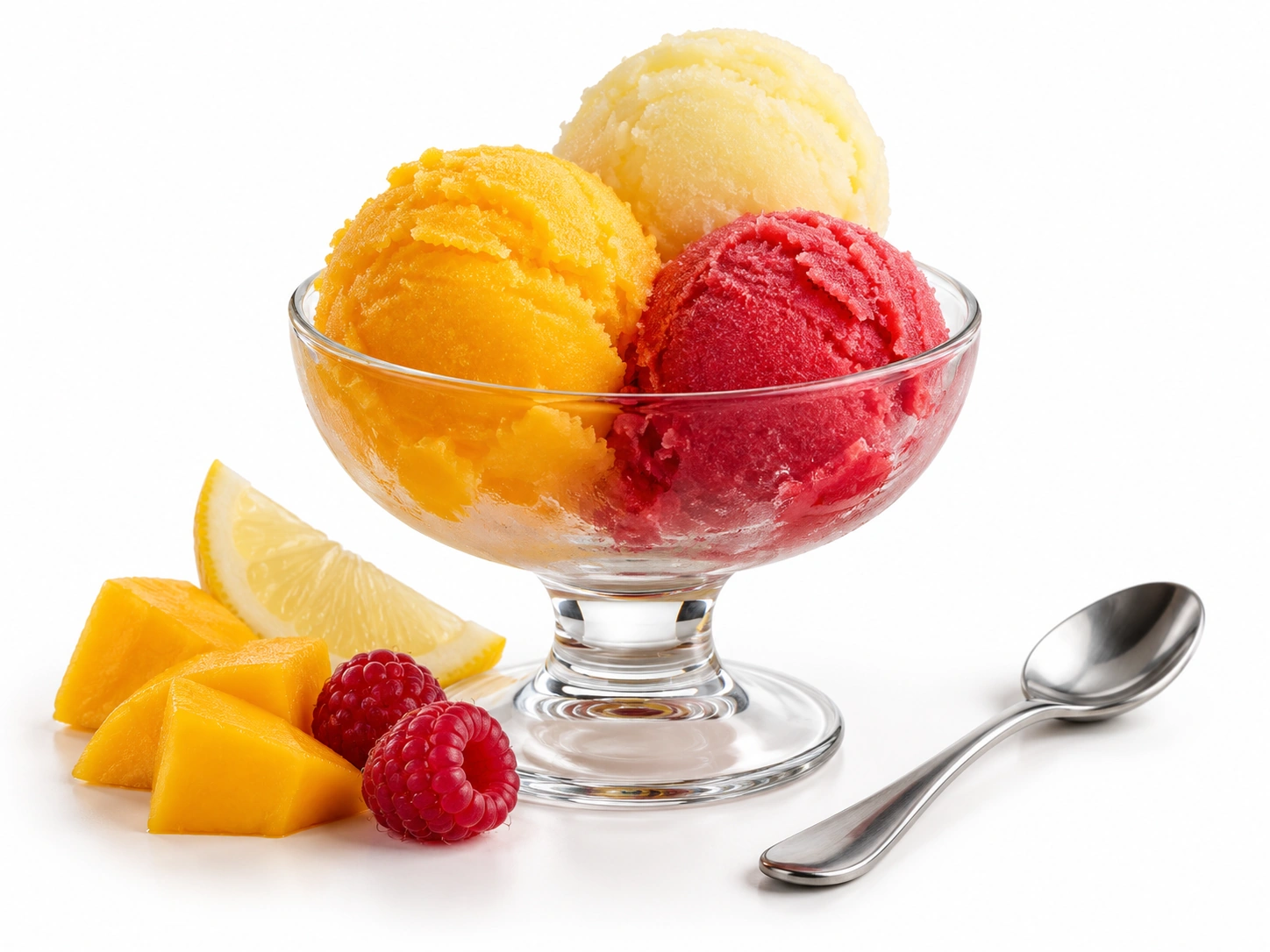
Sorbet
| Product | Fat % | MSNF % | Sugars % | Stab./emul. % | Total solids % |
|---|---|---|---|---|---|
| Premium ice cream | 12–16 | 9–10 | 14–17 | 0.2–0.4 | 38–42 |
| Standard ice cream | 8–10 | 10–11 | 13–15 | 0.3–0.5 | 34–37 |
| Frozen dessert (vegetable fat) | 5–8 | 7–10 | 13–16 | 0.4–0.6 | 30–34 |
| Gelato | 4–9 | 8–11 | 16–22 | 0.3–0.5 | 32–38 |
| Soft serve mix | 3–10 | 10–12 | 13–16 | 0.3–0.5 | 28–34 |
| Sorbet | 0 | 0 | 25–32 | 0.3–0.5 | 28–35 |
Planning the freezing and forming side as well? See our ice cream production line, the recombined milk production line for powder-based bases and our CIP plant systems.
300–10,000 L/h
mix capacity (80–2,640 US gal/h)
80–85 °C
HTST pasteurization (176–185 °F)
2–5 °C
aging temperature, 4–24 h (36–41 °F)
Why Protrus
Stage A · Mix preparation
Ice Cream Mix Preparation
Dissolve every gram of powder, melt the fat gently and weigh each batch to the recipe.
Mix preparation brings together liquids (milk, cream, water, liquid sugar), fats (butter, anhydrous milk fat or vegetable fat) and dry ingredients (milk powder, whey powder, sugar, stabilizers, emulsifiers, cocoa). The goal is a lump-free, air-free blend at 50–65 °C (122–149 °F) with exactly the right composition, batch after batch.
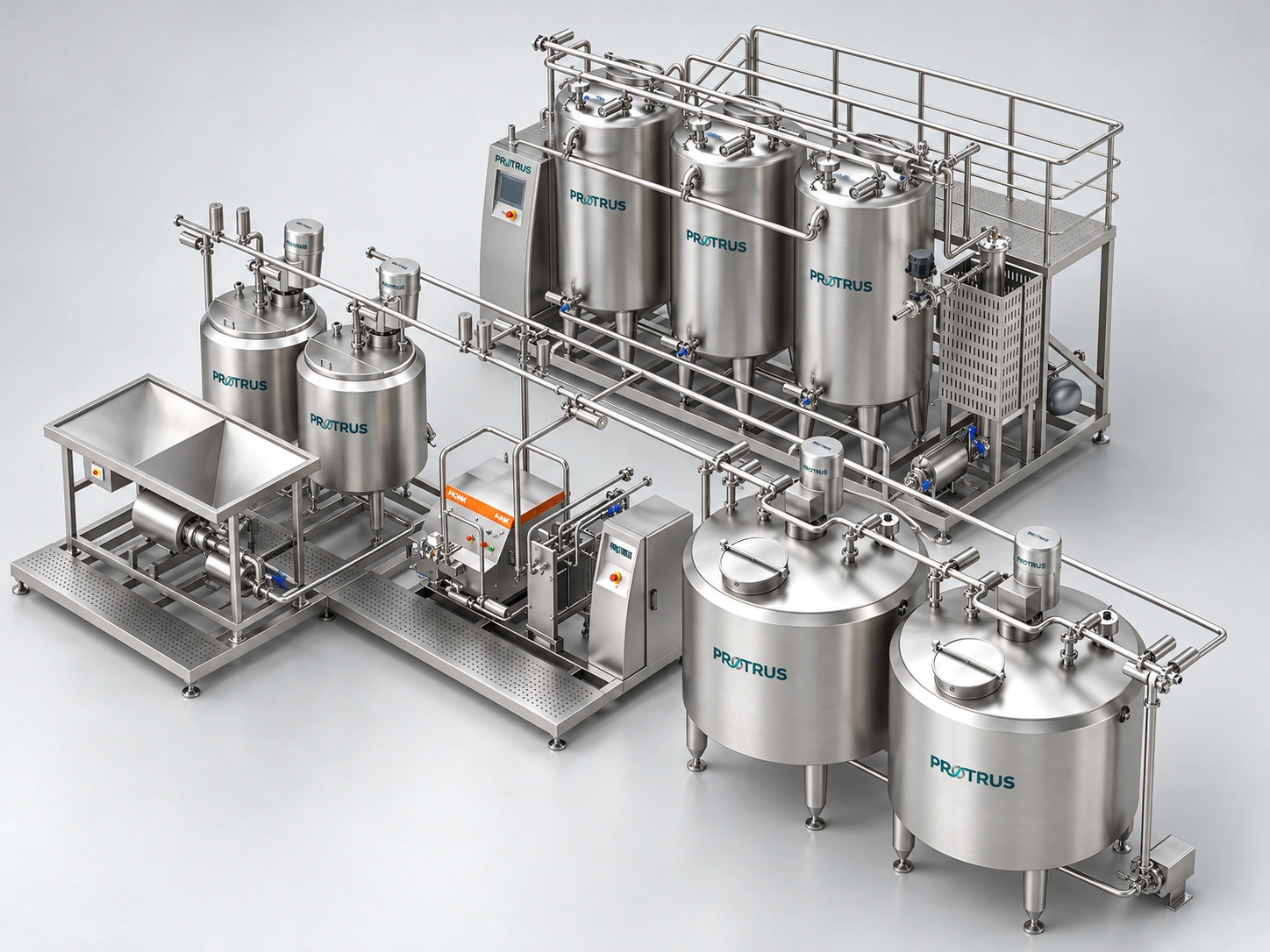
Powder hopper with high-shear mixer, batch tanks, pasteurizer and aging tanks.
Stick Ice Cream
Ice Cream Cones
45–60 °C
fat melting (113–140 °F)
50–65 °C
batch temperature (122–149 °F)
± 0.5 %
typical batch weighing accuracy
Mix Preparation Steps
| Step | Operation | Typical conditions |
|---|---|---|
| 1 | Liquid intake | Milk, cream, water and liquid sugar dosed by mass flowmeter or tank load cells |
| 2 | Heating of the liquid base | To 40–50 °C (104–122 °F) before powders are added |
| 3 | Fat melting | Butter or vegetable fat melted at 45–60 °C (113–140 °F) and pumped to the batch tank |
| 4 | Powder dissolving | High-shear mixer or vacuum mixer; stabilizers pre-blended with sugar (1:5–1:10) |
| 5 | Batch mixing | 15–30 min at 50–65 °C (122–149 °F) with agitator; sample for total solids |
| 6 | Filtration | Duplex strainer, 0.5–1 mm mesh, before the pasteurizer balance tank |
Mix Preparation Highlights
Key Machines for Mix Preparation

Powder hopper and high-shear mixer

High-pressure homogenizer
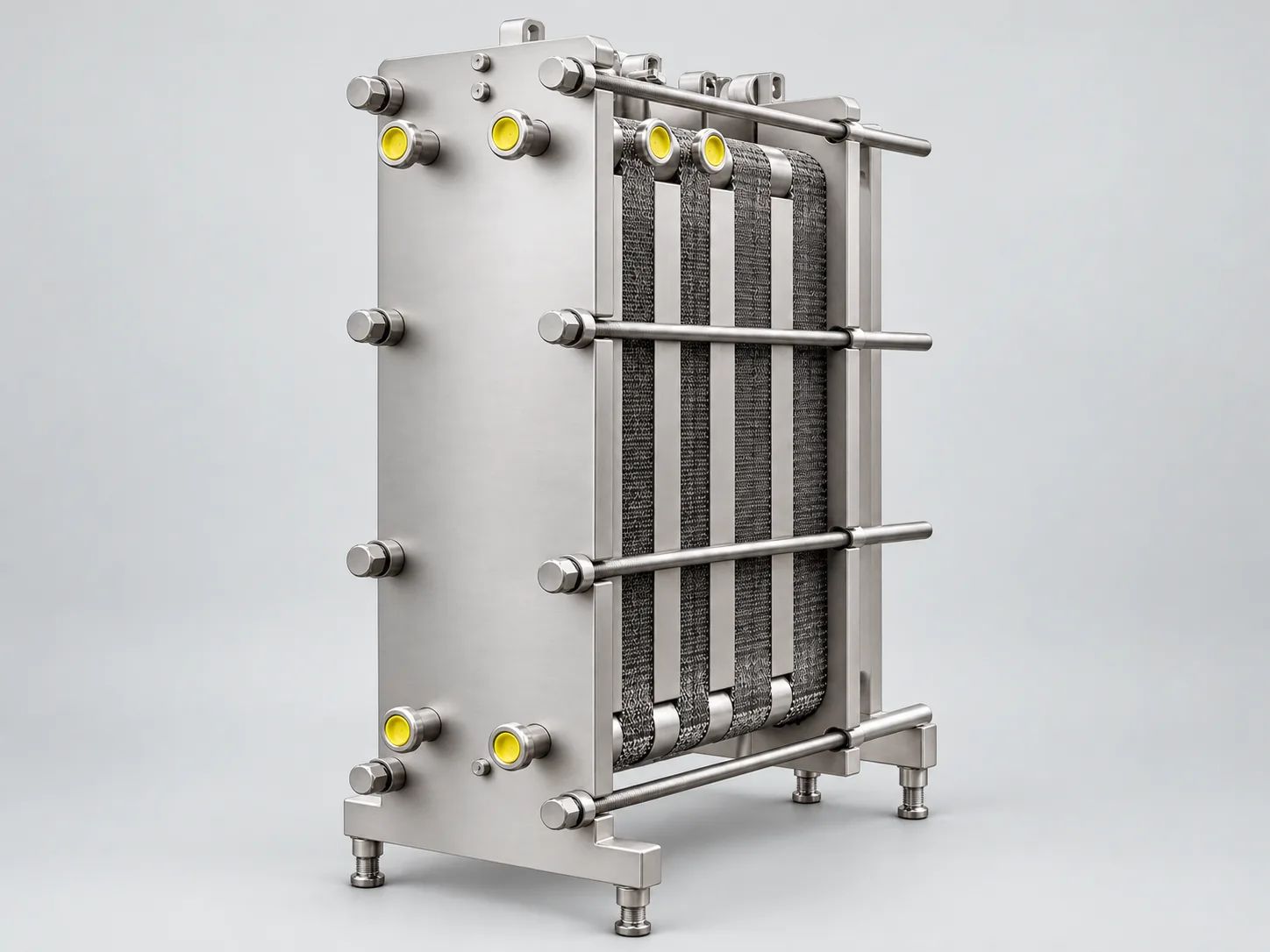
Plate heat exchanger
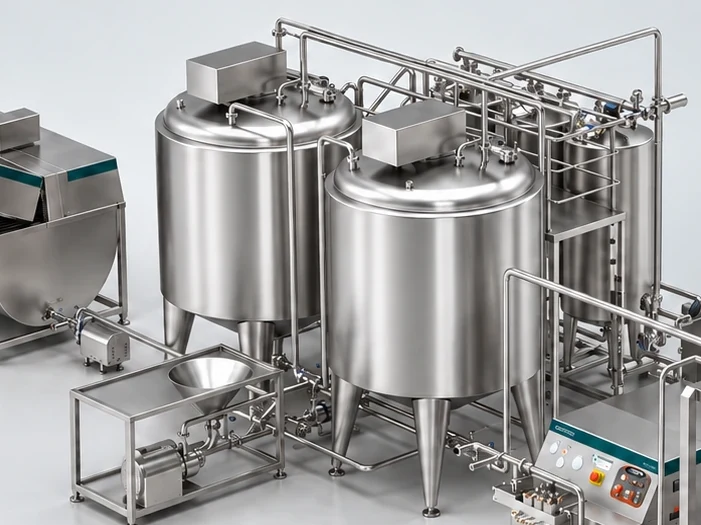
Batch mixing tanks
Stage B · Heat treatment and homogenization
Ice Cream Mix Pasteurization and Homogenization
Safe, smooth and stable: the heart of the mix unit in one compact skid.
The mix leaves the batch tank, is preheated by regeneration and homogenized at 70–80 °C (158–176 °F). It is then held at 80–85 °C (176–185 °F) for 15–25 seconds, cooled back by the incoming mix and finished with ice water to 2–5 °C (36–41 °F). Homogenization makes fat globules small and uniform; heat treatment makes the mix safe and helps the proteins and stabilizers do their work.
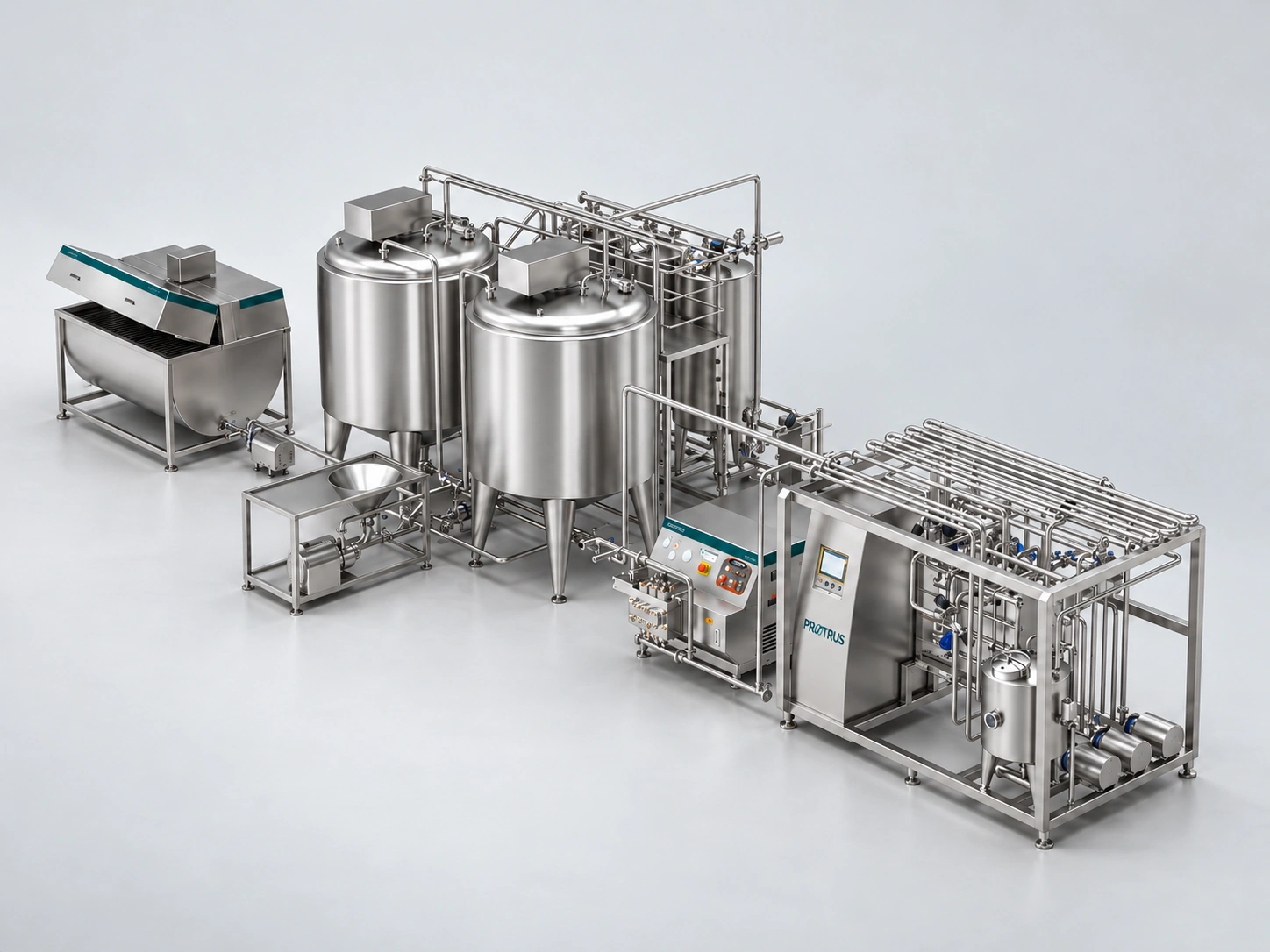
Compact mix unit: fat melter, powder funnel, batch tanks, homogenizer and HTST pasteurizer.
Premium Ice Cream
140–200 bar
1st stage (2,000–2,900 psi)
30–40 bar
2nd stage (435–580 psi)
75–90 %
heat recovery in the plate pasteurizer
Heat Treatment Options
| Method | Conditions | Best for | Notes |
|---|---|---|---|
| Batch (vat) | 69 °C (155 °F), 30 min | Small and artisanal plants | Simple; long cycle, more energy |
| HTST | 80 °C (175 °F) 25 s or 83 °C (180 °F) 15 s | Most industrial mix units | Plate HX, holding tube, flow diversion valve |
| HHST | 90–100 °C (194–212 °F), 1–5 s | Higher protein or long cold storage | Firmer body, slight cooked note |
| UHT | 135–140 °C (275–284 °F), 2–6 s | Aseptic soft serve and liquid mix | Months of shelf life at ambient or chilled |
Pasteurization and Homogenization Highlights
Key Machines for Pasteurization and Homogenization

Plate pasteurizer (HTST)
Two-stage homogenizer

Butter and fat melting tank
Complete mix processing system
Stage C · Aging and flavoring
Ice Cream Aging Tanks and Flavor Tanks
Time and cold turn a hot, fresh mix into a mature base that whips well and melts slowly.
During aging the fat crystallizes, emulsifiers move to the fat globule surface and stabilizers and proteins take up water. The mix becomes slightly more viscous and ready to hold air in the freezer. Aging tanks keep the mix at 2–5 °C (36–41 °F) for at least 4 hours, often overnight, with gentle agitation. Flavors, colors and fruit purées are then added in smaller flavor tanks just before freezing.
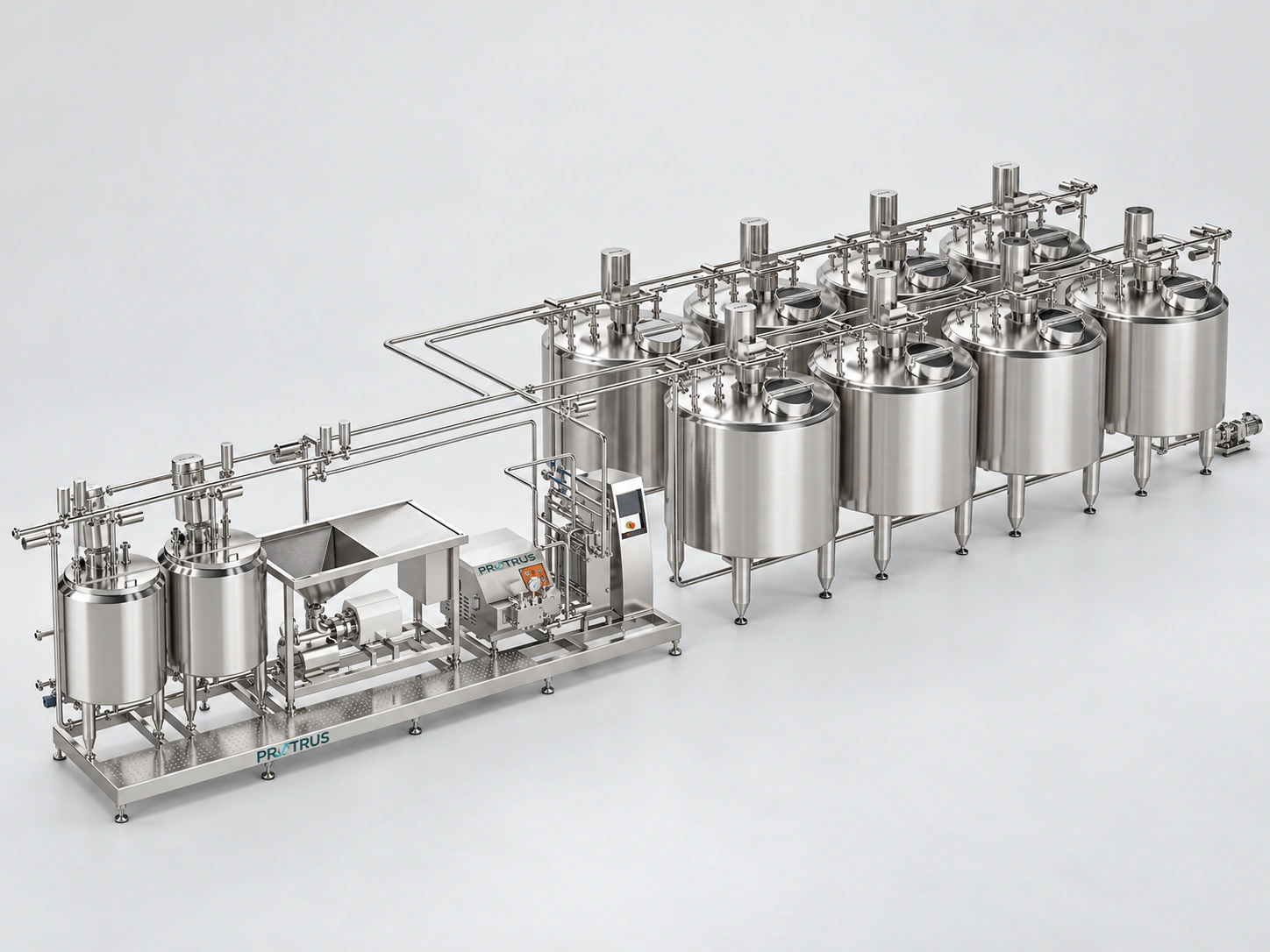
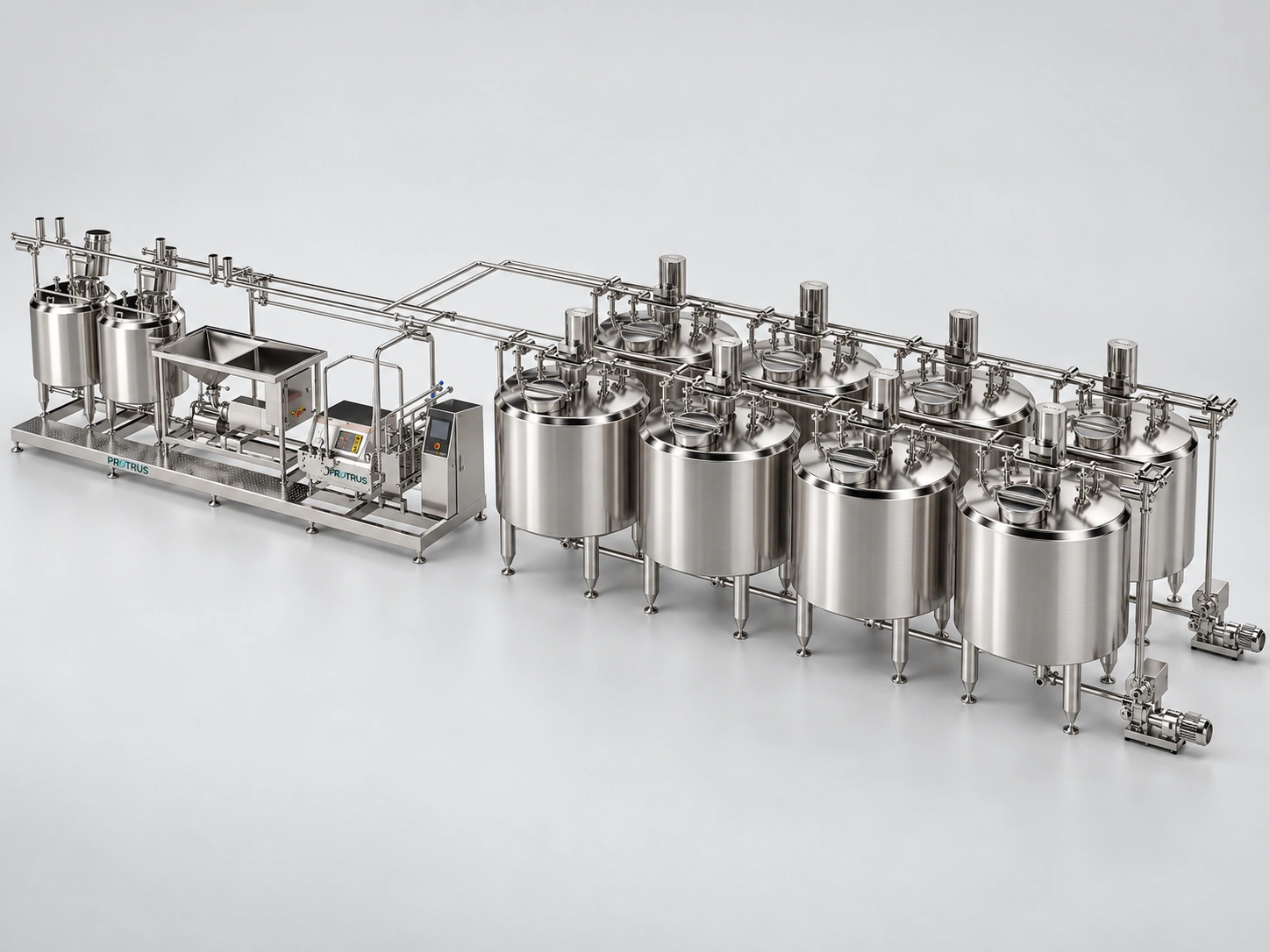
Mix skid with powder hopper and pasteurizer feeding a battery of eight aging tanks.
Gelato

Soft Serve Mix
≥ 4 h
minimum aging time
500–20,000 L
tank volume (130–5,300 US gal)
Ra ≤ 0.8 µm
product contact surface finish
Aging Tank Design Data
| Parameter | Typical value |
|---|---|
| Volume | 500–20,000 L (130–5,300 US gal), one tank per batch or per shift |
| Temperature | 2–5 °C (36–41 °F), held by ice water (1 °C) or glycol in a dimple or channel jacket |
| Insulation | 50–100 mm (2–4 in) mineral wool or PU foam with welded stainless cladding |
| Agitation | Slow anchor or propeller agitator, 20–60 rpm with frequency drive, no air intake |
| Instruments | PT100, level by load cells or pressure transmitter, low-level switch for pump protection |
| Hygiene | AISI 316L product contact, CIP spray balls, sloped bottom, sanitary outlet valve |
Aging and Flavor Tank Highlights
Key Machines for Aging and Flavoring

Aging tank battery
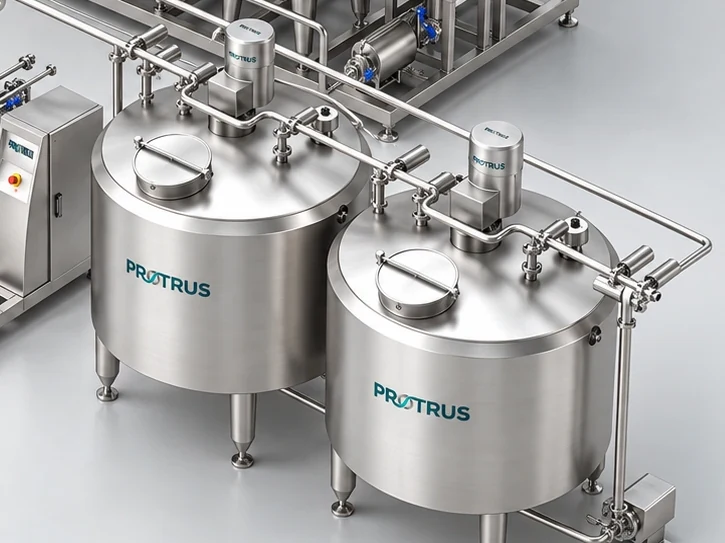
Insulated aging tanks
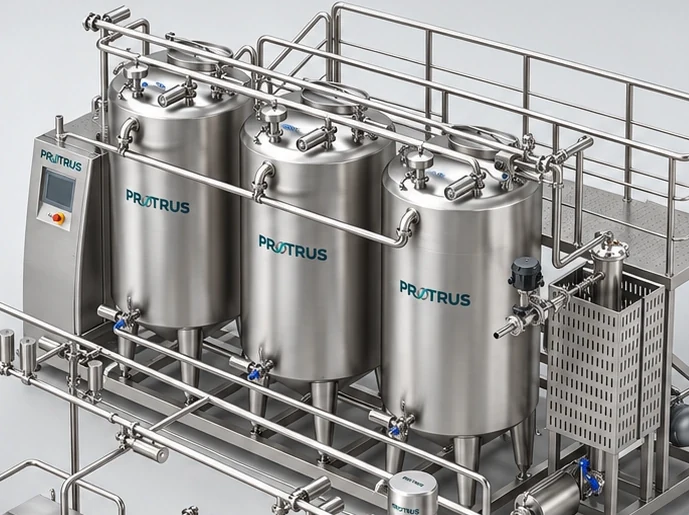
Automatic CIP unit
Mix transfer to freezers
Stage E · Utilities, CIP and automation
Ice Cream Mix Plant Design, Utilities and CIP
A complete plant is more than its machines: layout, utilities, cleaning and control decide daily performance.
Protrus designs the mix room around the product mix and the shift pattern. We size batch tanks, pasteurizer, homogenizer and aging volume from your recipes, then add hot water or steam, ice water or glycol, compressed air, CIP and one PLC/SCADA system. Units are pre-assembled and tested on skids, so installation and commissioning on site are short.
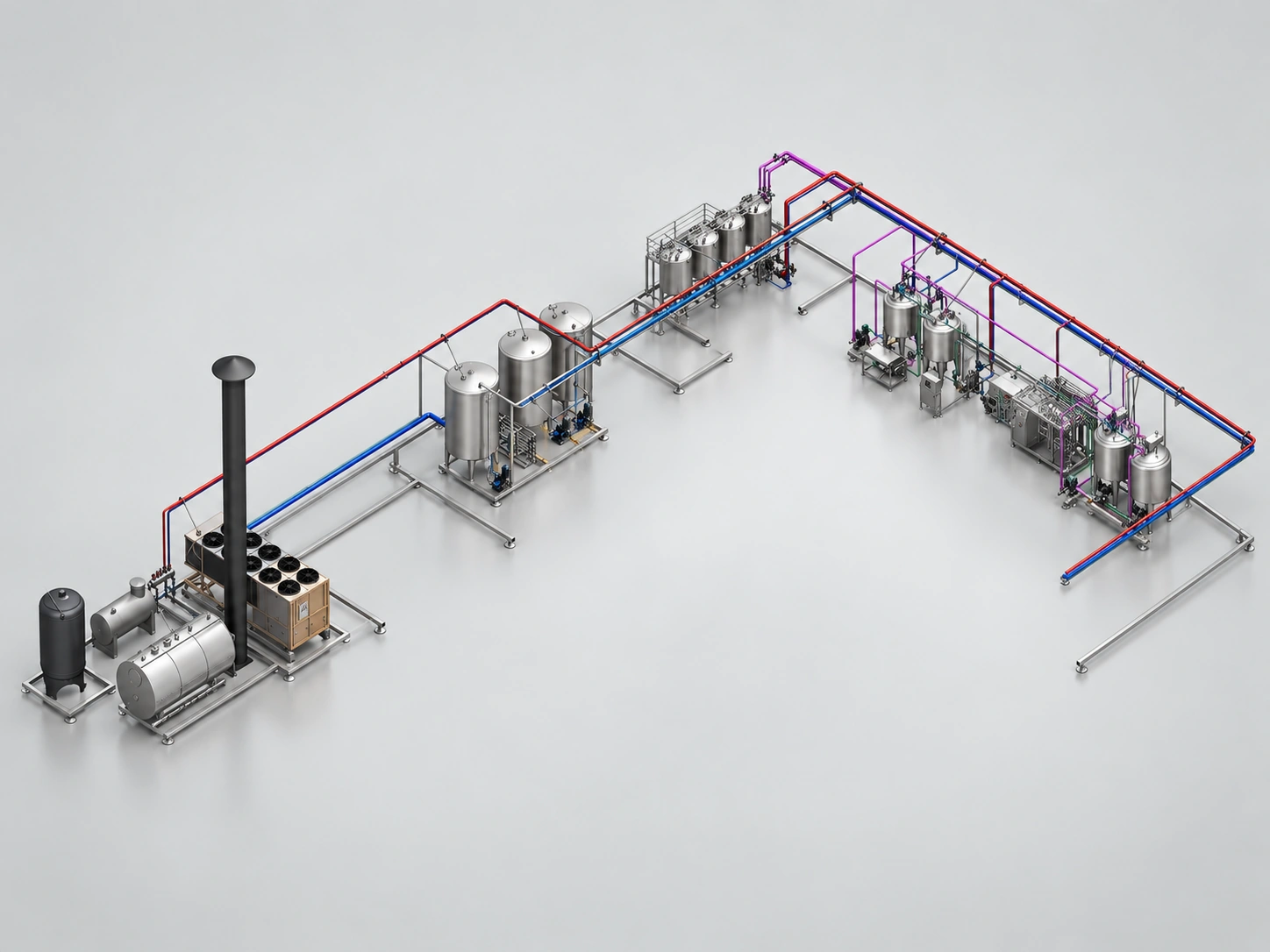
3D plant layout: boiler and hot water, ice water chiller, mix unit, aging tanks and pipe bridges.
Sorbet
25–35 %
fruit purée or juice in the sorbet mix
Flavor tank
fruit aroma and purée dosed into the aged mix
20–40 %
overrun, lower than dairy ice cream
Typical Unit Sizes
| Unit size | Mix capacity | Batch tanks | Aging tanks | Typical use |
|---|---|---|---|---|
| Compact | 300–1,000 L/h | 2 × 500–1,000 L | 2–4 × 1,000–3,000 L | Artisanal, gelato, soft serve mix |
| Medium | 1,000–3,000 L/h | 2 × 1,500–3,000 L | 4–8 × 3,000–8,000 L | Regional ice cream brands |
| Industrial | 3,000–10,000 L/h | 2–3 × 5,000–10,000 L | 8–16 × 10,000–20,000 L | Multi-freezer factories |
| Liquid mix (UHT) | 1,000–5,000 L/h | 2 × 2,000–5,000 L | Aseptic tank | Soft serve and shake mix |
Plant Design Highlights
Key Machines for Utilities and CIP
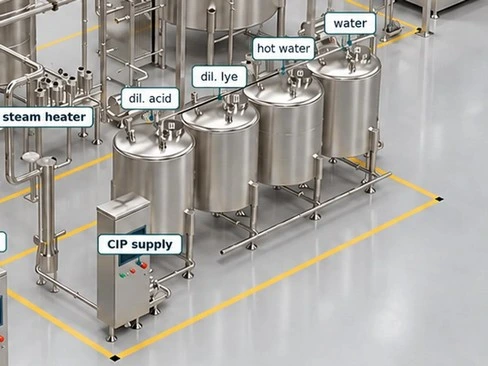
CIP unit
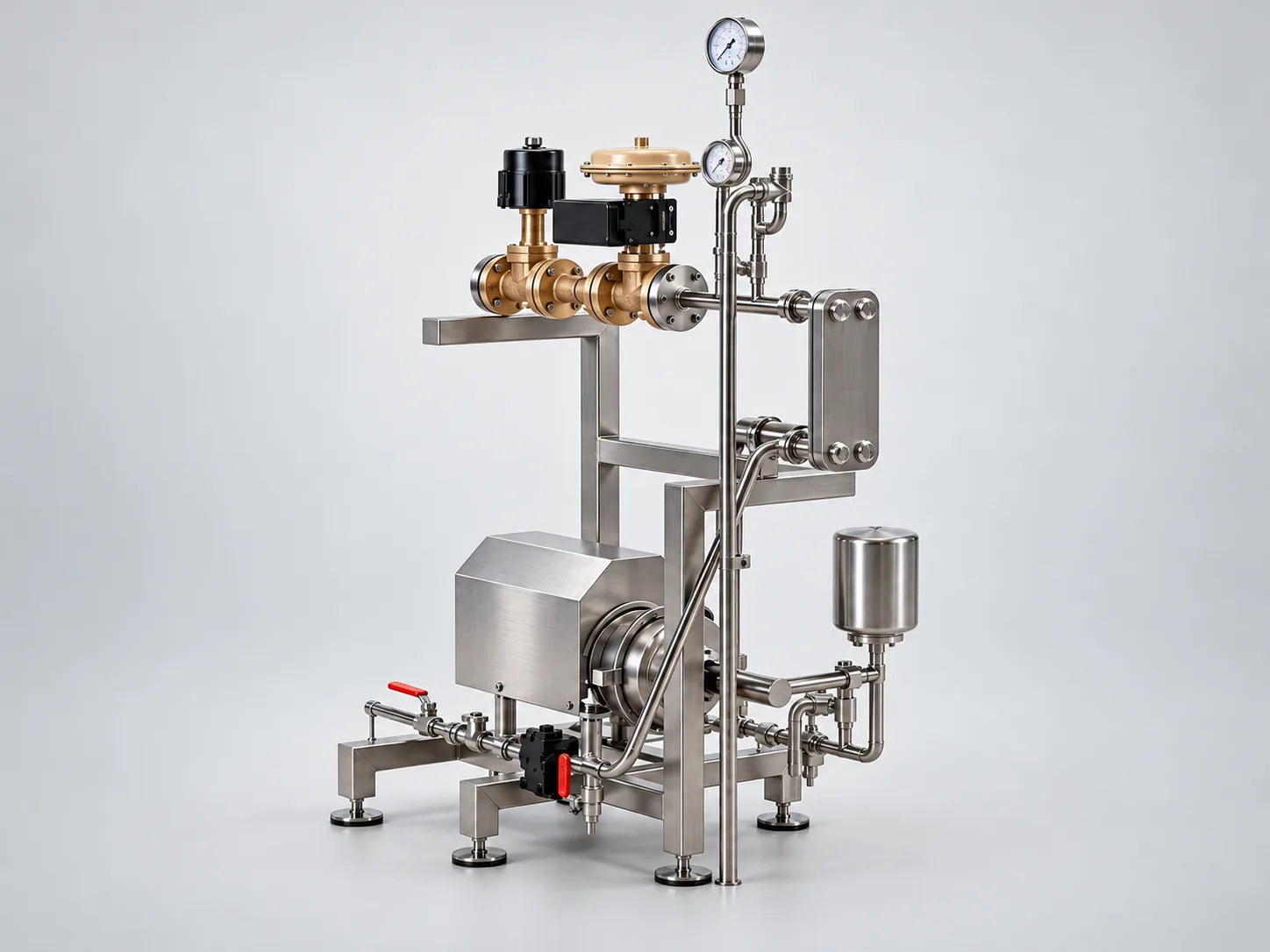
Hot water skid
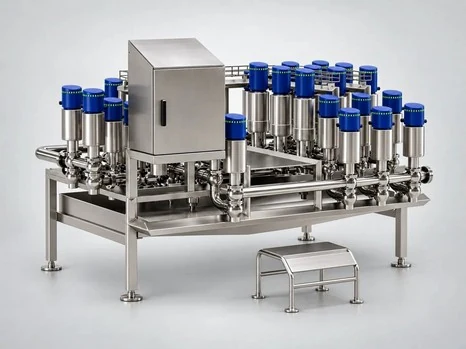
Valve manifold
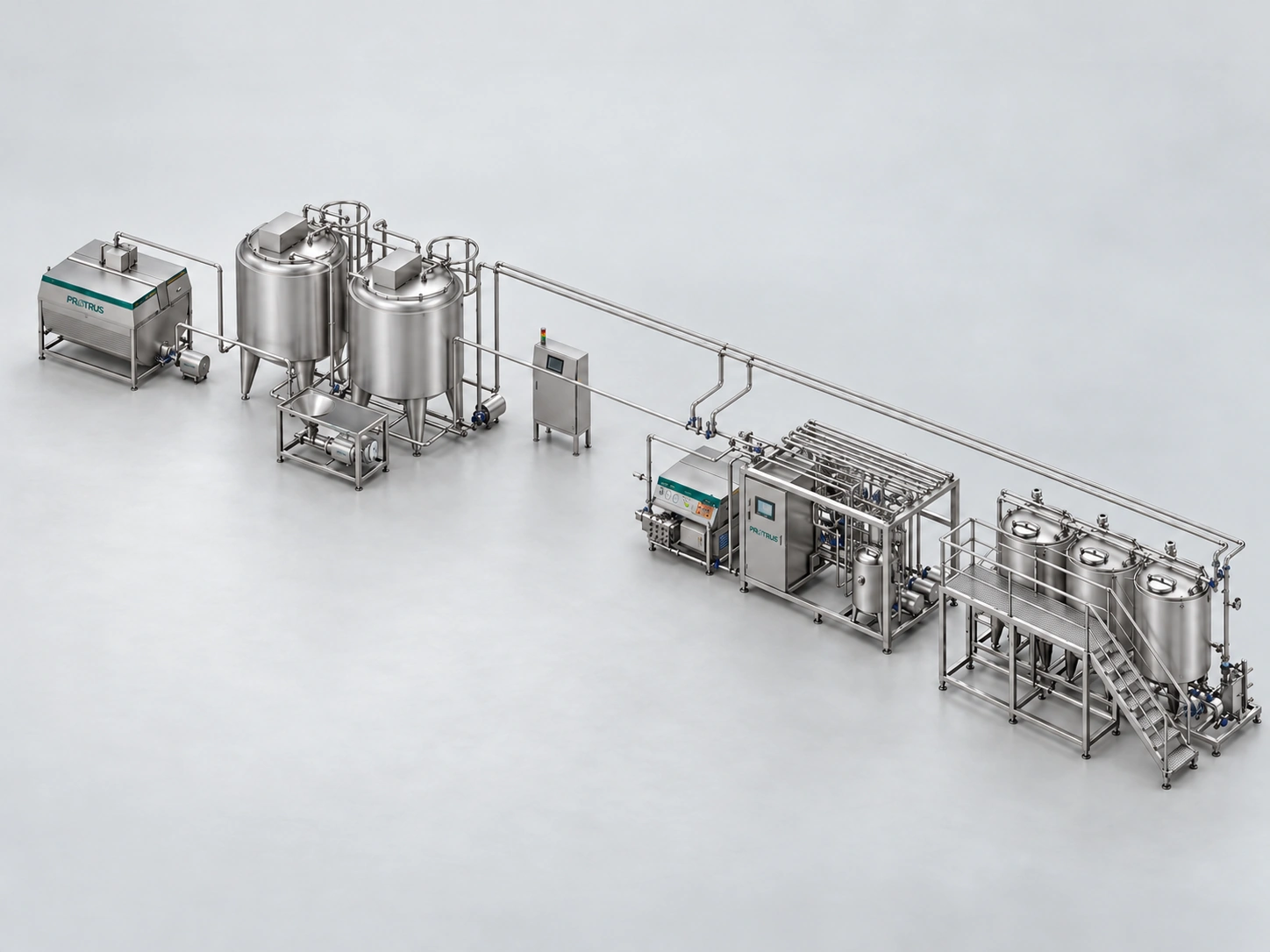
Complete mix line with CIP unit
Frequently Asked Questions About Ice Cream Mix Production
Have a question about your recipe or capacity? Ask our process engineers.
Get a Quote
Planning an Ice Cream Mix Plant?
Send us your recipes, target capacity and product range. Our process engineers will size the mixing, heat treatment, aging and CIP equipment and return a layout, a utility list and a budget offer.
Prefer email? info@protrus.com