

Dairy Processing · Membrane Filtration
Membrane Filtration Systems for Dairy
Separate milk and whey by size, not by heat: concentrate protein, remove bacteria, demineralize and recover water in one hygienic skid. Protrus designs and builds microfiltration, ultrafiltration, nanofiltration and reverse osmosis plants for milk, whey and fermented dairy.
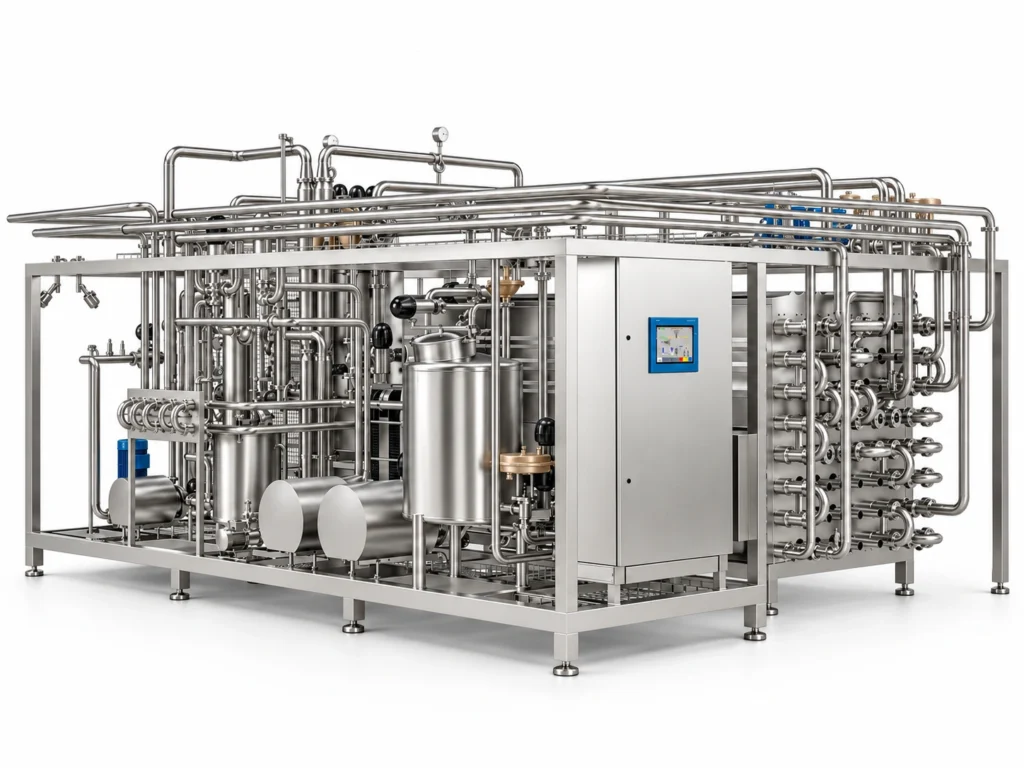
Membrane filtration skid · MF, UF, NF and RO on one engineering platform
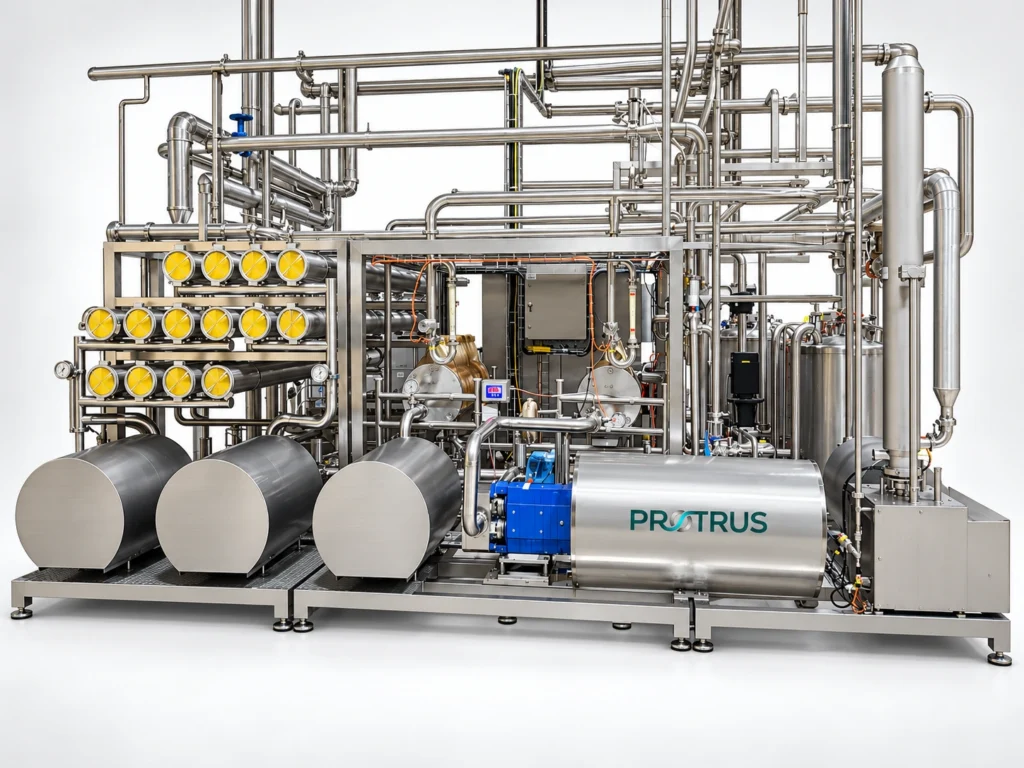
Protrus membrane filtration skid: membrane housings, circulation pumps, balance tank and integrated controls.
Separate Milk and Whey by Size, Not by Heat
A membrane is a precise sieve. Milk or whey is pumped along its surface under pressure; everything smaller than the pores passes through as permeate, everything larger is held back as retentate. By choosing the pore size you decide which milk components stay together.
Protrus designs and builds four membrane families for the dairy industry: microfiltration (MF), ultrafiltration (UF), nanofiltration (NF) and reverse osmosis (RO). They run at low temperature, use no chemicals in the product and have no moving parts in the membrane section.
4 technologies
MF, UF, NF and RO on one engineering platform
0.0001–1.4 µm
separation range, from salts to bacteria
1,000–30,000 L/h
typical plant capacity (265–7,900 US gal/h)
10 °C or 50 °C
cold or warm operation (50 °F or 122 °F)
Dairy Membrane Process Routes
Each membrane splits a stream in two, and both halves have value. The routes below show which membrane is used for which product, what it keeps in the retentate and what it sends to the permeate. In a complete dairy, the permeate of one step is often the feed of the next: UF permeate goes to NF, NF permeate to RO, and RO permeate back to the plant as water.
Skim milk
MF 1.4 µmRetentateBacteria and spore concentrateto sterilization and back to cream
PermeateESL milk, bacteria-reduced cheese milk99.5–99.99 % bacteria removal
Skim milk
MF 0.1 µmRetentateMicellar casein concentrate (MCC)cheese milk, casein drinks
PermeateNative whey (serum proteins)infant formula, sports drinks
Skim milk
UF + DFRetentateMPC 42–85, MPI, high-protein milkprotein drinks, cheese, yogurt
PermeateMilk permeatelactose, permeate powder
Cultured milk
UF (P&F)RetentateStrained yogurt, skyr, quark, labneh18–40 % total solids
PermeateAcid whey (protein-free)to NF or biogas
Sweet whey
UF + DFRetentateWPC 35–80, WPI (with MF)nutrition, bakery, meat
PermeateWhey permeateto NF, RO or drying
Whey, permeate
NFRetentateDemineralized whey D40, lactoseinfant formula, confectionery
PermeateMonovalent salts, waterNa, K, Cl, lactic acid
Milk, whey
RORetentateConcentrate 18–25 % TSless transport, less evaporator
PermeateWater; RO polisher for condensatereuse for CIP and boiler feed
Dairy membrane process routes. DF: diafiltration; P&F: plate-and-frame; TS: total solids. Select a membrane to see its system.
The Four Membrane Technologies at a Glance
Pore size and pressure decide what each membrane keeps and what it lets through, and so which dairy products it makes. Select a product to see the membrane system behind it.
| Technology | Pore size / cut-off | Pressure | Main dairy duties |
|---|---|---|---|
| Microfiltration (MF) | 0.1–1.4 µm | 0.5–3 bar (7–45 psi) | ESL milk, bacteria and spore removal, micellar casein, whey defatting |
| Ultrafiltration (UF) | 1–100 kDa | 1–10 bar (15–145 psi) | WPC, MPC, protein standardization, strained yogurt, quark, cheese milk |
| Nanofiltration (NF) | 150–300 Da | 10–40 bar (145–580 psi) | Whey demineralization, permeate concentration, lactose reduction |
| Reverse osmosis (RO) | dense, no pores | 20–60 bar (290–870 psi) | Concentration of milk and whey, water recovery (RO polisher) |
Cross-Flow Principle and What Each Membrane Retains

| Membrane | Bacteria, spores0.2–2 µm | Fat globules0.1–15 µm | Casein micelles20–300 nm | Whey proteins3–6 nm | Lactose~1 nm | Ca, Mg salts< 1 nm | Na, K, Cl salts< 1 nm | Water0.3 nm |
|---|---|---|---|---|---|---|---|---|
| MFMicrofiltration0.1–1.4 µm · 0.5–3 bar | R | R | P | P | P | P | P | P |
| UFUltrafiltration1–100 kDa · 1–10 bar | R | R | R | R | P | P | P | |
| NFNanofiltration150–300 Da · 10–40 bar | R | R | R | R | R | R | P | |
| ROReverse osmosisdense · 20–60 bar | R | R | R | R | R | R | R | P |
Cross-flow principle and the milk components each membrane type retains. Pressures in bar: 1 bar = 14.5 psi. 0.1 µm MF also retains casein micelles (micellar casein). Typical values; actual retention depends on the membrane.
Membrane Platform Highlights
Planning a complete dairy plant? See our process technology for dairy, the filtered and combi cheese production line and the yogurt and kefir production line.
UF · Protein concentration
Ultrafiltration (UF) Systems
Concentrate and standardize milk protein without heat, additives or product loss.
Ultrafiltration holds back proteins and fat while water, lactose and soluble minerals pass through. Milk, cultured milk or whey is pumped across the membrane at 1–10 bar (15–145 psi); the protein-rich retentate becomes WPC, MPC, strained yogurt, quark or protein-standardized cheese milk, and the clear permeate carries about 0.02 % protein and practically no fat. Adding water during filtration (diafiltration) washes out more lactose and minerals and lifts protein in dry matter up to 80–90 %.
Plate-and-frame UF unit with feed and circulation pumps, balance tanks and control panel.
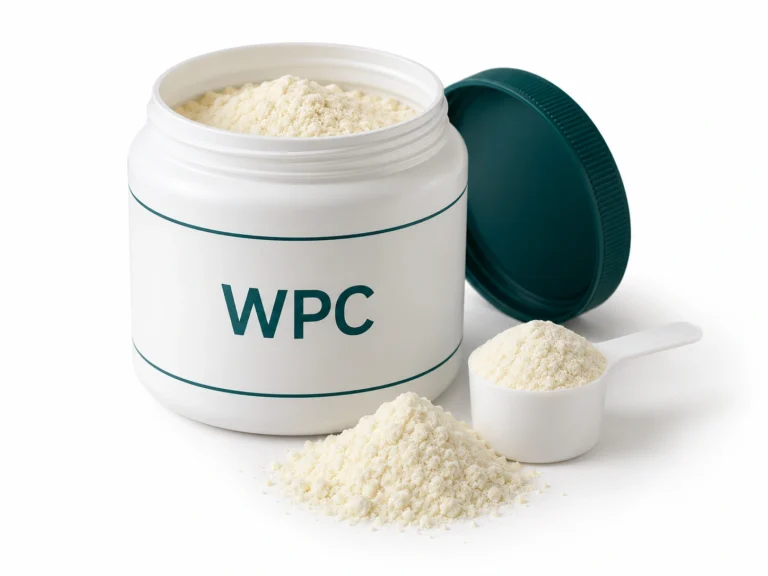
Whey protein concentrate (WPC)
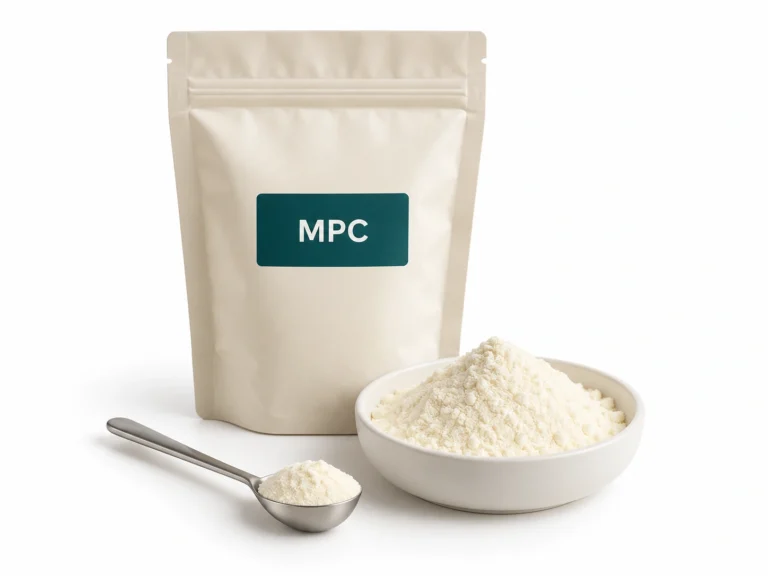
Milk protein concentrate (MPC)
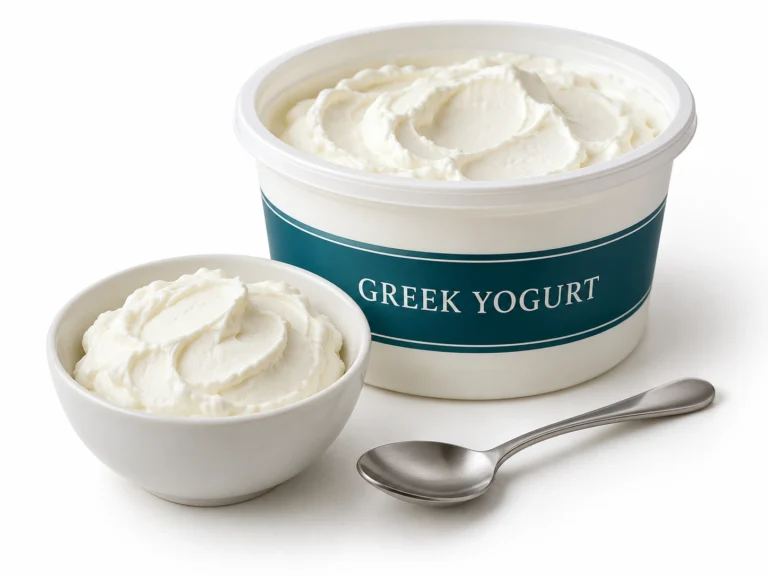
Strained Greek-style yogurt
1–100 kDa
molecular weight cut-off
≈ 0.02 %
protein in UF permeate
1,000–30,000
L/h typical capacity (265–7,900 US gal/h)
Spiral-Wound or Plate-and-Frame UF?
| Criterion | Spiral-wound (SW) UF | Plate-and-frame (P&F) UF |
|---|---|---|
| Best for | Low to medium viscosity: milk, whey, MPC, WPC, cheese milk | High viscosity: strained yogurt, quark, labneh, cream cheese |
| Dense concentrates | Risk of clogging rises with solids | Open channels, low clogging risk |
| Energy per liter of permeate | Low, rising with viscosity | Low to medium |
| Several products on one line | Limited | Yes |
| CIP at pH 12–13 and 65–70 °C (149–158 °F) | Limited, special chemicals | Yes |
| Elements | 3.8–8 in diameter, 38–40 in long; 20–130 mil spacers | Modular plate stacks; single plates can be isolated |
| Typical capacity | MPC, WPC 5,000–30,000 L/h; feta milk 5,000–15,000 L/h | Strained yogurt, quark 1,000–30,000 L/h; labneh 1,000–3,000 L/h |
UF Line Highlights
Key UF Machines
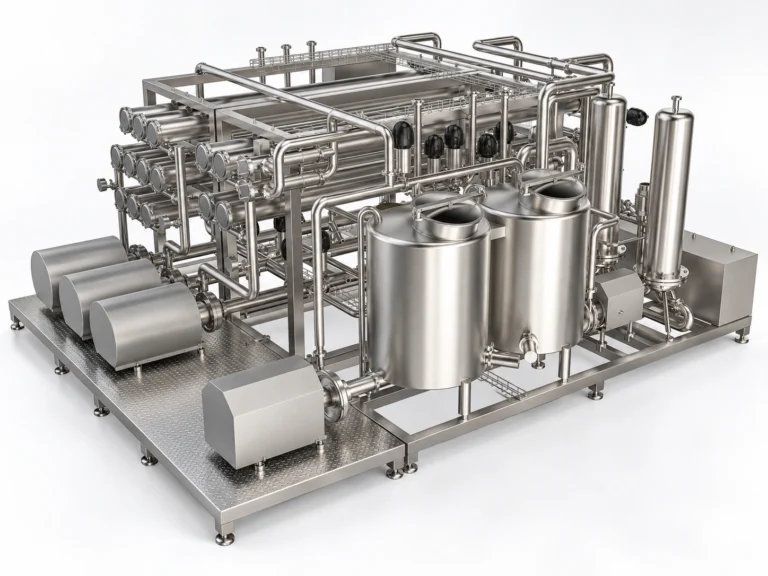
Spiral-wound UF plant for milk and whey
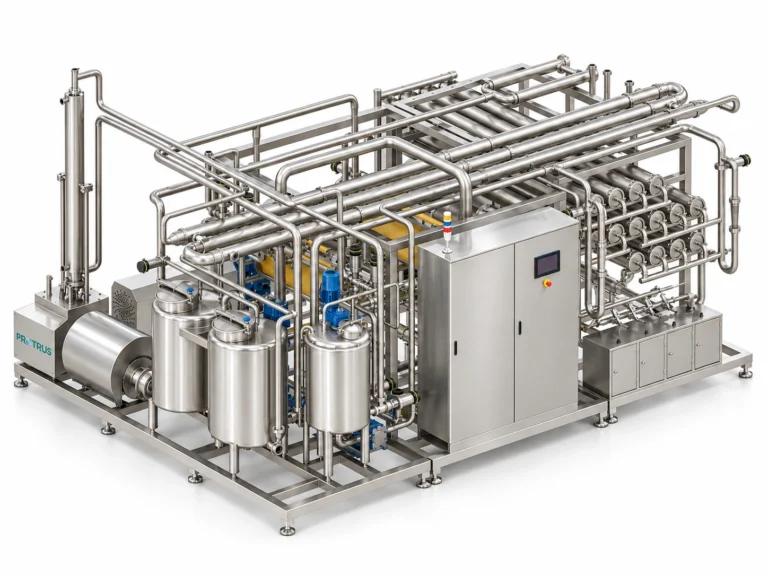
Plate-and-frame UF skid
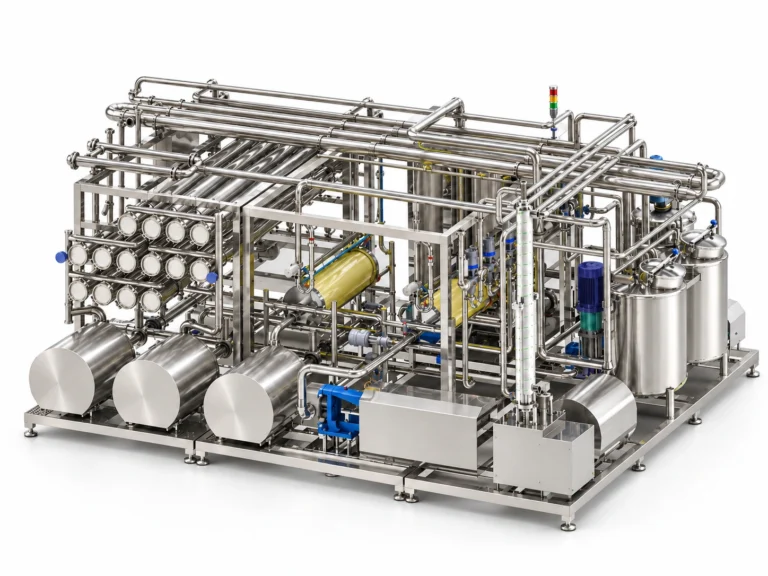
High-capacity P&F UF plant
NF · Whey demineralization
Nanofiltration (NF) Systems
Remove salt and water from whey in one step, and keep the lactose and protein.
Nanofiltration sits between UF and RO. Its cut-off of about 150–300 Da holds back lactose, proteins and most divalent ions such as calcium and magnesium, while water and a large part of the monovalent salts (sodium, potassium, chloride) and lactic acid pass through. At 10–40 bar (145–580 psi) one NF plant both concentrates whey and partly demineralizes it, which makes NF the standard pre-treatment before evaporation and spray drying of whey and permeate.
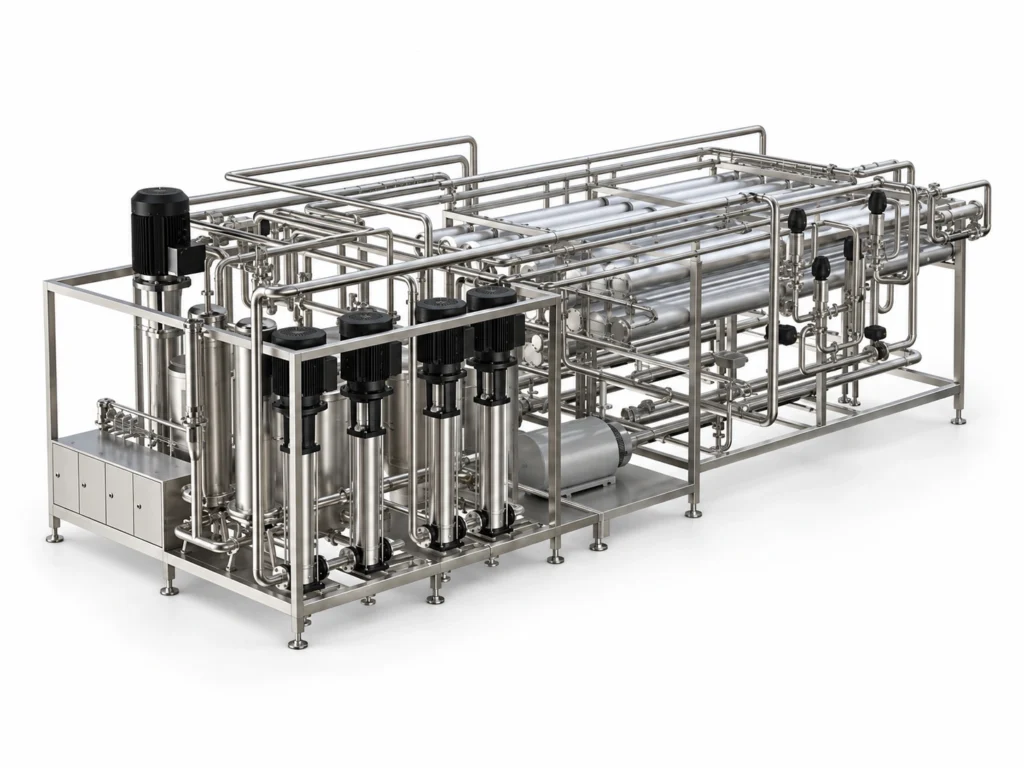
Nanofiltration plant with high-pressure feed pumps and spiral-wound NF housings.
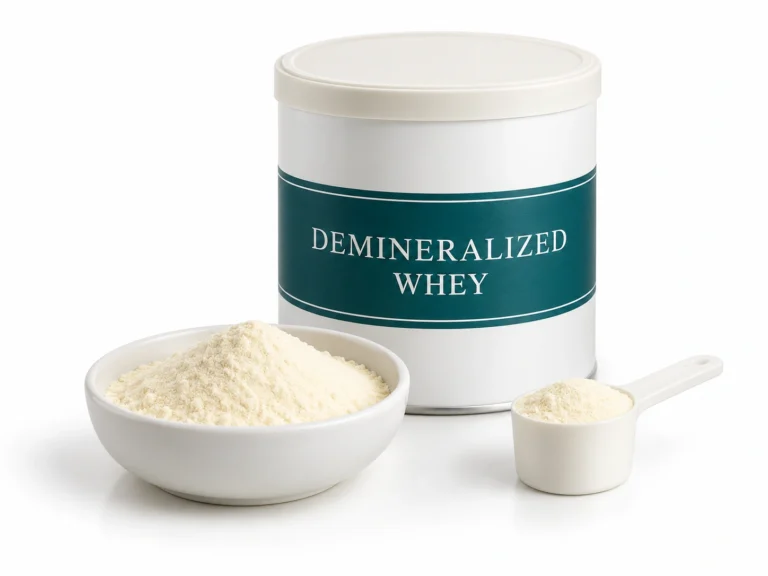
Demineralized whey
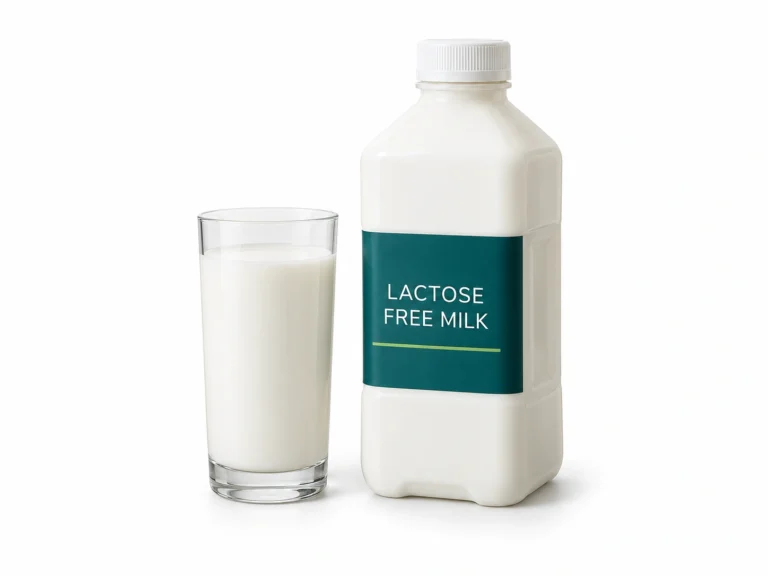
Lactose-free milk
150–300 Da
molecular weight cut-off
30–40 %
ash removal with diafiltration (D40)
18–22 %
total solids in NF concentrate
Nanofiltration Duties in a Dairy Plant
| Application | Feed | Result |
|---|---|---|
| Whey demineralization | Sweet whey, 5.5–6.5 % TS | D40 whey concentrate; pre-step for electrodialysis or ion exchange to D70–D90 |
| Permeate concentration | UF permeate (milk or whey) | Lactose concentrate with less salt, better crystallization |
| Acid whey treatment | Greek yogurt or quark whey | Lactic acid and salts removed, easier drying |
| Salty whey recovery | Whey from cheese salting | Salt removed, whey can be processed again |
| Lactose reduction | Milk or UF permeate | Part of the lactose removed before lactase treatment |
| CIP recovery | Used caustic solution | Clean caustic returned to the CIP tank |
NF Plant Highlights
Why Demineralize Whey?
Sweet whey contains about 8–9 % ash in its dry matter. That salt taste limits its use in infant formula, confectionery and bakery. Nanofiltration removes most of the monovalent salts, producing a whey concentrate with 30–40 % lower ash when diafiltration is used. For infant formula grades (D70, D90) NF is combined with electrodialysis or ion exchange, which then work on a smaller, already partly demineralized stream.
NF for Acid Whey
Strained yogurt and quark leave acid whey that is hard to dry because of its lactic acid and calcium content. NF removes much of the lactic acid and monovalent salts and concentrates the lactose, turning a disposal problem into a raw material for powders and fermentation.
MF · Bacteria and spore removal
Microfiltration (MF) Systems
Take bacteria and spores out of milk mechanically, and keep its fresh taste.
Microfiltration uses the largest pores of the four membrane families, about 0.1–1.4 µm. With 1.4 µm ceramic membranes, skim milk at about 50 °C (122 °F) passes the membrane while bacteria and spores are held back: typically 99.5–99.99 % of them. The result is extended shelf life (ESL) milk with a pasteurized taste, or cheese milk free of spore-forming bacteria without nitrate. Finer MF membranes of about 0.1 µm separate casein micelles from whey proteins, the basis of micellar casein and native whey.
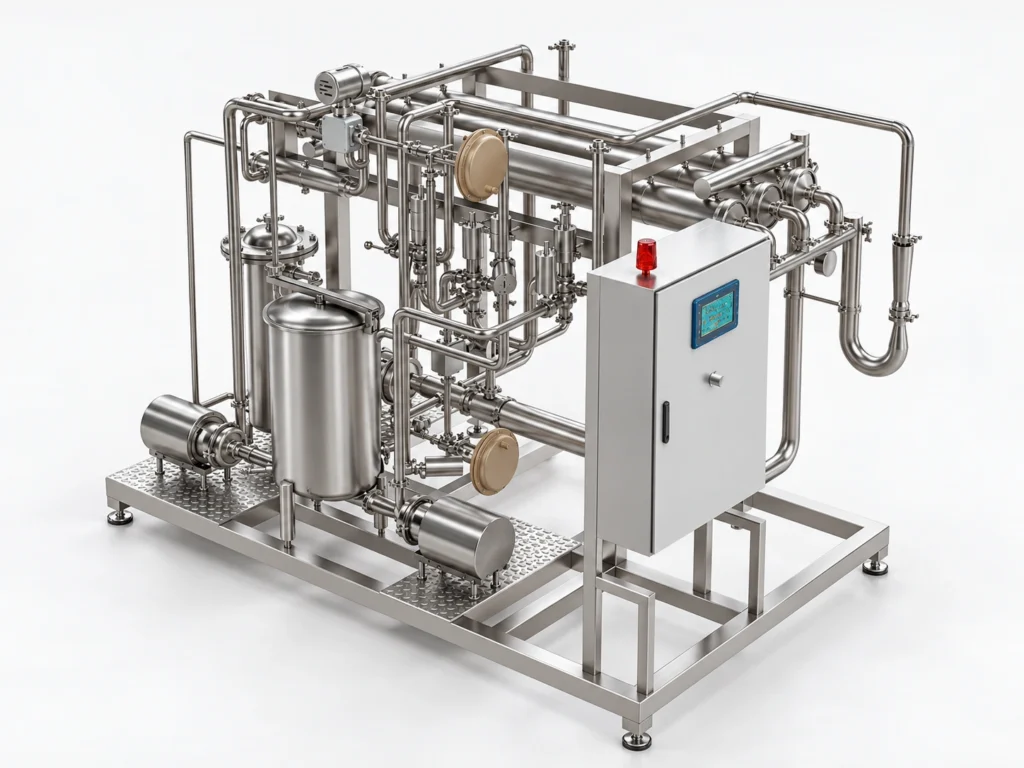
Compact microfiltration unit with membrane housings, circulation pumps and control panel.

ESL milk
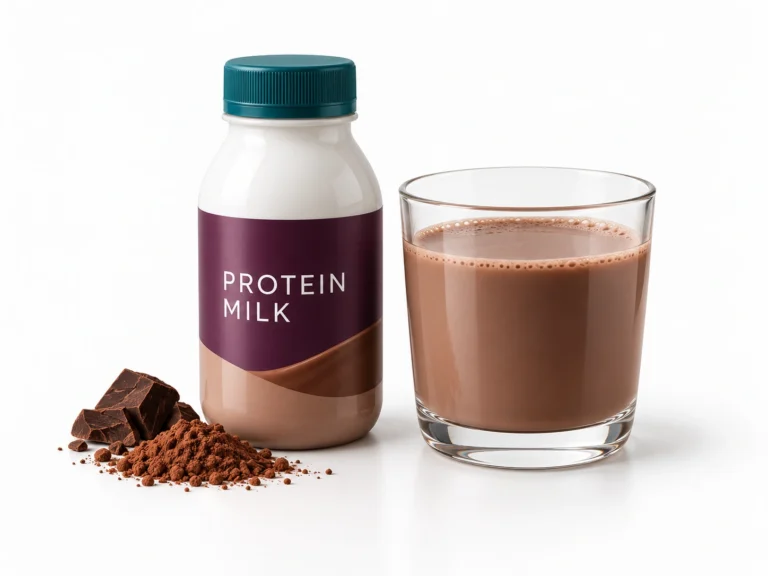
High-protein milk drink
0.1–1.4 µm
pore size
99.5–99.99 %
bacteria and spore removal at 1.4 µm
15–30+ days
chilled shelf life of MF + pasteurized ESL milk
Microfiltration Applications
| Application | Membrane | How it works |
|---|---|---|
| ESL milk | 1.4 µm ceramic | Skim milk filtered at about 50 °C; cream heat-treated separately and blended back before pasteurization |
| Cheese milk | 1.4 µm ceramic | Removes Clostridium spores that cause late blowing, without nitrate or lysozyme |
| Micellar casein (MCC) | 0.1 µm ceramic or polymeric | Casein retained, native whey proteins pass; for cheese and high-protein drinks |
| Whey defatting | 0.1–0.2 µm | Residual fat and phospholipids removed before UF for WPI |
| Brine clarification | 0.8–1.4 µm | Cheese brine cleaned of bacteria and yeasts for reuse |
MF Plant Highlights
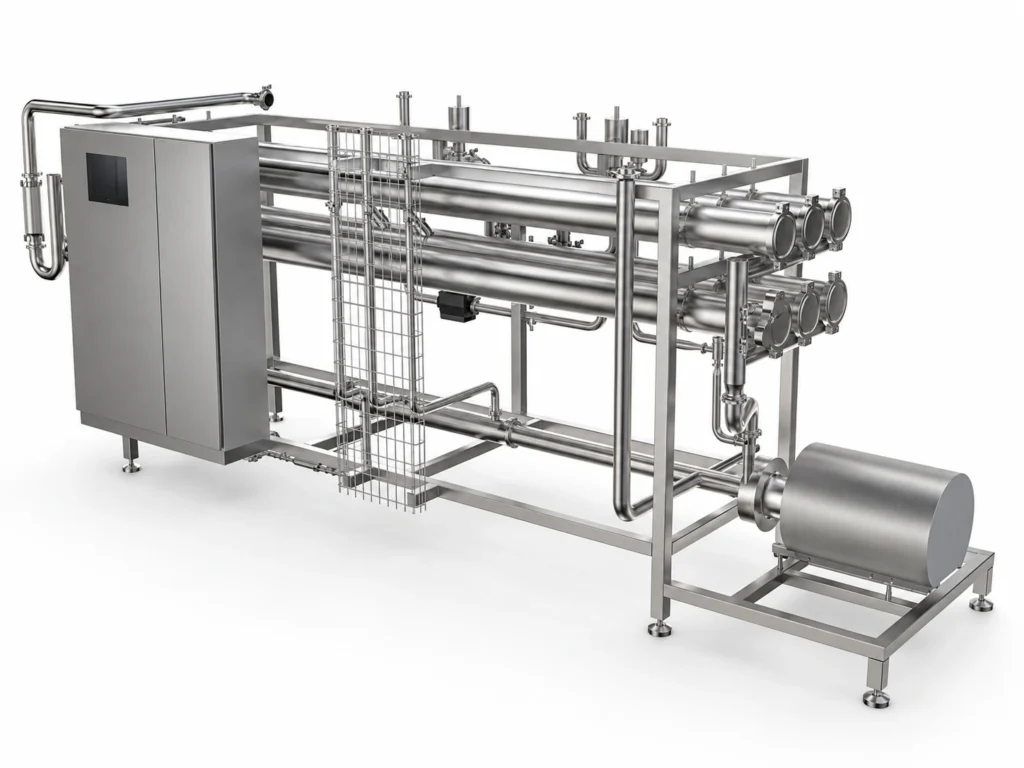
Microfiltration plant with long ceramic membrane housings and integrated control cabinet.
RO · Concentration and water recovery
Reverse Osmosis (RO) Systems
Remove water, and only water, at a fraction of the energy of evaporation.
Reverse osmosis uses the tightest membranes in dairy processing. At 20–60 bar (290–870 psi) water is pushed through the membrane against the osmotic pressure of the product; proteins, fat, lactose and salts all stay in the retentate. RO concentrates whey from about 6 % to 18–22 % total solids and skim milk to 20–25 %, cutting the volume to transport and the water that an evaporator must boil off. A second RO stage, the polisher, turns evaporator condensate and membrane permeates into clean water for reuse.
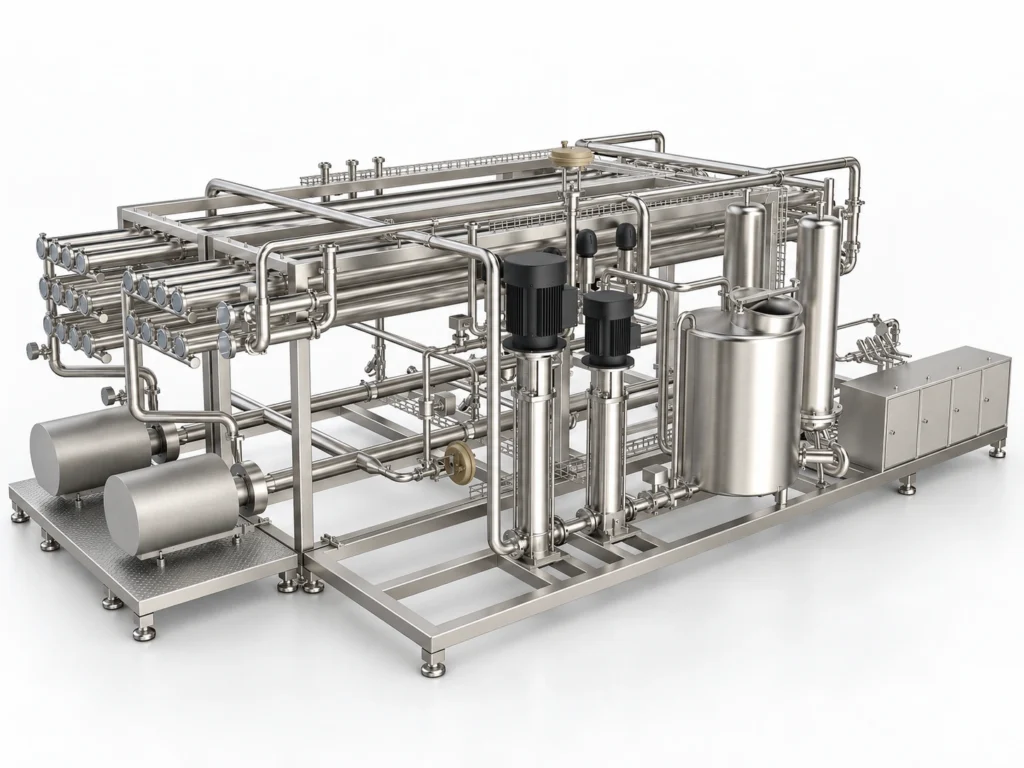
Reverse osmosis plant with spiral-wound RO housings, high-pressure pumps and permeate collection.
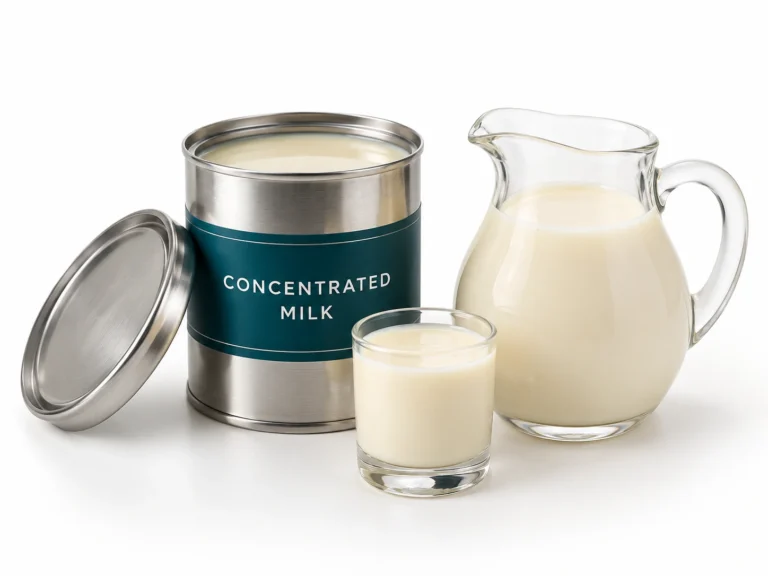
Concentrated milk
20–60 bar
operating pressure (290–870 psi)
18–25 %
total solids in RO concentrate
> 99 %
rejection of dissolved solids
Reverse Osmosis Applications
| Application | Feed | Typical result |
|---|---|---|
| Whey preconcentration | Sweet or acid whey, 5.5–6.5 % TS | 18–22 % TS before the evaporator or for transport |
| Milk concentration | Skim or whole milk | 1.5–3 times concentrated; less transport, higher cheese vat yield |
| Permeate concentration | UF permeate | Lactose concentrate for drying or crystallization |
| Ice cream and yogurt solids | Skim milk | Solids raised without milk powder |
| RO polisher | Evaporator condensate, permeates | Clean water for CIP, boiler feed and cooling towers |
RO Plant Highlights
Why Concentrate with RO?
Every liter of water removed by RO is a liter the evaporator does not have to boil and a truck does not have to carry. Small cheese plants that sell whey save most of the freight; large plants reduce steam and electricity consumption of the evaporator and gain drying capacity.
Water Recovery with an RO Polisher
Evaporator condensate (the water removed from milk, often called cow water) and RO or NF permeates are rich in water but carry traces of lactose and salts. A polisher RO cleans them to a quality suitable for CIP, boiler feed or cooling, so a dairy can cover a large share of its water demand from its own milk.
Dairy Applications and Final Products
One raw material, many value streams: how membranes turn milk and whey into high-value ingredients.
Final Products and Typical Specifications
| Product | Membrane route | Typical specification | Used in |
|---|---|---|---|
| Whey protein concentrate (WPC) | UF + DF | 35–80 % protein in dry matter | Nutrition, bakery, dairy desserts |
| Whey protein isolate (WPI) | MF + UF + DF | ≥ 90 % protein, < 1 % fat | Sports and clinical nutrition |
| Milk protein concentrate (MPC) | UF + DF | 42–85 % protein in dry matter | Protein drinks, cheese, yogurt |
| Micellar casein concentrate | MF 0.1 µm + DF | ≥ 80 % casein of total protein | Cheese milk, beverages |
| Strained Greek-style yogurt | UF (P&F) | 8–10 % protein, 18–25 % TS | Retail cups, foodservice |
| ESL milk | MF 1.4 µm + pasteurization | 15–30+ days chilled shelf life | Retail milk |
| Demineralized whey | NF (+ ED / IX) | D40 to D90 ash reduction | Infant formula, confectionery |
| Lactose-free milk | UF + NF + lactase | < 0.1 % lactose, no added sweetness | Retail milk |
| Milk / whey concentrate | RO | 18–25 % TS | Cheese, ice cream, evaporator feed |
Why Protrus for Dairy Ingredients
Membrane Plant Design, CIP and Automation
The right membrane, in the right loop, cleaned the right way: that is what sets flux, uptime and membrane life.
A dairy membrane plant is built from loops. A feed pump fills the plant from a balance tank; in each loop a circulation pump drives the product across the membranes at high velocity, while a small part is bled to the next loop. Concentration rises loop by loop until the retentate reaches its target solids. Permeate from every loop is collected and measured. Diafiltration water, CIP and the PLC complete the system.
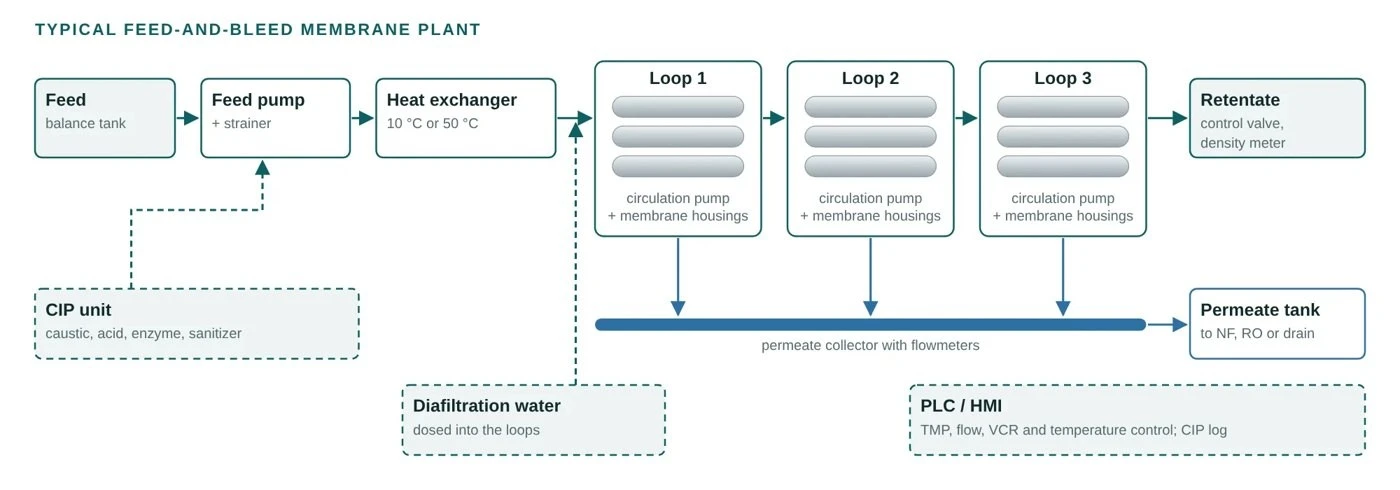
Typical three-loop feed-and-bleed membrane plant with diafiltration, CIP and automation.
Membrane Element Types
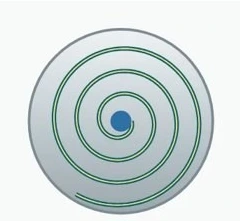
Spiral-wound
polymeric, UF · NF · RO
milk, whey, permeate
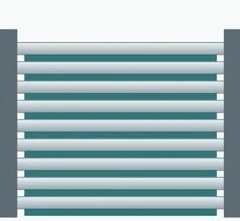
Plate-and-frame
polymeric sheets, UF
strained yogurt, quark, cheese
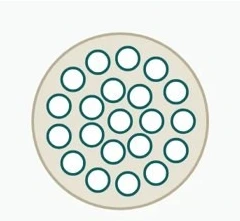
Ceramic tubular
alumina / zirconia, MF · UF
ESL milk, bacteria removal
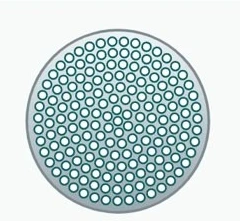
Hollow fiber
polymeric, MF · UF
whey clarification, water
Typical CIP Sequence for Dairy Membranes
| Step | Agent | Conditions | Purpose |
|---|---|---|---|
| Rinse | Water or permeate | Until product is displaced | Remove product residues |
| Alkaline (+ enzyme) | Caustic, surfactant, protease | pH 10.5–12, 45–55 °C (113–131 °F) | Remove protein and fat |
| Acid | Nitric or phosphoric acid | pH 1.8–2.5, 45–50 °C (113–122 °F) | Remove calcium phosphate and minerals |
| Sanitize | Peracetic acid or chlorine (as allowed) | Ambient, 10–20 min | Disinfect before production |
| Water flux test | Clean water | Standard TMP and temperature | Confirm cleaning and membrane condition |
Why Protrus for Membrane Plants
Frequently Asked Questions About Dairy Membrane Filtration
Have a question about your product or capacity? Ask our process engineers.
Get a Quote
Plan Your Membrane Plant with Protrus
Tell us your product, feed, daily volume and target solids or protein. Our process engineers will select the membrane type, size the loops, CIP and utilities, and return a flow diagram, a layout and a budget offer.
Prefer email? info@protrus.com