

Dairy & Food Processing · Fat Melting
Fat Melter: Fat Melting Tanks for Dairy and Food Production
From frozen blocks to pumpable, weighed liquid fat at the right temperature, without hot spots, scorching or manual chopping.
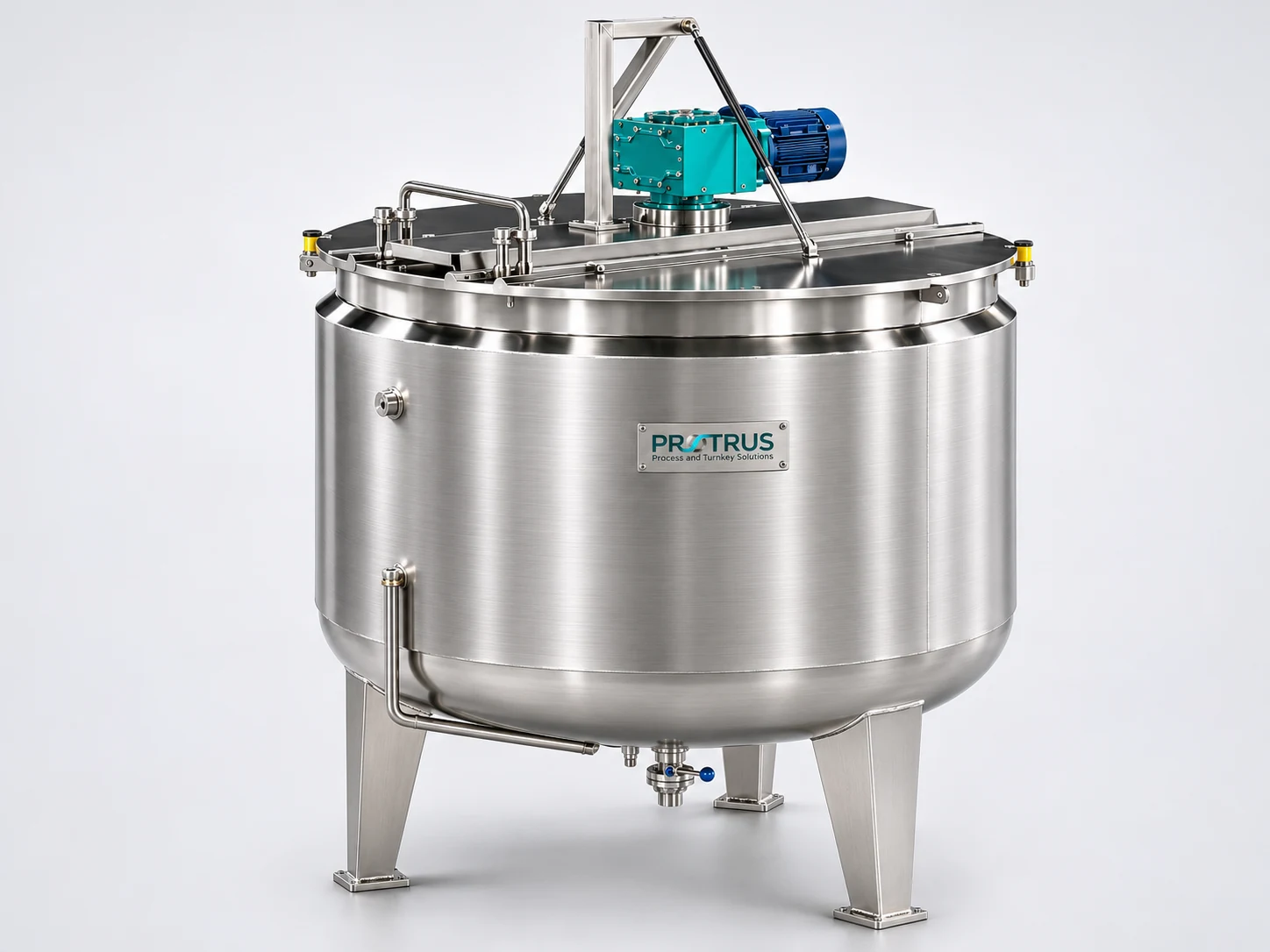
Vertical fat melting tank with scraper agitator, split hinged lid and water jacket.
up to 2,000 kg/h
Melting capacity of the horizontal block melter
500 – 2,000 L
Standard tank volumes
40 – 70 °C
Working temperature of the melted fat
≤ 90 °C · 30 min
CIP cleaning through the built-in inlet
What a Fat Melter Does
Solid fats in, clear liquid fat out: pumpable, dosed and ready for the mixer.
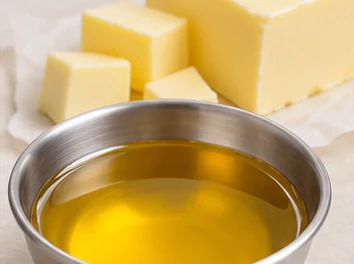
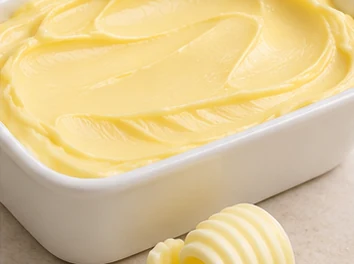
A fat melter (fat melting tank) converts solid fats such as butter, anhydrous milk fat (AMF), cocoa butter, palm fat, coconut fat and bakery shortening into a clear liquid that can be pumped, dosed and mixed. Protrus fat melters heat indirectly with circulating hot water, so the fat never touches a surface much hotter than it needs.
Fats are bought as 20–25 kg blocks, cartons or pails because they are stable and easy to store when solid. Before they can go into a recombined milk, ice cream mix, processed cheese, chocolate mass, margarine emulsion or biscuit dough, they must be fully liquid and at a defined temperature. Steam lances, open kettles and hot rooms melt slowly and unevenly: the surface overheats and oxidizes while the core stays solid.
A fat melter does the job in a closed, hygienic vessel. Warm water in a jacket and in coils gives up its heat over a large surface, the fat melts from the outside in and runs off, and the liquid is held just above its melting range until the process calls for it. The PLC then doses the exact kilograms to the next step.
Two designs cover most plants: a vertical jacketed tank with a scraper agitator for batch melting and holding, and a horizontal block melter with internal heating coils, its own hot water unit, product pump, flowmeter and PLC dosing for continuous feeding of mixers and process lines. In a complete plant the melted fat goes on to the ice cream mix unit or a high shear mixer.
Two Fat Melter Designs
A jacketed tank for batch melting and holding, or a block melter for continuous dosing at up to 2,000 kg/h.
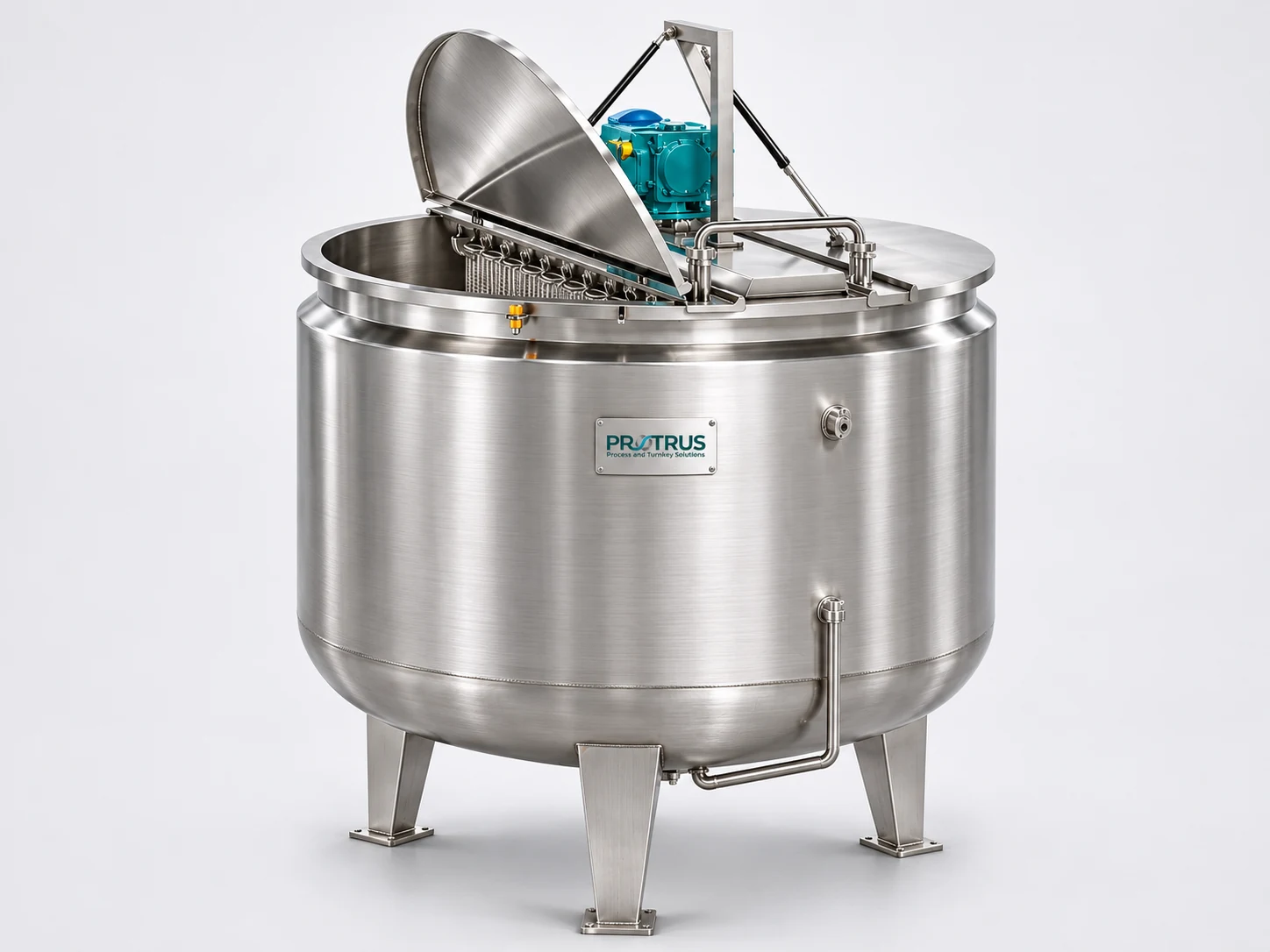
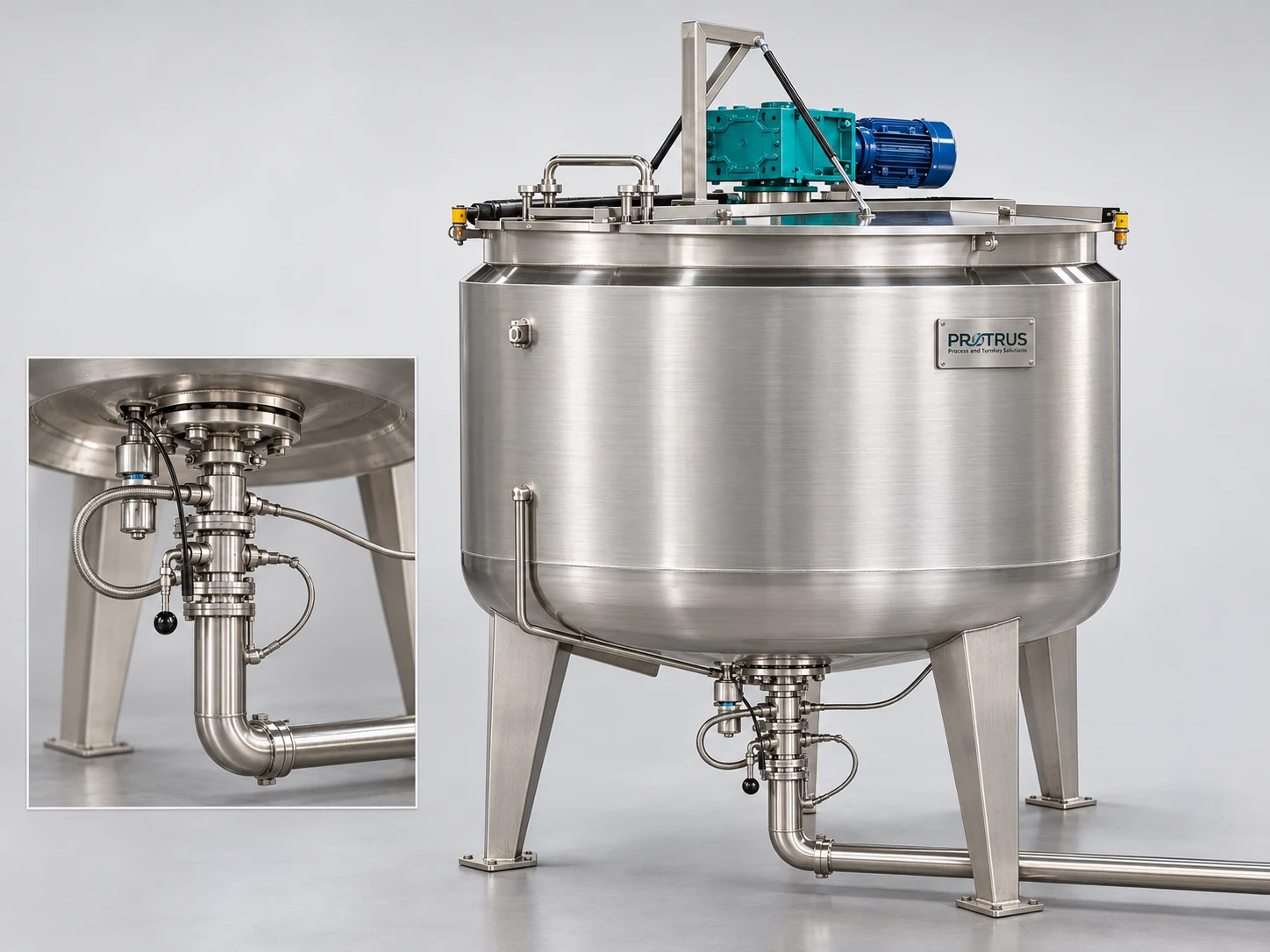
Open lid with scraper agitator; hygienic bottom discharge.
Vertical Fat Melting Tank
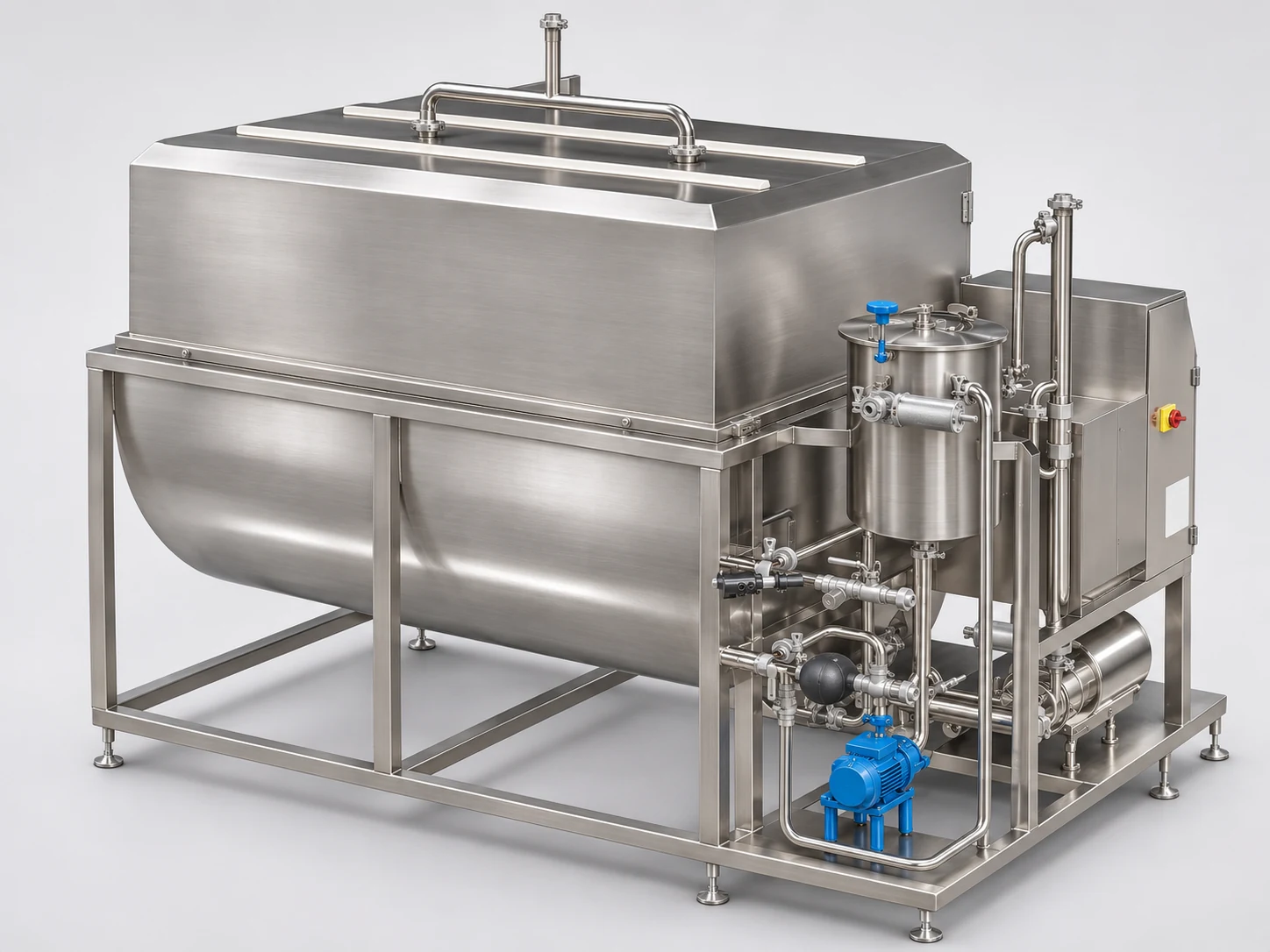
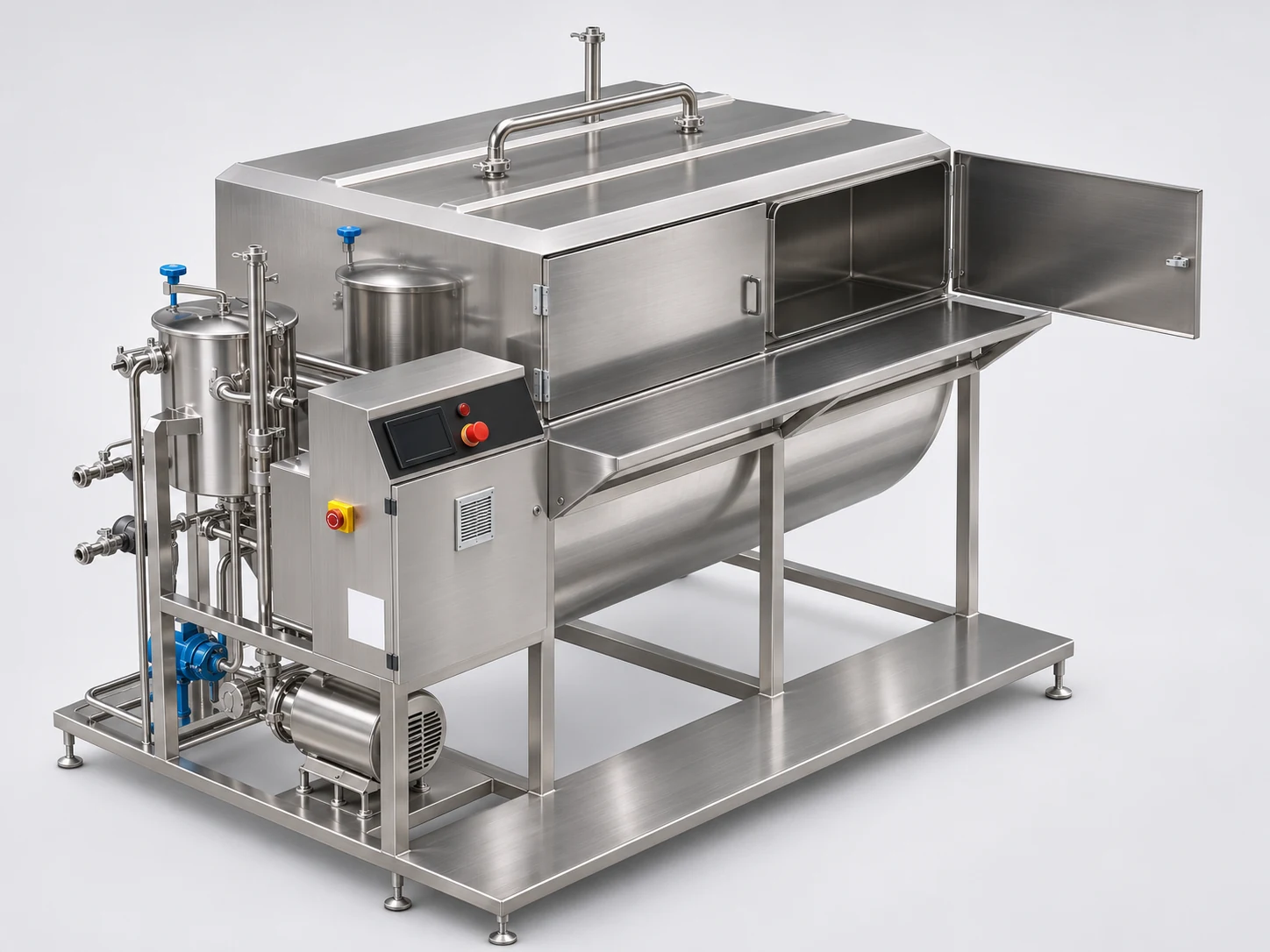
Block melter with hot water unit and open loading door.
Horizontal Block Fat Melter
Why Gentle, Indirect Melting Pays Off
Hot water instead of steam or open flame protects the fat, the operator and the energy bill, and makes every batch weigh what the recipe asks for.
Fat quality
Low heating-medium temperature limits oxidation, free fatty acids and off-flavors.
Faster melting
Coils under the blocks and a heated trough double the heat transfer area.
Exact dosing
Weigh cells or a flowmeter deliver the batch quantity set on the touch panel.
Energy savings
Three-layer insulated walls keep heat in the water and the fat, not in the room.
Hygiene
Closed AISI 304L vessel, CIP inlet and drainable trough; no open kettles or hot rooms.
Operator safety
No steam lances, no knives, no carrying of hot liquid fat in buckets.
Applications
Applications in Dairy and Food & Beverage Plants
Dairy. AMF and butter oil for recombined and reconstituted milk, cream and condensed milk; fat phase for ice cream mix, processed cheese, cheese analogues and ghee.
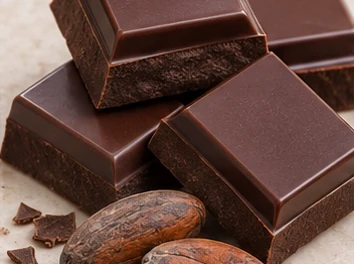
Food & beverage. Cocoa butter and CBE for chocolate and coatings; palm, coconut and hard fats for margarine, bakery, biscuits and wafers; oil phase for sauces, mayonnaise, soups and creamers.




Eight steps
Fat Melting Process: From Carton to Mixer
Eight steps, with the temperature of the fat and of the heating water under control at all times.
Blocks go in through the lids, rest on the heating coils and melt from every side. The melt drains into the jacketed trough, where it is kept a few degrees above its melting range so that no crystals remain.
When the next batch is called, the operator enters the kilograms on the touch panel; the product pump and the flowmeter or weigh cells stop the transfer at the set amount. At the end of production the unit is drained and cleaned in place through its own CIP inlet.
A · Load & melt typical values · set per fat type and recipe
- 1Prepare blocksUnwrap cartons, pails, bags25 kg blocks, pails
- 2LoadThrough hinged lidsNo tools, no chopping
- 3MeltHot water jacket + coilsWater 55–85 °C
- 4Collect & holdMelt runs to jacketed troughFat 40–70 °C
B · Dose, transfer & clean
- 5CheckTrough temperature, levelPT100 · alarm
- 6DoseWeigh cells or flowmeterBatch kg set on HMI
- 7TransferProduct pump with VFDTo mixer or tank
- 8Clean (CIP)Spray inlet, drain, rinse≤ 90 °C · ~30 min
Heating circuit
Steam (or electric heaters) → heat exchanger → hot water tank → circulation pump → jacket and coils → back to tank · condensate returned
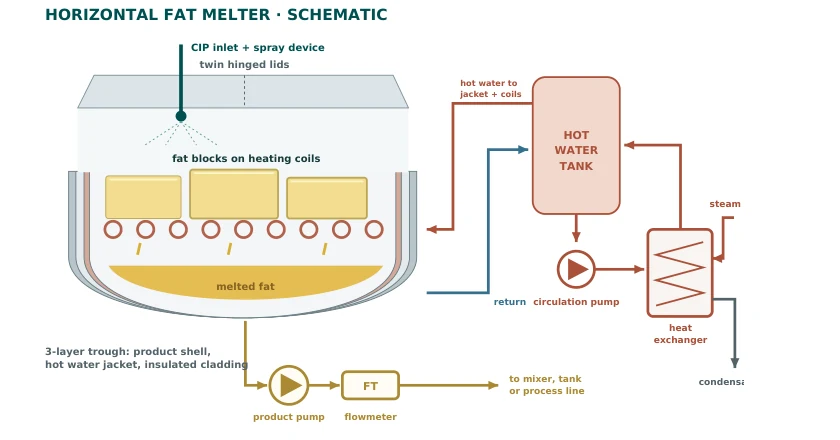
Heating and product circuits of the horizontal block melter.
How the Heating Works
Hot water, not steam. Steam or electric heaters warm a closed water circuit through a heat exchanger. The fat only sees water at 55–85 °C (131–185 °F), so local overheating and burnt layers are avoided.
Two heating zones. Coils under the blocks and the trough jacket have separate set points: fast melting on the coils, gentle holding in the trough.
Three-layer wall. 3 mm 304L product shell, 3 mm heating jacket and 1.2 mm insulated outer cladding.
Rule of thumb. Hold the fat 10–15 °C above its full melting point to erase crystal memory, and below 70 °C (158 °F) to slow oxidation.
Melting and Holding Temperature Guide
Typical values per fat family. Final set points are stored as PLC recipes for each fat you run.
| Fat | Melts completely at | Typical holding | Used in |
|---|---|---|---|
| Butter, AMF, butter oil | 32–36 °C | 45–55 °C | Recombined milk, ice cream, processed cheese, ghee |
| Cocoa butter, CBE | 34–37 °C | 45–50 °C | Chocolate, coatings, fillings |
| Palm oil, palm-based fats | 33–40 °C | 50–60 °C | Ice cream, margarine, creamers, bakery |
| Coconut, palm kernel fat | 24–28 °C | 35–45 °C | Ice cream, compound coatings, non-dairy creamers |
| Shortening, hard stock | 40–56 °C | 60–70 °C | Biscuits, wafers, puff pastry, margarine |
Technical Data: Horizontal Block Fat Melter, 2,000 kg/h
| Item | Horizontal block fat melter |
|---|---|
| Melting capacity | up to 2,000 kg/h (about 4,400 lb/h) |
| Tank volumes | 500 · 1,000 · 1,500 · 2,000 L |
| Fat temperature | 40–70 °C, set on the HMI |
| Heating | Hot water circuit: steam heat exchanger or electric; jacket and coils controlled separately |
| Construction | AISI 304L (316L on request); 3 mm shell, 3 mm jacket, 1.2 mm insulated cladding |
| Pumps | Product pump 1.1 kW with VFD and mechanical seal; hot water pump 1.1 kW; total 2.2 kW |
| Dosing | Weighing system or magnetic / ultrasonic flowmeter, batch kg set on the HMI |
| Control | PLC with touch screen (temperatures, fat weight, CIP, alarms); pneumatic hygienic valves, air 6 bar |
| CIP | Built-in CIP inlet and spray device, ≤ 90 °C, about 30 minutes |
| Power supply | 3-phase, 220 V / 60 Hz or 400 V / 50 Hz to site standard |
| Footprint, weight | approx. 3,010 × 1,860 × 1,985 mm (L × W × H), about 900 kg; CE marked, ISO 9001 |
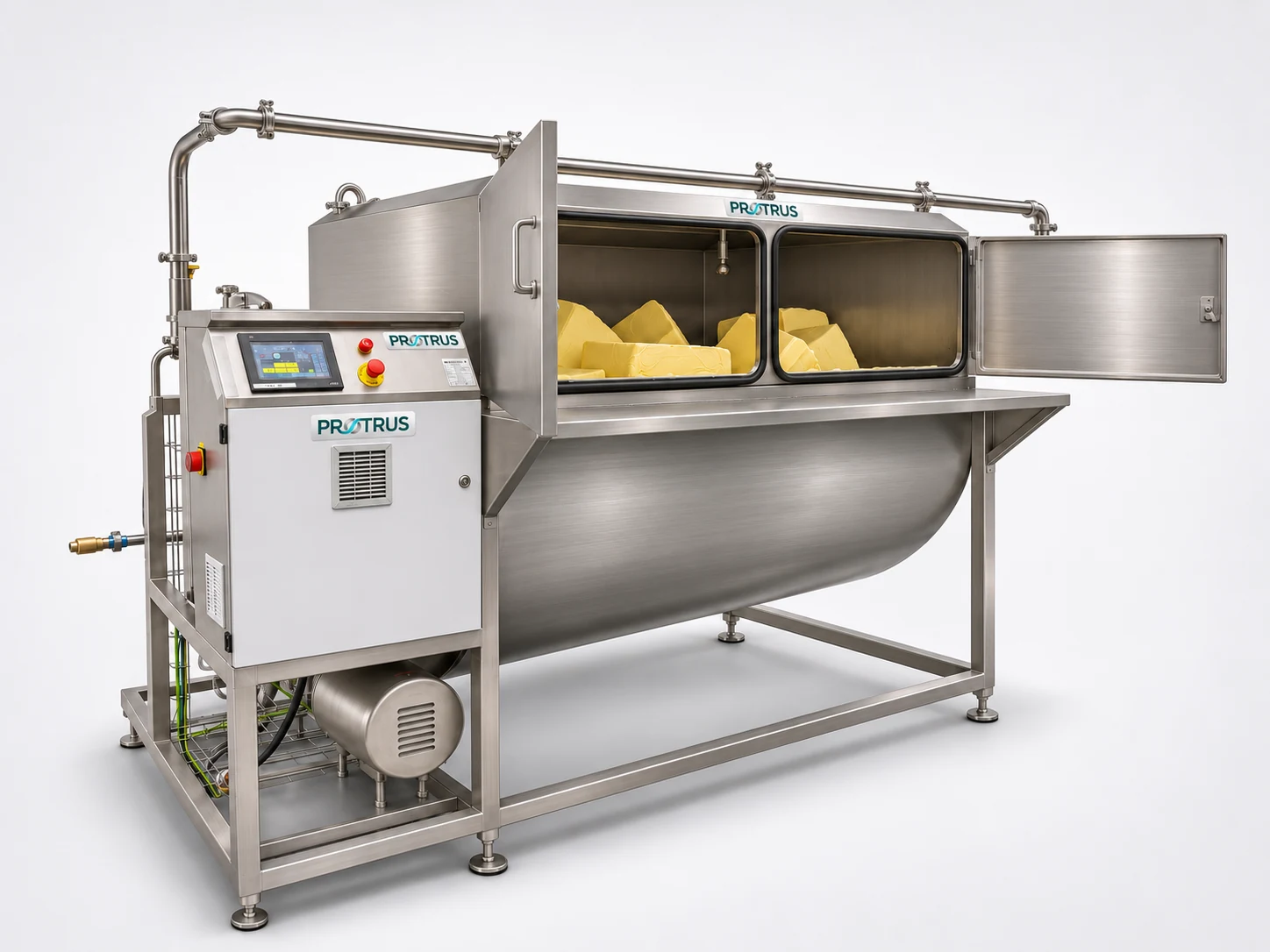
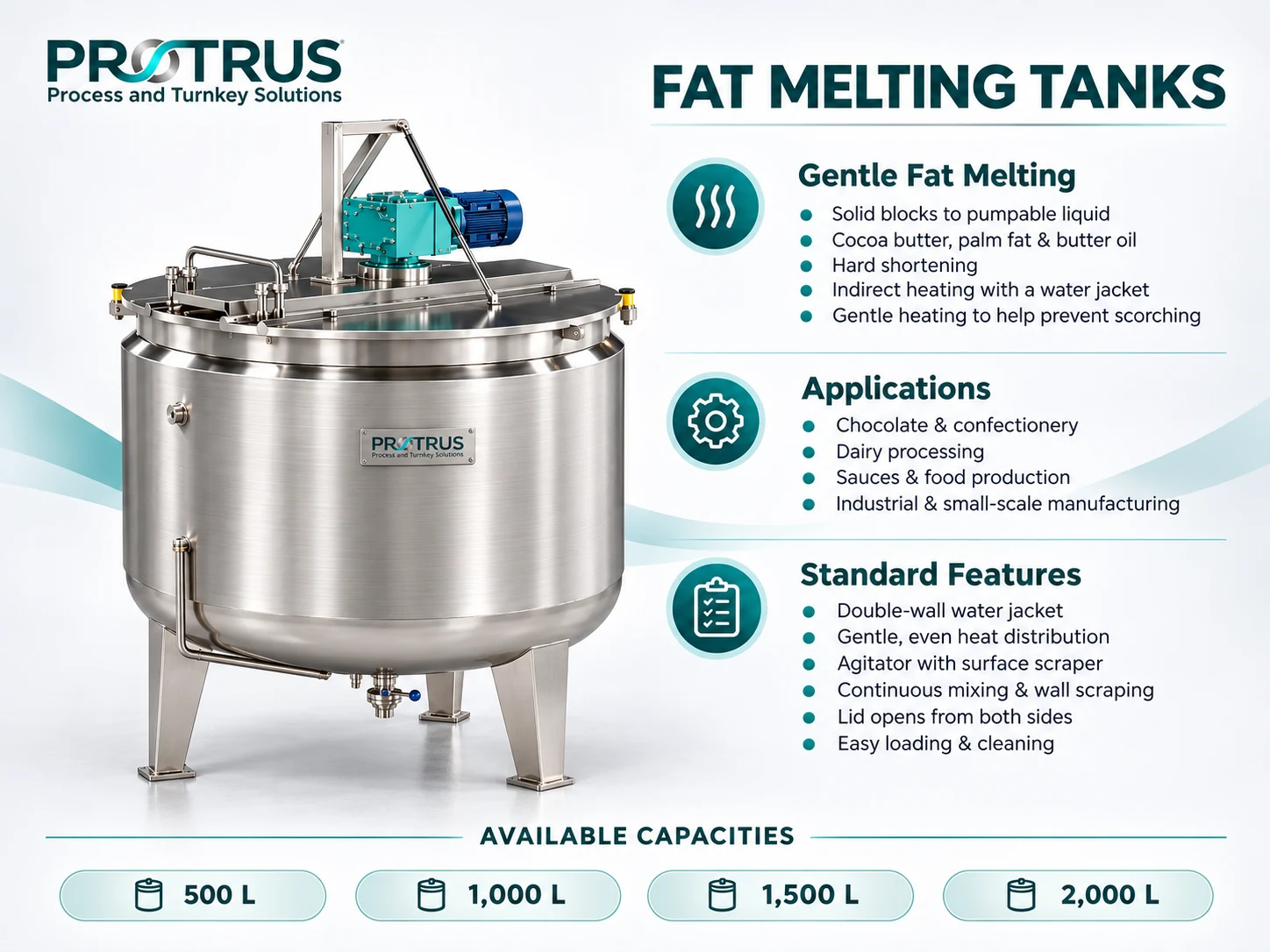
Fat blocks on the coils, touch panel and CIP header, jacketed trough, standard capacities.
Frequently Asked Questions About Fat Melters
Have a question about melting, holding or dosing your fats? Ask our process engineers.
Get a Quote
Size Your Fat Melter with Protrus
Tell us which fats you melt, how they arrive (blocks, cartons, pails or drums), the kilograms you need per hour or per batch and where the melted fat goes next. Our engineers return a sizing note, a P&ID, a 3D layout and a budget offer for a vertical melting tank or a horizontal block melter with its own hot water unit.
Prefer email? info@protrus.com