

Dairy & Beverage Processing · AISI 304 / 316L
Stainless Steel Tanks and Vessels for Dairy, Food and Beverage Plants
Storage silos, process and mixing tanks, fermentation, buffer, chocolate, syrup and vacuum vessels, designed around your product and built in sanitary stainless steel.
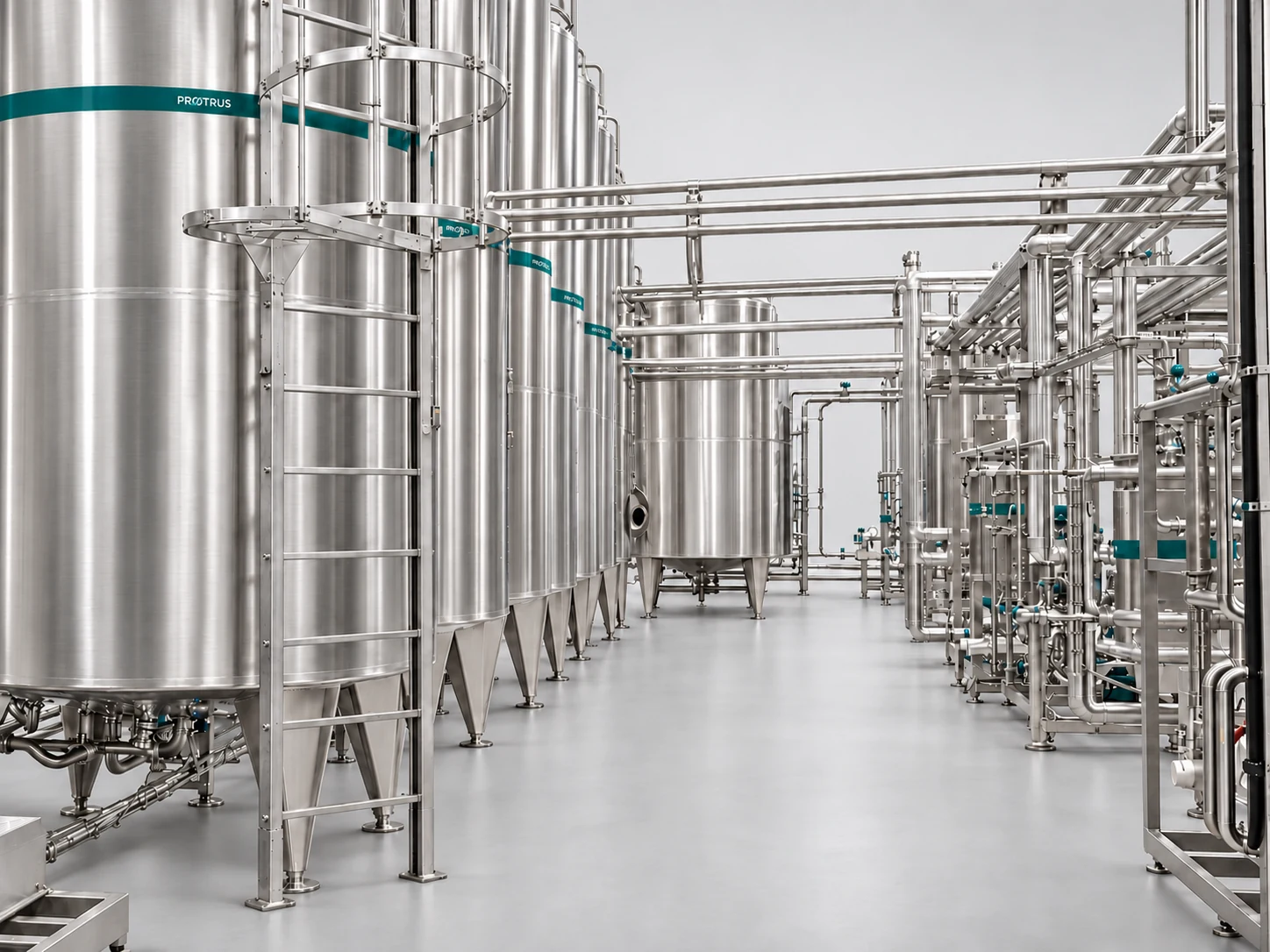
Protrus dairy tank farm: process and storage tanks linked by sanitary piping, valves and CIP.
100–120,000 L
Liters per tank, silos to 150,000 L
AISI 316L
Product-contact parts
Ra ≤ 0.8 µm
Inner surface, ≤ 0.4 µm on request
100 % CIP
Spray balls, drainable design
Tanks and vessels
Why the Tank Matters
Storage silos, process and mixing tanks, fermentation, buffer, chocolate, syrup and vacuum vessels, designed around your product and built in sanitary stainless steel for clean, safe and repeatable production.
In a dairy or food plant almost every product spends more time in a tank than in any other machine. Milk waits in silos, cream ripens, yogurt ferments, sauces cook and chocolate is kept liquid. The tank decides whether the product stays cold, warm, mixed, sterile and free of air, and whether it can be cleaned in minutes.
Protrus designs each vessel for its duty: volume, jacket, insulation, agitator, instruments and CIP, and delivers it piped, wired and pressure tested.
Tank and Vessel Range

Most requested
Storage Tanks and Silos
Raw and pasteurized milk, cream, whey, water, oil. 10,000–150,000 L.
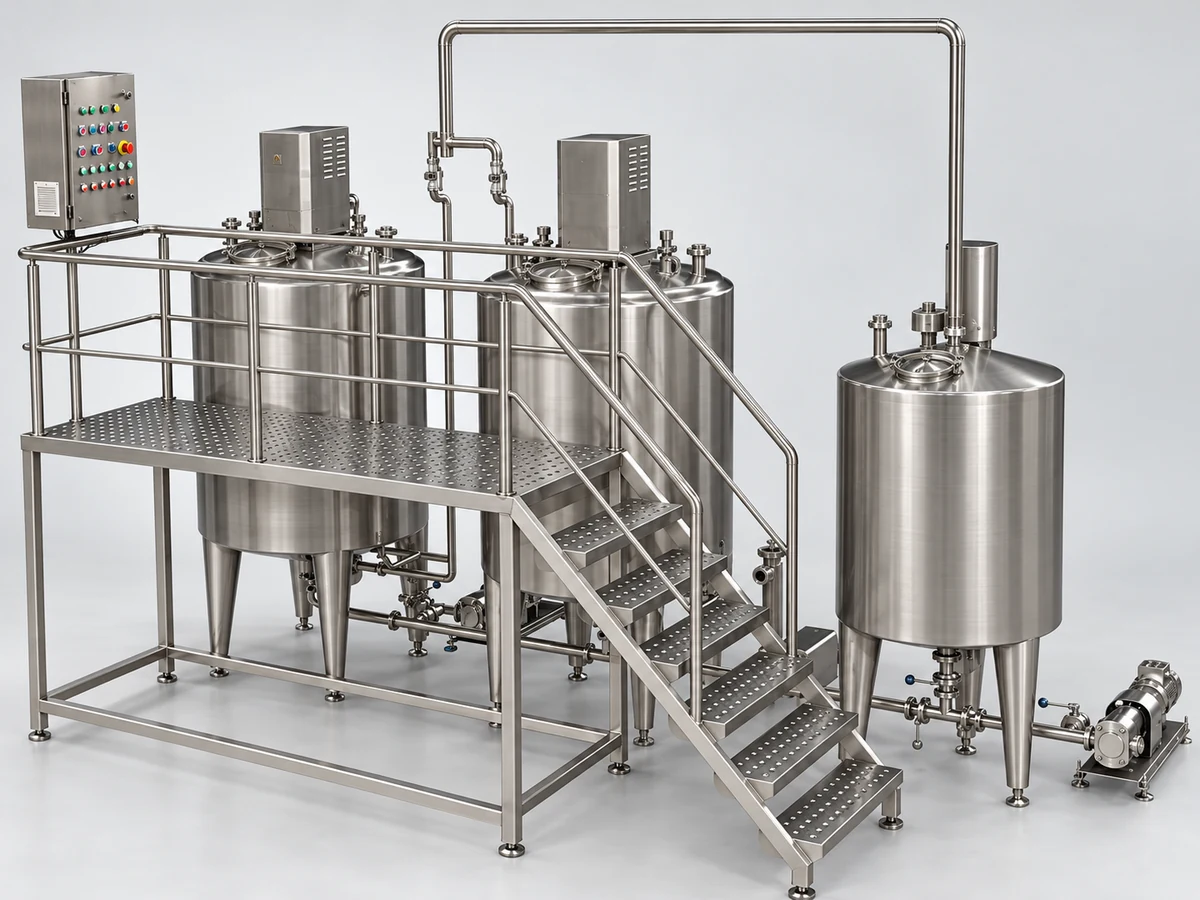

Which Tank Does What? (Typical)
| Tank type | Main job | Typical volume | Key features | Typical products |
|---|---|---|---|---|
| Storage tank / silo | Keep product cold and uniform | 10,000–150,000 L | Insulated, slow agitator, radar level | Raw milk, cream, whey, water, oil |
| Process tank | Heat, hold, cool and mix | 100–30,000 L | Dimple jacket, scraper agitator | Ice cream mix, sauces, cheese milk |
| Mixing / blending tank | Dissolve and blend ingredients | 100–20,000 L | High shear head or inline mixer | Drinks, reconstituted milk, dressings |
| Fermentation tank | Incubate and cool cultured products | 1,000–50,000 L | Precise jacket, pH, gentle agitator | Yogurt, kefir, ayran, sour cream |
| Buffer (balance) tank | Decouple process and filling | 100–30,000 L | Aseptic or sanitary, level control | Milk, yogurt, juice before filler |
| Chocolate / syrup tank | Melt, hold, dissolve sugar | 100–20,000 L | Warm water jacket, anchor stirrer | Chocolate, fillings, sugar syrup |
| Vacuum / pressure vessel | Deaerate, cook, emulsify | 50–10,000 L | −0.95 to +6 bar, scraper + high shear | Caramel, mayonnaise, creams, gels |
100,000 L is about 26,400 US gal; 150,000 L is about 39,600 US gal.
Where Protrus Tanks Work
Dairy
Milk reception, cheese, yogurt, cream, butter and ice cream plants.
Food
Sauces, dressings, ready meals, purees and spreads.
Beverage
Juice, nectar, tea, plant-based and soft drinks, syrups.
Confectionery
Chocolate, fillings, caramel, creams and glazes.

Personal care · Chemical
Lotions, shampoos, gels, detergents, resins.

Biotech · Pharma
Media, buffers, fermentation broths, liquid dosage forms.
Storage tanks and silos
Storage Tanks and Silos for Milk, Cream, Whey, Water and Oil
Insulated vertical silos and storage tanks that keep large volumes cold, uniform and traceable between reception, processing and filling, indoors or outdoors.

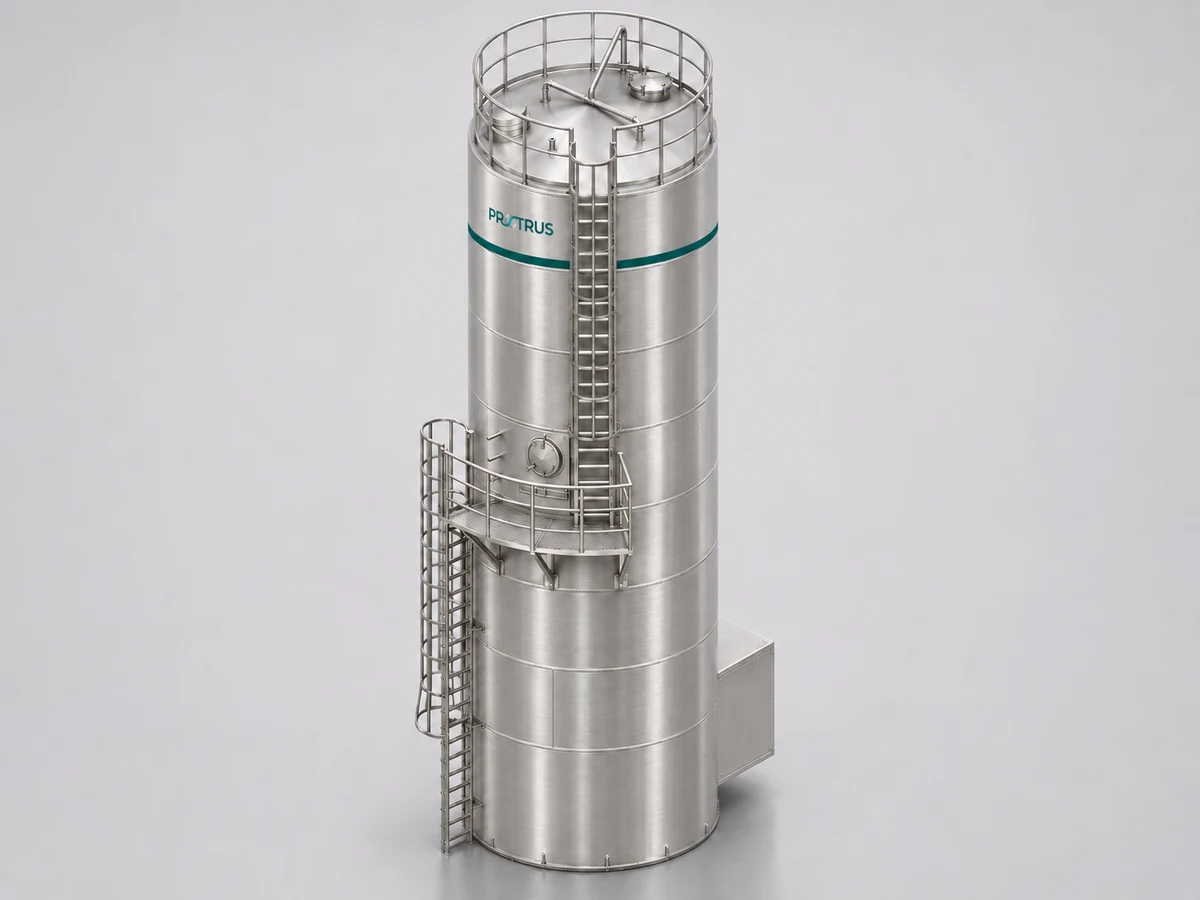
Insulated milk storage tanks with catwalk (left) and a tall outdoor milk silo with access platform (right).
10,000–150,000
L per silo, larger on request
≤ 1 K / 24 h
temperature rise, insulated
15–30 rpm
gentle agitation, no fat damage
AISI 304 / 316L
inner shell, welded cladding
What a Good Milk Silo Does
A milk storage tank must hold raw milk at 2–4 °C (36–39 °F) for up to 48 hours without warming, creaming or foaming. Protrus silos have a double-wall body with 50–100 mm insulation, a slow side or top agitator that keeps fat evenly spread, a sloped bottom that drains completely, and a CIP spray system that reaches every surface.
Radar level, temperature sensors, a sampling valve and a manhole with a vent and vacuum relief come as standard. Outdoor silos keep the valve and instrument area inside a heated room.
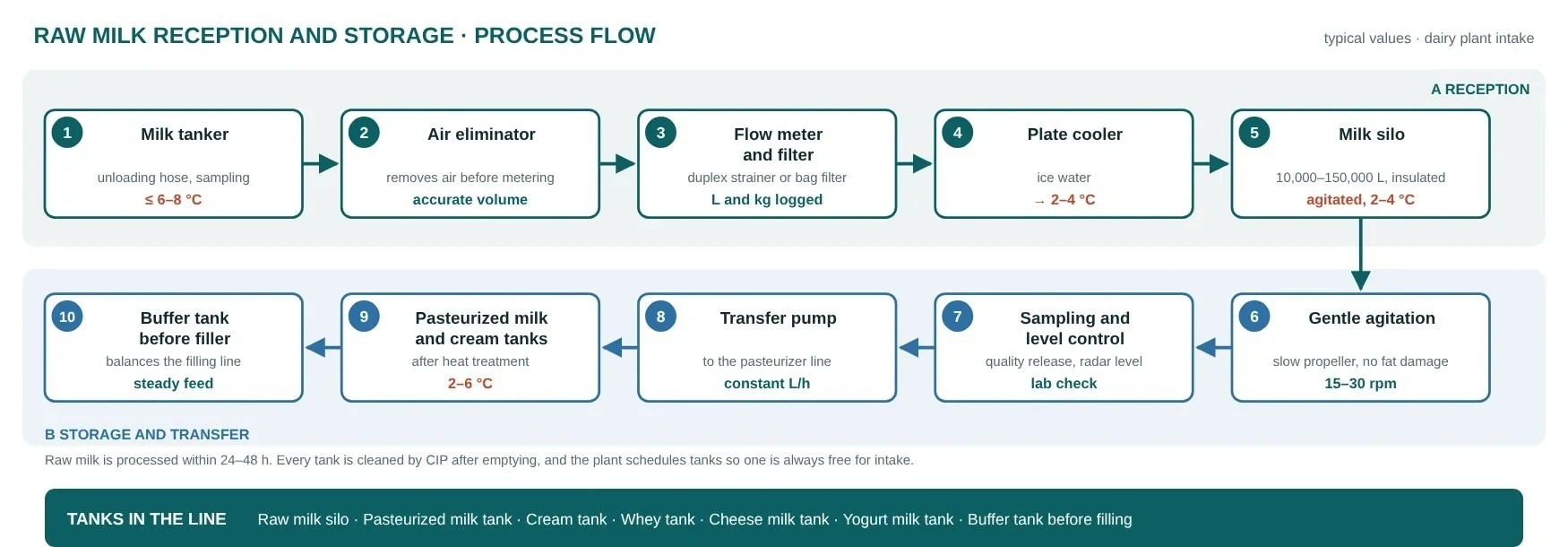
Raw milk reception and storage, process flow. Typical values.
Storage Tanks in Dairy and Beverage Plants
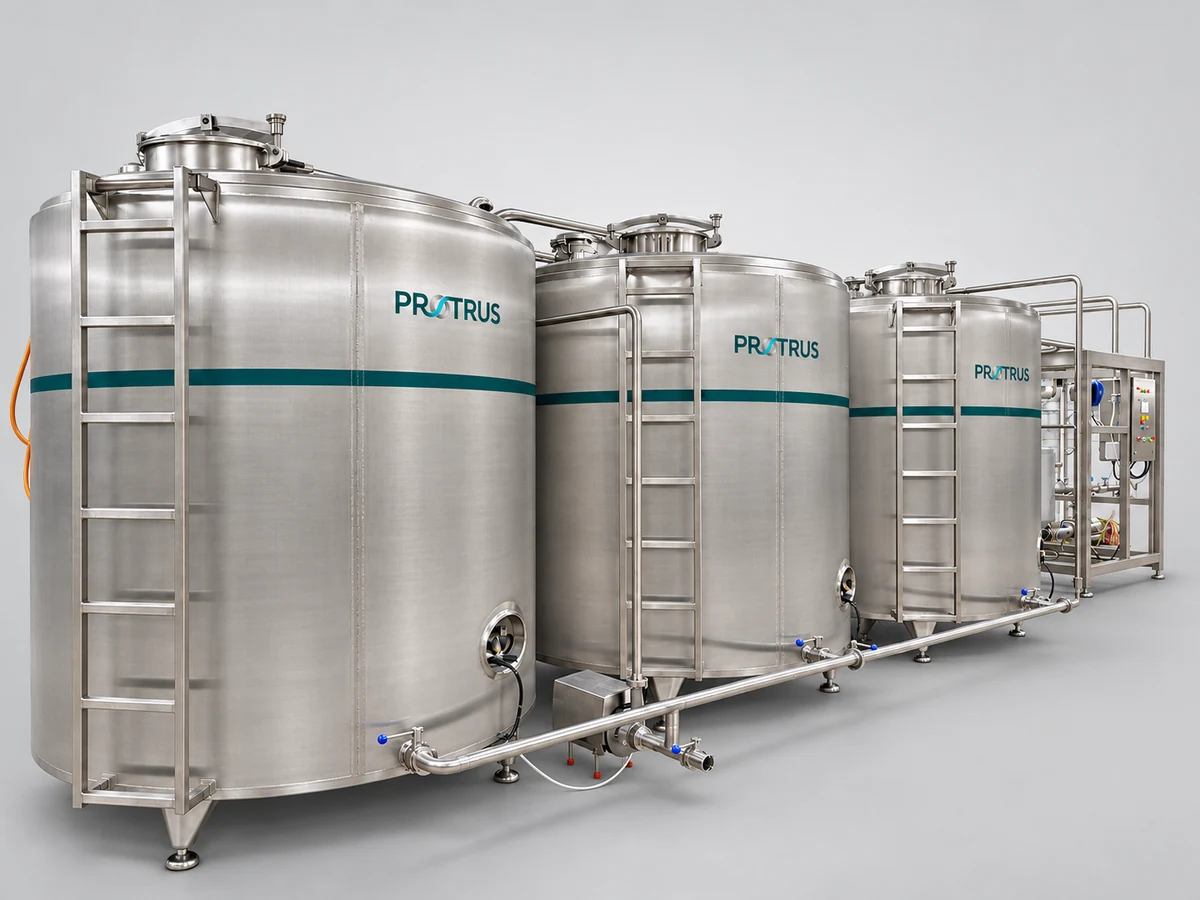
Milk storage tanks with ladders.

Cream storage with process skid.
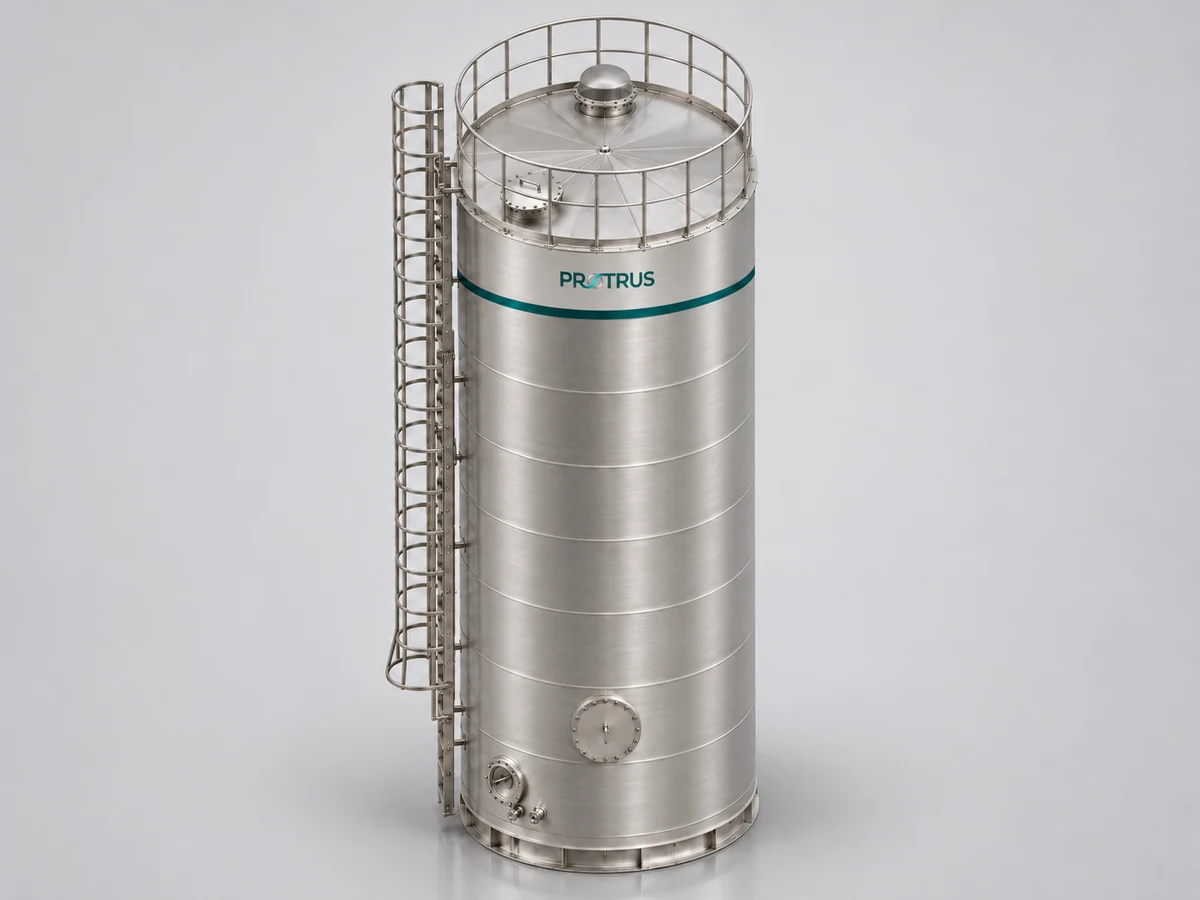
Outdoor stainless silo.
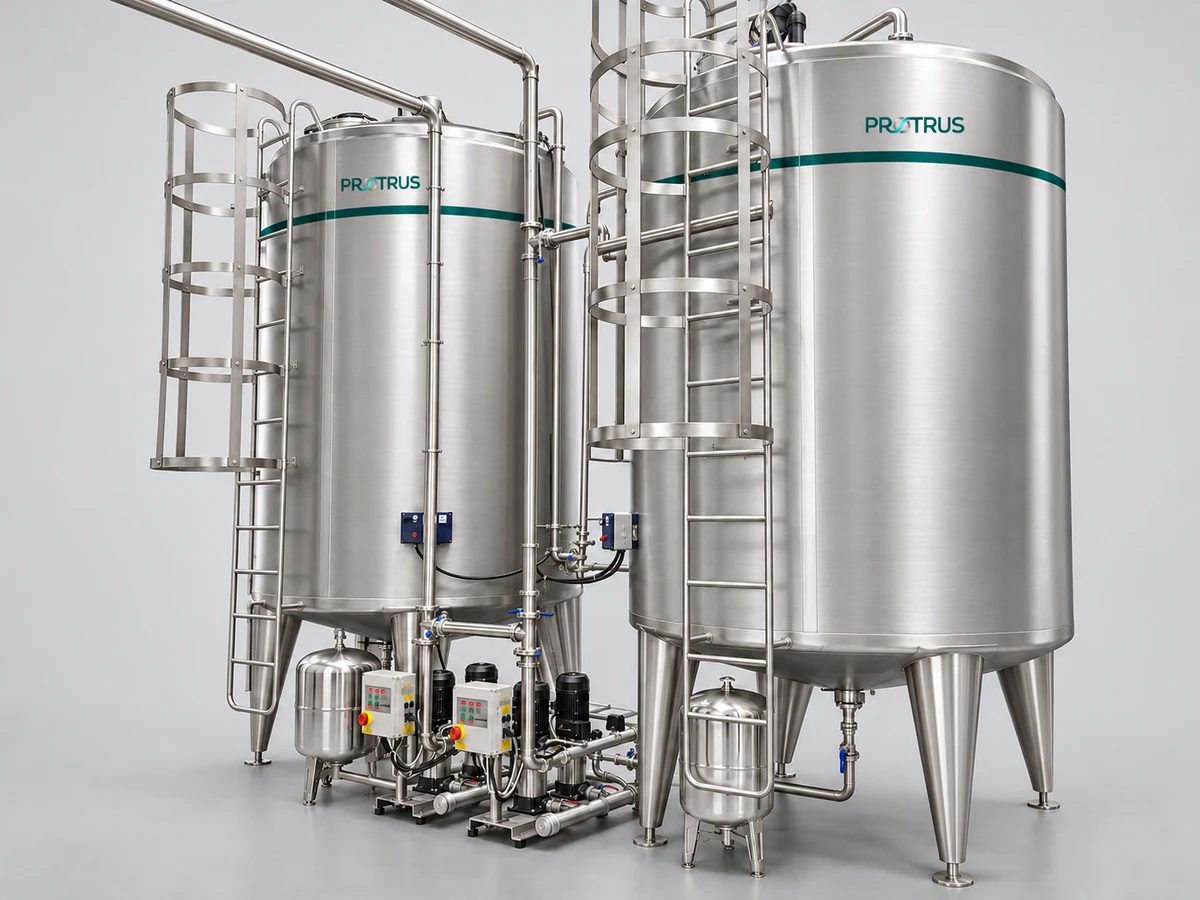
Water tanks with booster pumps.
Storage Tank Types and Design Points (Typical)
| Tank | Volume | Storage temp. | Design points |
|---|---|---|---|
| Raw milk silo | 10,000–150,000 L | 2–4 °C | Insulated, side agitator, radar level, sample valve |
| Pasteurized milk / cream tank | 5,000–50,000 L | 2–6 °C | Ice water jacket, gentle agitator, aseptic option |
| Whey and permeate tank | 10,000–100,000 L | 4–8 °C or 50 °C | Cooled or kept warm, foam-free inlet |
| Process and potable water tank | 5,000–100,000 L | ambient or hot | UV or hot water loop, booster pumps |
| Edible oil and palm oil tank | 10,000–150,000 L | ambient to 60 °C | Heating coil, nitrogen blanket option |
Tall Silo on Its Own Support Ring
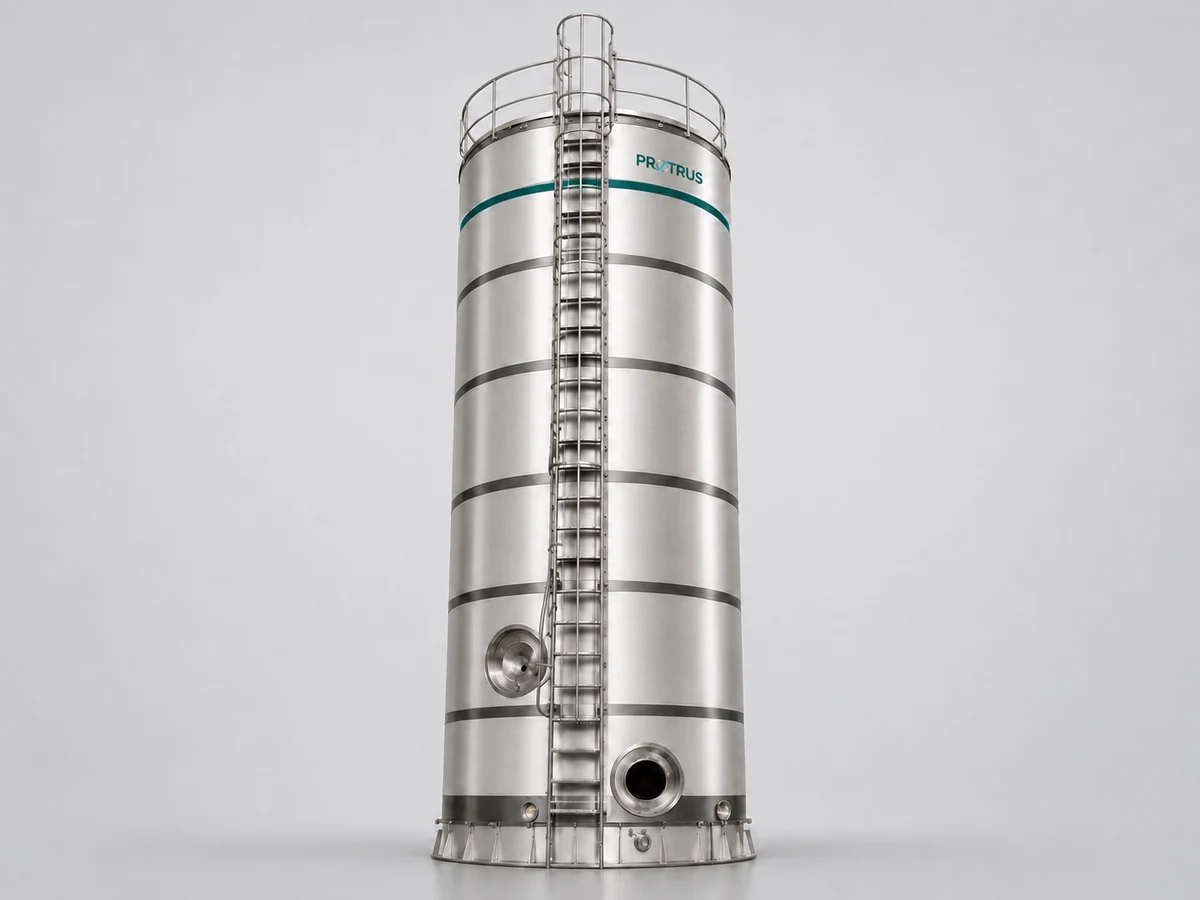
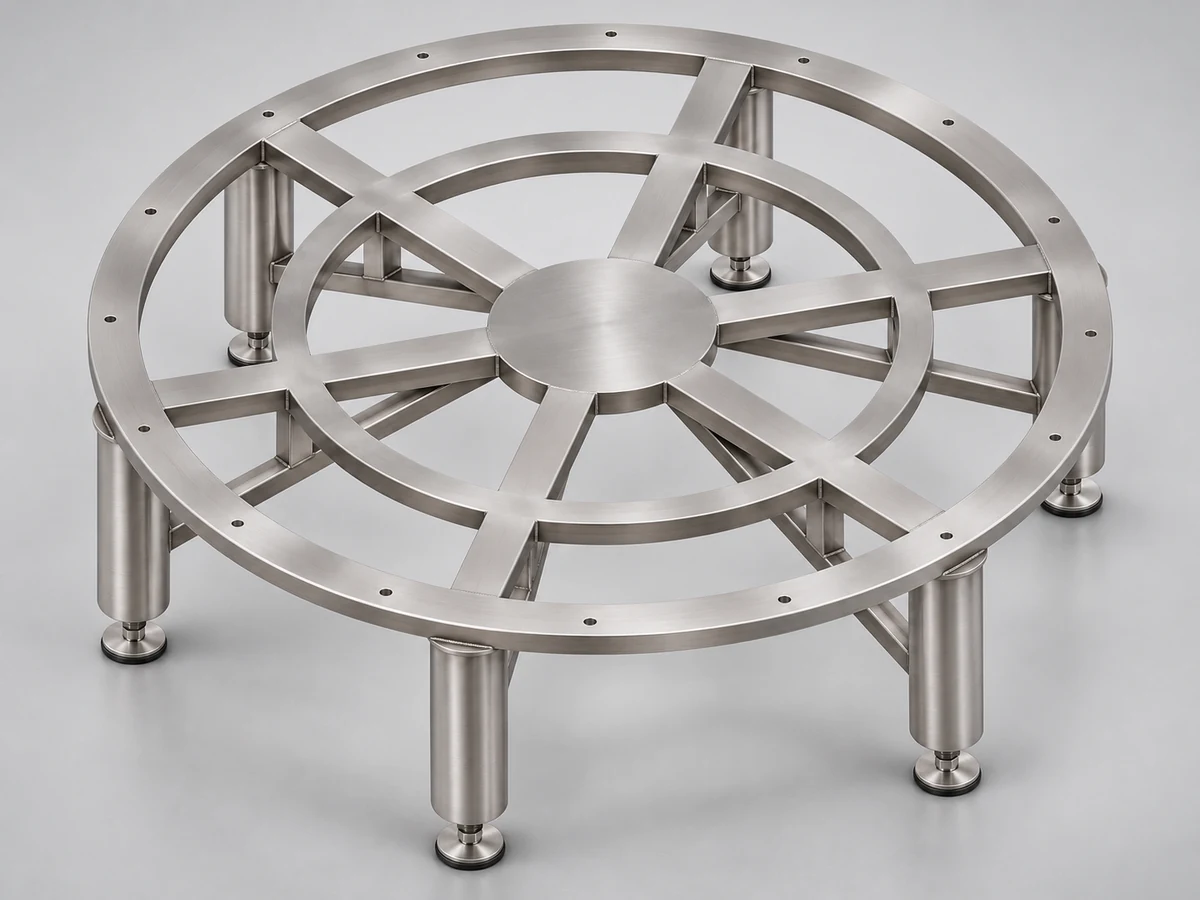
Tall cream storage silo (left) and the stainless support ring it stands on (right).
Process tanks
Process Tanks for Dairy, Food and Beverage Production
Jacketed, insulated and agitated vessels that heat, hold, cool and condition a batch in one place, with every temperature and time recorded.
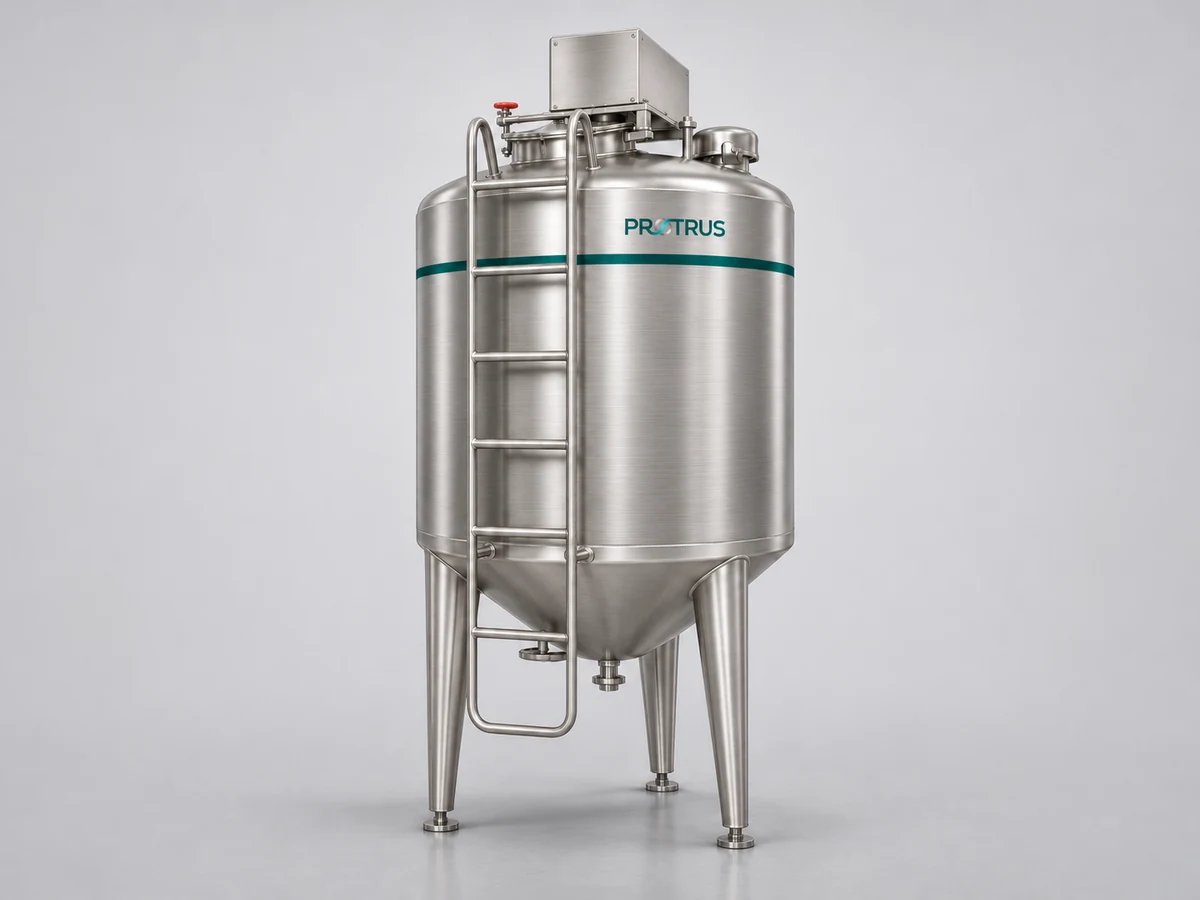

Juice process tank with top agitator and cone bottom (left); cheese process tank with manhole and drive (right).
100–30,000
L working volume
−10 to 140 °C
jacket range, steam or water
10–150 rpm
VFD-driven agitator
± 0.5 °C
batch temperature control
How a Process Tank Works
The product is pumped in, the agitator starts and the jacket heats with steam or hot water, then cools with ice water or glycol. Scrapers keep the wall clean so heat flows fast and nothing burns or sticks.
The PLC follows a recipe: fill, heat to set point, hold for the set time, cool and discharge. Temperature, time, speed and weight are logged for every batch, and the tank is cleaned by CIP right after it empties.
Dairy and Food Process Programs (Typical)
| Product | Heating | Holding | Cooling / next step | Tank design |
|---|---|---|---|---|
| Ice cream mix (aging) | mixed at 60–65 °C | 4–24 h at 2–4 °C | to the freezer | Ice water jacket, slow agitator |
| Cheese milk | 30–35 °C | culture, rennet dosing | to cheese vat | Insulated, gentle agitator |
| Cream ripening (butter) | 19–21 °C | 12–16 h | cool to 8–12 °C | Jacket, cold and warm water |
| Processed cheese pre-mix | 50–60 °C | salt and powders added | to the cooker | Scraper + high shear |
| Ketchup, sauces, dressings | 85–95 °C | 5–15 min | hot fill or cool to 30 °C | Scraper agitator, steam jacket |
| Juice and nectar from concentrate | ambient or 50 °C | blend, Brix check | to pasteurizer | Propeller, load cells |
Processed cheese pre-mixes go on to a cooker cooler mixer; juice blends go to a pasteurizer.
Heating and Cooling Options
Dimple jackets give the best heat transfer for their weight and suit steam up to 6 bar (87 psi) and ice water. Half-pipe coils take higher pressures and fast glycol cooling.
For gentle warming of chocolate, cream or cultures we use a closed hot water circuit with its own pump and plate heater, so the wall is never hotter than the product needs. Electric heating is available for small tanks and plants without steam. Insulation of 50–100 mm with a welded stainless skin keeps the batch at temperature and the room dry.

Dairy Process Tanks
Food and Beverage Process Tanks
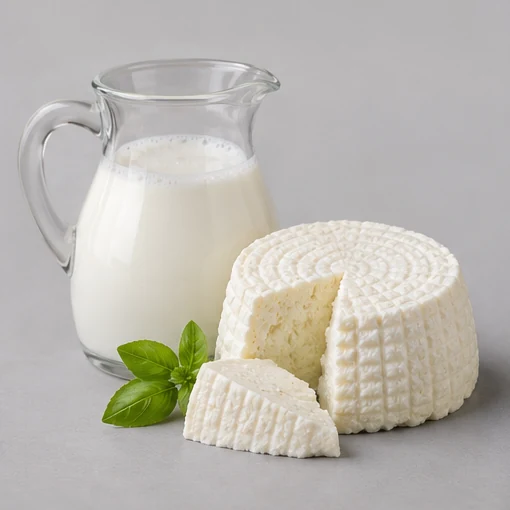
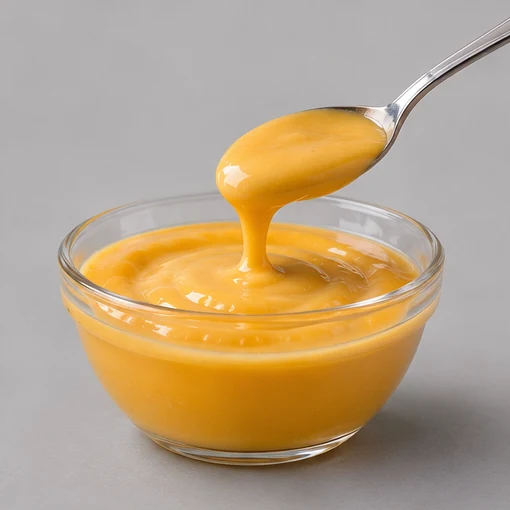
Products Made in Protrus Process Tanks

Mixing and blending tanks
Mixing and Blending Tanks
Tanks that dissolve powders without lumps, blend liquids to an exact recipe and build stable emulsions, for dairy, food, beverage and personal care plants.


Mixing and blending tank in cutaway (left); two mixing tanks with an inline high shear mixer and powder hopper (right).
100–20,000
L mixing and blending tanks
1–200,000
mPa·s product viscosity
1,500–3,000
rpm high shear rotor
< 15 min
typical powder dissolving
Choosing the Right Mixing Method
Mixing quality depends on the agitator, the tank shape and how ingredients go in. Thin liquids need flow, so a propeller or pitched blade turbine turns the whole volume over. Thick products need wall contact, so an anchor with scrapers or a counter-rotating agitator moves the mass and keeps heat transfer high.
Powders and oils need shear: a rotor-stator head in the tank or an inline mixer in a loop wets the powder instantly and breaks oil into fine droplets. Baffles stop the liquid from swirling and pulling in air. See our high shear mixers.
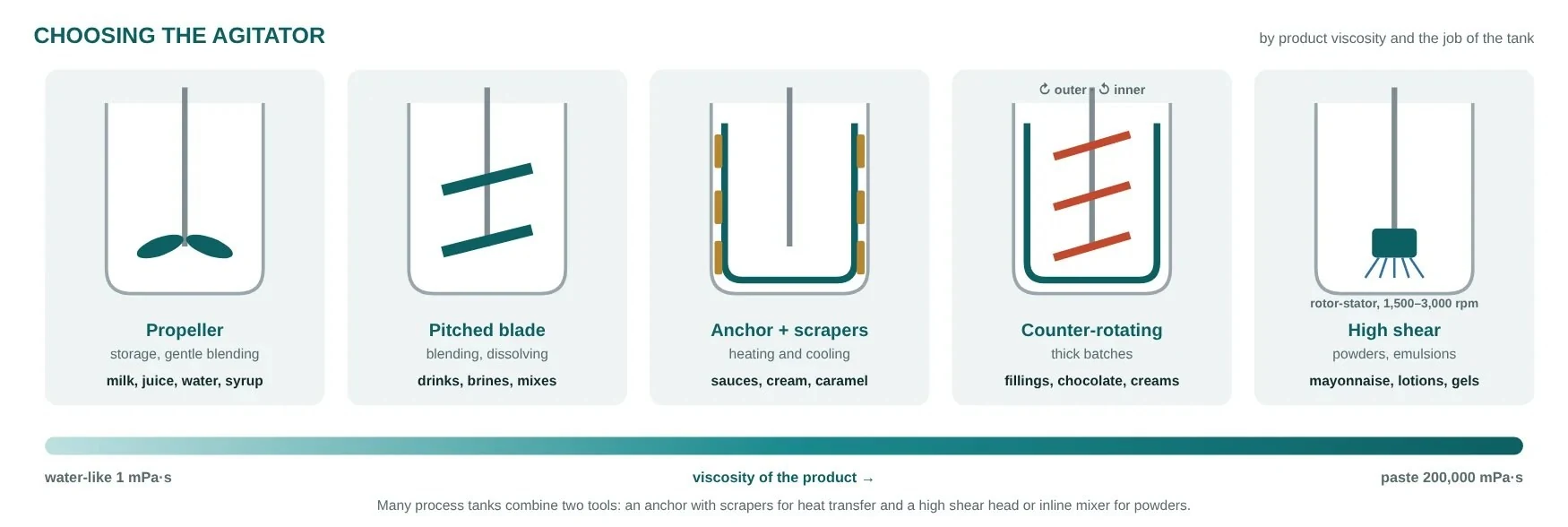
Choosing the agitator by product viscosity: from propeller for thin liquids to high shear for powders and emulsions.
Agitated Tanks in Operation

Agitated tank with top drive and cage ladder.
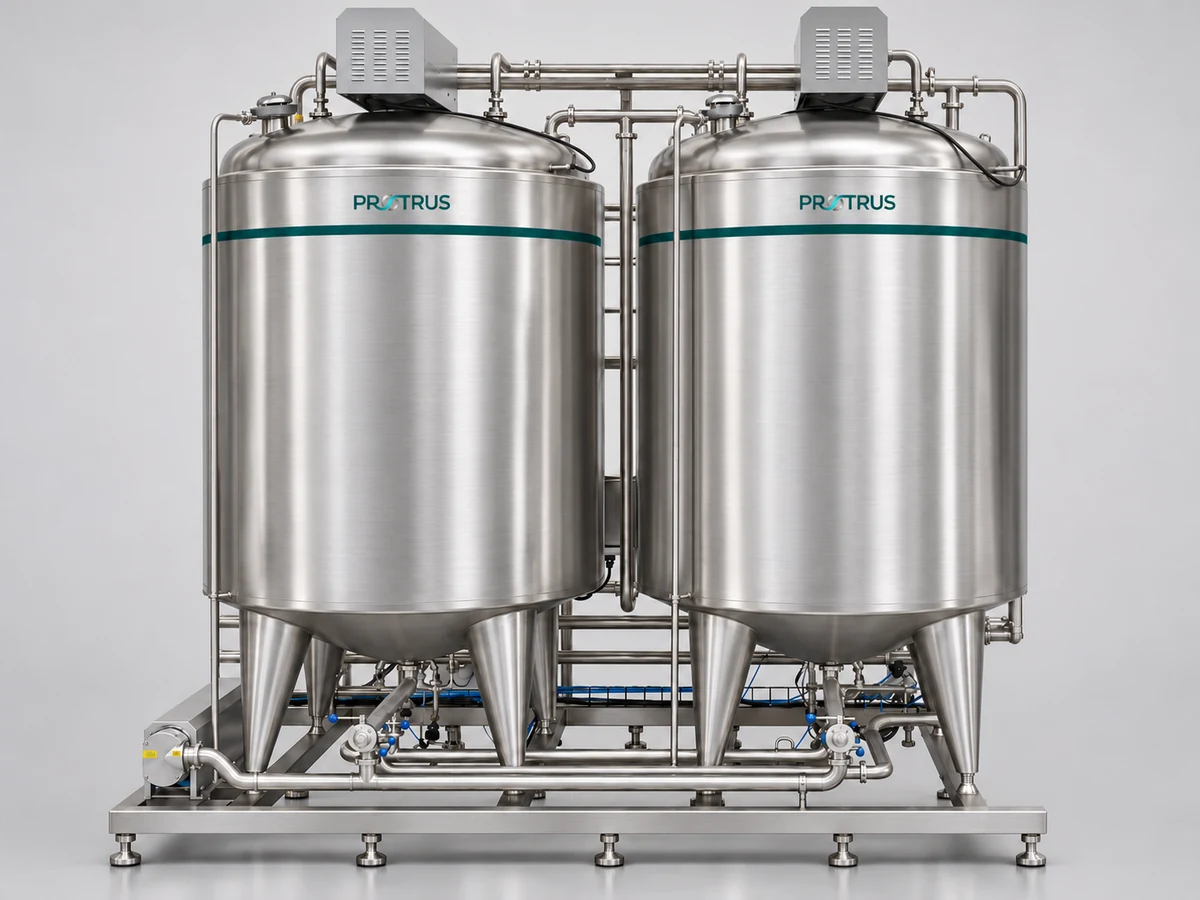
Two jacketed mixing tanks on one skid.
Typical Mixing Jobs and the Right Tank
| Job | Examples | Agitator | Notes |
|---|---|---|---|
| Powder dissolving | Milk powder, sugar, stabilizers, cocoa | High shear + propeller | Vacuum or funnel feed, 40–60 °C water |
| Liquid blending | Juice from concentrate, drink bases, brines | Propeller or turbine | Load cells or flow meters for the recipe |
| Emulsifying | Mayonnaise, dressings, creams, lotions | Bottom high shear + scraper | Oil added slowly, often under vacuum |
| Hydration | Oat, soy and almond bases, gums | High shear + anchor | Enzyme step possible, 50–60 °C |
Products Made in Protrus Mixing Tanks
Fermentation and buffer tanks
Fermentation Tanks and Buffer (Balance) Tanks
Tanks that give cultures exactly the temperature and calm they need, then cool and hold the product so the filling line never waits and never overflows.


Fermentation tanks with powder funnel and platform (left); twin fermentation tanks with control panel (right).
1,000–50,000
L per fermentation tank
± 0.5 °C
incubation temperature
pH 4.6
typical end point, inline or lab
4–6 h
yogurt incubation at 42–43 °C
Inside a Fermentation Tank
Pasteurized and homogenized yogurt milk enters at 42–43 °C (108–109 °F) and the culture is dosed. The agitator stops and the warm water jacket holds the temperature while the gel forms. At the target pH, a slow agitator breaks the gel smoothly and ice water in the jacket cools it to 20–24 °C.
The tank is fully insulated, has a smooth wall without dead zones and a conical bottom, so the delicate yogurt leaves by gravity or a gentle lobe pump without losing its body.
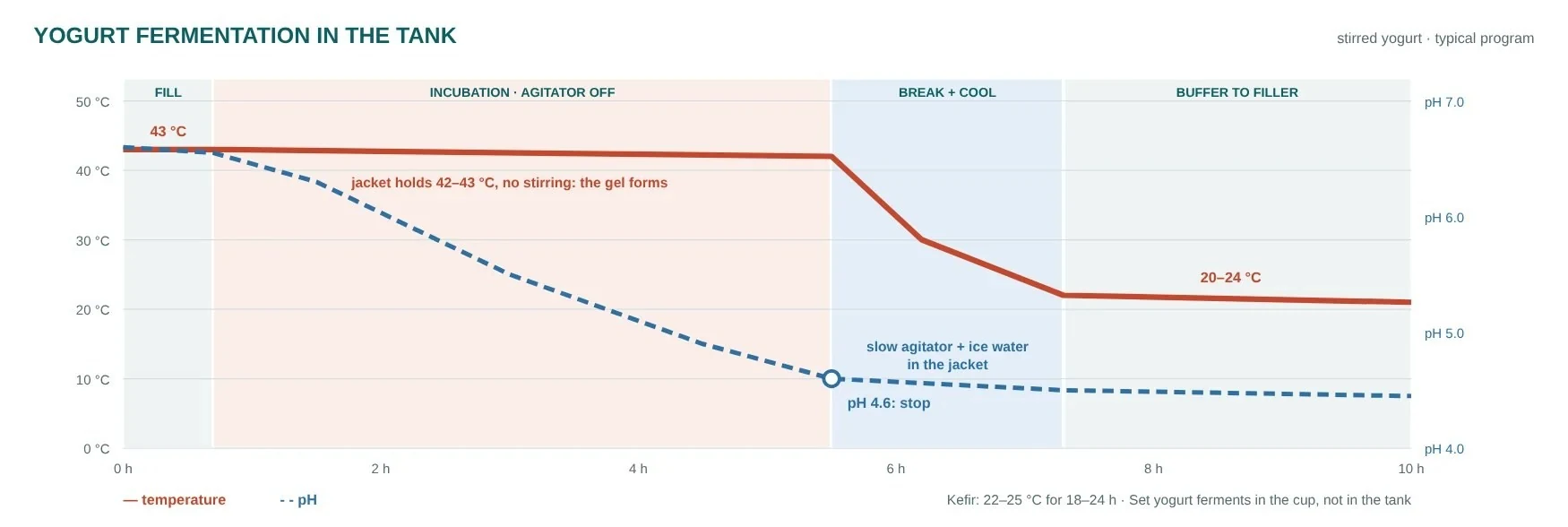
Yogurt fermentation in the tank: temperature and pH over time. Typical values.
Fermentation Programs (Typical)
| Product | Inoculation | Incubation | End point | After fermentation |
|---|---|---|---|---|
| Stirred yogurt | 42–43 °C | 4–6 h | pH 4.5–4.6 | Break, cool to 20–24 °C, buffer, fill |
| Drinking yogurt / ayran | 42–43 °C | 4–6 h | pH 4.4–4.5 | Break, add salt or fruit, cool, homogenize |
| Kefir | 22–25 °C | 18–24 h | pH 4.5–4.6 | Ripen at 8–10 °C, then cool |
| Sour cream / crème fraîche | 20–22 °C | 16–20 h | pH 4.5 | Cool, smooth, fill |
| Biotech broths and media | 30–37 °C | process specific | OD / pH / DO | Harvest, sterile hold |
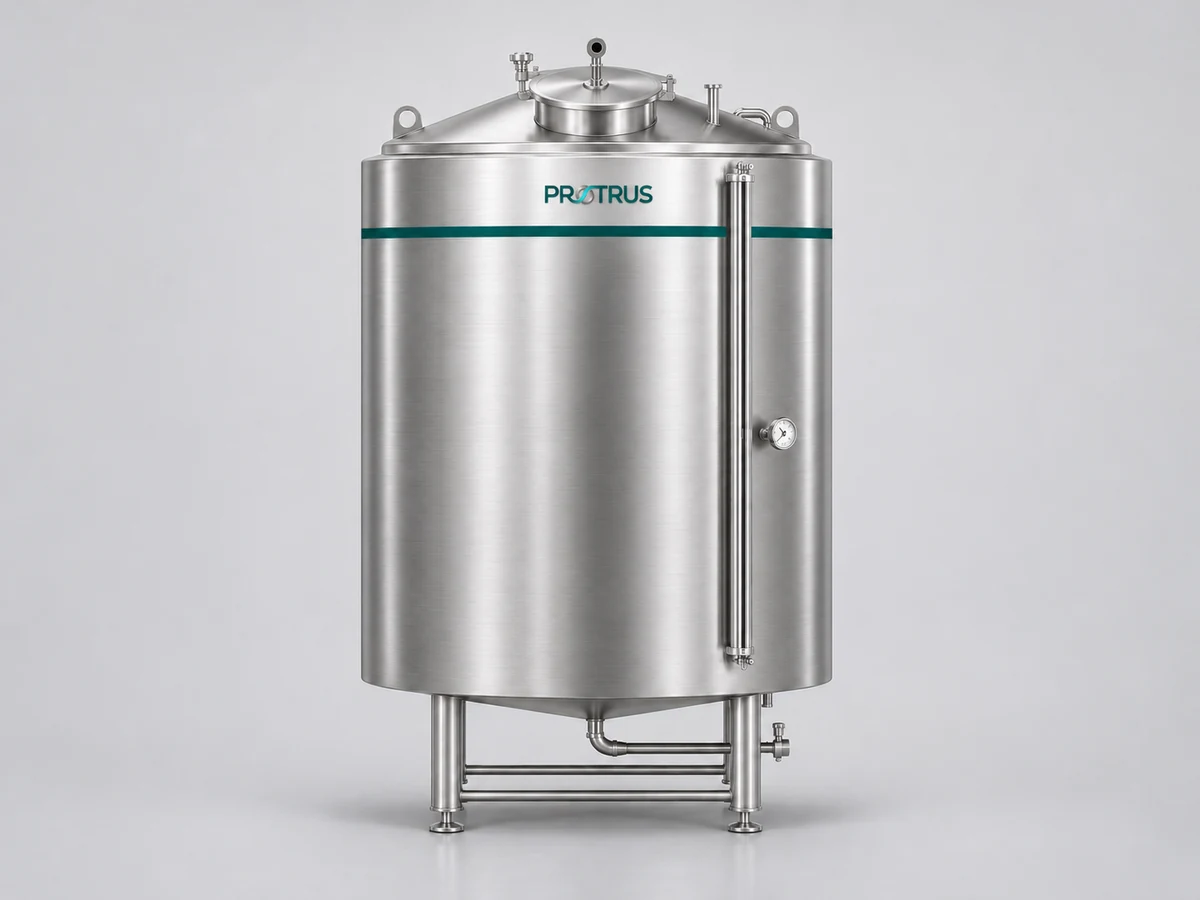
Insulated buffer tank with instrument port.
Buffer (Balance) Tanks
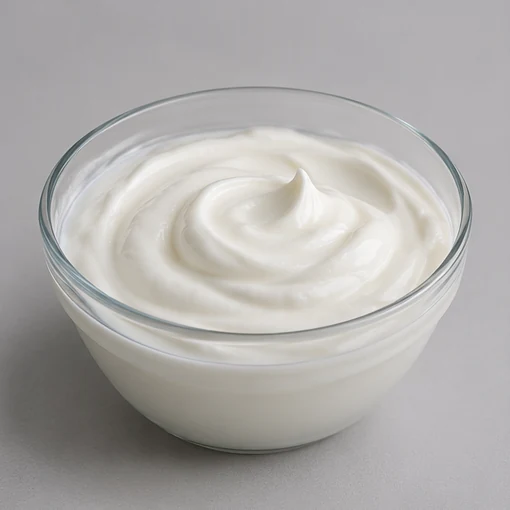
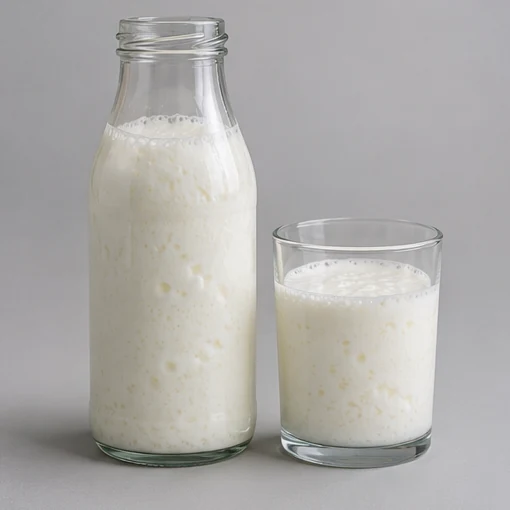
Cultured Products Made in Protrus Fermentation Tanks


Chocolate and syrup tanks
Chocolate-Confectionery Tanks and Syrup Tanks
Warm-water jacketed tanks that melt, stir and hold chocolate, fillings and syrups at the exact temperature the next machine needs.


Chocolate tank with open lid and safety grid (left); twin chocolate holding tanks with hinged lids (right).
100–20,000
L chocolate and filling tanks
40–50 °C
dark chocolate holding
± 0.5 °C
warm water jacket control
65–67 °Brix
typical sugar syrup
Why Chocolate Needs Its Own Tank
Chocolate burns above about 55 °C (131 °F), sets below 30 °C (86 °F) and takes up moisture from any steam leak, so it is never heated with direct steam.
Protrus chocolate tanks use a closed warm-water jacket with its own heater and pump, an anchor or counter-rotating stirrer with PTFE scrapers that keeps the wall clean, and a bottom outlet to the tempering machine, enrober or depositor. A safety grid under the lid lets the operator add blocks or callets while the stirrer runs.
Chocolate and Confectionery Tanks

Agitator arms and scrapers inside the tank.

Chocolate melting tank with hopper lid.

Syrup storage tanks with manholes.
Chocolate Temperatures (Typical)
| Mass | Melting | Holding |
|---|---|---|
| Dark chocolate | 45–50 °C | 40–45 °C |
| Milk chocolate | 40–45 °C | 38–42 °C |
| White chocolate | 38–42 °C | 36–40 °C |
| Compound coating | 45–50 °C | 40–45 °C |
Sugar Syrup Tank Program (Typical)
| Step | Value |
|---|---|
| Water in, heat | 60–80 °C |
| Sugar dosing, high shear | to 65–67 °Brix |
| Hold / pasteurize | 85 °C, 10–15 min |
| Filter, cool, store | to 20–25 °C |
Confectionery Applications
Syrup Applications in Food and Beverage
Products from Protrus Chocolate and Syrup Tanks



Vacuum process tanks
Vacuum Process Tanks for Caramel, Aroma, Sauces and Creams
Full-vacuum rated vessels that cook gently, take in powders without dust and deliver smooth, air-free products with their color and aroma intact.
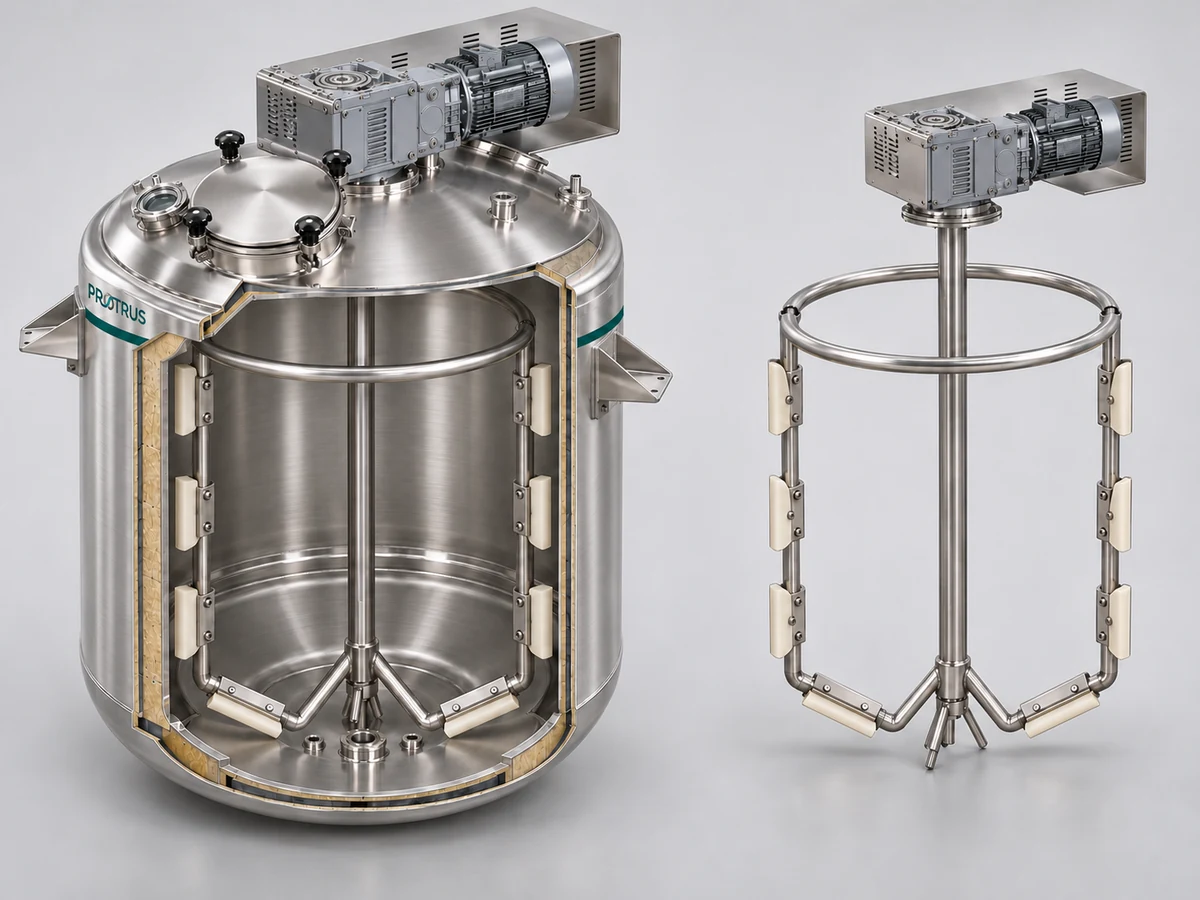
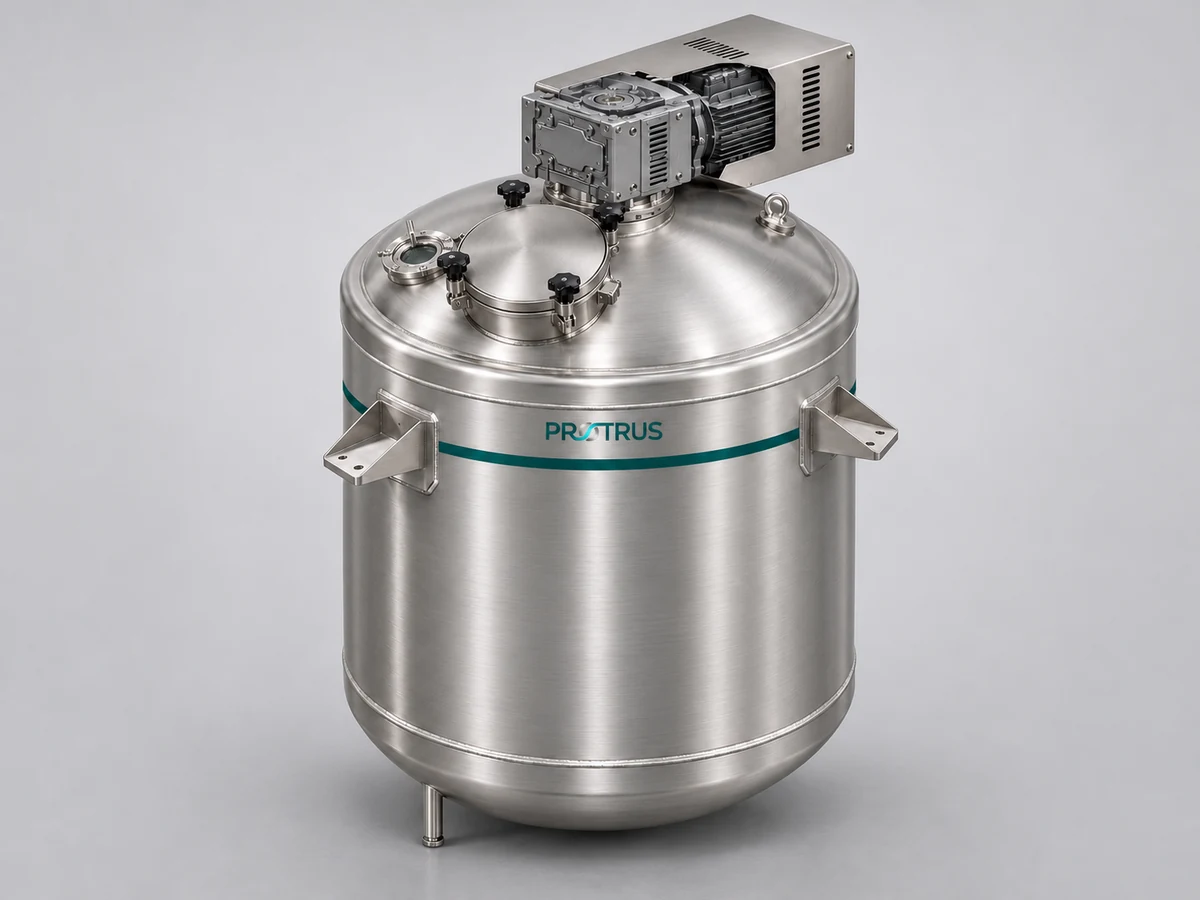
Vacuum process tank in cutaway with scraper agitator (left) and as delivered with top drive and manhole (right).
−0.95 bar
vacuum, full-vacuum rated shell
60–70 °C
boiling point under vacuum
50–10,000
L vacuum process tanks
3 in 1
cook, emulsify, deaerate
What Vacuum Does for the Product
Under vacuum, water boils at 60–70 °C (140–158 °F) instead of 100 °C, so caramel, dulce de leche, fruit preparations and sauces cook gently and keep their color and aroma. Powders are sucked in below the liquid level without dust or lumps.
The finished batch is free of air bubbles, which gives a glossy surface, an exact fill weight and a longer shelf life. A condenser catches the vapor, so aroma can be returned to the batch or water can be removed to reach the target °Brix.
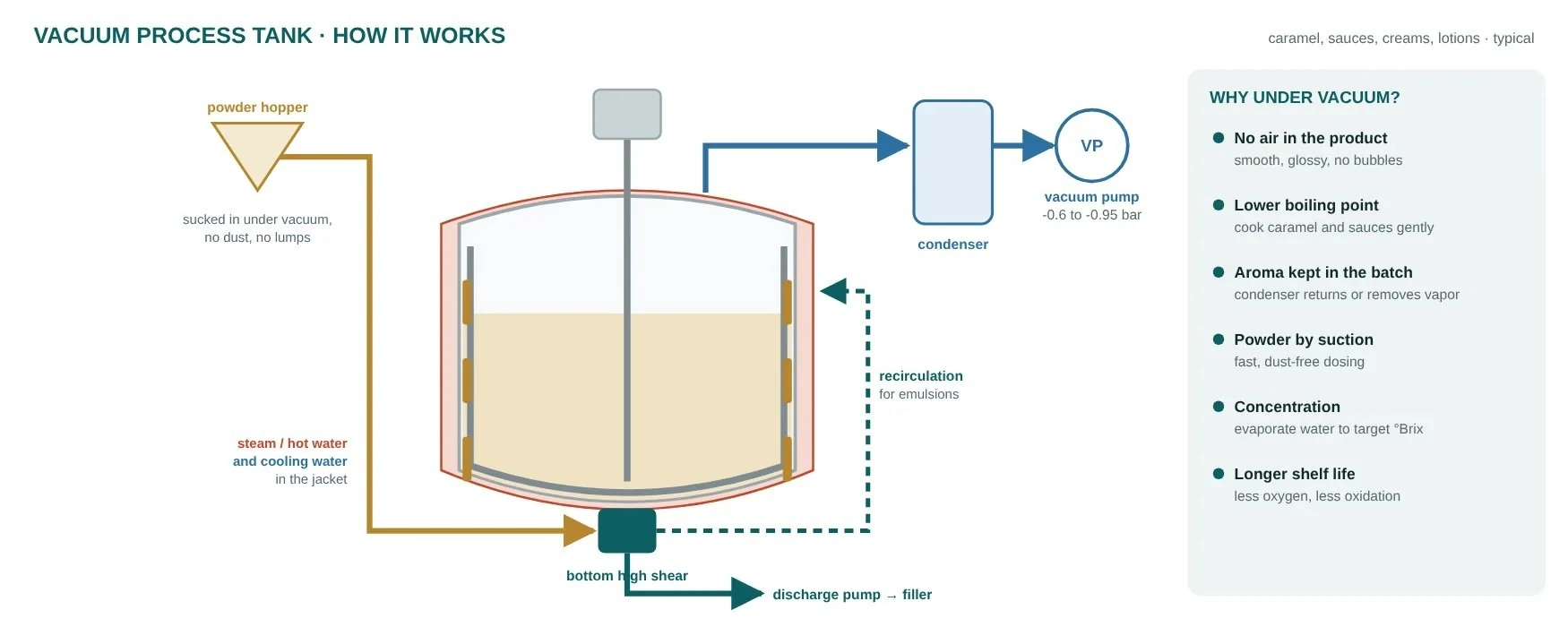
How a vacuum process tank works. Schematic, typical values.
Vacuum Tank Applications (Typical)
| Product | Temperature | Vacuum | Why vacuum |
|---|---|---|---|
| Caramel and dulce de leche | 95–110 °C, cooled under vacuum | −0.6 to −0.8 bar | Gentle cooking, no burnt taste, concentration |
| Fruit preparations and jams | 65–85 °C | −0.7 to −0.9 bar | Color and aroma kept, fruit pieces stay whole |
| Mayonnaise and dressings | 15–25 °C | −0.8 to −0.9 bar | No air, stable emulsion, longer shelf life |
| Processed cheese and spreads | 75–95 °C | −0.5 to −0.7 bar | Smooth body, no holes, exact fill |
| Creams, lotions, gels | 70–80 °C then 30 °C | −0.8 to −0.95 bar | No bubbles, glossy and stable product |
Food and Dairy Vacuum Tanks
Personal Care and Pharma Vacuum Vessels
Products from Protrus Vacuum Process Tanks
Personal care · Chemical · Pharma · Biotech
Industrial Tanks for Personal Care, Biotechnology and Pharmaceutical Plants
The hygienic design that protects milk and juice also protects creams, culture media and medicines. Protrus builds these vessels to the finish, cleaning and documentation each industry asks for.
Tanks Beyond Food and Dairy
Personal care: emulsions
Water phase and oil phase vessels at 70–80 °C feed a vacuum emulsifying vessel that makes creams, lotions, sunscreens and ointments. Scraper and high shear mixing give a fine, stable emulsion without air.
Personal care: liquids and gels
Shampoo, shower gel, liquid soap and conditioner are blended in large propeller or turbine tanks, with slow mixing of surfactants to avoid foam, then held in storage tanks before filling.
Biotechnology: media and buffers
Media and buffer preparation tanks dissolve salts, sugars and peptones to an exact recipe, check pH and conductivity, then pass the solution through sterile filters into hold tanks.
Biotechnology: fermentation and harvest
Seed and production vessels with sterile air, pH and DO control grow yeast, bacteria and cells; harvest and hold tanks keep the broth cold before separation and purification.
Pharmaceutical: liquids and semi-solids
Syrups, suspensions, oral solutions, gels and creams are made in electropolished vessels that clean and steam-sterilize in place, with every batch step recorded.
Pharmaceutical: purified water and WFI
Purified water and water-for-injection tanks run hot at 80 °C or in a sanitized loop, with sterile vent filters, spray balls and full drainability to keep water quality.
How the Design Changes by Industry (Typical)
| Design point | Dairy and food | Personal care | Biotechnology | Pharmaceutical |
|---|---|---|---|---|
| Inner surface | Ra ≤ 0.8 µm | Ra ≤ 0.6 µm | Ra ≤ 0.4 µm, electropolished | Ra ≤ 0.4 µm, electropolished |
| Cleaning | CIP | CIP, hot water | CIP + SIP at 121 °C | CIP + SIP, validated |
| Typical vessels | Silos, process, fermentation | Phase, emulsifying, storage | Media, buffer, fermenter, hold | Formulation, WFI, hold |
| Documentation | Materials, pressure test | Materials, FAT | Turnover package, FAT, SAT | IQ/OQ support, cGMP file |
| Design standard | 3-A style hygienic design | Hygienic design, ATEX if needed | ASME BPE | ASME BPE, GMP, PED/ASME |
Products Made in Protrus Industrial Tanks
Technical Data, All Protrus Tanks (Typical)
| Item | Standard | Options |
|---|---|---|
| Volume | Tanks 100–120,000 L · silos 10,000–150,000 L | Larger silos built on site |
| Materials | AISI 304 / 316L product contact | Duplex, 904L, Hastelloy for chemicals |
| Design pressure | Atmospheric or −1 / +3 bar | Up to +6 bar, full vacuum |
| Jacket and insulation | Dimple jacket, 50–100 mm PU or mineral wool | Half-pipe coil, channel jacket, glycol |
| Agitation | Top or side agitator, VFD | Scraper, counter-rotating, high shear, magnetic |
| Instruments and control | PT100, radar or load cells, PLC/HMI | pH, DO, conductivity, batch records |
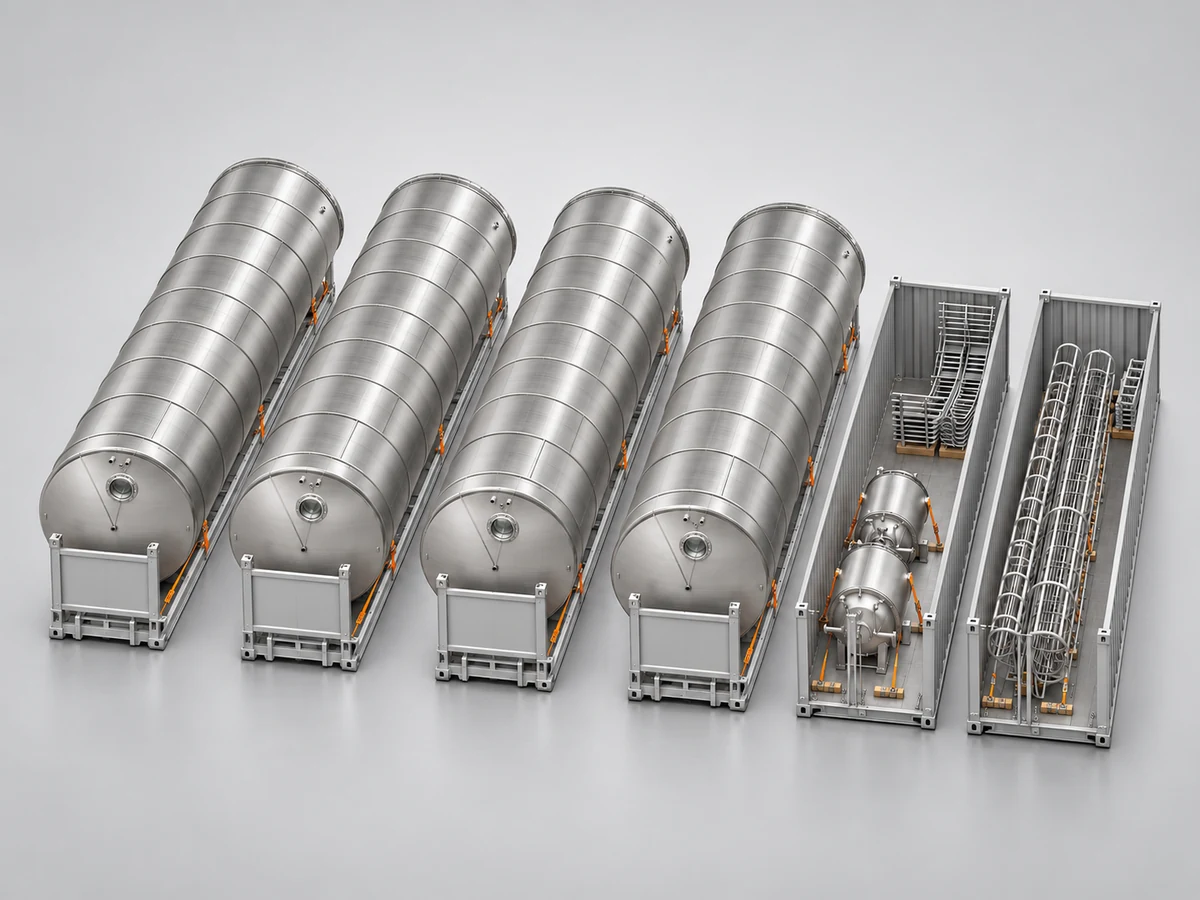
Tank shells ready for shipping on flat racks.
Fabrication, Testing and Delivery
Frequently Asked Questions About Stainless Steel Tanks
Have a question about volume, finish or agitation? Ask our process engineers.
Get a Quote
Send Us Your Product, Volume and Process
Tell us what goes in the tank, how much, at what temperature and how it must be mixed, heated, cooled or kept. Protrus engineers size the vessel, jacket, agitator and CIP, and deliver a tested tank or a complete tank farm.
Prefer email? info@protrus.com