

Food & Beverage Processing · Washing Systems
Industrial Washers for Crates, Trolleys, Buggies and Containers
Hygienic cabinet and tunnel washing machines that clean every item that touches your product, with repeatable results, less water and fewer hours of manual work.
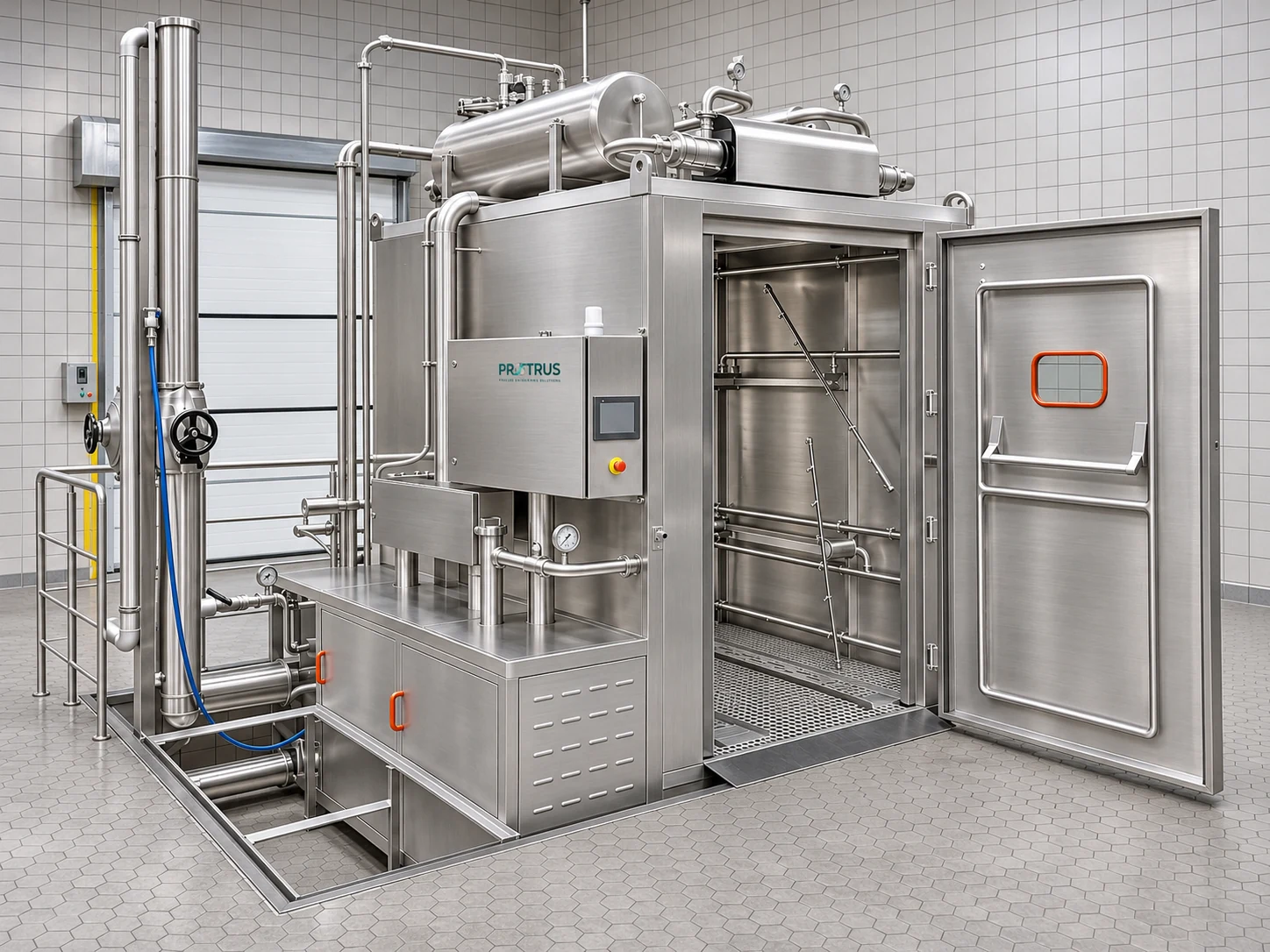
Protrus Ultrawash five-stage cabinet washer for racks, trolleys, molds and buckets.
5 cabinet types
Buggies, racks, trays, trolleys, pots
3 tunnel types
Crates, trays, bins, buckets, molds
80–85 °C
Fresh hot final rinse
AISI 304 / 316
Stainless steel construction
Series overview
Controlled Washing Instead of Hoses
Hygienic cabinet and tunnel washing machines that clean every item that touches your product, with repeatable results, less water and fewer hours of manual work.
In a food plant, crates, racks, buggies and molds go back into production many times a day. If they are washed by hand with a hose, results depend on the person and the shift, water and detergent use is high and the wash area is always wet.
A Protrus washer turns this into a controlled process: the right temperature, detergent concentration, spray pressure and contact time, every cycle, logged by the PLC. We build two families. Cabinet washers clean one load at a time behind closed doors and suit large or mixed items. Tunnel washers move items on a conveyor through separate wash, rinse and drying zones and suit high volumes of the same item. All machines are AISI 304 stainless steel (AISI 316 on request) with sloped surfaces and removable filters.
Cabinet Type Washers
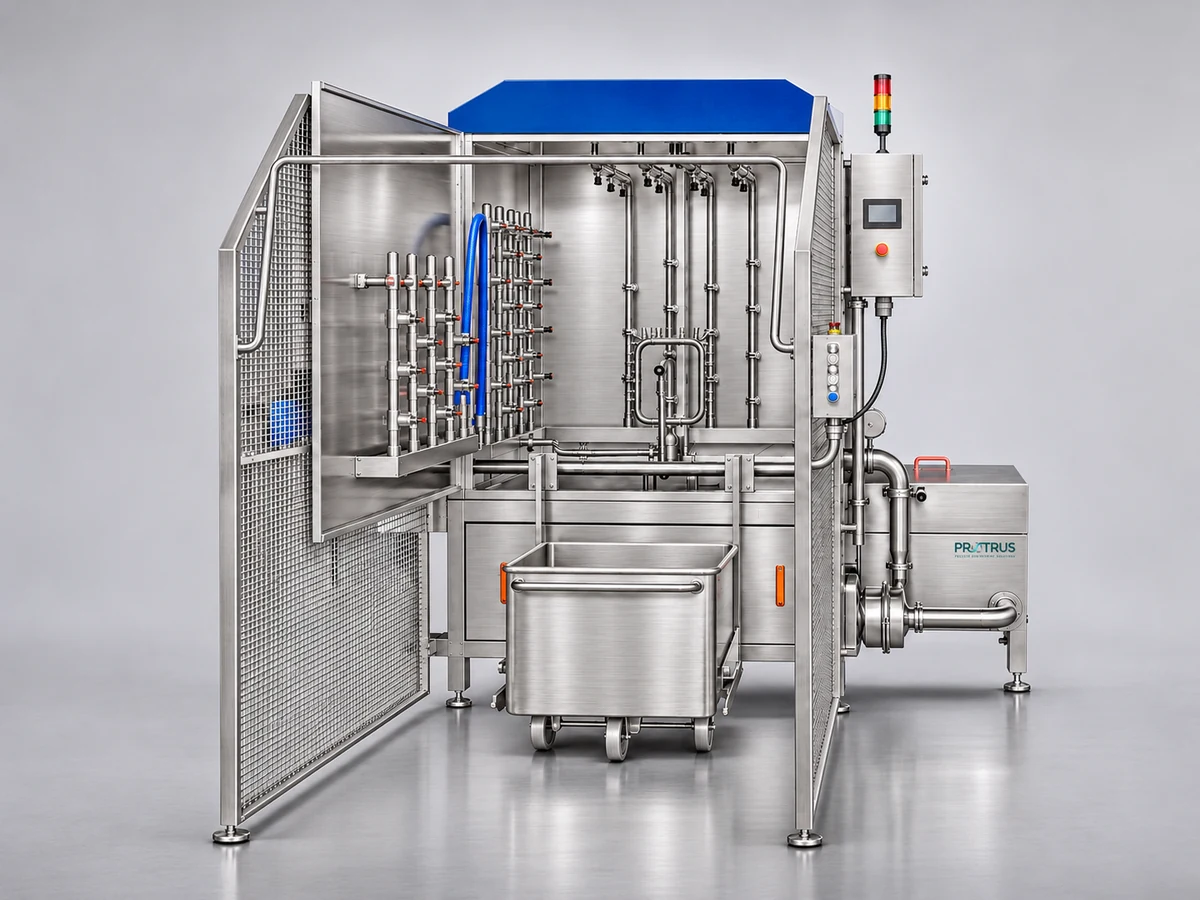
Buggies · V-carts
Easywash Buggy Washer
Lifts and inverts 200 L buggies for inside and outside washing.
Racks · Molds · Sieves
Ultrawash 5-Stage Cabinet
Fully equipped: wash, rinse, disinfection, hot rinse.
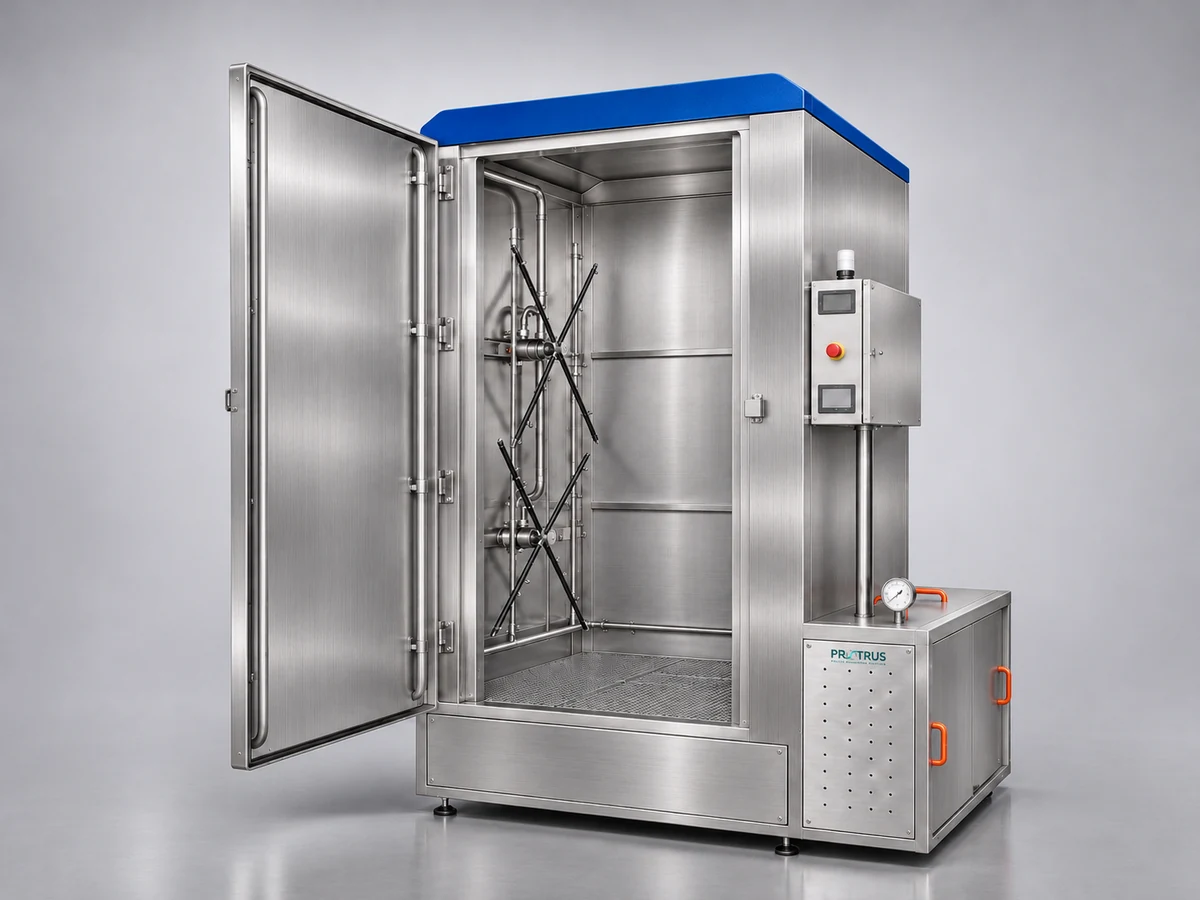
Racks · Trays · Pans
Technowash Compact Cabinet
Small footprint, 3 programs, for trolleys up to 1.9 m.
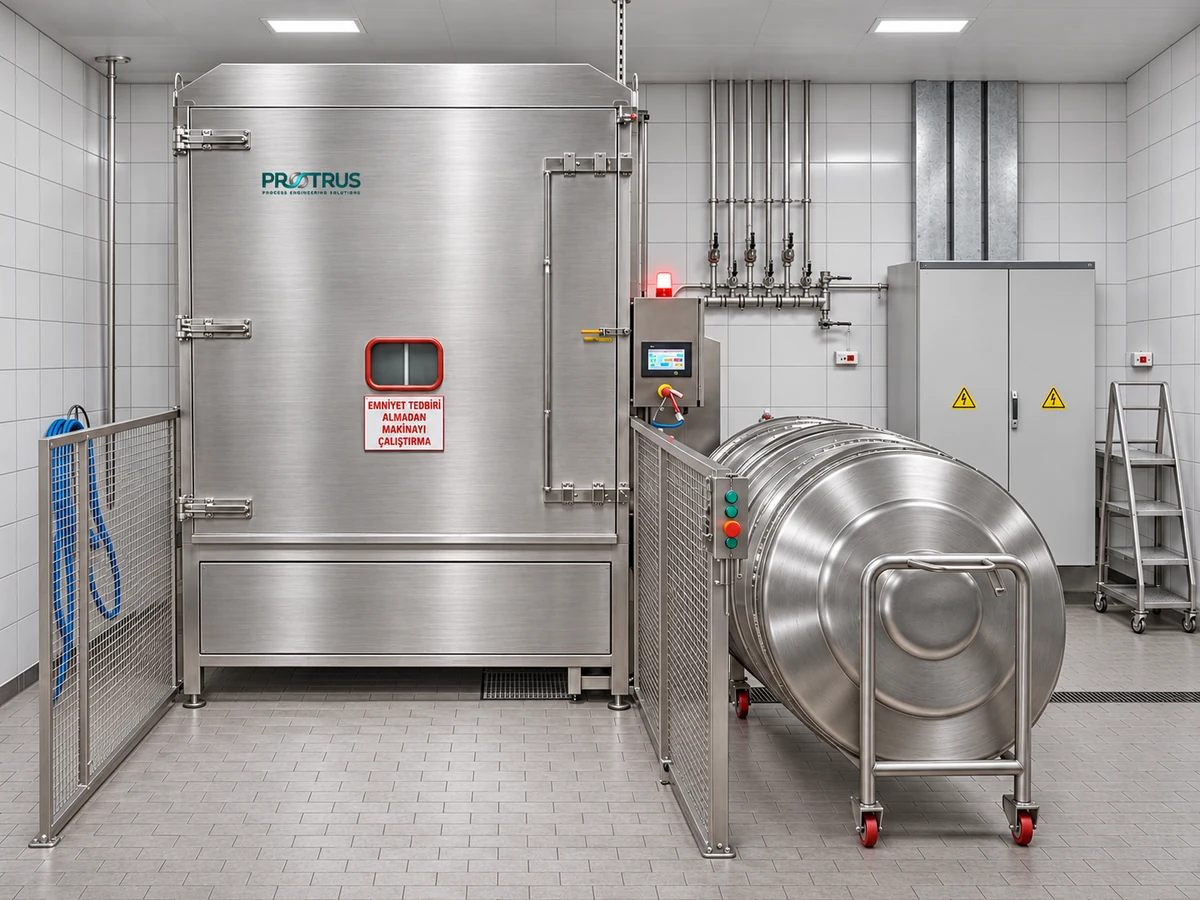
Pots · Tubs · Boxes
Greatwash Pot and Box Washer
Elevator inverts each container for inside and outside washing.
Tunnel Type Washers
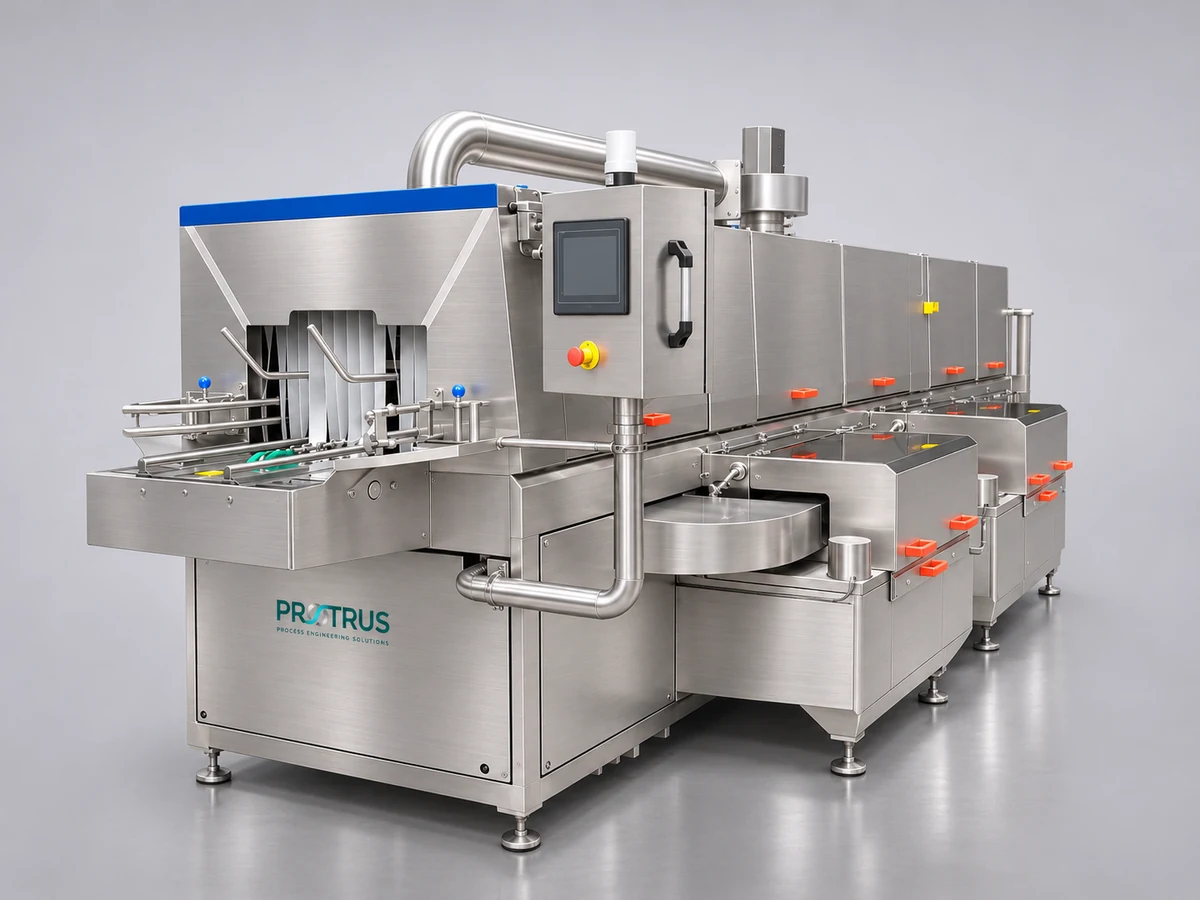
Crates · Trays · Bins
Unique Multi-Zone Tunnel
Pre-wash, wash, rinse and blow-off in one line for the highest volumes.
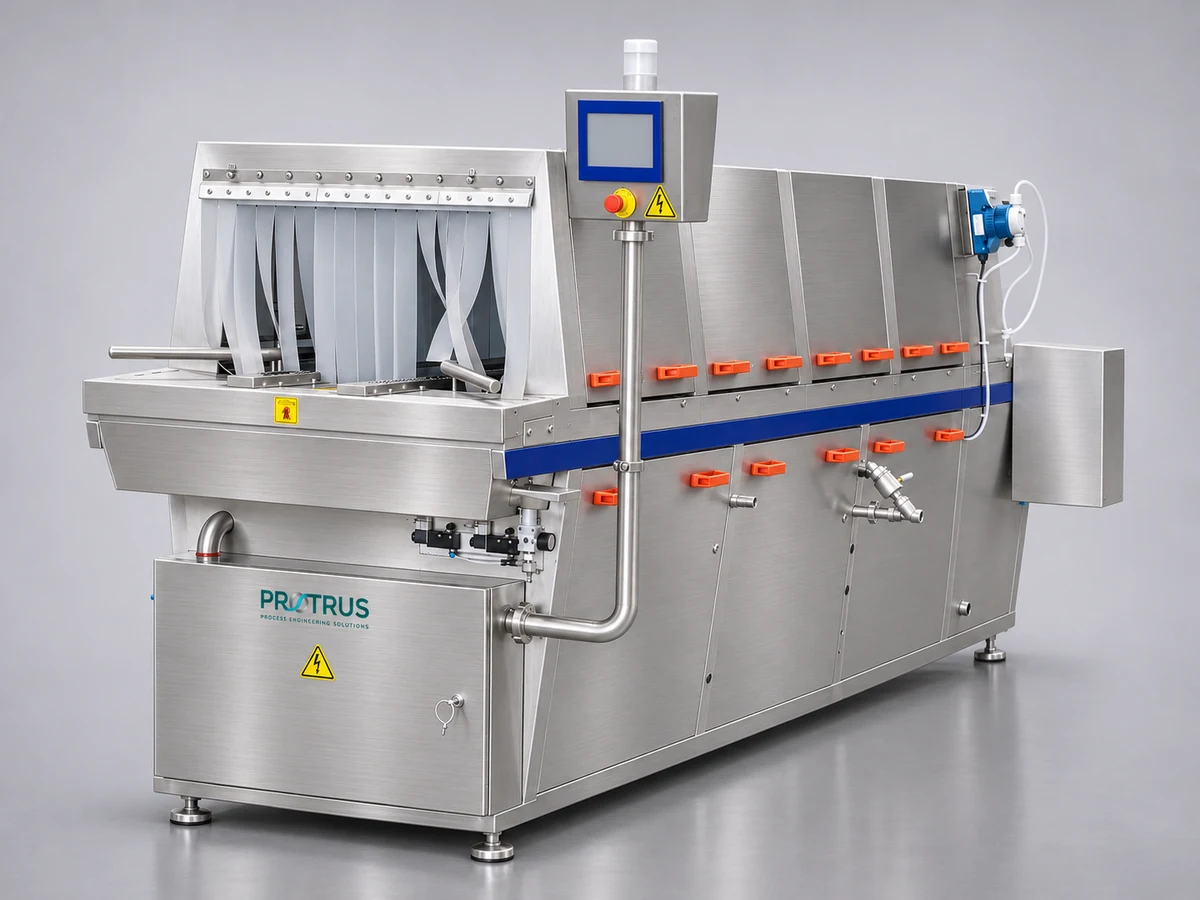
Crates · Boxes
Singlewash Compact Tunnel
Four zones in about 4 m for mid-size plants and retail logistics.
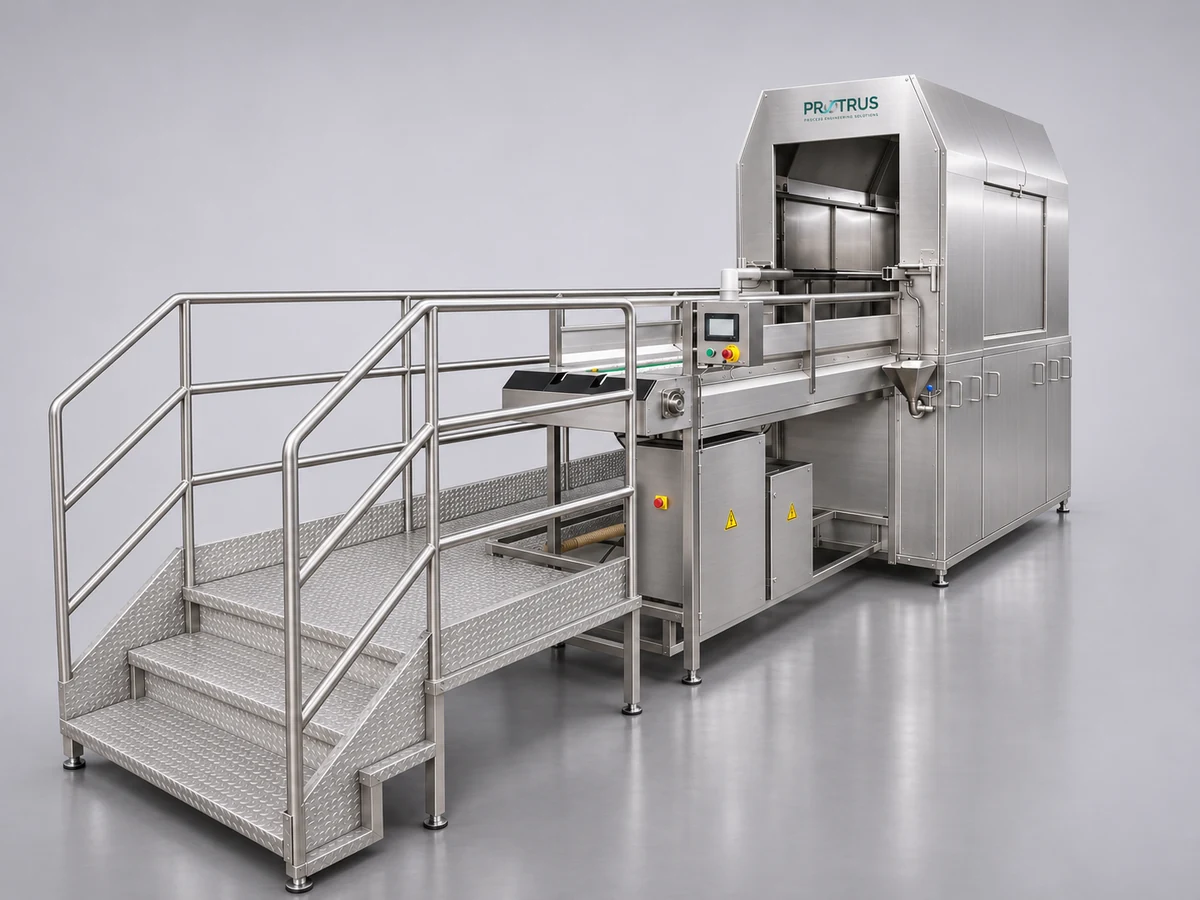
Crates · Buckets · Molds
Sanita Disinfection Tunnel
Disinfects new or stored containers before they enter production.
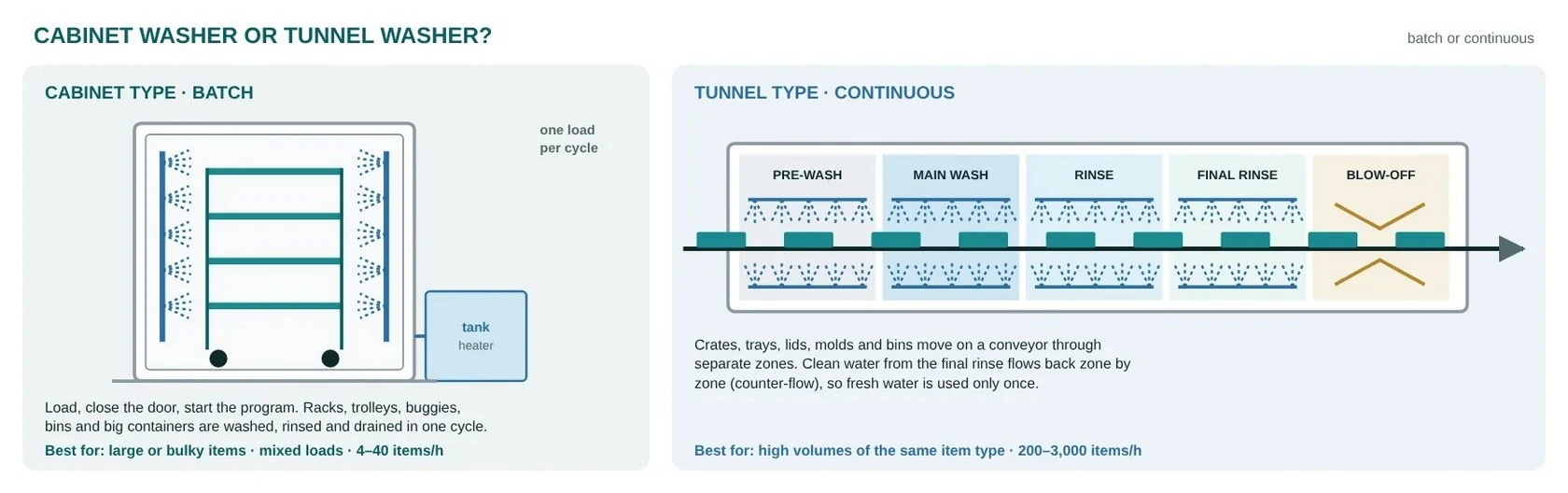
Cabinet washer or tunnel washer? Batch washing for large or mixed items, continuous washing for high volumes of the same item.
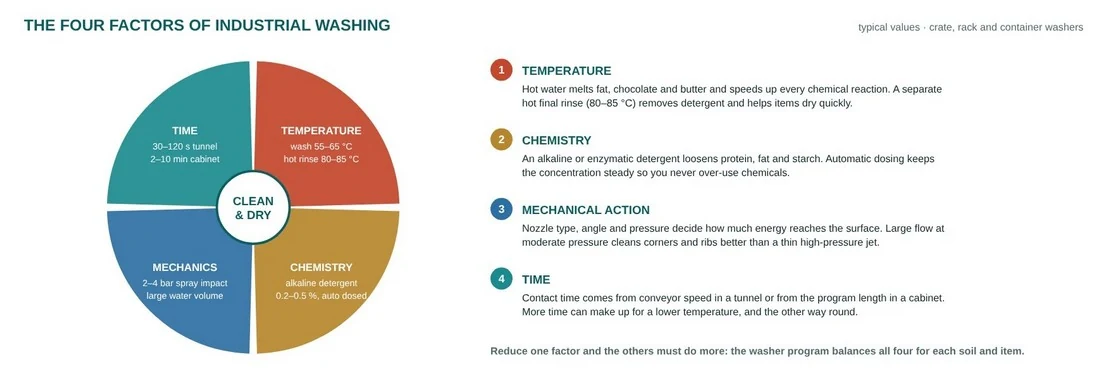
Reduce one factor and the others must do more: the washer program balances temperature, chemistry, mechanical action and time for each soil and item.
Where Protrus Washers Work
Dairy
Yogurt incubation trolleys, cheese molds, kashkaval resting racks, crates, plastic pallets.
Meat and poultry
200 L buggies, sausage and smoke trucks, hanging racks, E2 crates, egg setter trays.
Bakery and confectionery
Oven racks, baking trays and pans, cake molds, chocolate molds, dough tubs.
Fruit, vegetables and ready meals
Harvest and retail crates, bins, lids and portion trays.
Catering and central kitchens
Tray carts, plate racks, service trolleys, gastronorm containers.
Logistics and retail
Returnable crates and boxes, roll cages and pallets for food distribution.
Which Washer for Which Item
| Washer | Type | Typical items | Loading | Typical output |
|---|---|---|---|---|
| Easywash | Cabinet | 200 L buggies, V-carts, tote bins | Lift and tilt | 30–60 buggies/h |
| Ultrawash | Cabinet, 5-stage | Racks, molds, sieves, buckets, trays | Entry and exit doors | 4–10 loads/h |
| Technowash | Cabinet, compact | Bakery racks, trays, pans, small trolleys | Ramp, 1 door | 6–15 loads/h |
| Masterwash | Cabinet, pass-through | Large trolleys, incubation racks, cages | Entry and exit doors | 6–12 trolleys/h |
| Greatwash | Cabinet, elevator | Pots, tubs, boxes, dough troughs, bins | Elevator, inverted | 20–40 items/h |
| Unique | Tunnel, multi-zone | Crates, trays, lids, bins, pallets on request | Conveyor | 800–3,000 crates/h |
| Singlewash | Tunnel, compact | Crates, boxes, trays | Conveyor | 300–800 crates/h |
| Sanita | Tunnel, disinfection | New or stored crates, buckets, molds, tubs | Conveyor | Matched to the line |
Cabinet type · Buggies and V-carts
Easywash Buggy Washer for 200 L Buggies and V-Carts
Automatic lift-and-tilt washing that cleans the inside, outside and wheels of every buggy in about two minutes.
Easywash with lifting carriage, safety cage and wall-mounted touch screen panel.
60–120 s
per buggy, by program
30–60 /h
buggies per hour
200 L
standard buggies, V-carts
AISI 304
AISI 316 on request
How the Easywash Works
The operator pushes a dirty buggy onto the lifting carriage and starts the cycle. The carriage raises the buggy and turns it upside down inside the wash chamber, so water and residues drain out by gravity.
A central spray ball sits in the middle of the tub and sprays 360° onto the inner walls and corners, while spray nozzles all around wash the outside, the frame and the wheels. After the detergent wash, a fresh-water rinse removes chemical residues. The carriage then lowers the buggy upright and the next one goes in. The whole movement is guarded by the safety cage and interlocked door.
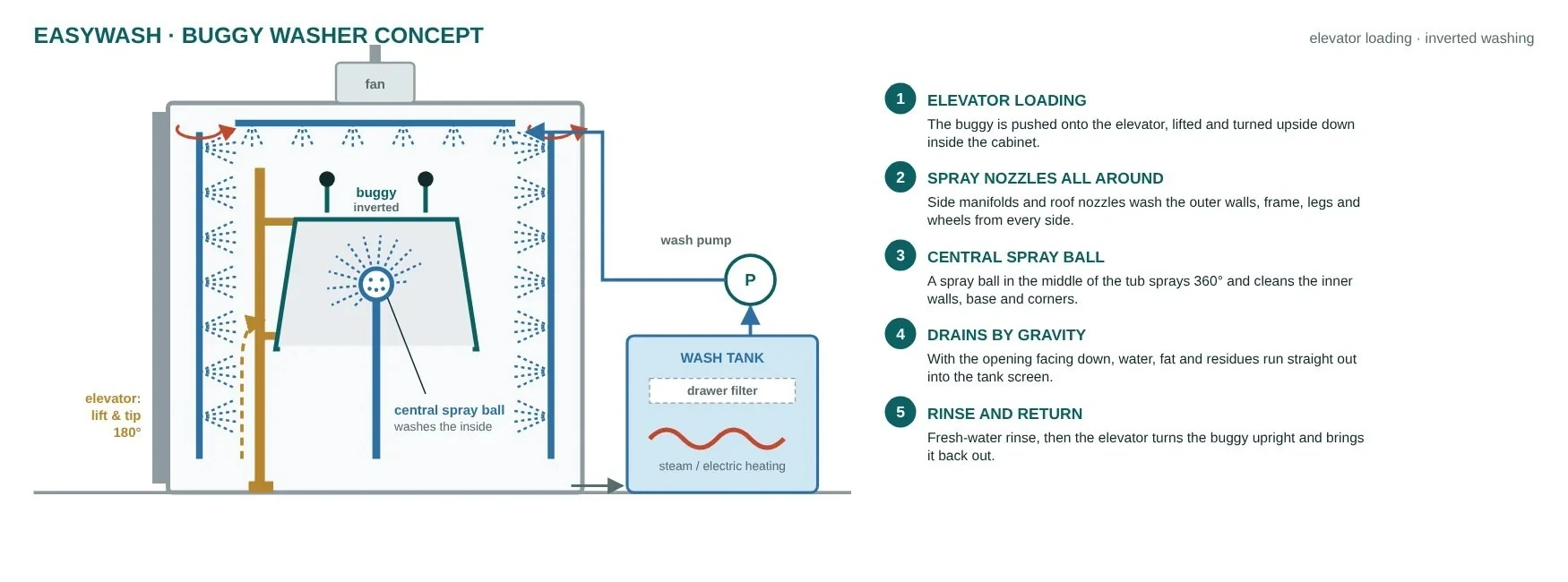
Easywash buggy washer concept: elevator loading and inverted washing.

Easywash, one cycle. Cycle time depends on the soil (fat, blood, dough) and the selected program.
Easywash Technical Data (Typical)
| Parameter | Value |
|---|---|
| Items | 200 L buggies (Euro standard), V-carts, tote bins |
| Cycle time | 60–120 s, programmable |
| Output | 30–60 buggies per hour |
| Wash / rinse | 55–65 °C (131–149 °F) detergent wash, fresh-water rinse |
| Heating | Indirect steam coil or electric heaters in the tank |
| Wash pump | Centrifugal, stainless steel |
| Filtration | Dual filter: drawer screen + pump suction filter |
| Control | PLC with touch screen on the safety cage |
| Construction | AISI 304; AISI 316 option |
Easywash Standard Equipment
Easywash Options
Why Buggy Washing Needs a Machine
Easywash: Where It Is Used
Cabinet type · 5-stage washing
Ultrawash Five-Stage Cabinet Washer for High-Care Hygiene
The most complete cabinet in the range: pre-wash, main wash, cold rinse, disinfection and hot rinse in one closed cycle.
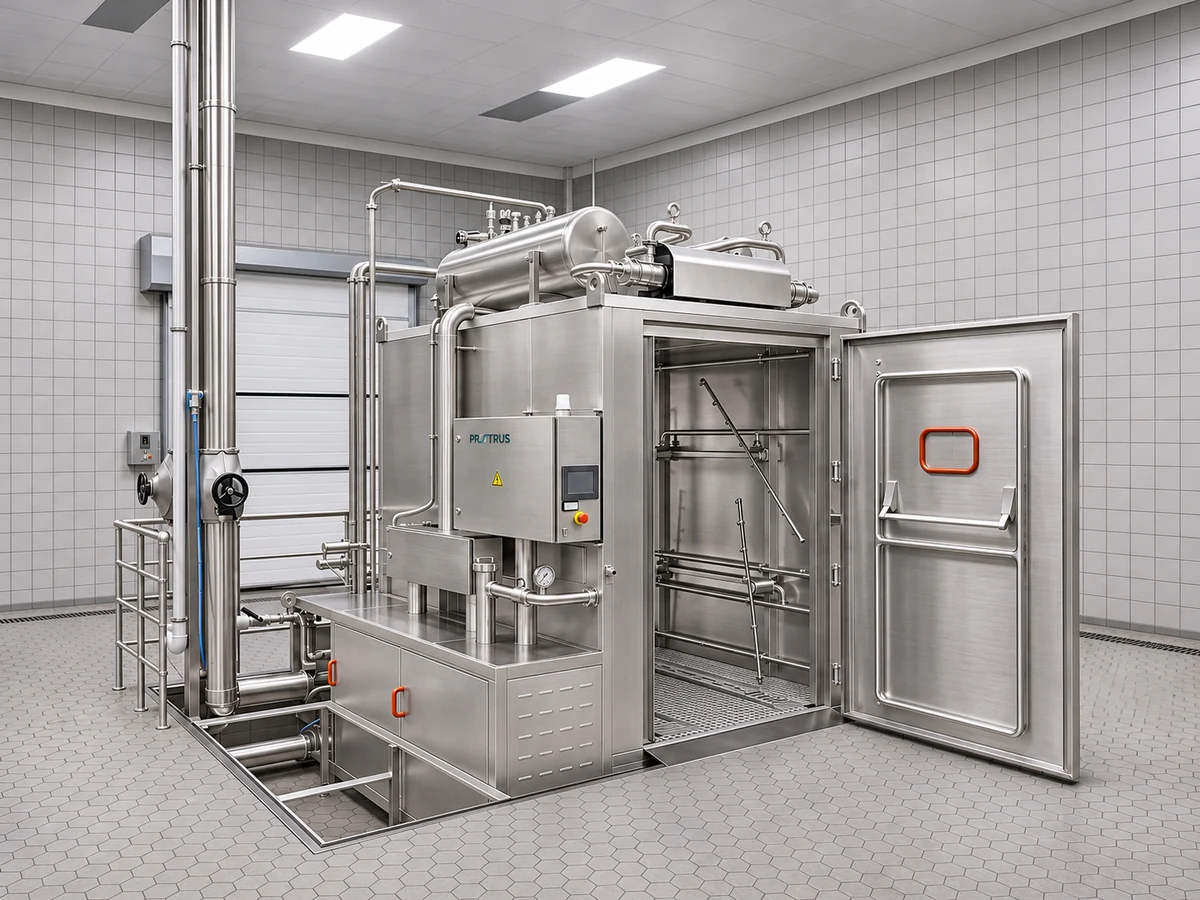
Ultrawash cabinet washer, steam heating and service side.
5 stages
wash · rinse · disinfect
2 doors
automatic, one-way flow
1,000 × 2,000
mm trolley footprint, typical
Conductivity
controlled detergent dosing
Nothing Left to Chance
Plants that make chocolate, dairy desserts or ready-to-eat products cannot accept a mold or rack that is only “mostly clean”. Ultrawash runs five separate stages in one closed cycle. A pre-wash takes off loose soil, the main wash with rotating spray arms removes fat, sugar and protein, and a cold rinse flushes out the detergent.
A dedicated line then applies disinfectant, and a fresh hot rinse leaves the items clean and quick to dry. A conductivity meter keeps detergent strength on target. Items enter through one automatic door and leave through the other, straight into the clean area. Trolleys roll in at floor level from a pit, or with the loading elevator.

Ultrawash, five-stage washing: entry and exit doors open automatically; dirty items in on one side, clean items out on the hygienic side.
Ultrawash Technical Data (Typical)
| Parameter | Value |
|---|---|
| Items | Trolleys, molds, sieves, buckets, trays, tubs, machine parts |
| Item size | Up to about 1,000 × 2,000 mm (39 × 79 in), height 1,900 mm (75 in) |
| Stages | Pre-wash, main wash, cold rinse, disinfection, hot rinse |
| Wash / rinse | 60–70 °C wash, 80–85 °C (176–185 °F) fresh hot rinse |
| Heating | Steam or electric |
| Doors | Automatic entry and exit doors, one-way operation |
| Loading | Floor pit for flush loading or trolley elevator |
| Construction | AISI 304 heavy-duty frame and panels |
Ultrawash Standard Equipment
Ultrawash Options
Wash room with clean-side exit.
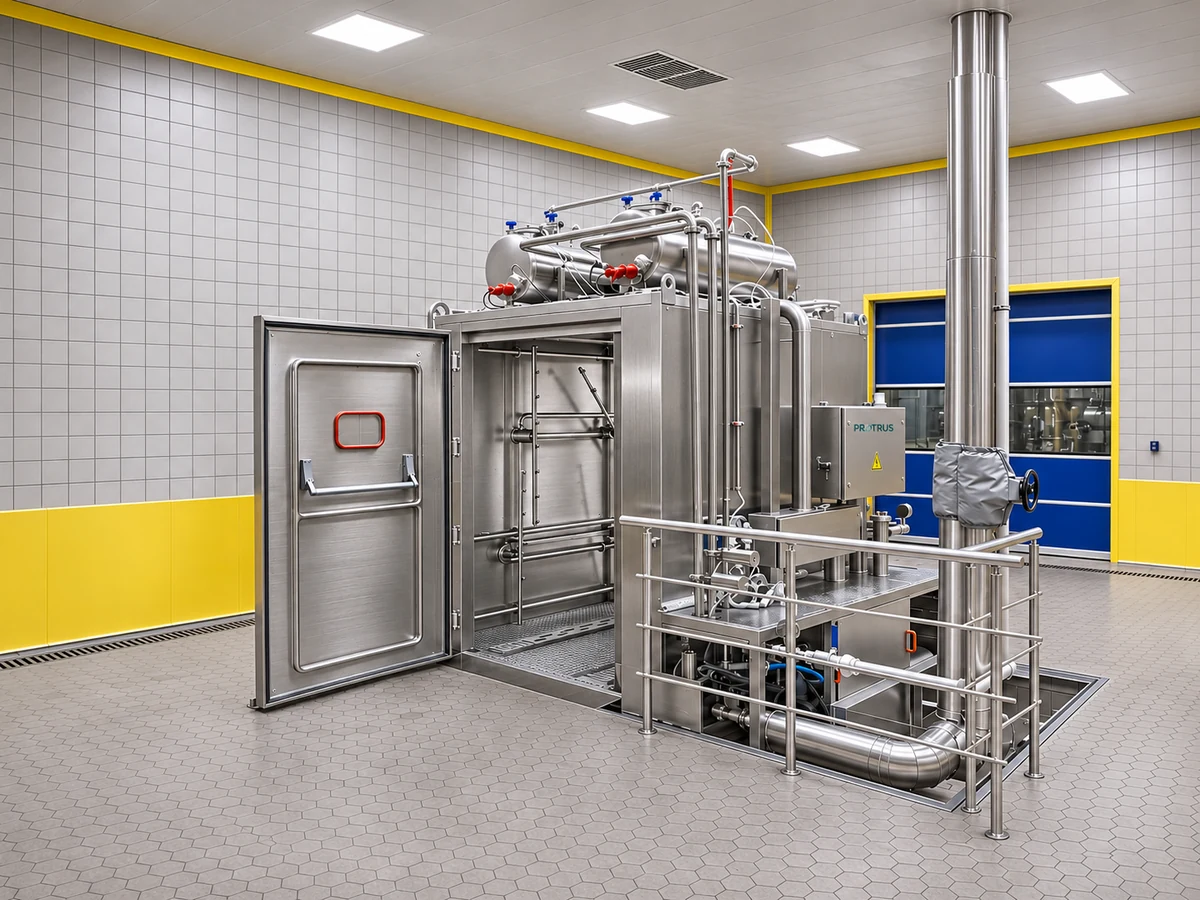
Ultrawash in a wash room with floor-level loading, steam supply and service platform.
Ultrawash: What It Washes
Ultrawash: Why Five Stages
Cabinet type · Compact
Technowash Compact Rack, Tray and Pan Washer
A compact cabinet washer with a strong 11 kW pump and three programs for racks, trays, pans and small trolleys.
Technowash with door open, rotating spray arms and side-mounted wash tank.
960 × 1,200
mm trolley footprint
1,900 mm
maximum item height
11 kW
(15 hp) wash pump
3
programs: short · standard · long
Small Footprint, Full Performance
Technowash fits where space is short: next to a production line, in a small wash room or in a central kitchen. The operator rolls a rack or trolley into the chamber, closes the door and picks a program.
Rotating spray arms on both sides and roof nozzles wash the load with recirculated hot detergent solution, then fresh hot water rinses it. The tank fills and heats itself, the filter group pulls out for cleaning, and wash and rinse times can be changed in seconds on the control panel.
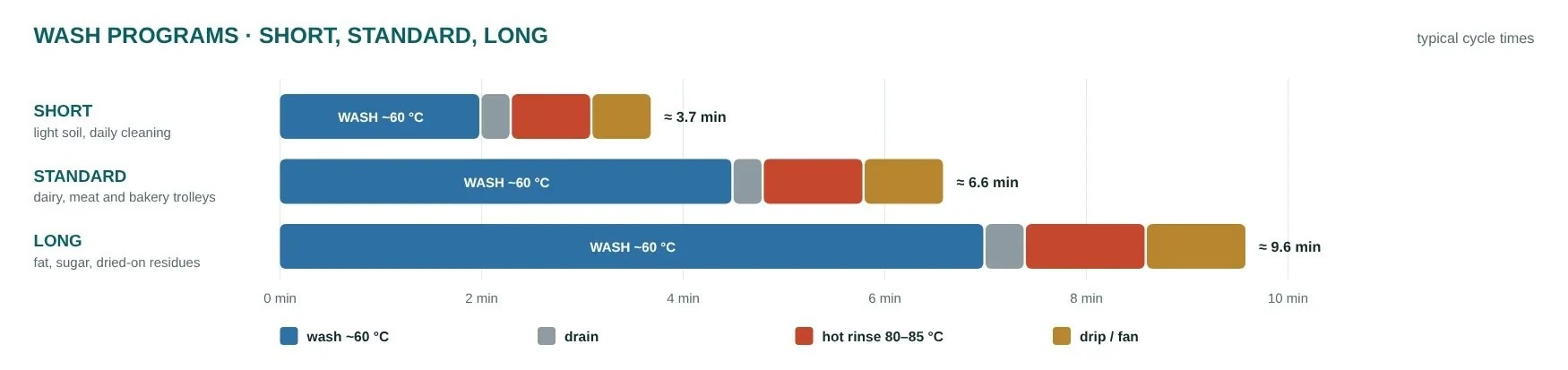
Technowash wash programs: short for light daily soil, standard for daily racks and trolleys, long for heavy or baked-on residue. Typical cycle times.
Technowash Technical Data (Typical)
| Parameter | Value |
|---|---|
| Items | Bakery racks, trays, pans, cake molds, small trolleys |
| Item size | Up to 960 × 1,200 mm, height 1,900 mm |
| Wash pump | 11 kW (15 hp) |
| Programs | 3: short, standard, long; times adjustable |
| Wash / rinse | 55–65 °C wash, 80–85 °C fresh hot rinse |
| Heating | Steam or electric |
| Water | Automatic fill and temperature control |
| Construction | All AISI 304 stainless steel |
Technowash Standard Equipment
Technowash Options
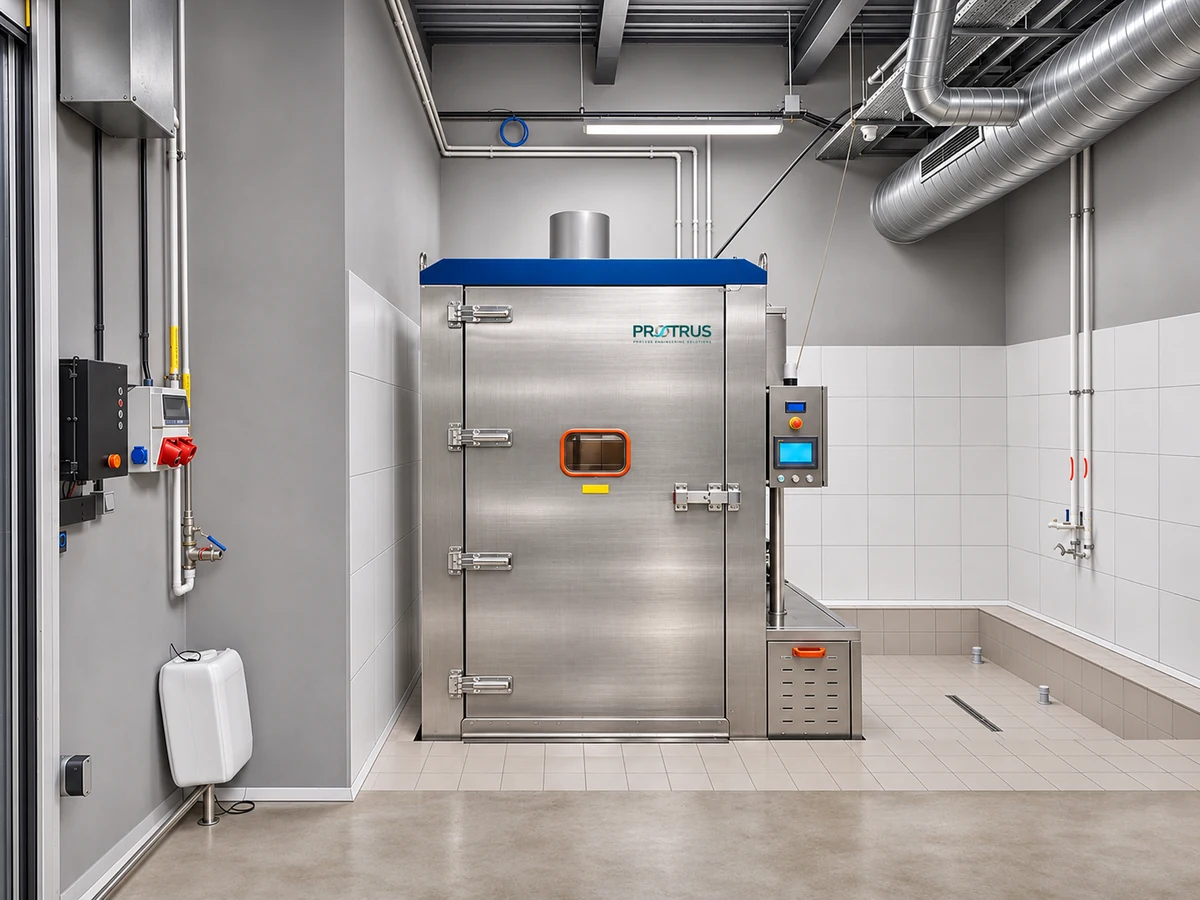
Technowash installed in a hygiene room.
Technowash: Benefits
Technowash: Typical Users
Cabinet type · Pass-through
Masterwash Pass-Through Rack and Trolley Washer
Large trolleys in from the dirty side, out clean on the hygienic side, with automatic doors and rotating spray arms.
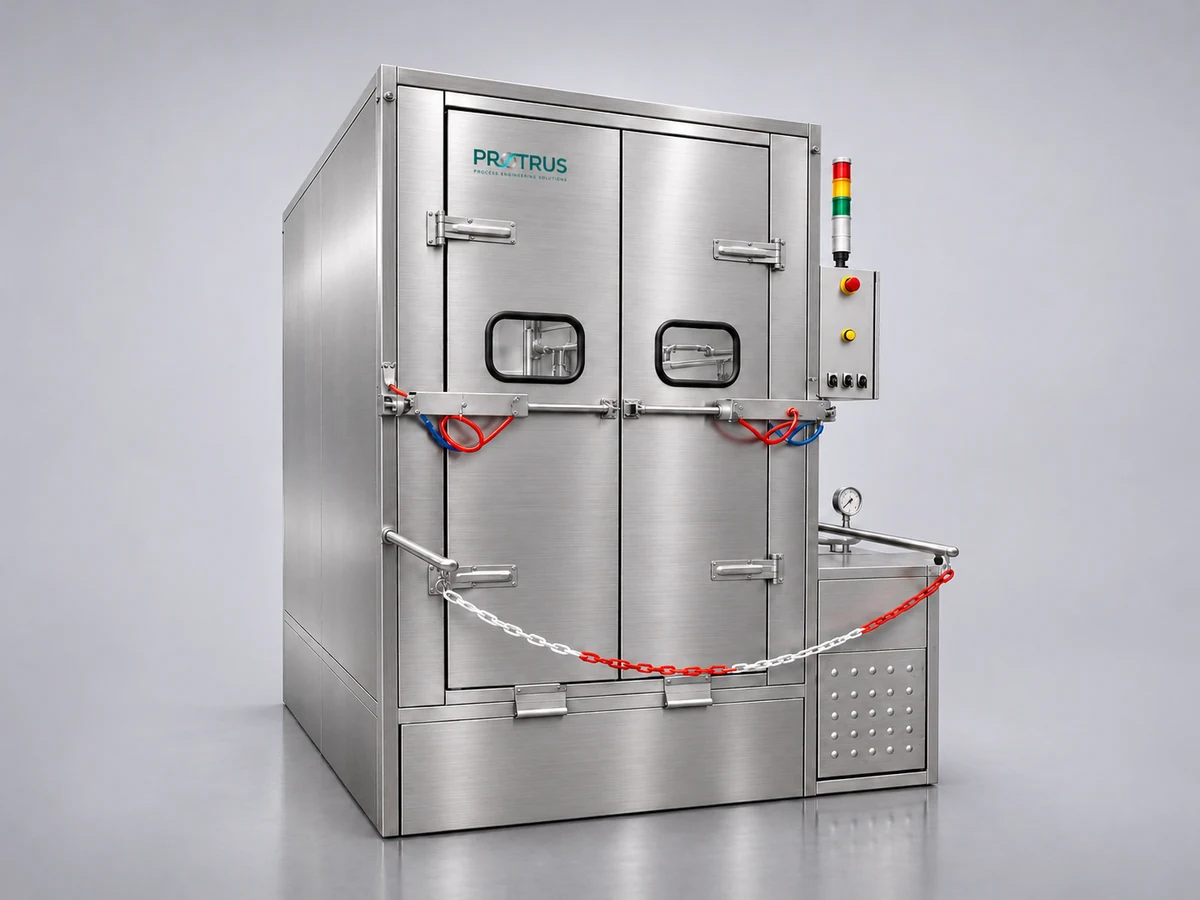
Masterwash with double-leaf door, sight windows, signal tower and control box.
1,000 × 2,000
mm trolley footprint
1,900 mm
maximum item height
2 doors
dirty side · clean side
6–12 /h
trolleys, by program
One-Way Hygiene Flow
In dairy and meat plants the wash room often sits between a dirty area and a high-care area. Masterwash is built as a pass-through cabinet: trolleys go in through the entry door on the dirty side and come out through the exit door on the clean side, so washed equipment never crosses the path of dirty equipment.
Both doors open and close automatically and are interlocked. Inside, rotating spray arms sweep the full height of the load, roof nozzles clean the top shelves, and a separate hot rinse finishes each cycle. Programs for each item type are stored in the PLC.
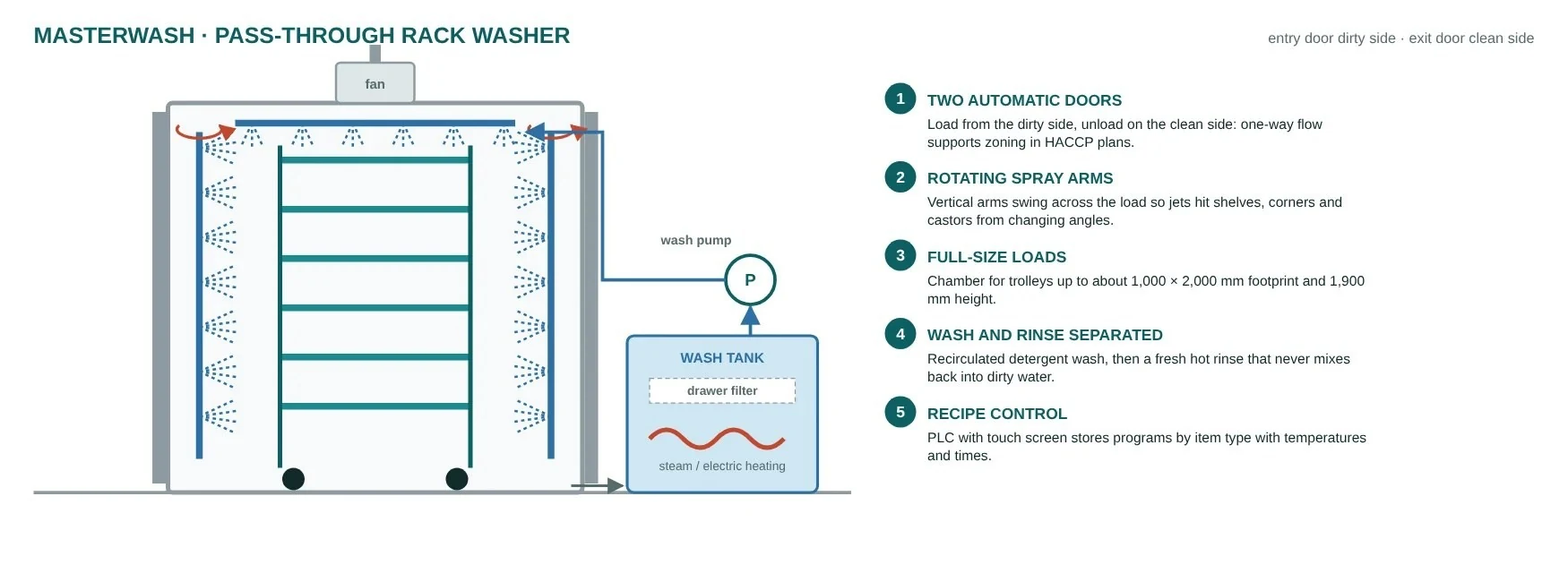
Masterwash pass-through rack washer: entry on the dirty side, exit on the clean side.
Masterwash Technical Data (Typical)
| Parameter | Value |
|---|---|
| Items | Large trolleys, incubation racks, cheese racks, cages |
| Item size | Up to 1,000 × 2,000 mm, height 1,900 mm |
| Doors | Automatic entry and exit doors, interlocked |
| Wash / rinse | 55–65 °C wash, 80–85 °C fresh hot rinse |
| Heating | Steam or electric, by site utilities |
| Programs | Adjustable wash and rinse times per item |
| Control | Digital control and information center (PLC) |
| Construction | Heavy-duty AISI 304 stainless steel |
Masterwash Standard Equipment
Masterwash Options
Masterwash: What It Washes
Masterwash: Why Pass-Through
Cabinet type · Pots, tubs and boxes
Greatwash Pot, Tub and Box Washer
Automatic washing for deep pots, tubs and boxes: the elevator turns each container upside down and the machine cleans it inside and out.
Greatwash in a hygiene room with a stainless tub on its trolley next to the loading elevator.
Inside + out
in one cycle
Elevator
loads and inverts
20–40 /h
containers, by size and soil
Conductivity
controlled detergent dosing
Deep Containers, Cleaned Without Climbing In
Deep pots, dough troughs and large tubs are hard to clean by hand: the bottom corners are out of reach and the water stays inside. Greatwash solves this with an automatic loading elevator. The container is lifted and held upside down in the wash chamber, so water and residues run out by gravity.
A rotary wash head cleans the inner walls, base and corners, while systematically placed nozzles wash the outer walls, rims and handles. After the detergent wash, dedicated rinse lines with heated water finish the job and the elevator brings the container back out.

Greatwash pot, tub and box washer: elevator loading, inside and outside washing.
Greatwash Technical Data (Typical)
| Parameter | Value |
|---|---|
| Items | Pots, tubs, boxes, dough troughs, bins, large buckets |
| Item size | Elevator and chamber sized to the container |
| Spray system | Rotary inner wash head + outside nozzle lines |
| Wash / rinse | 55–65 °C wash, heated rinse water |
| Heating | Steam or electric |
| Dosing | Automatic, with conductivity meter |
| Control | Digital control panel, adjustable wash/rinse times |
| Construction | Strong AISI 304 stainless steel |
Greatwash Standard Equipment
Greatwash Options
Greatwash: Typical Items
Greatwash: Benefits
Tunnel type · High capacity
Unique Multi-Zone Tunnel Washer for Crates, Trays and Bins
Continuous washing and drying for the highest crate volumes, with counter-flow water use and rotary drum filters.
Unique tunnel washer with hood, touch panel, removable manifolds and blow-off section.
800–3,000
crates per hour, typical
4–6 zones
wash, rinse, blow-off
≈ 7–12 m
line length, Extra Dry
1×
fresh water use, counter-flow
How a Tunnel Washer Works
Crates enter on a guided conveyor and pass through separate zones, each with its own tank, pump and spray manifolds. The pre-wash removes loose soil, labels and film; rotary drum filters take this debris out continuously. The main wash uses hot detergent solution from above, below and the sides.
Rinse zones then use cleaner water, and the final rinse uses fresh hot water only. That water overflows back towards the entry, zone by zone, so it is used several times before it drains. High-volume fans and air knives in the blow-off and Extra Dry zones remove water from corners and ribs.
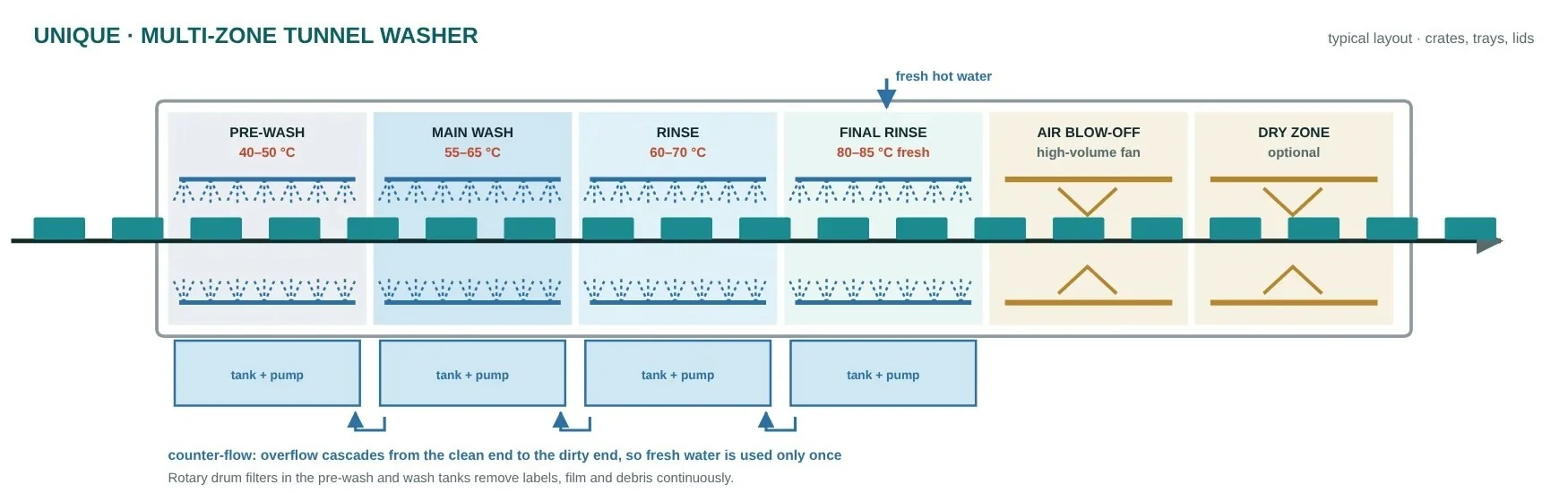
Unique multi-zone tunnel washer: counter-flow water from the final rinse back to the pre-wash; each zone has its own tank and pump.
Unique Technical Data (Typical)
| Parameter | Value |
|---|---|
| Items | Plastic crates, E2 crates, trays, lids, bins, boxes |
| Dryness | Near 100 % dry crates with the Extra Dry unit |
| Zones | Pre-wash, detergent wash, rinse, final rinse, blow-off |
| Versions | ≈ 7 m standard, ≈ 12 m Extra Dry (about 23 / 39 ft) |
| Output | 800–3,000 crates/h, by crate and configuration |
| Filtration | Rotary drum filters, self-cleaning |
| Heating | Steam or electric per tank |
| Construction | AISI 304 / 316 stainless steel throughout |
Unique Standard Equipment
Unique Options
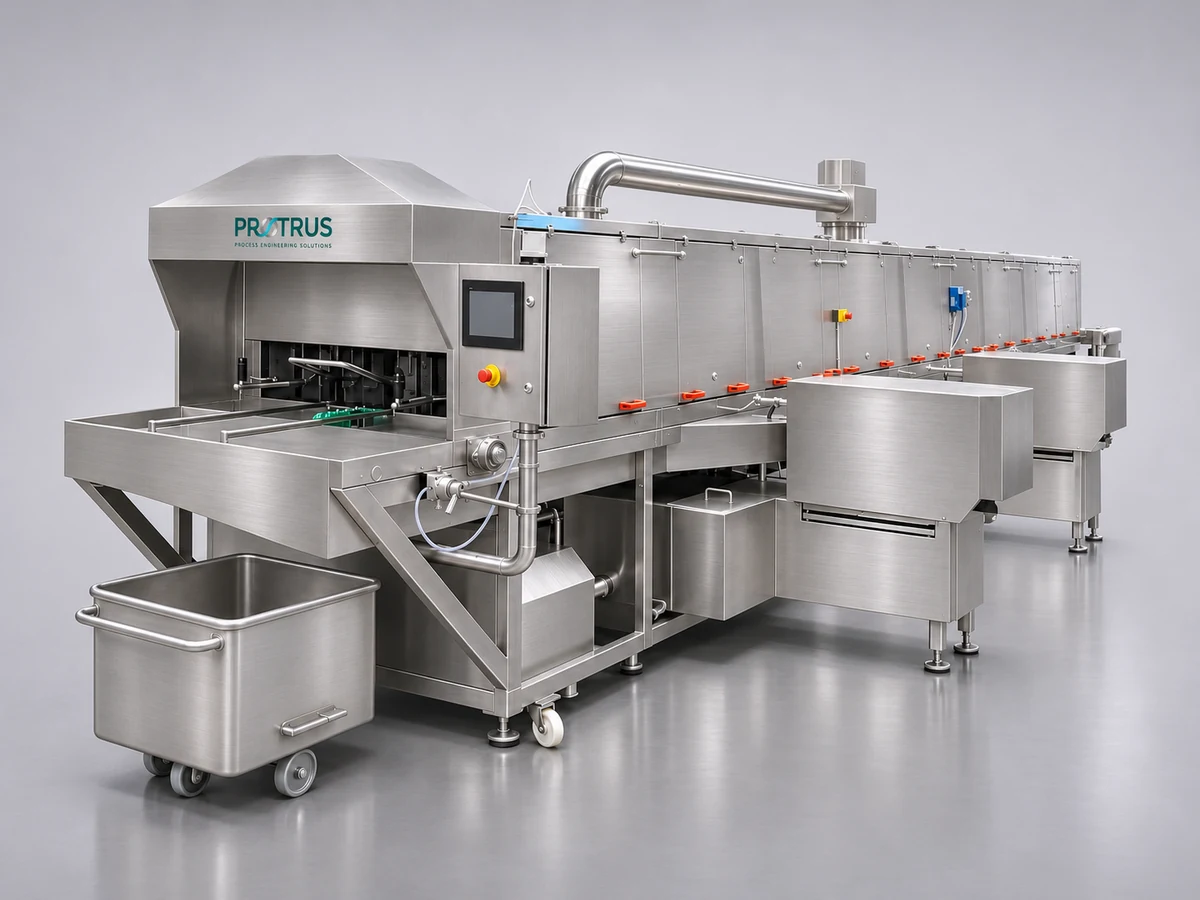
Version for crates and bins with outlet hoppers.
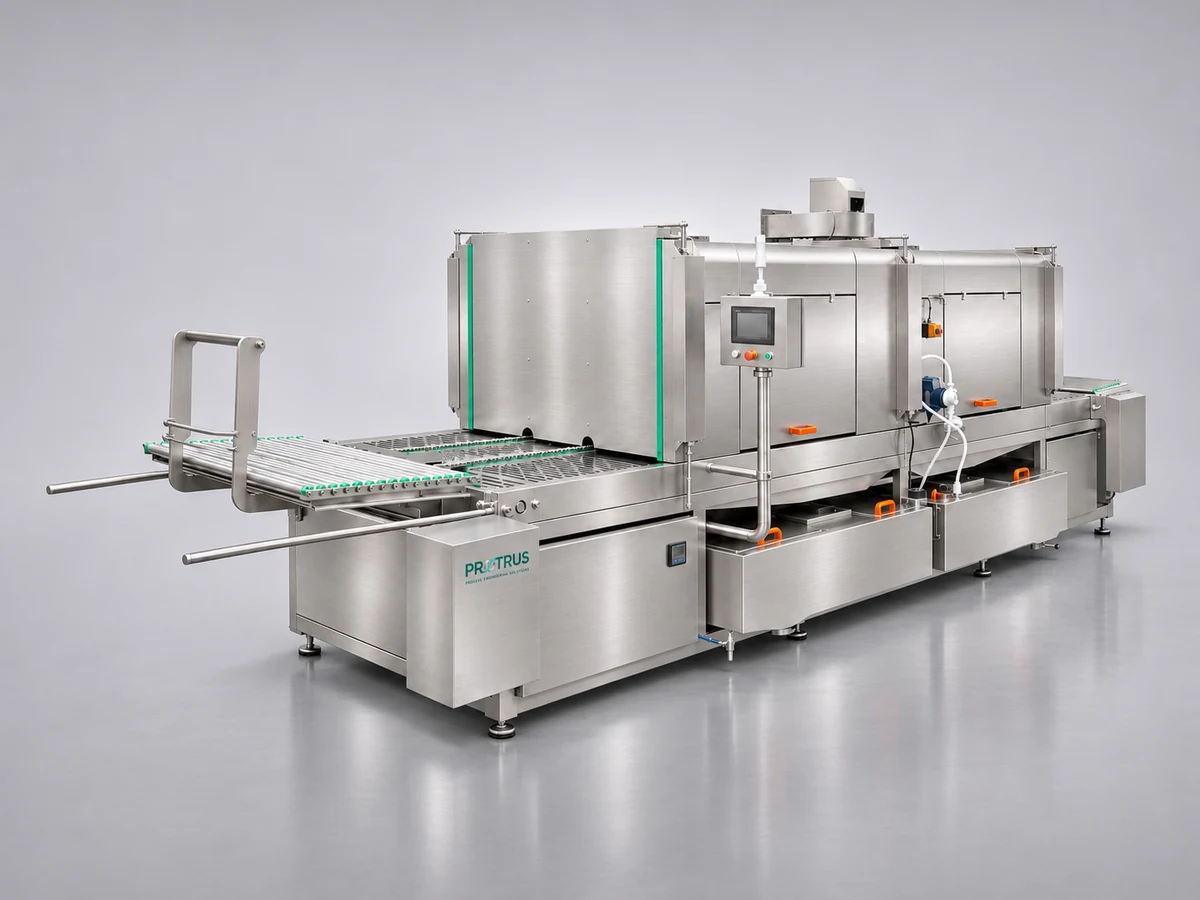
Long infeed and guided conveyor.
Unique: Built for Volume
Unique: Typical Items
Tunnel type · Compact
Singlewash Compact Tunnel Washer for Crates and Boxes
Four wash zones in a compact line of about 4 m, for mid-size food plants, distribution centers and retail logistics.
Singlewash with infeed curtains, removable spray manifolds and touch panel.
≈ 4 m
compact line length
4 zones
pre-wash · wash · rinse · air
300–800
crates per hour, typical
3
stored wash programs
Tunnel Washing in a Small Space
Singlewash brings continuous crate washing to plants that do not need a full-length line. Crates move through four operation units in one compact frame: pre-wash, detergent wash, fresh-water rinse and air blow-off. Drawer-type screen filters collect debris and slide out from the front for cleaning.
The operator sets conveyor speed and wash temperature on the touch screen and chooses one of three programs for light, normal or heavy soil. The hinged hood opens fully for inspection and cleaning.
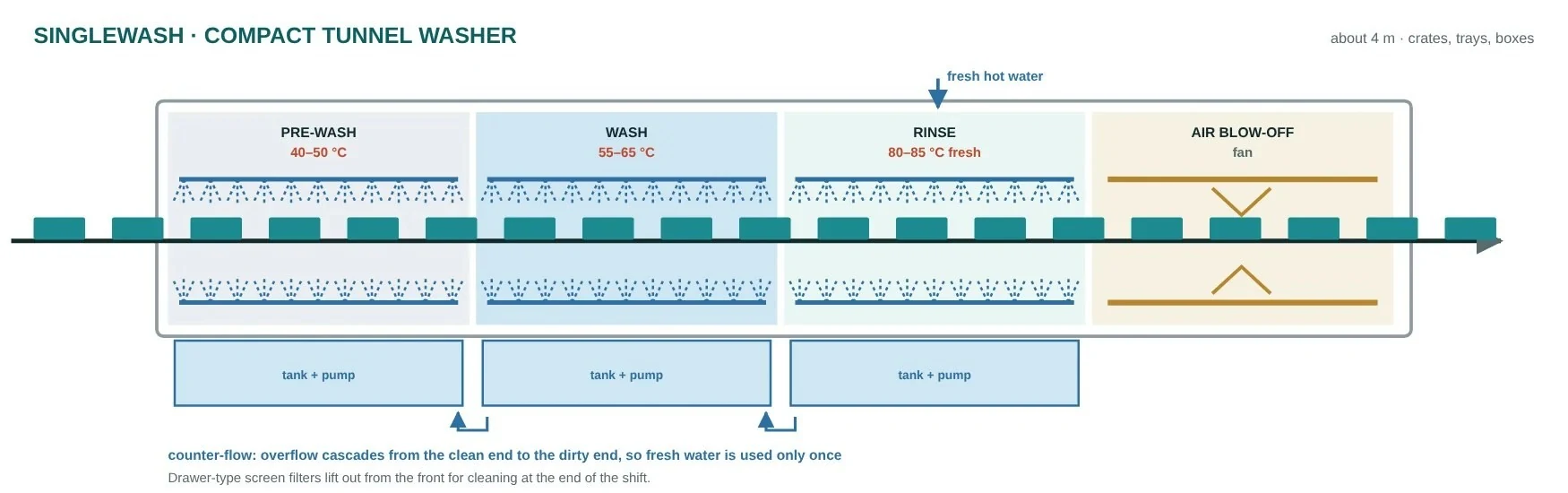
Singlewash compact tunnel washer: four zones in about 4 m.
Singlewash Technical Data (Typical)
| Parameter | Value |
|---|---|
| Items | Plastic crates, boxes, trays, small bins |
| Zones | Pre-wash, detergent wash, rinse, air blow-off |
| Length | About 4.2 m (13.8 ft) |
| Output | 300–800 crates/h, by crate size and soil |
| Filtration | Drawer-type screen filters, front access |
| Nozzles | AISI 316 V-jet nozzles, welded on manifolds |
| Heating | Steam or electric |
| Construction | AISI 304 / 316 stainless steel |
Singlewash Standard Equipment
Singlewash Options

Hinged hood for full access.
Singlewash: Benefits
Singlewash: Typical Users
Tunnel type · Disinfection
Sanita Disinfection Tunnel for Crates, Buckets and Molds
A conveyor tunnel that disinfects new or stored containers just before they enter production, so hidden contamination stays out.
Sanita with stainless loading platform, stairs, infeed conveyor and control panel.
Dosed
disinfectant spray
Adjustable
spray and conveyor speed
Modular
cabin and nozzles extendable
Stand-alone
or after a tunnel washer
Why Clean-Looking Containers Still Need Disinfection
New crates, buckets and molds arrive from the supplier wrapped and stacked, and washed containers often wait in a warehouse before use. During that time they can pick up dust, spores and microorganisms that the eye cannot see.
Sanita closes this gap at the entrance to production. Containers travel on a conveyor through a disinfection cabin where nozzles cover every inner and outer surface with a dosed disinfectant. Conveyor speed sets the exposure time. An optional potable-water rinse and an air blow-off follow, so containers arrive at the line ready to fill. Sanita runs on its own or as the last module of a Protrus tunnel washer.

Sanita disinfection tunnel, pre-production sanitizing. Spray pressure and conveyor speed set the exposure time; the cabin and nozzle system can be extended.
Sanita Technical Data (Typical)
| Parameter | Value |
|---|---|
| Items | Crates, cases, buckets, tubs, molds, trays, tableware |
| Process | Disinfectant spray, contact zone, optional rinse, blow-off |
| Conveyor | Speed adjustable to set exposure time |
| Spray system | Adjustable nozzles, extendable cabin length |
| Dosing | Automatic disinfectant dosing and monitoring |
| Loading | Raised stainless platform with stairs and rails |
| Control | Digital control panel and information center |
| Construction | Strong AISI 304 stainless steel |
Sanita Standard Equipment
Sanita Options
Sanita: Where It Is Used
Sanita: Benefits
Frequently Asked Questions About Industrial Washers
Have a question about items, soils or output? Ask our process engineers.
Get a Quote
Tell Us What You Wash
Send the item type and size, the soil (fat, dough, protein, sugar), items per hour and your utilities. Protrus engineers choose cabinet or tunnel, heating and drying, and plan the wash room layout.
Prefer email? info@protrus.com