

Dairy, Meat, Food & Beverage, Supermarkets · Hygienic Building Protection
Hygienic Wall Protections for Food Plants
Hygienic wall protections for dairies, meat plants, food factories and supermarkets: curbs, skirting, bollards and corner guards that protect walls and door frames from carts and forklifts, close the wall-floor joint where dirt collects and stand up to daily washdown.
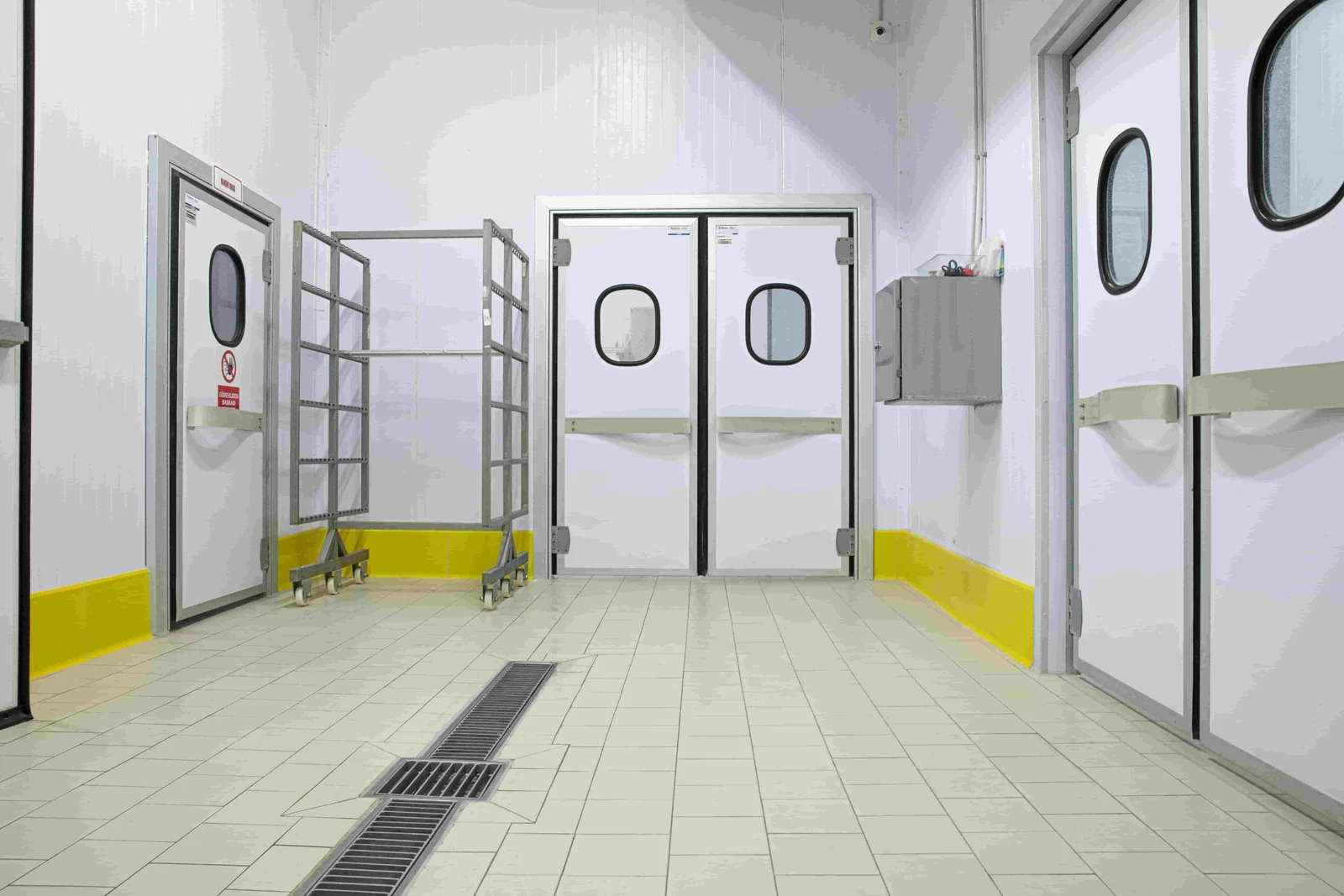
Traffic-yellow hygienic curbs along wall panels and door frames in a food plant.
Acrylic or AISI 304/316L
Food-safe acrylic or stainless steel
7 product families
Curbs, skirting, bollards, wall and corner guards
Traffic yellow
Visible warning line at floor level
2 installation types
On top of or flush with the floor finish
Product overview
Wall Protection That Does Not Become a Dirt Trap
One system for the wall-floor joint and the impact zones of a hygienic plant: acrylic skirting and curbs, stainless steel profiles, bollards, wall protectors and corner guards.
In a food plant, walls take hits every day from carts, pallet trucks, racks and forklifts. A broken panel skin or chipped corner lets water and soil in behind the surface, and the sharp corner between wall and floor is one of the hardest places to clean. Timber buffers and painted steel guards stop the impact but add new ledges, gaps and corrosion.
Protrus hygienic wall protection closes this joint with a radiused profile and protects the wall at the height where impacts happen. The acrylic range is glass-fiber-free, traffic yellow and resistant to oils, acids and cleaning chemicals. Stainless steel curbs use an AISI 304 or AISI 316L shell over a reinforced concrete core for heavy traffic. Most profiles come in two versions: on top of the floor finish, or set in front of it for a flush joint. For the floor itself, see our acid-resistant floor tiles; with the in-front version, the tile meets the profile flush. Equipment for the same rooms is covered under our food and beverage processing solutions.
Floor-to-Wall Profiles
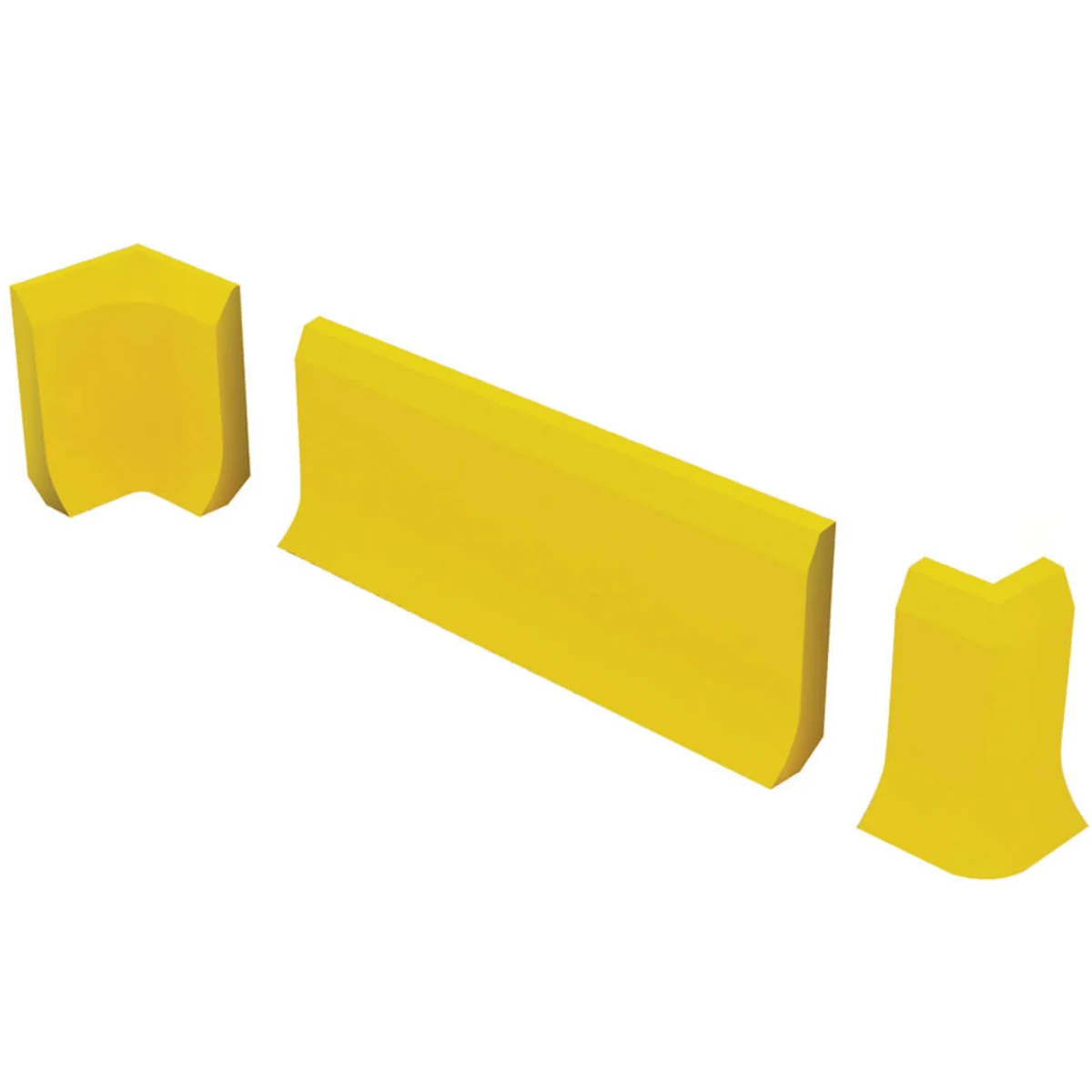
Impact Protection
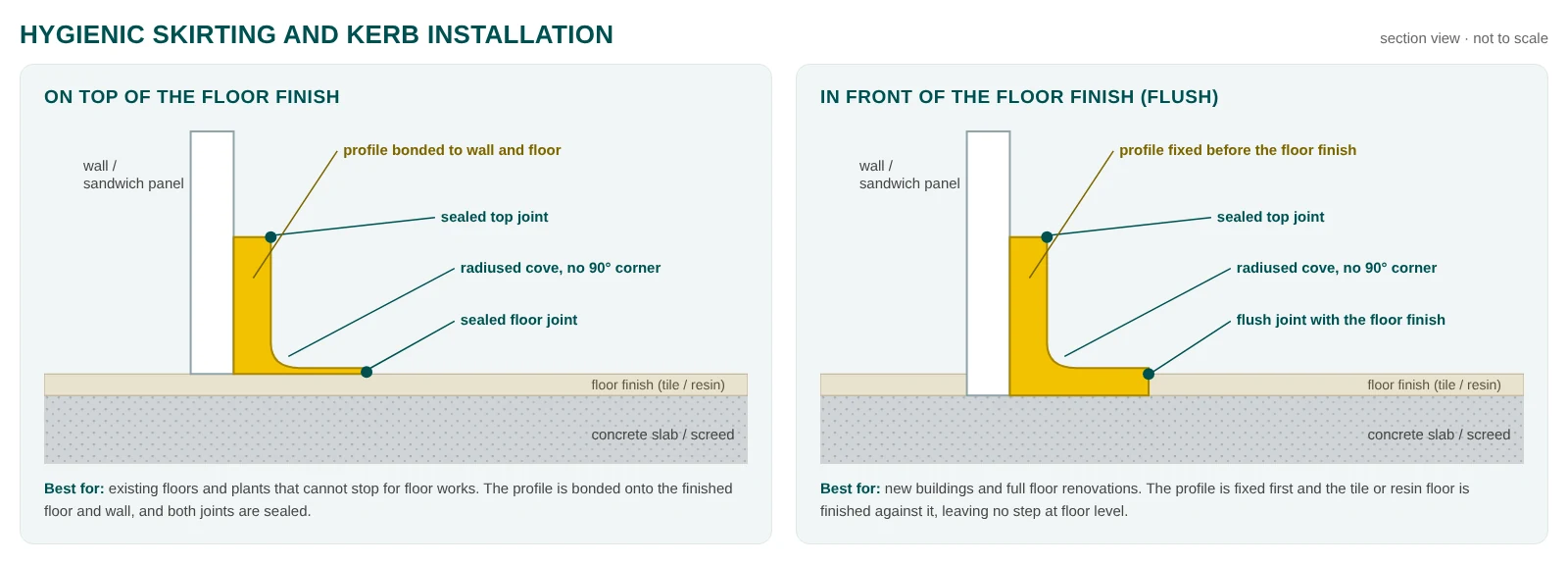
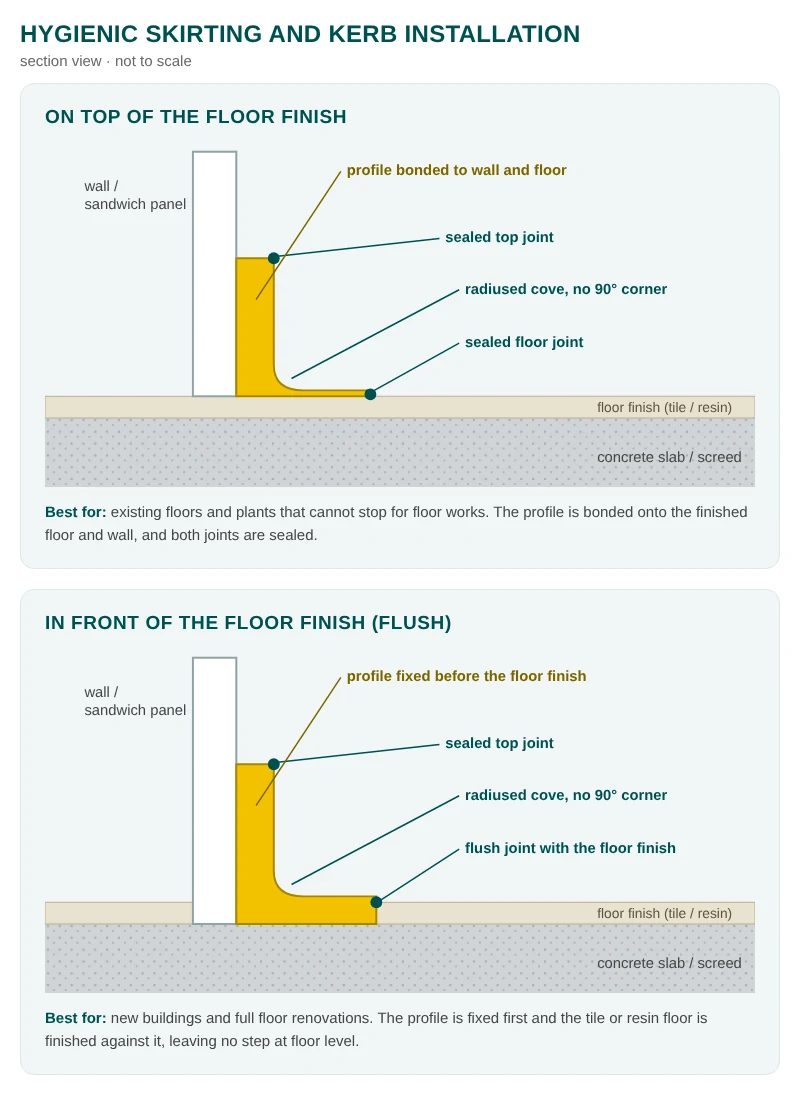
On top of the floor finish or set in front of it: both versions keep a radiused, sealed joint between wall and floor.
Which Profile for Which Area
| Product | Material | Standard sizes (mm) | Installation | Best for |
|---|---|---|---|---|
| Hygienic skirting | Acrylic, glass-fiber-free | 100–1,000 mm high; stair and column versions | On top or flush | Wall and panel bases, light to medium impacts |
| Hygienic curb | Glass-fiber-free, standard or iron-reinforced | 300–405 × 770 × 50 | On top or flush | Cart traffic along walls, cold rooms |
| Stainless steel curb | AISI 304 / 316L, concrete core | 300–1,015 × 1,000; 50–150 mm options | On top or flush | Medium to heavy impacts, forklift aisles |
| Stainless steel skirting | AISI 304 / 316L | 250 / 265 × 1,000 × 25 | On top or flush, anchored | Corridors with a steel finish |
| Bollards | Acrylic over steel tube, or AISI 304 / 316 | 500, 750, 900, 1,000 mm high | Floor anchored | Doors, columns, machine corners |
| Wall protectors | Glass-fiber-free board, acrylic strip | 200 × 1,200 × 12; 80 × 500 × 50 | Bonded, any height | Panel faces at cart height |
| Corner guards | Acrylic | 100 × 80 × 50 to 140 × 120 × 70; 1,500 mm | Bonded | Outside corners, door reveals |
Dimensions in millimeters as listed in the product codes (1 in = 25.4 mm).
Where Hygienic Wall Protections Are Used
Hygienic wall protections are fitted wherever carts, pallet trucks and forklifts share space with walls that are wet-cleaned every day. Food production is the largest field of use, but the same curbs, skirting and bollards protect supermarkets, cold stores, kitchens and laboratories.

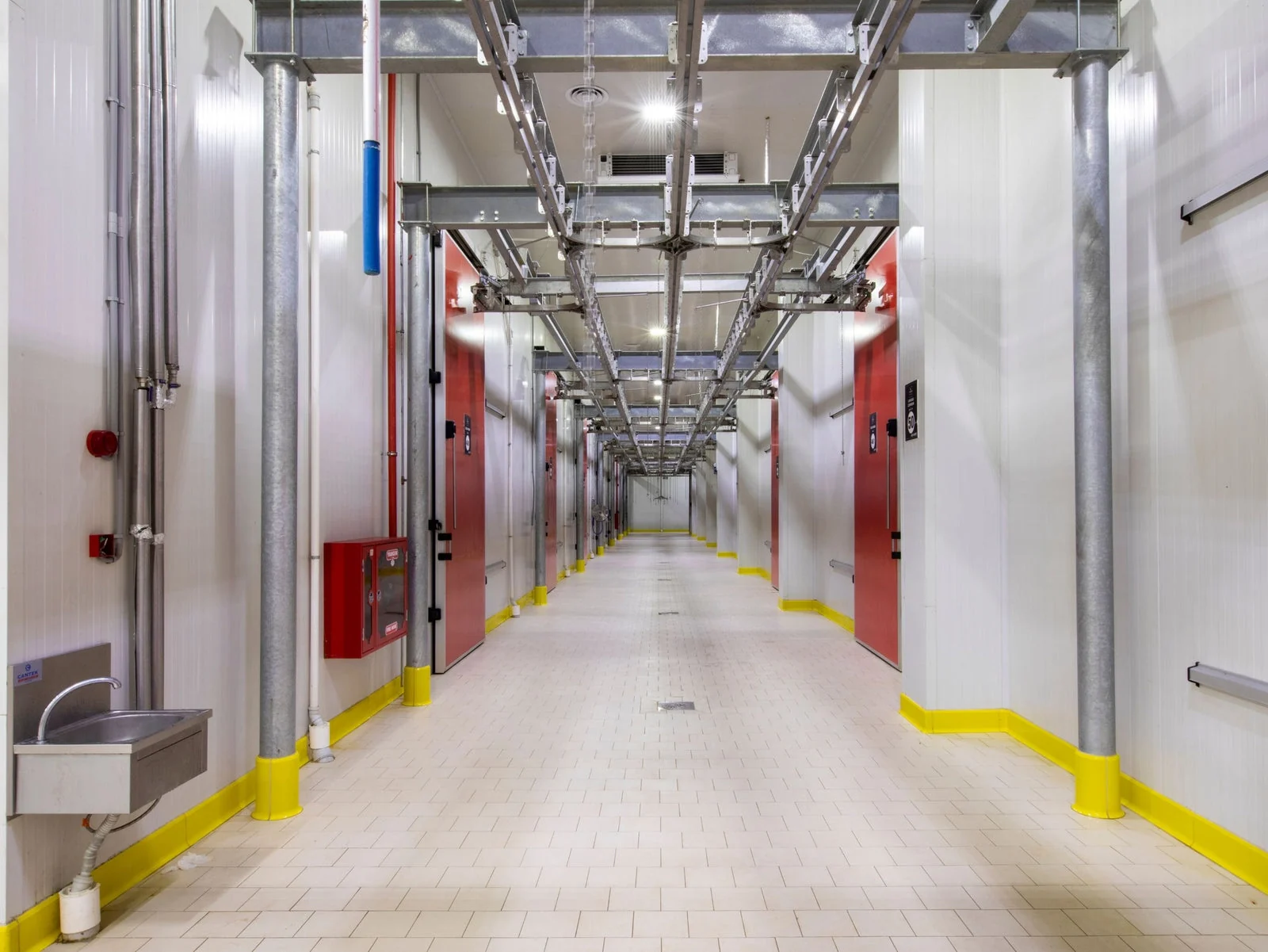
Dairy Plants
Cold rooms, CIP areas and process halls where pallet trucks pass door frames and walls are washed down every shift.
Meat and Poultry Processing
Curbs at column and panel bases in chilling and cutting areas with blood, fat and hot-water washdown.
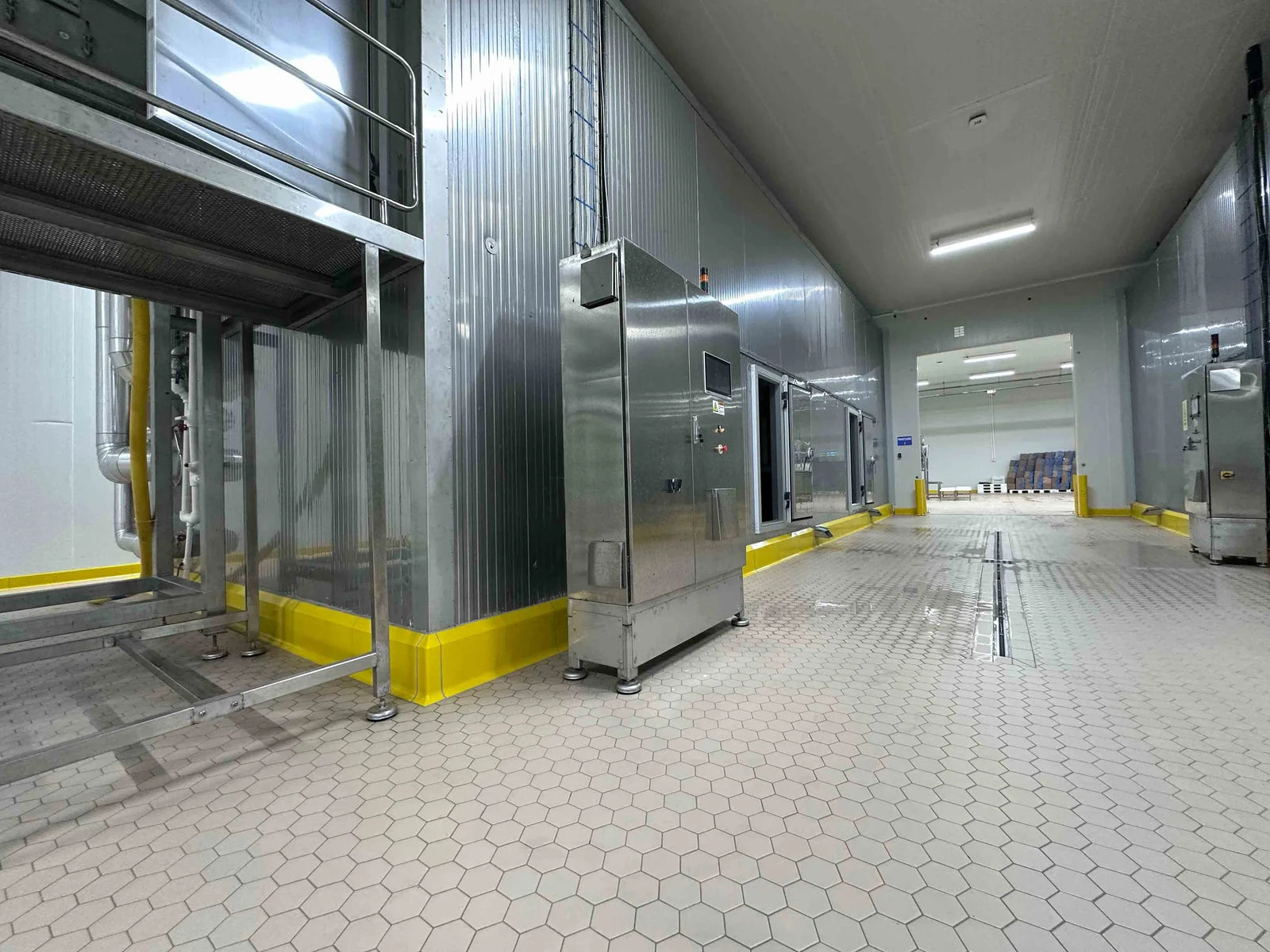
Food and Beverage Processing
One-piece curbs along stainless steel panel walls, machine rooms and corridors with constant trolley traffic.

Supermarkets and Retail
Back-of-house corridors and receiving areas hit by roll cages, crate stacks and floor scrubbers.

Seafood and Wholesale Markets
Wet floors, ice boxes and pallet trucks along cold room walls, where yellow curbs keep loads off the panels.
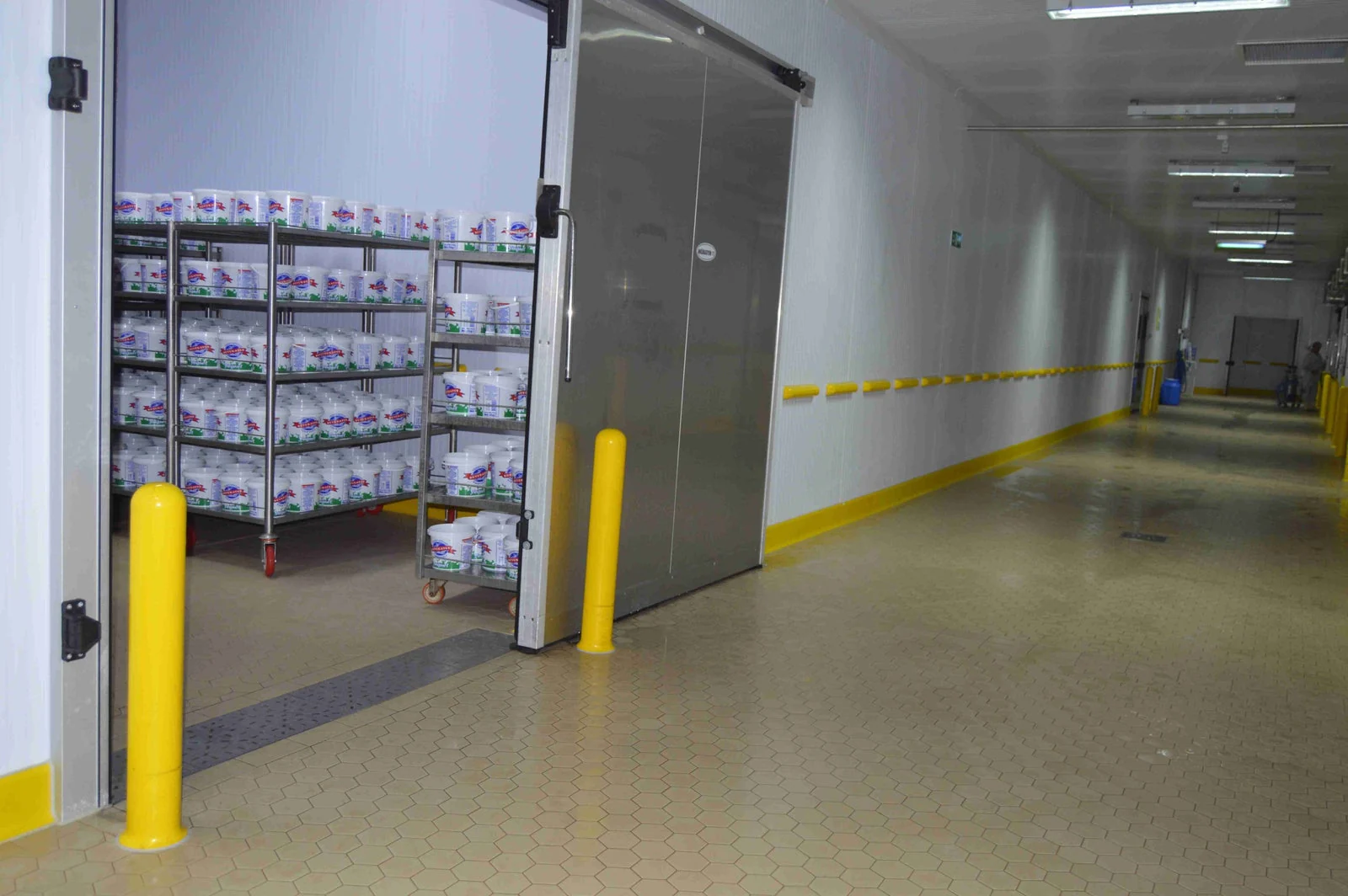
Cold Stores and Warehouses
Bollards at doors, bumper strips and skirting where forklifts and racks move between rooms.
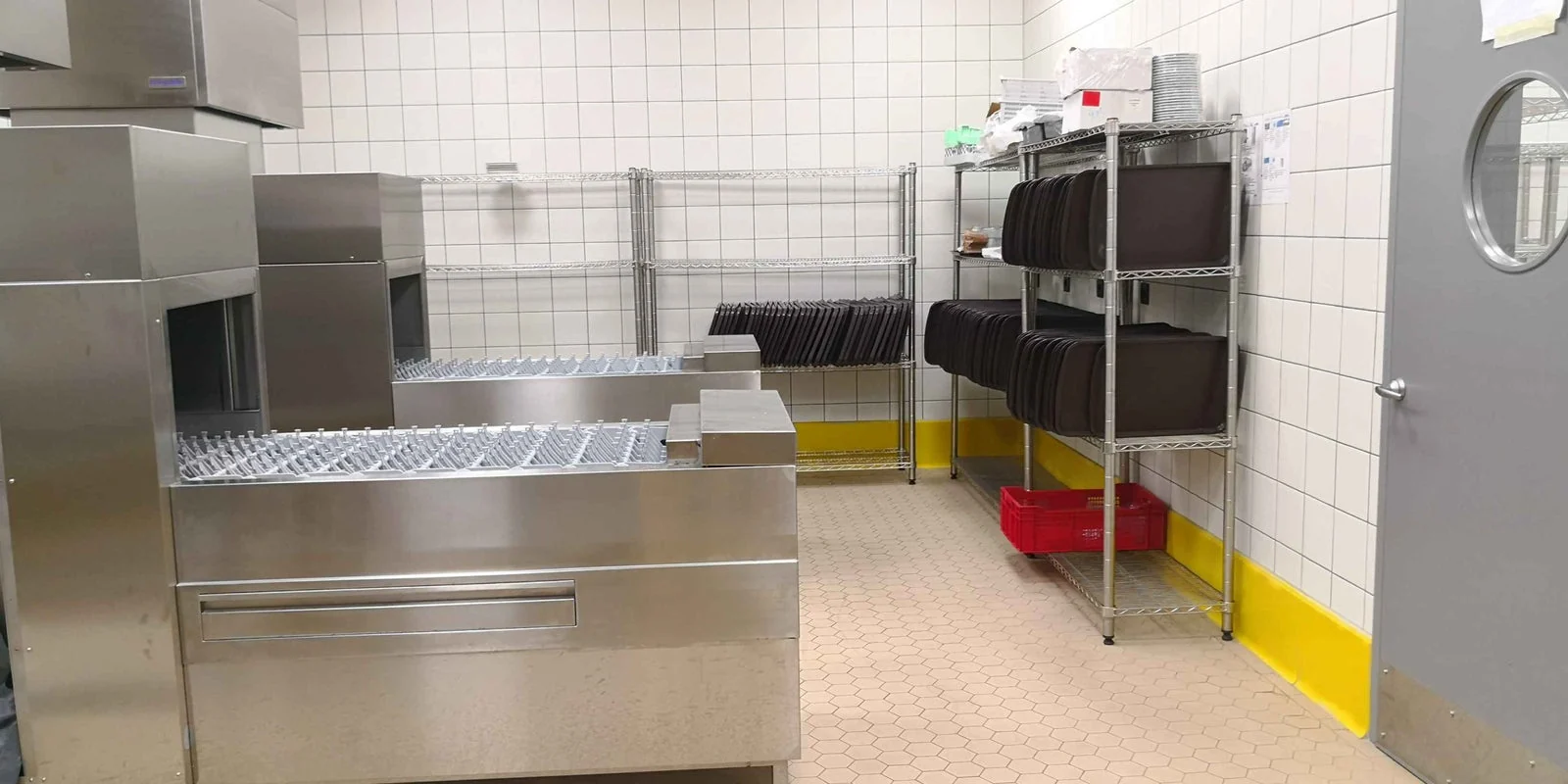
Commercial Kitchens
Skirting along tiled walls behind cooking lines, dishwash areas and stainless steel shelving.

Laboratories and Pharma
Smooth, cleanable cove joints for quality control labs, pharmaceutical production and hospitals.
Acrylic · Wall and panel bases
Hygienic Skirting (Cove Base) for Walls, Panels, Stairs and Columns
Radiused acrylic skirting that seals the wall-floor joint and takes light to medium impacts from carts and cleaning equipment.
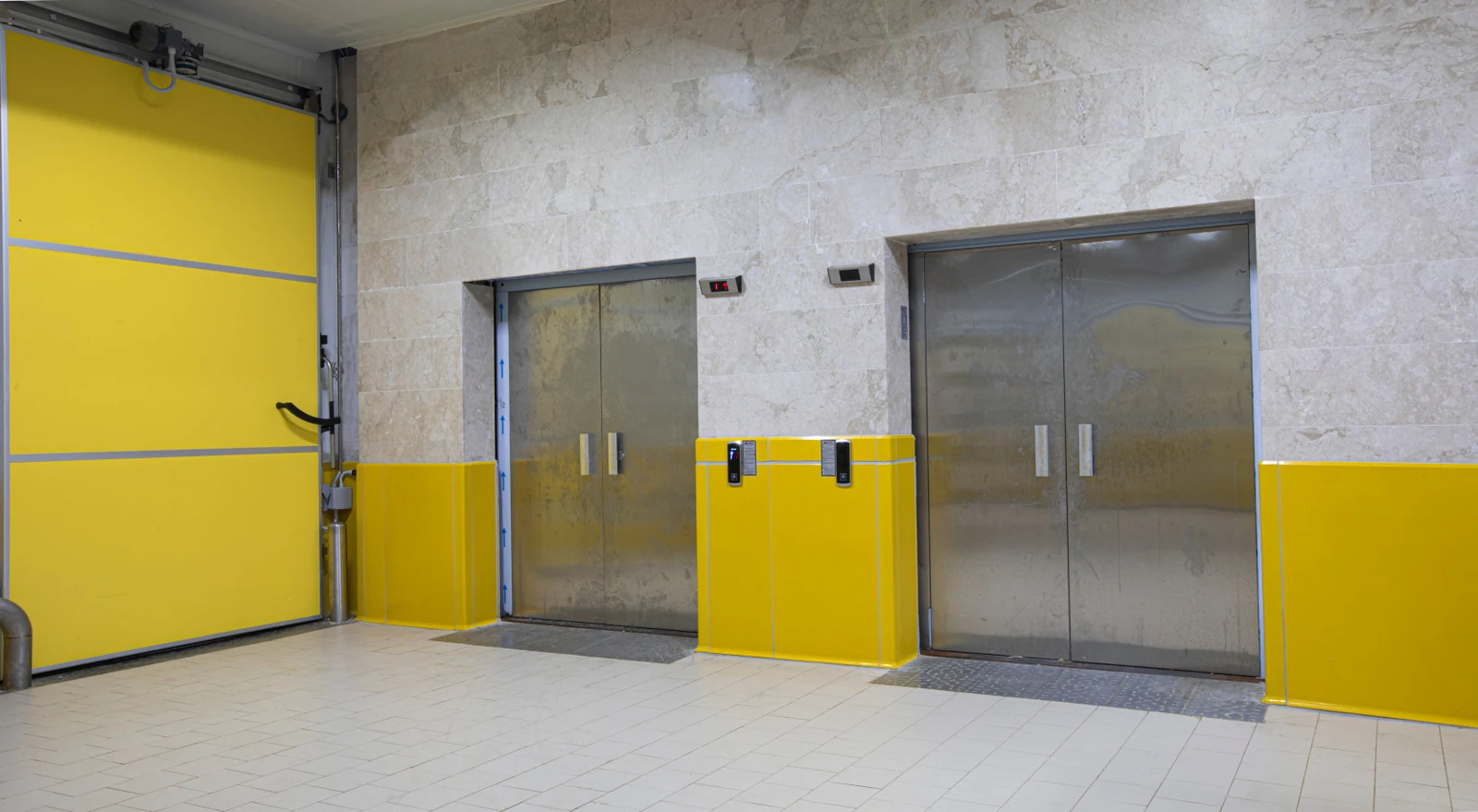
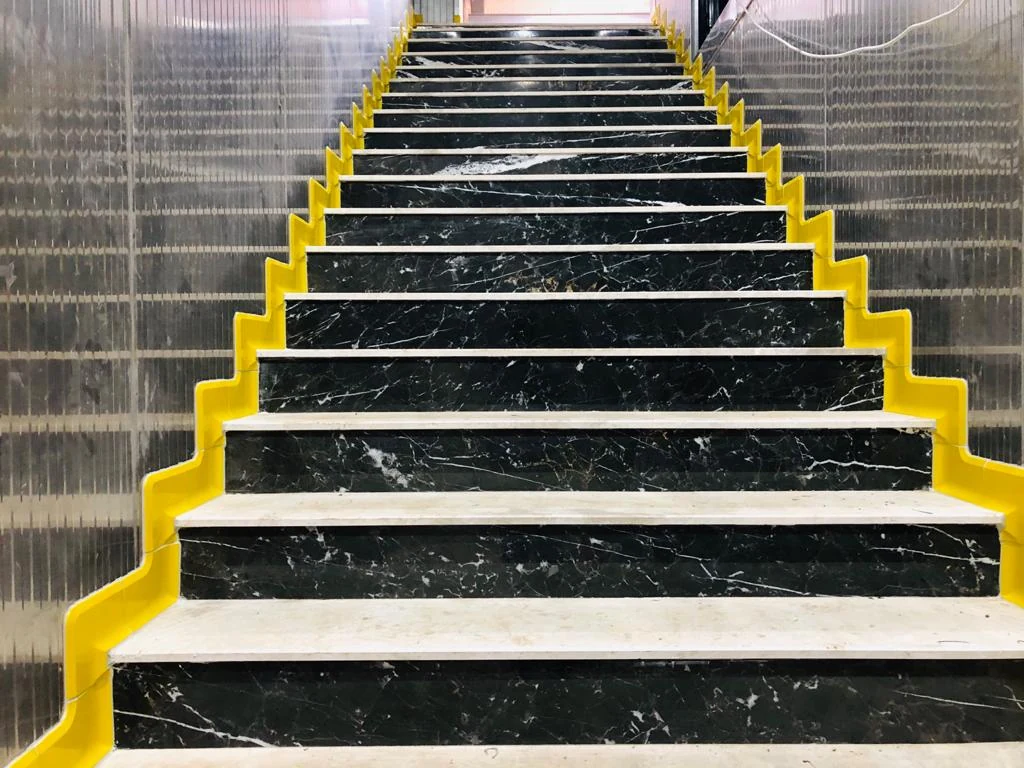
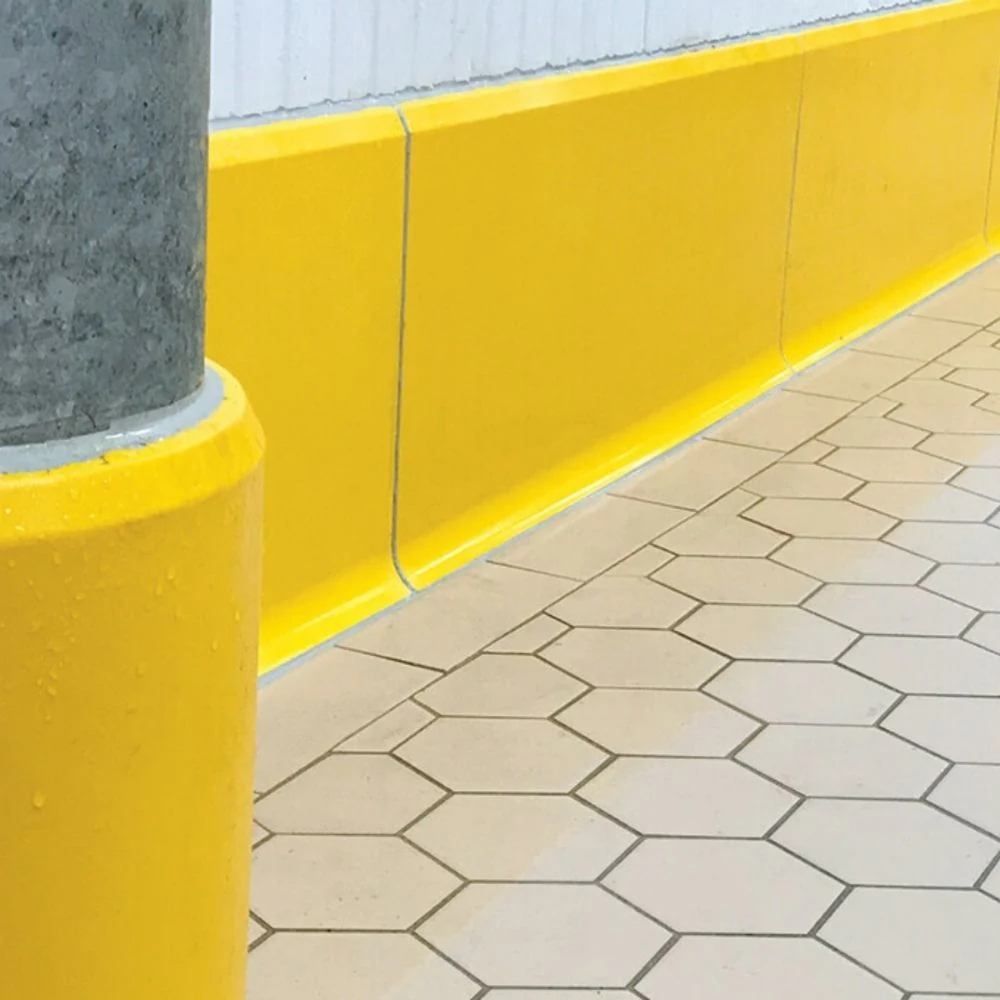
Full-height panels around lift doors, stair skirting and round column skirting.
100–1,000 mm
skirting heights (4–39 in)
10–15 mm
profile thickness
Traffic yellow
doubles as a warning band
2 versions
on top of or flush with the floor
How Hygienic Skirting Works
The profile replaces the sharp corner between wall and floor with a smooth radius, so water, fat and dust have nowhere to settle and a squeegee or brush reaches the whole joint. Inside and outside corner pieces continue the same radius around the room.
Low profiles of 100 to 165 mm suit production halls and corridors. The 300 mm and 1,000 mm high panels cover the zone where carts and pallets hit sandwich panels, around doors and lift openings. Stair skirting follows each step, and round column skirting wraps steel columns of 140, 170 and 220 mm diameter.
Hygienic Skirting Standard Sizes
| Type | Size (mm) | Installation |
|---|---|---|
| Standard skirting | 100 × 1,000 × 10 | On top of the floor finish |
| Standard skirting | 150 × 1,000 × 12 | On top of the floor finish |
| Standard skirting | 165 × 1,000 × 13 | In front of the floor finish (flush) |
| High skirting panel | 300 × 750 × 15 | On top of the floor finish |
| Full-height panel | 1,000 × 750 × 15 | On top of the floor finish |
| Stair skirting | 100 × 10 | Follows each step, made to the stair |
| Round column skirting | 150 × Ø140 · 300 × Ø170 · 300 × Ø220 | Around round columns |
Hygienic Skirting Key Features
Hygienic Skirting: Typical Areas
Glass-fiber-free · Standard and iron-reinforced
Hygienic Curbs (Kerbs) for Wall and Panel Protection
Traffic-yellow curbs that keep carts and pallet trucks off the wall and close the joint to the floor in one piece.

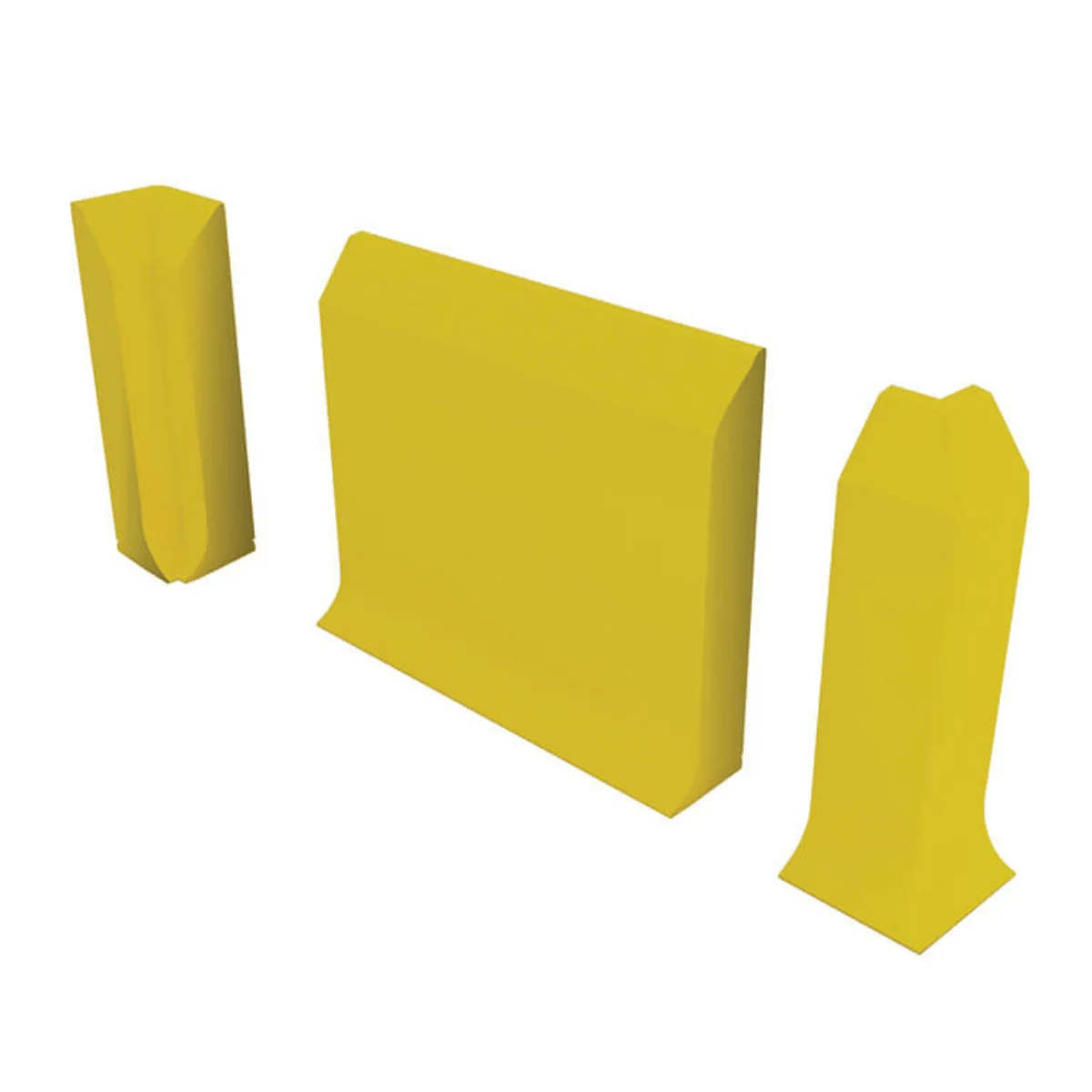
Hygienic curb along a cold room wall and door frame.
300–405 mm
curb sizes (12–16 in)
770 mm
piece length (30.3 in)
Iron-reinforced
version for thermal shock
Migration tested
food contact, reinforced range
Standard or Iron-Reinforced?
The standard curb is a glass-fiber-free, traffic-yellow profile that resists oil, acids, harsh and cleaning chemicals, dirt and stains. It protects walls and panels from cart and equipment impacts and marks the wall line on the floor.
The iron-reinforced curb adds steel reinforcement inside the profile for areas with heavier impacts and large temperature swings, such as cold rooms, clean room panel walls and outdoor transitions. It is not affected by sudden changes between heat and cold and can be produced in other colors on request.
Hygienic Curb Standard Sizes
| Version | Installation | Size (mm) |
|---|---|---|
| Standard | In front of the floor finish | 305 × 770 × 50 · 405 × 770 × 50 |
| Standard | On top of the floor finish | 300 × 770 × 50 |
| Iron-reinforced | In front of the floor finish | 305 × 770 × 50 · 405 × 770 × 50 |
| Iron-reinforced | On top of the floor finish | 300D × 770 × 50 · 400D × 770 × 50 · 400 × 770 × 50 |
Hygienic Curb Key Features
Hygienic Curbs: Typical Areas
AISI 304 / 316L · Heavy duty
Stainless Steel Curbs for Heavy Traffic Areas
A stainless steel shell over a reinforced concrete core for walls that see pallet trucks, forklifts and heavy carts.
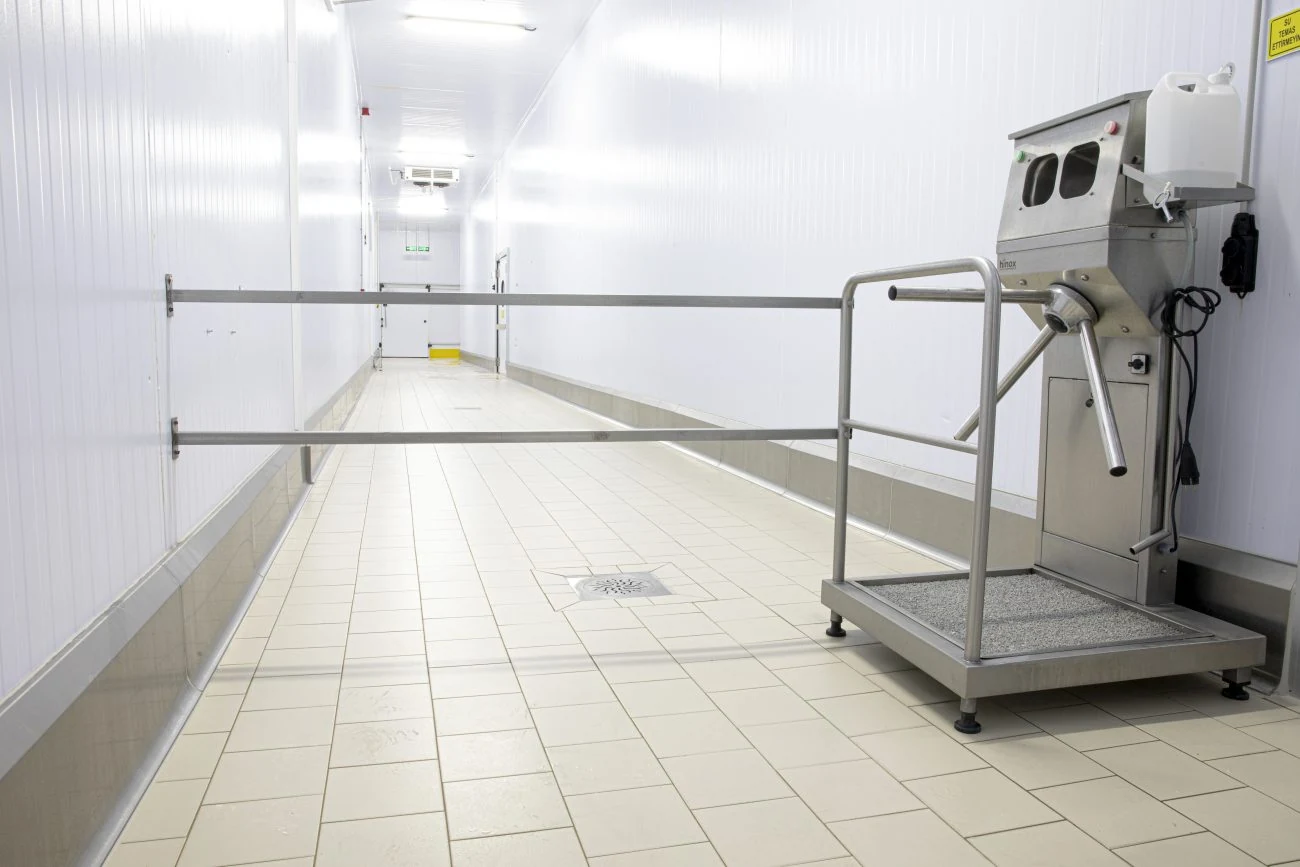
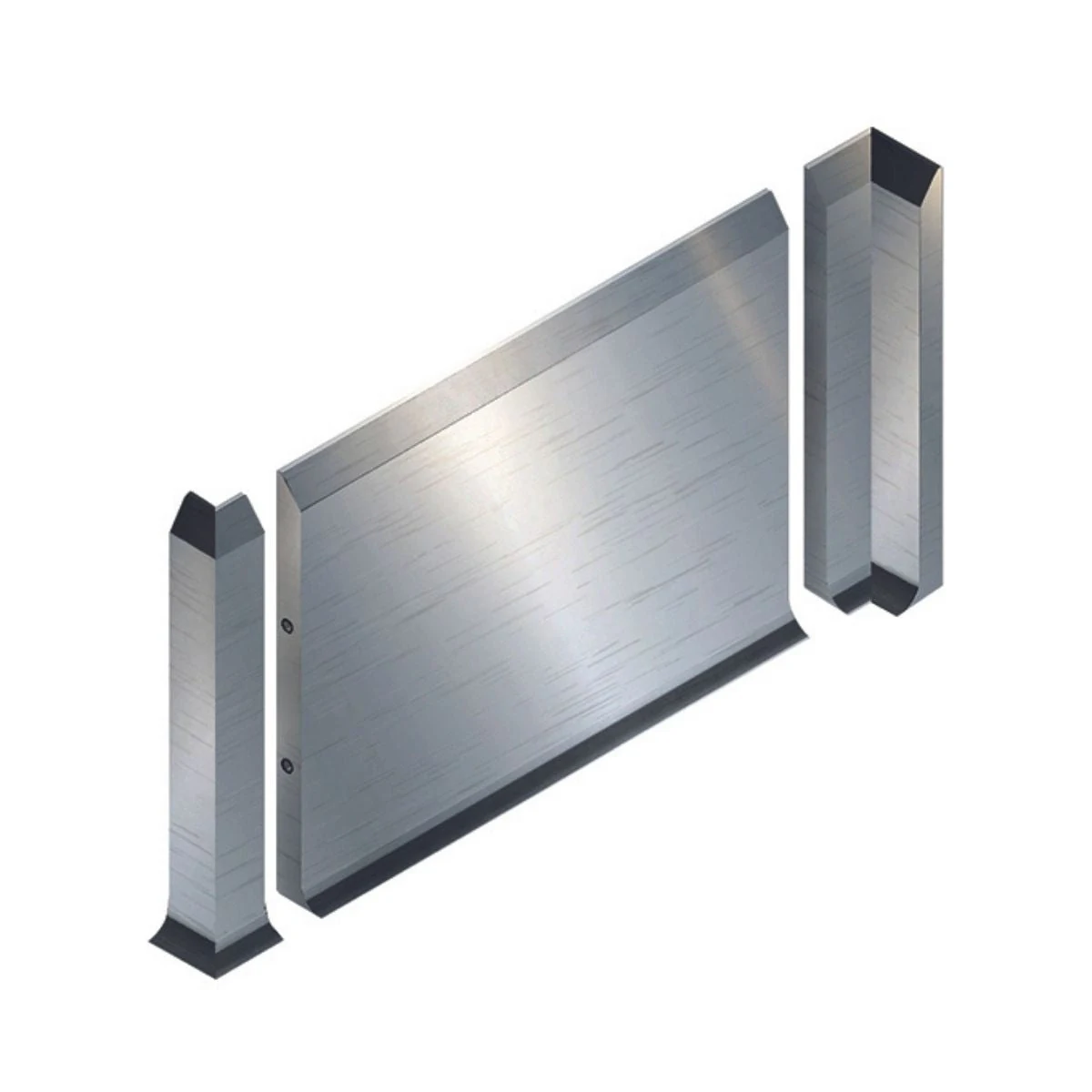
Stainless steel curb along the panel wall of a food plant corridor.
AISI 304 / 316L
stainless steel grades
Concrete core
composite and iron reinforced
1,000 mm
piece length (39.4 in)
Medium–heavy
impact and scratch resistant
Built for Impacts
Each curb is a formed AISI 304 or AISI 316L stainless steel shell filled with visco concrete and reinforced with composite and iron. Steel and concrete are bonded with a special process, so the profile behaves as one solid body under medium and heavy impacts and resists scratching.
The surface resists acids and chemicals and is not affected by hot, cold or humid environments. Curbs can be installed on any floor type, on top of the finished floor or in front of it so the tile or resin meets the steel flush. Choose AISI 316L for salty, acidic or chloride-rich areas such as cheese brining, meat curing or seafood processing.
Stainless Steel Curb Standard Sizes
| Installation | Size (mm) | Profile options (mm) |
|---|---|---|
| In front of the floor finish | 315 × 1,000 | 50 · 100 · 150 |
| In front of the floor finish | 515 × 1,000 | 50 · 100 · 150 · 50Z115 · 50Z215 · 50Z315 |
| In front of the floor finish | 765 × 1,000 | 50 · 100 · 150 · 50Z115 · 50Z215 · 50Z315 |
| In front of the floor finish | 1,015 × 1,000 | 100 · 150 · 50Z115 · 50Z215 · 50Z315 |
| On top of the floor finish | 300 × 1,000 | 50 · 100 · 150 |
| On top of the floor finish | 500 × 1,000 | 50 · 100 · 150 · 50Z100 · 50Z200 · 50Z300 |
| On top of the floor finish | 750 × 1,000 | 50 · 100 · 150 · 50Z100 · 50Z200 · 50Z300 |
| On top of the floor finish | 1,000 × 1,000 | 50 · 100 · 150 · 50Z100 · 50Z200 |
Codes with Z are special profile variants. Ask our engineers for the section drawing.
Stainless Steel Curb Key Features
Stainless Steel Curbs: Typical Areas
AISI 304 / 316L · Radiused cove
Stainless Steel Skirting for Hygienic Corridors
A stainless steel cove base with a 47.5 mm (1.9 in) radius at the wall-floor joint, for areas that need a steel finish without the bulk of a curb.
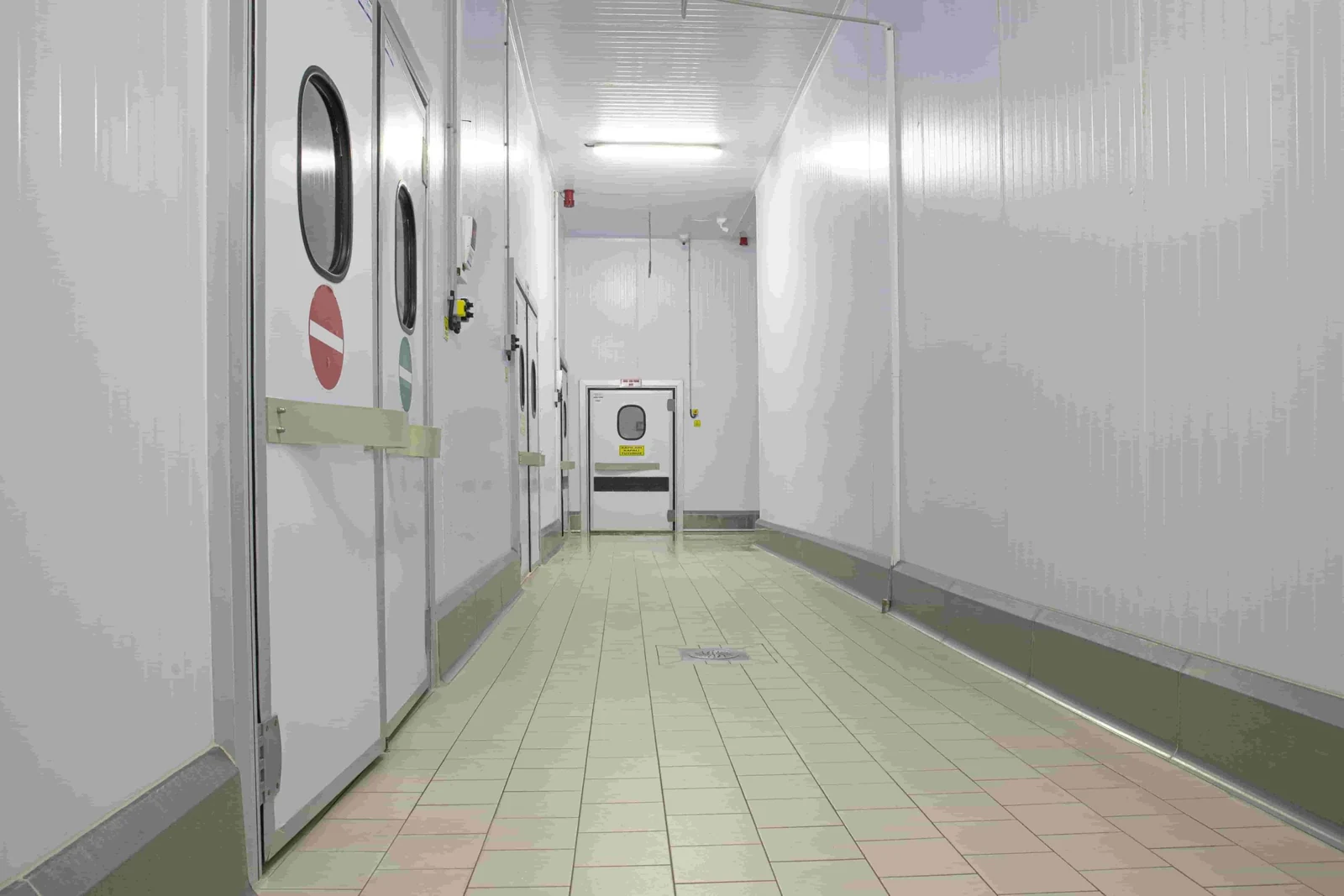
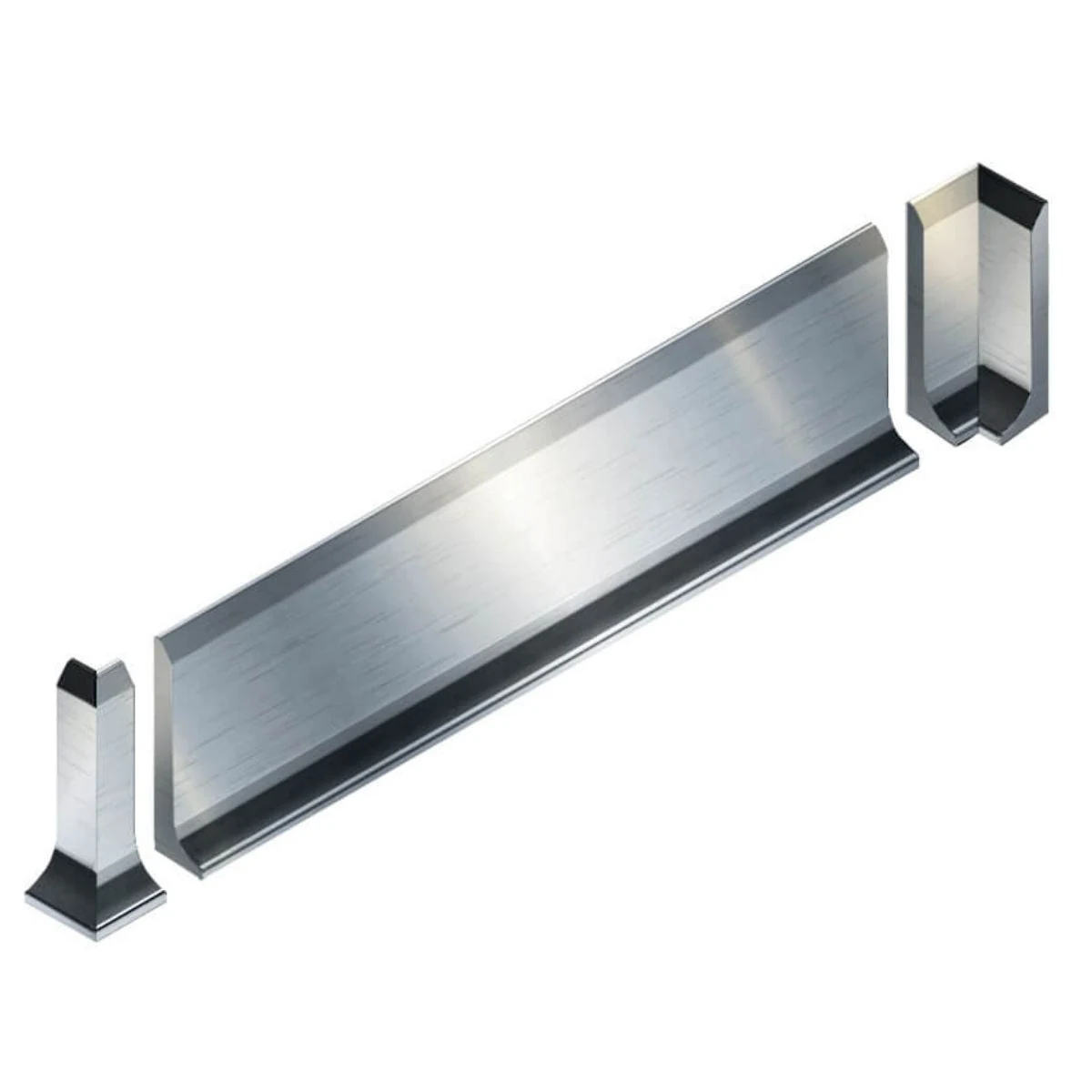
Stainless steel skirting along a hygienic corridor.
r = 47.5 mm
cove radius (1.9 in)
AISI 304 / 316L
stainless steel grades
1,000 mm
piece length (39.4 in)
Custom
special sizes to order
Clean Lines in Stainless Steel
Stainless steel skirting closes the wall-floor joint with a radial turn of r = 47.5 mm (about Ø95 mm), so cleaning tools follow the corner in one pass. The steel resists oils, acids and cleaning chemicals and stays corrosion resistant in wet washdown areas.
The 265 mm version is set in front of the floor finish and the 250 mm version goes on top of it. Both can be fixed with a floor anchoring system, and special sizes are produced to order. Typical uses are food factories, hospitals and busy buildings such as airports and train stations.
Stainless Steel Skirting Standard Sizes
| Version | Size (mm) | Fixing |
|---|---|---|
| In front of the floor finish | 265 × 1,000 × 25 | Floor anchoring available |
| On top of the floor finish | 250 × 1,000 × 25 | Floor anchoring available |
Stainless Steel Skirting Key Features
Stainless Steel Skirting: Typical Areas
Acrylic or stainless steel · Floor anchored
Hygienic Bollards for Doors, Columns and Machines
Impact bollards with smooth, radiused surfaces that keep forklifts and pallet trucks away from doors, columns and equipment.
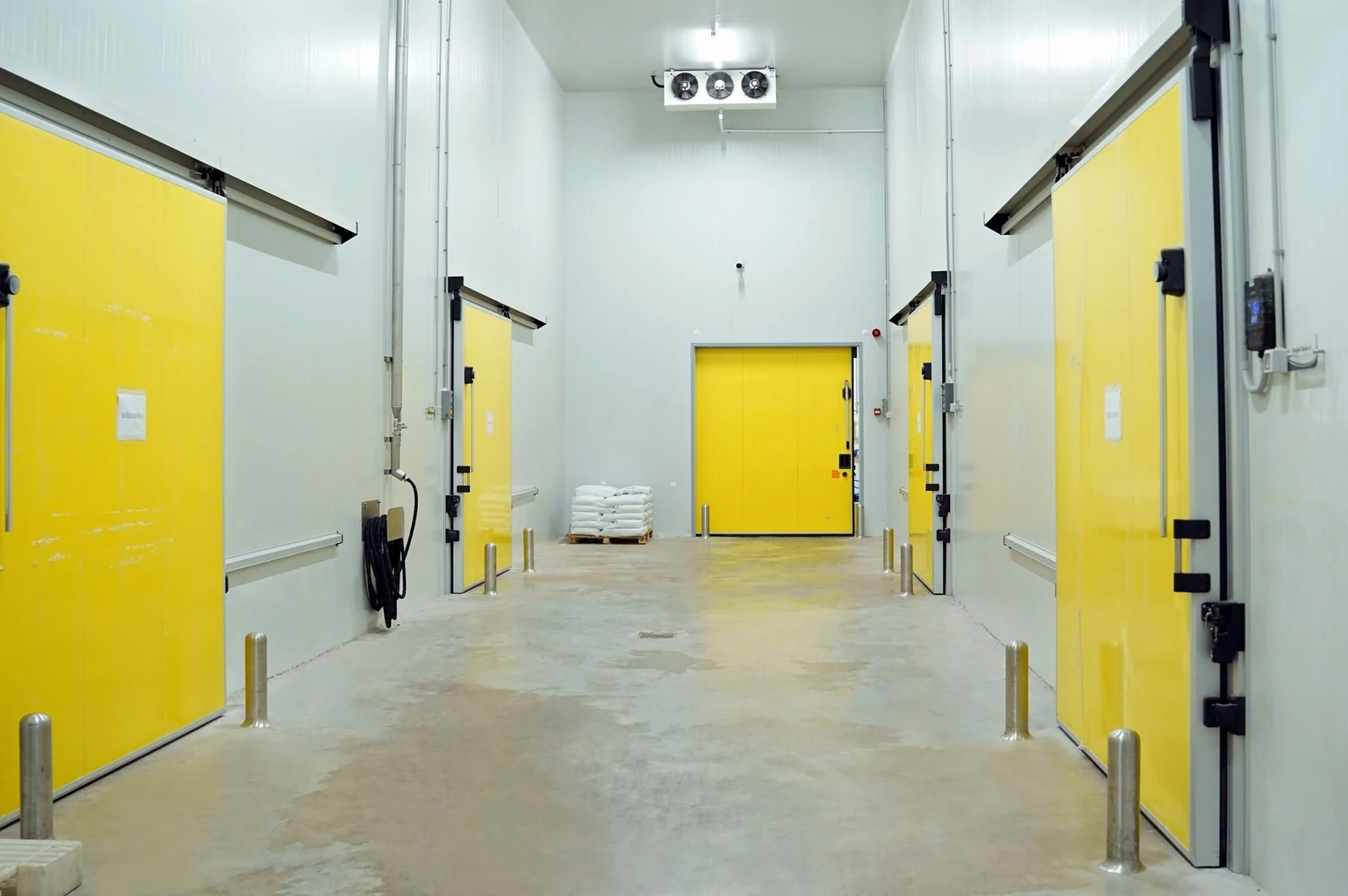
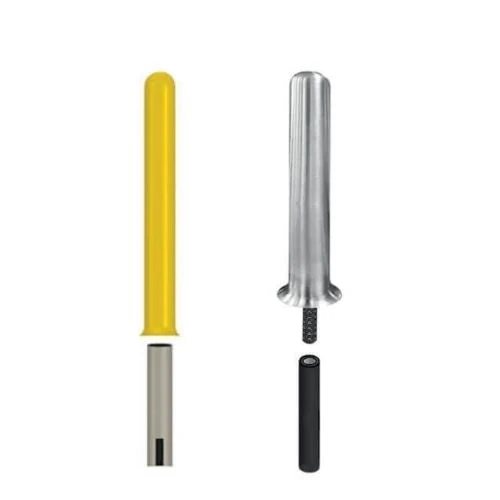
Stainless steel bollards in front of cold room doors.
900 mm
hygienic bollard (35.4 in)
500–1,000 mm
stainless bollards (20–39 in)
M24
resin anchor fixing
2 mm
stainless steel wall
Two Bollard Types
The hygienic bollard is a traffic-yellow shell made from food-contact grade acrylic over a strong steel tube. The tube takes high-energy impacts without bending, and the bollard is fixed to the floor with an M24 resin-based anchor mortar. The smooth, radiused surface leaves no corners or cracks for bacteria. The 900 mm model is standard; other heights are made to order.
Stainless steel bollards are made from AISI 304 or 316 tube with a 2 mm wall and a concrete-filled core, in 500, 750 and 1,000 mm heights. They are mounted to the floor, with the filling concrete supplied for installation, and suit door transitions, storage and production areas where a steel finish is preferred.
Bollard Models
| Model | Material | Height | Fixing |
|---|---|---|---|
| Hygienic bollard | Food-contact acrylic over steel tube, traffic yellow | 900 mm, custom heights | M24 resin anchor |
| Stainless steel bollard | AISI 304 / 316, 2 mm wall, concrete filled | 500 · 750 · 1,000 mm | Floor mounted |
Bollard Key Features
Bollards: Typical Areas
Acrylic · Bonded at any height
Wall Protectors and Bumper Strips for Panel Faces
Bonded boards and bumper strips that take cart impacts on the wall face, set at the height where hits actually happen.
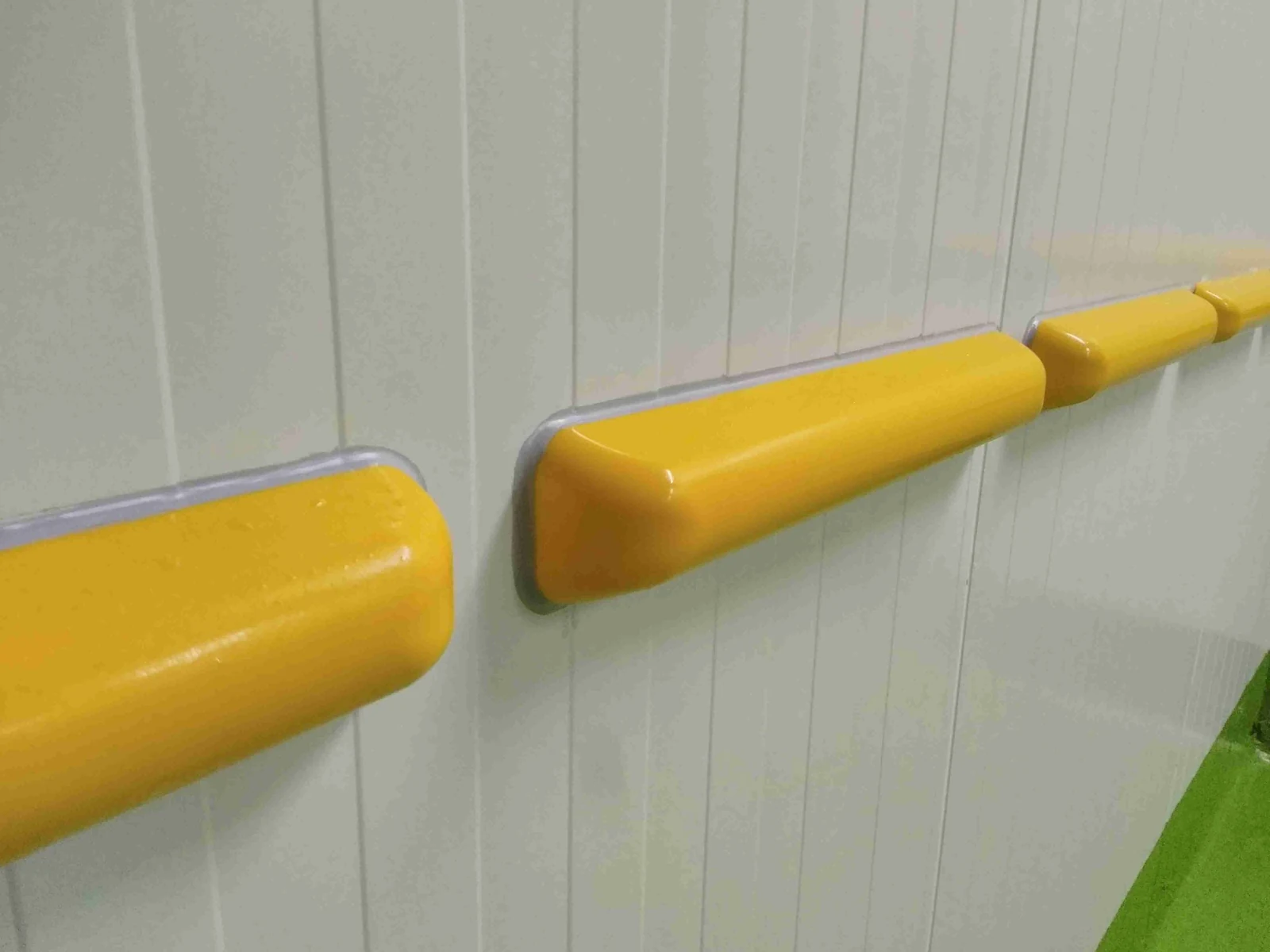
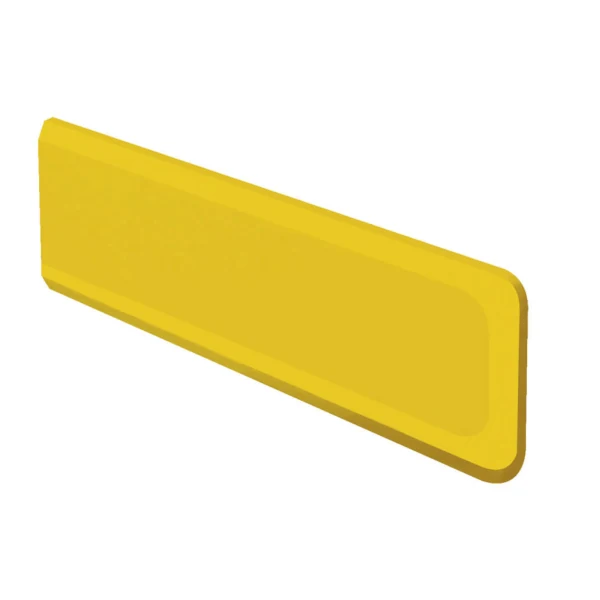
Bumper strips bonded to an insulated wall panel.
200 × 1,200 mm
protector board (8 × 47 in)
12 mm
board thickness
80 × 50 mm
bumper strip section
Adjustable
mounting height
Protection Where the Cart Hits
The wall protector board is a glass-fiber-free, traffic-yellow plate applied to walls, columns and panels. It resists chemicals and acids and can be produced to special sizes for your project.
The bumper strip is a rounded acrylic profile, 80 mm wide and 50 mm deep in a 500 mm length. It is bonded to the wall at an adjustable height to match trolley handles, cart edges or pallet truck forks, and it resists acids and chemicals.
Wall Protector Standard Sizes
| Product | Size (mm) | Material | Fixing |
|---|---|---|---|
| Wall protector board | 200 × 1,200 × 12 | Glass-fiber-free, traffic yellow | Applied to walls, columns, panels |
| Bumper strip | 80 × 500 × 50 | Acrylic | Bonded, adjustable height |
Wall Protector Key Features
Wall Protectors: Typical Areas
Acrylic · Corners and door reveals
Corner Guards for Wall Corners and Door Reveals
Acrylic corner guards in three sections and a 1,500 mm full-height corner protector for outside corners hit by carts and equipment.
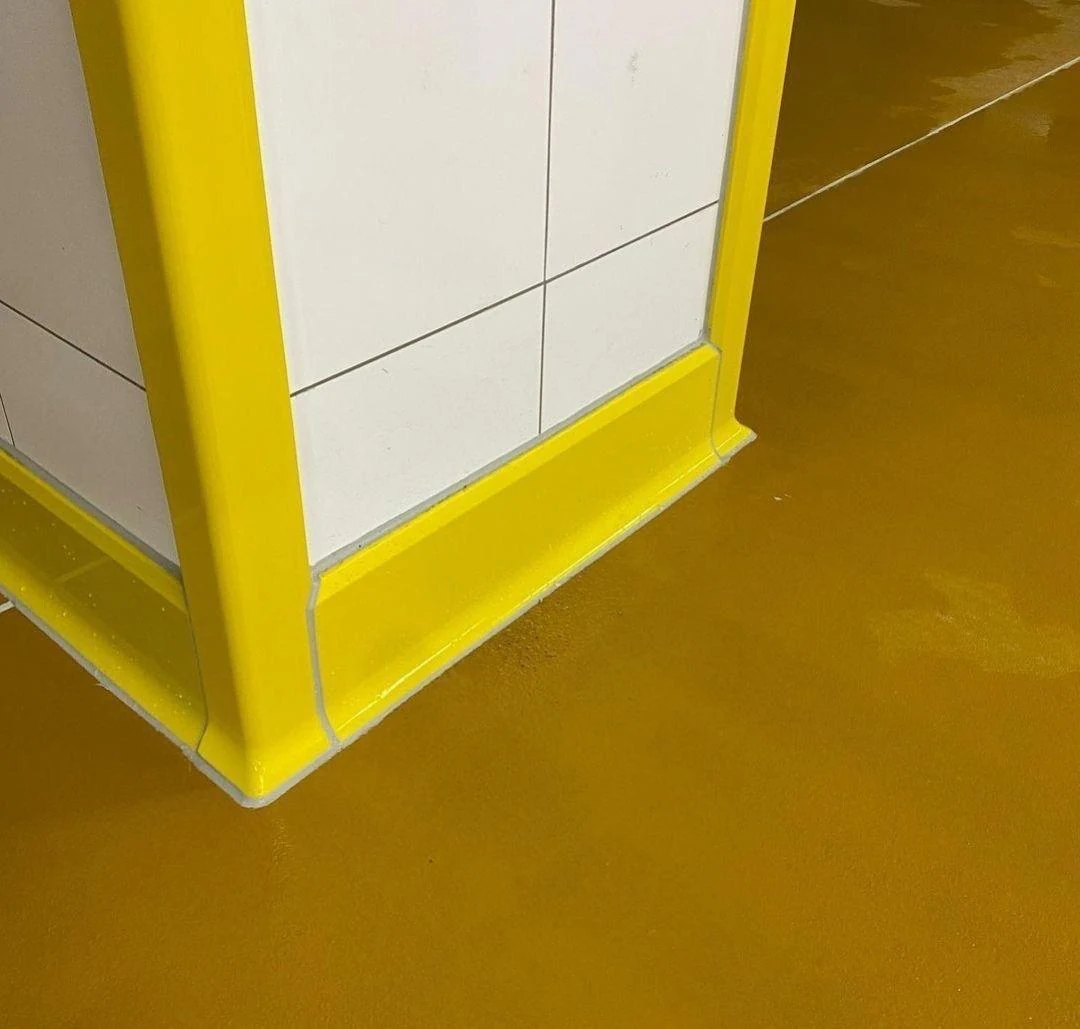

Full-height corner wall protector meeting the hygienic skirting.
1,500 mm
full-height protector (59 in)
3 sections
bonded corner guards
MS polymer
ISEGA-certified adhesive
Traffic yellow
visible corner line
Small Guards or Full Height
The bonded corner guards are acrylic profiles in 100 × 80 × 50 mm, a rounded R100 × 80 × 50 mm version and a heavy-duty 140 × 120 × 70 mm section. They are glued at the height you need to protect panels, walls and columns from light and medium impacts, and they resist acids and chemicals.
The 1,500 × 15 mm corner wall protector covers the lower corner in one piece. It is made from materials suitable for food hygiene, resists oils, acids and chemicals, and is installed with an ISEGA-certified MS-polymer hybrid adhesive and neutral silicone joints that withstand high temperatures and resist mold on the surface.
Corner Guard Standard Sizes
| Product | Size (mm) | Fixing |
|---|---|---|
| Corner guard | 100 × 80 × 50 | Bonded, adjustable height |
| Rounded corner guard | R100 × 80 × 50 | Bonded, adjustable height |
| Heavy-duty corner guard | 140 × 120 × 70 | Bonded, adjustable height |
| Corner wall protector | 1,500 × 15 | MS-polymer adhesive, silicone joints |
Corner Guard Key Features
Corner Guards: Typical Areas
Frequently Asked Questions About Hygienic Wall Protection
Have a question about profiles, floors or installation? Ask our engineers.
Get a Quote
Send Us Your Wall Layout
Send the wall lengths, floor finish, type of traffic and cleaning regime. Protrus engineers select the right curbs, skirting and guards and size the corners, end pieces and accessories for each room.
Prefer email? info@protrus.com