

Dairy Processing · Cheese Lines
Mozzarella, Pasta Filata, Kashkaval and Process Cheese Production Lines
From raw milk to packed mozzarella balls, pizza cheese blocks, kashkaval wheels and processed cheese portions, with one engineering partner for every step.
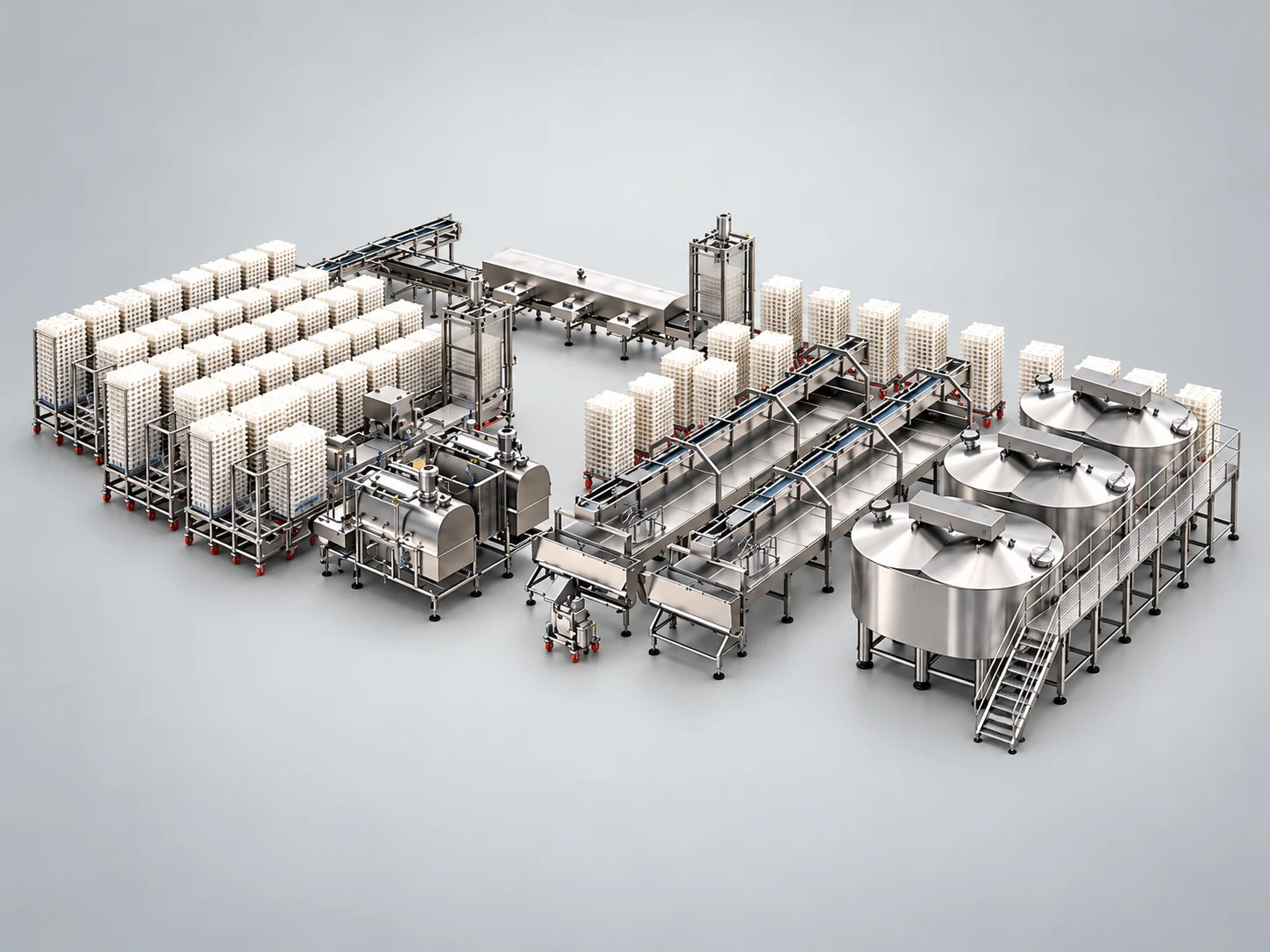
A complete Protrus pasta filata plant: cheese vats, finishing vats, cooker-stretcher, forming and mould trolleys.
500–5,000 kg/h
Line output (1,100–11,000 lb/h)
pH 5.1–5.3
Curd window for clean stretching
58–68 °C
Dough temperature (136–154 °F)
3 g – 10 kg
Piece weight, cherry mozzarella to blocks
Protrus designs and builds complete lines and single machines for stretched-curd (pasta filata) cheese and for processed cheese. A line combines cheese vats, curd filtration drums, finishing vats for acidification, steam or hot water cooker-stretchers, forming and portioning machines, hardening and cooling tunnels, and a cooker-creamer for processed cheese. Every machine is made of AISI 304/316L stainless steel, cleaned in place and run from recipes on one PLC, so a plant can switch between fresh mozzarella, pizza cheese, string cheese and kashkaval with predictable yield and texture.
What Makes Pasta Filata Cheese Different?
In pasta filata cheese, the curd is heated and kneaded until its protein network turns elastic and lines up into long fibers. This only works in a narrow window: when acidification has removed enough calcium from the casein, at about pH 5.1–5.3, the warm curd stretches like dough instead of breaking. The same principle gives the soft, milky layers of fresh mozzarella, the melt and stretch of pizza cheese, and the closed, sliceable body of kashkaval.
Processed cheese follows a different route: natural cheese is melted with emulsifying salts into a smooth, stable mass that is filled hot into slices, triangles, blocks and cups.
Product range
Four Cheese Families on One Machine Platform
| Property | Fresh mozzarella | Pizza cheese (LMPS) | Kashkaval | Process cheese |
|---|---|---|---|---|
| Raw material | Cow or buffalo milk | Standardized cow milk | Cow, sheep or mixed milk | Natural cheese blend, emulsifying salts |
| Key step | Gentle stretch, high moisture | Firm stretch, dry salting | Stretch in hot salted water, ripening | Cooking and creaming with salts |
| Moisture | 52–60 % | 45–52 % | 40–45 % | 40–60 % by type |
| Forms | Balls 3–250 g, plaits | Blocks 1–10 kg, shred, sticks | Wheels and loaves 0.5–10 kg | Slices, triangles, blocks, cups |
| Shelf life | 2–4 weeks at 2–4 °C (36–39 °F) | 2–4 months, vacuum packed | 6–12 months after ripening | 6–12 months |
Final Products from Protrus Cheese Lines
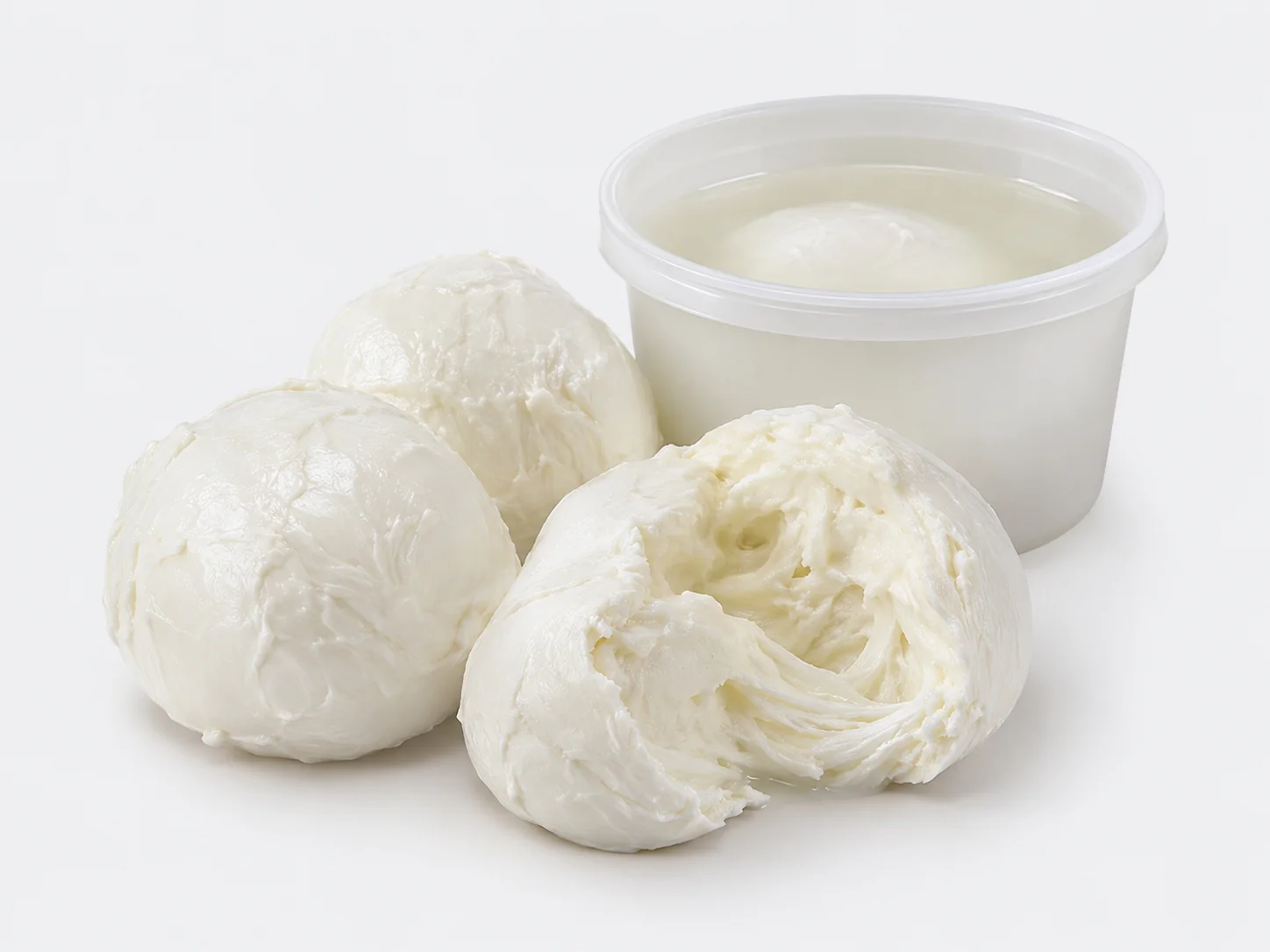
Fresh mozzarella (fior di latte)
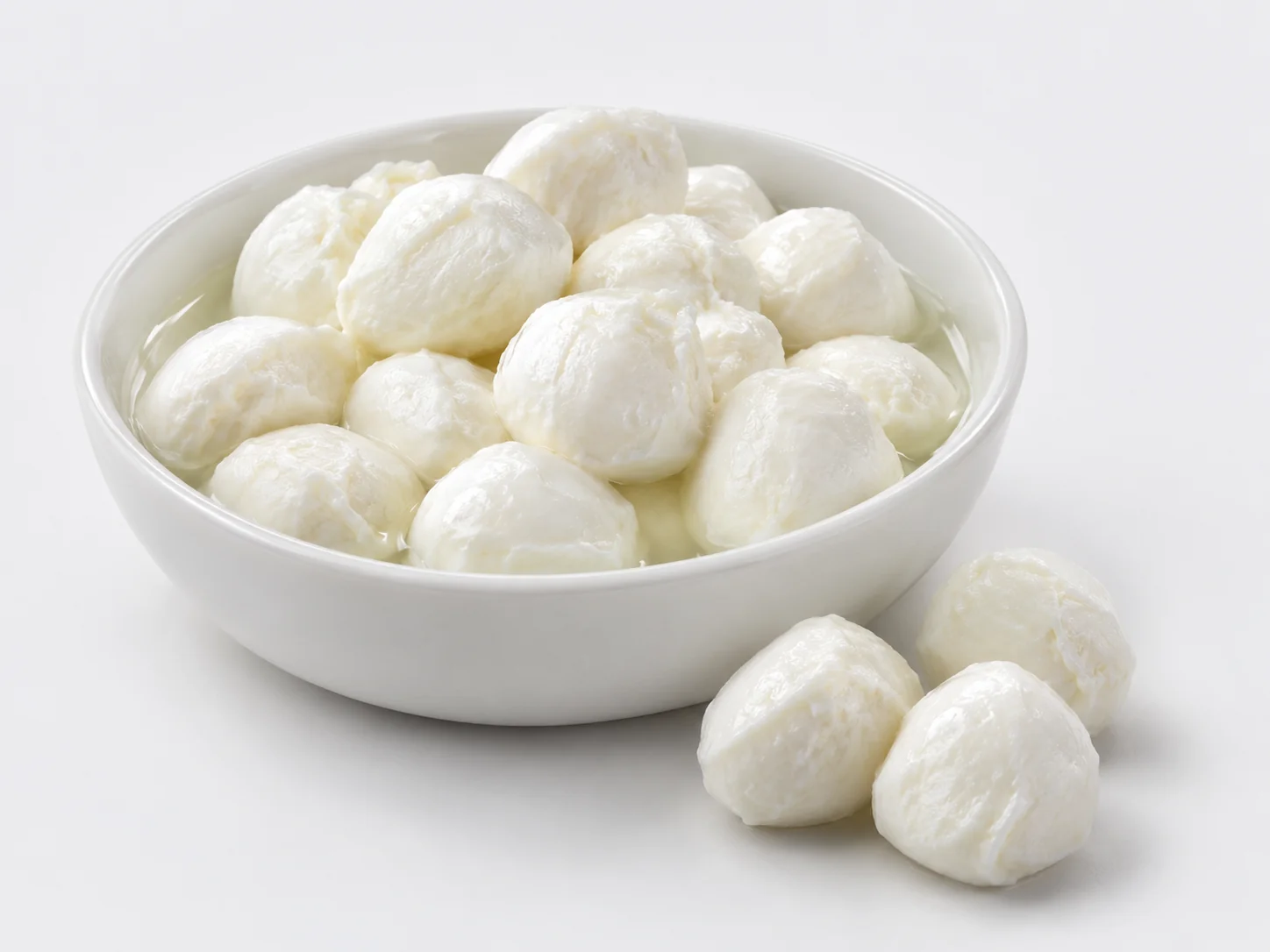
Mini mozzarella and bocconcini
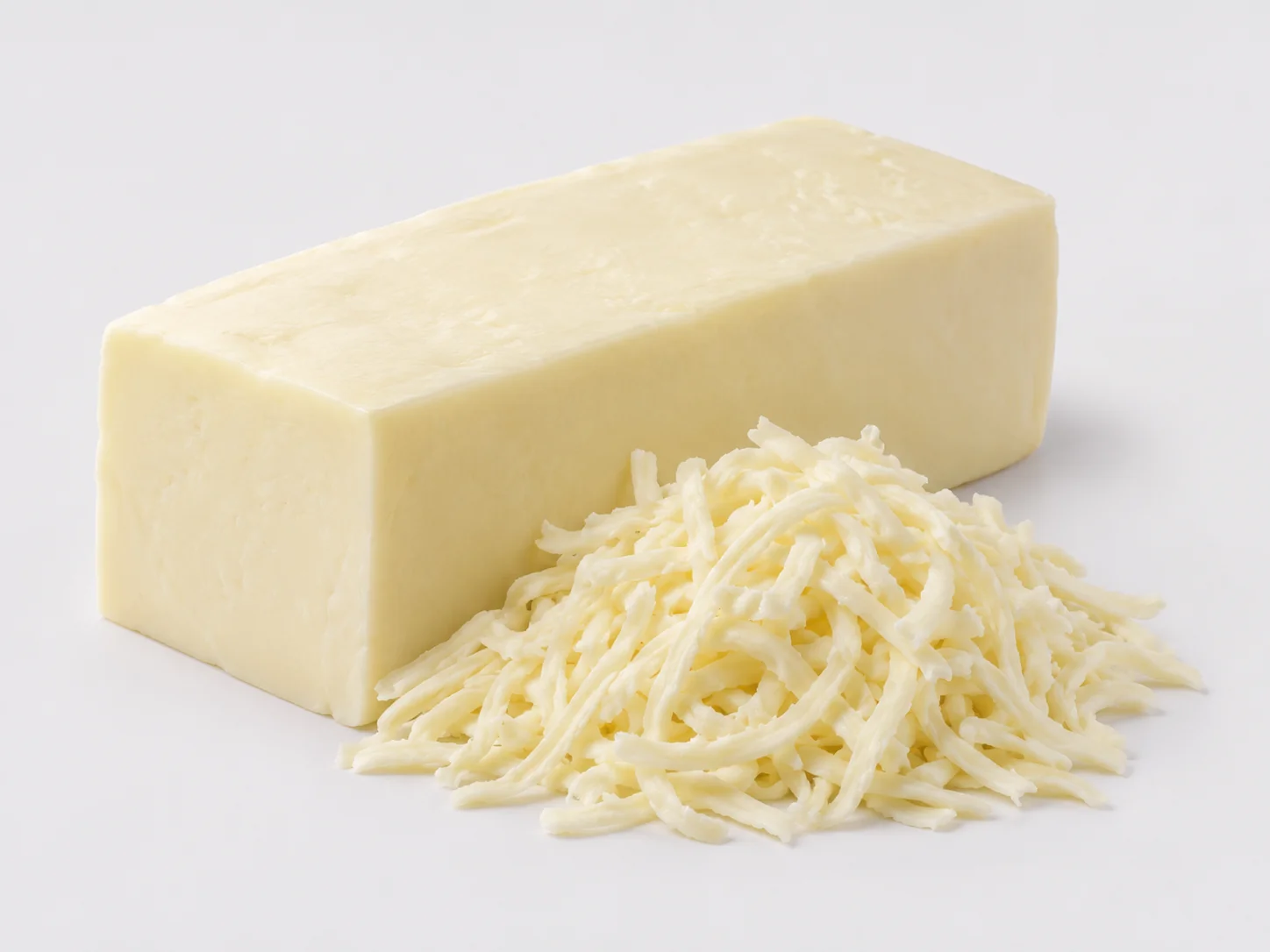
Pizza cheese block and shred
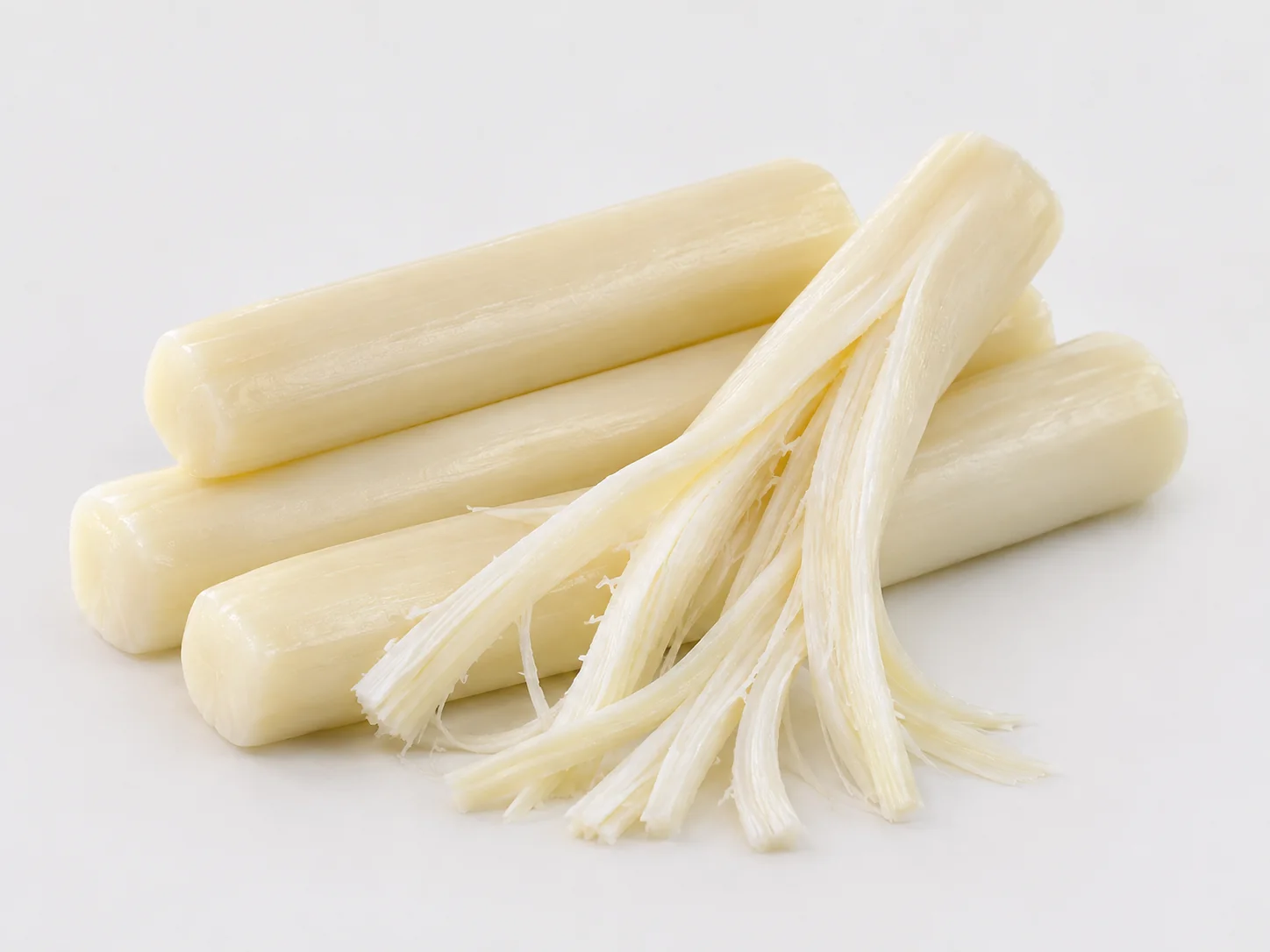
String cheese
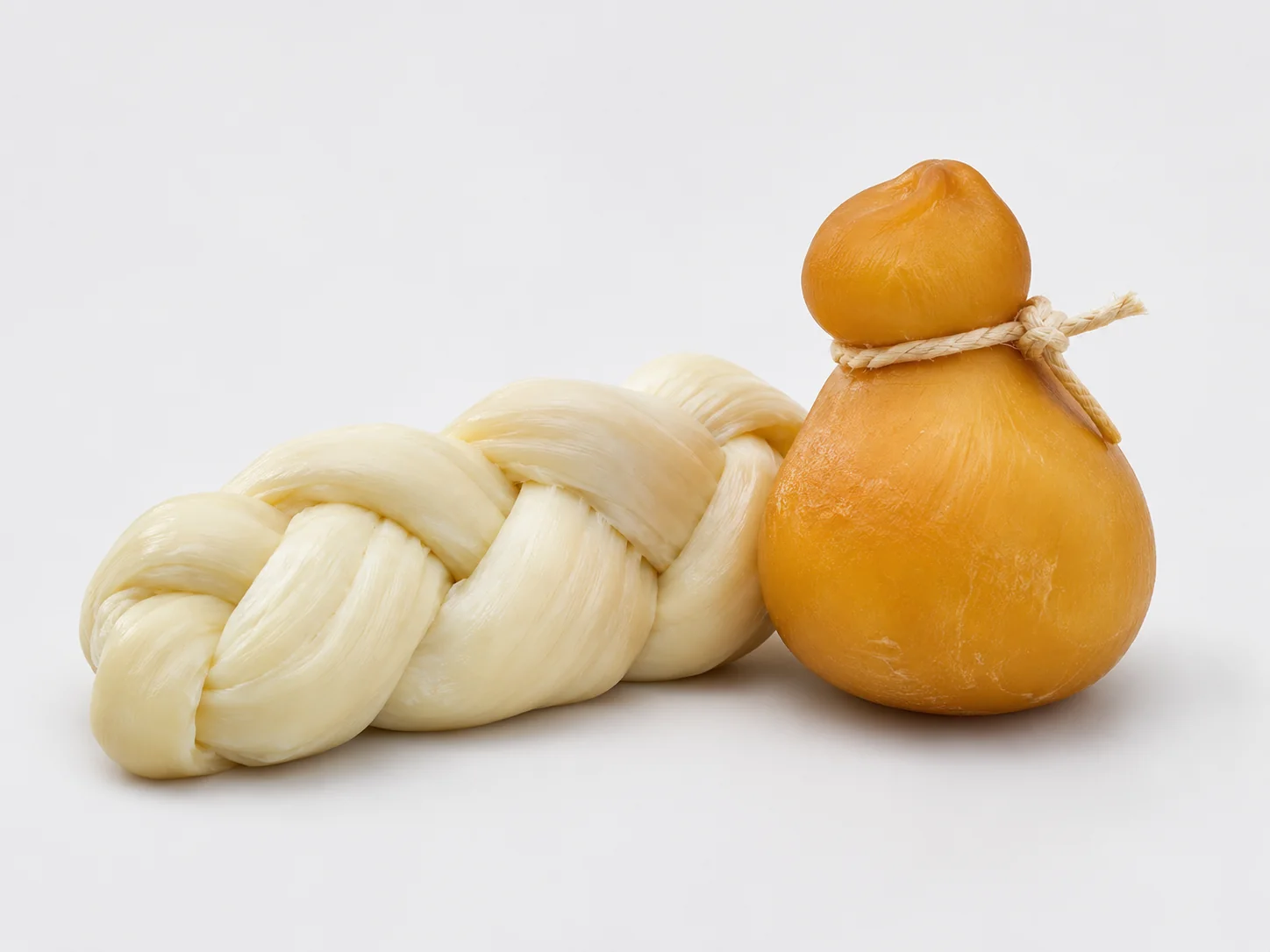
Braided and smoked pasta filata
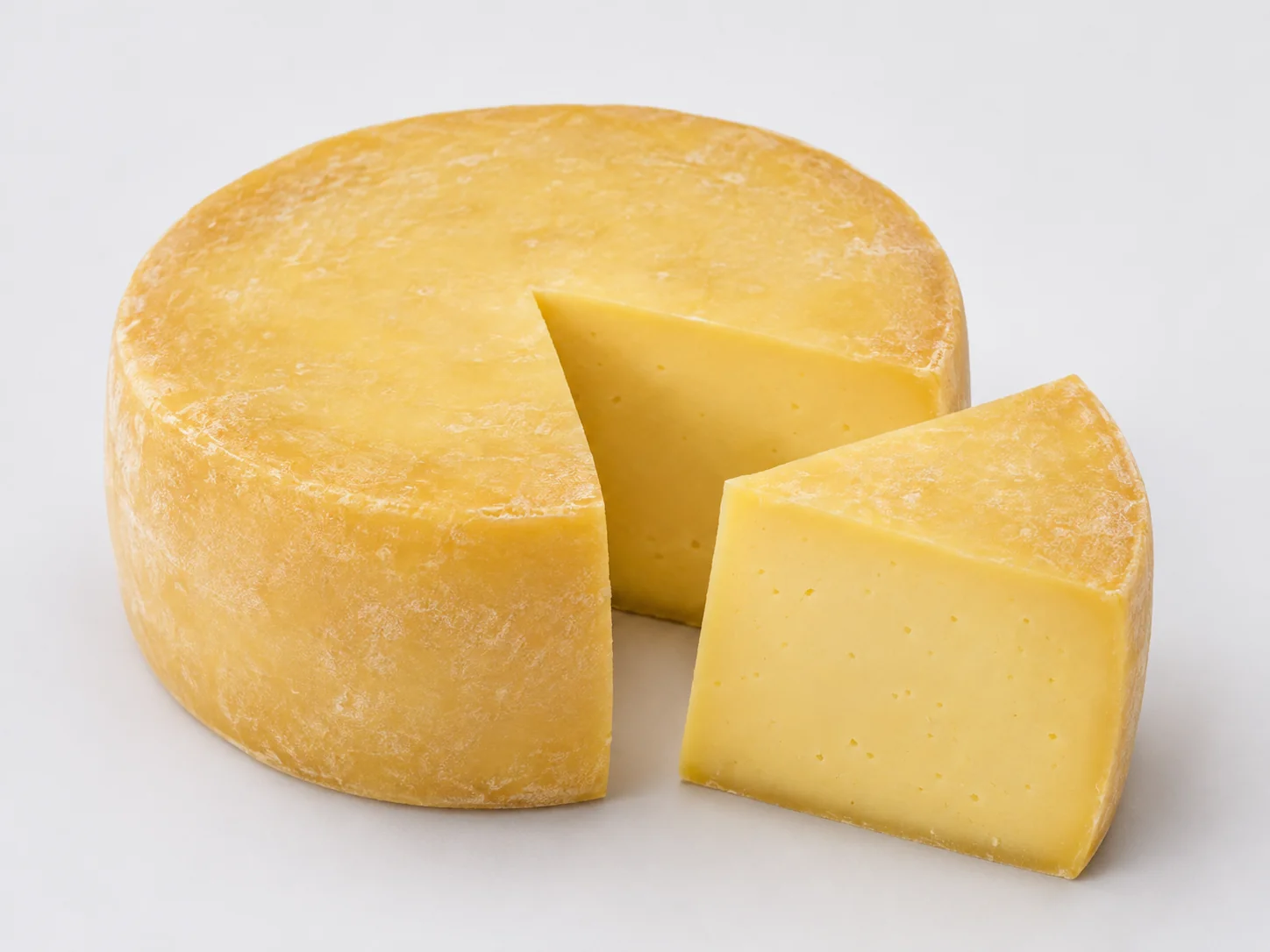
Kashkaval wheel
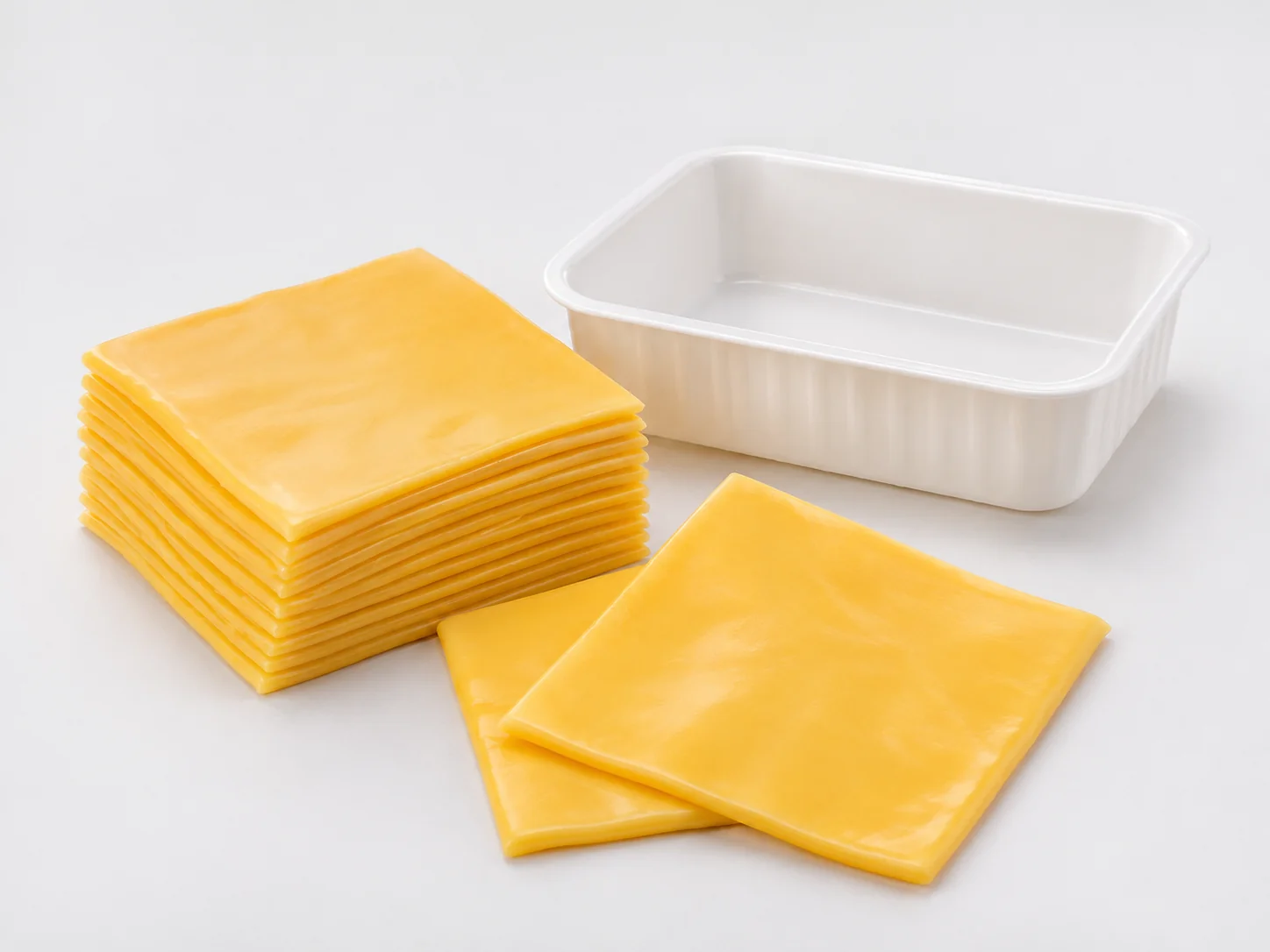
Processed cheese slices
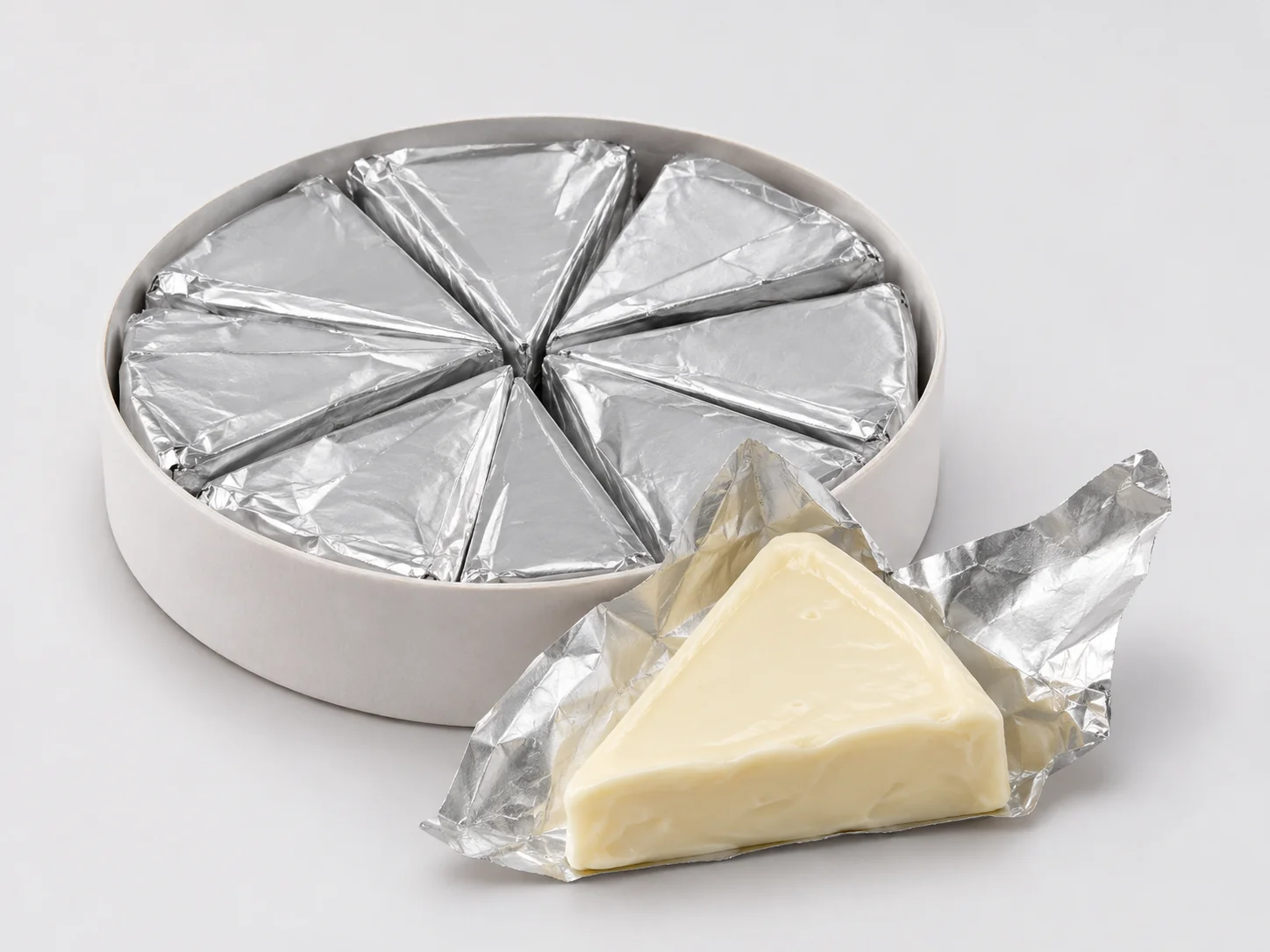
Spreadable cheese triangles
In this section
Process · Steps 1–14
The Pasta Filata Process: From Milk to Stretched Curd
Fourteen controlled steps turn standardized milk into elastic, fibrous curd that can be shaped into any mozzarella, pizza cheese or kashkaval format.
The diagram shows a typical line for cow milk. Zone A makes the curd, zone B brings it to the right acidity and stretches it, and zone C shapes, hardens and packs the cheese. Times and temperatures are recipe values on the PLC, so the same equipment produces a soft, high-moisture fresh mozzarella in the morning and a firm pizza cheese block in the afternoon.
- 1Milk receptionStandardize protein : fat, 3.0–3.5 % fat
- 2PasteurizerPlate HX with regeneration, 72–75 °C (162–167 °F), 15–20 s
- 3Cheese vatCulture or acid + rennet, 32–36 °C (90–97 °F), 30–45 min
- 4Cut, stir, cookCurd cubes 10–15 mm, 38–42 °C (100–108 °F), 30–60 min
- 5Filtration drumWhey off, curd to vat, sieve 0.2–1 mm
Whey from step 5 goes to the separator and whey processing (WPC).
- 6Finishing vatAcidify, drain, push out, pH 5.1–5.3
- 7Curd millOption: or cold-stored curd blocks, strips 10–20 mm
- 8Load-cell dosingBatch weight into hopper, 100–400 kg/batch
- 9Cooker-stretcherSteam or hot water, augers, dough at 58–68 °C (136–154 °F)
- 10Transfer augerHeated, PTFE-coated, keeps 60–65 °C (140–149 °F)
- 11FormingBalls, blocks, wheels, sticks, 3 g – 10 kg
- 12HardeningChilled water, conveyor, 4–12 °C (39–54 °F), 15–60 min
- 13BriningOption: or dry salt in stretcher, 18–22 % NaCl
- 14Drying and packingAir knife, vacuum, MAP, cold store 2–4 °C (36–39 °F)
- Final productsFresh mozzarella in whey
Pizza cheese blocks, shred
String and braided cheese
Kashkaval, ripening 60–90 d
Smoked pasta filata
Process flow of a pasta filata line for cow milk. A: milk and curd making, B: texturing, cooking and stretching, C: forming, hardening and finishing. Dashed boxes are options. Kashkaval: curd ripened to pH 5.0–5.2, stretched in 70–75 °C (158–167 °F) salted water, moulded into wheels, dried and ripened. Pizza cheese: low-moisture curd, dry-salted in the stretcher, block-formed. All values are typical ranges; final recipes are set per milk, culture and product on the Protrus PLC.
Process Steps
Milk preparation (1–2). Milk is standardized to the protein-to-fat ratio the product needs, then pasteurized at 72–75 °C (162–167 °F) for 15–20 s and cooled to setting temperature. Fat and protein set the yield, so in-line standardization pays back quickly.
Coagulation and cutting (3–4). Starter culture (or direct acidification with citric acid for fast fresh mozzarella) and rennet are added in the cheese vat at 32–36 °C (90–97 °F). After 30–45 min the gel is cut into 10–15 mm cubes, stirred and cooked to 38–42 °C (100–108 °F) to release whey.
Whey drainage (5). Curd and whey are pumped to a filtration drum. The whey passes a 0.2–1 mm screen and goes to the separator and whey processing, the curd drops into the finishing vat.
Acidification (6–7). The curd mats, drains and acidifies in the finishing vat until it reaches pH 5.1–5.3. It is then milled into strips, or cooled and stored as curd blocks for stretching later.
Cooking and stretching (8–10). A load cell doses each batch into the cooker-stretcher. Steam or hot water heats the curd to 58–68 °C (136–154 °F) while counter-rotating augers knead it into a smooth, glossy dough.
Forming and finishing (11–14). The dough is shaped into balls, blocks, sticks or wheels, set in chilled water at 4–12 °C (39–54 °F), salted in brine or before forming, dried and packed in whey, under vacuum or in modified atmosphere.
Cheese Vats for Mozzarella and Kashkaval Curd
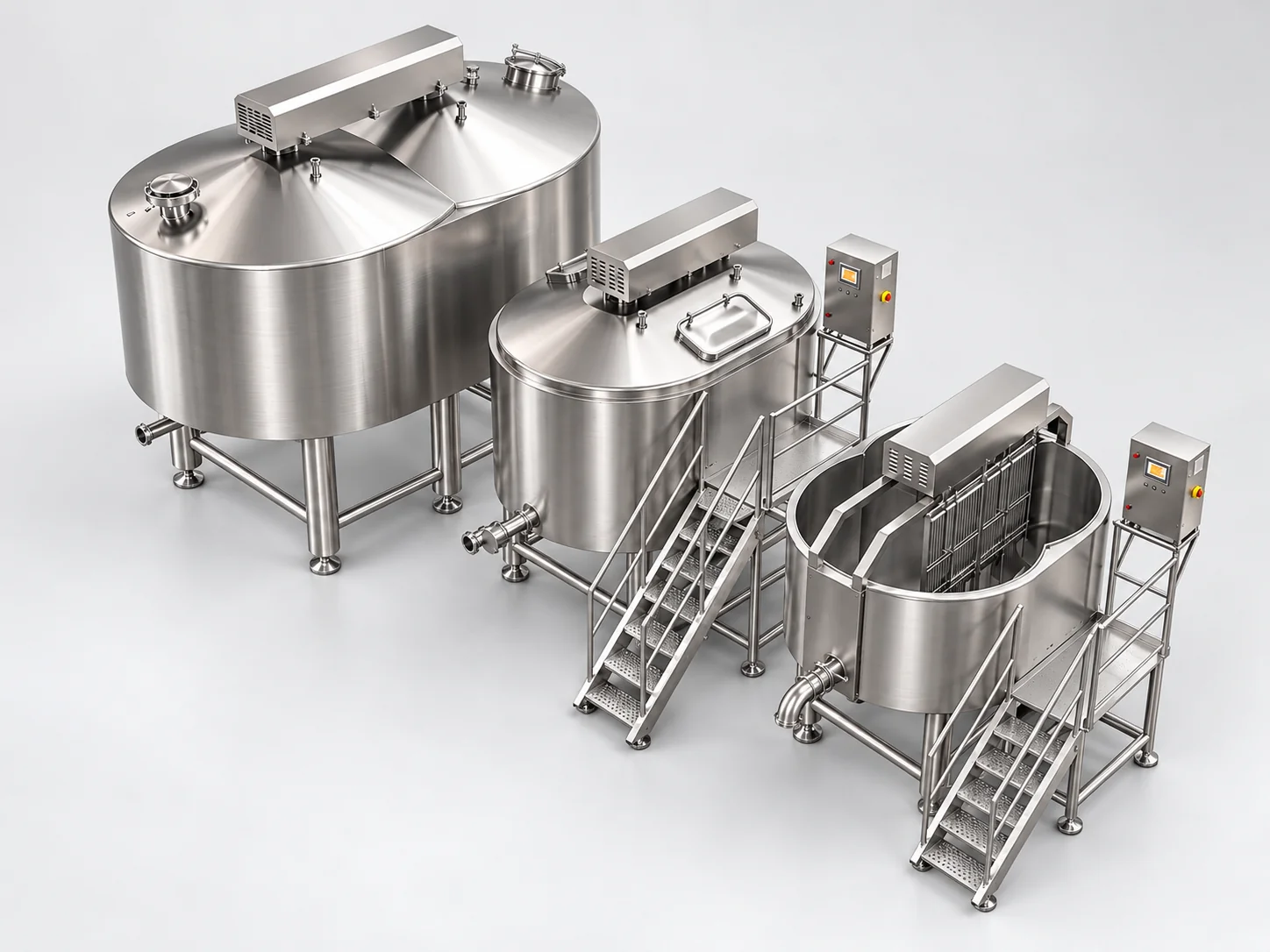
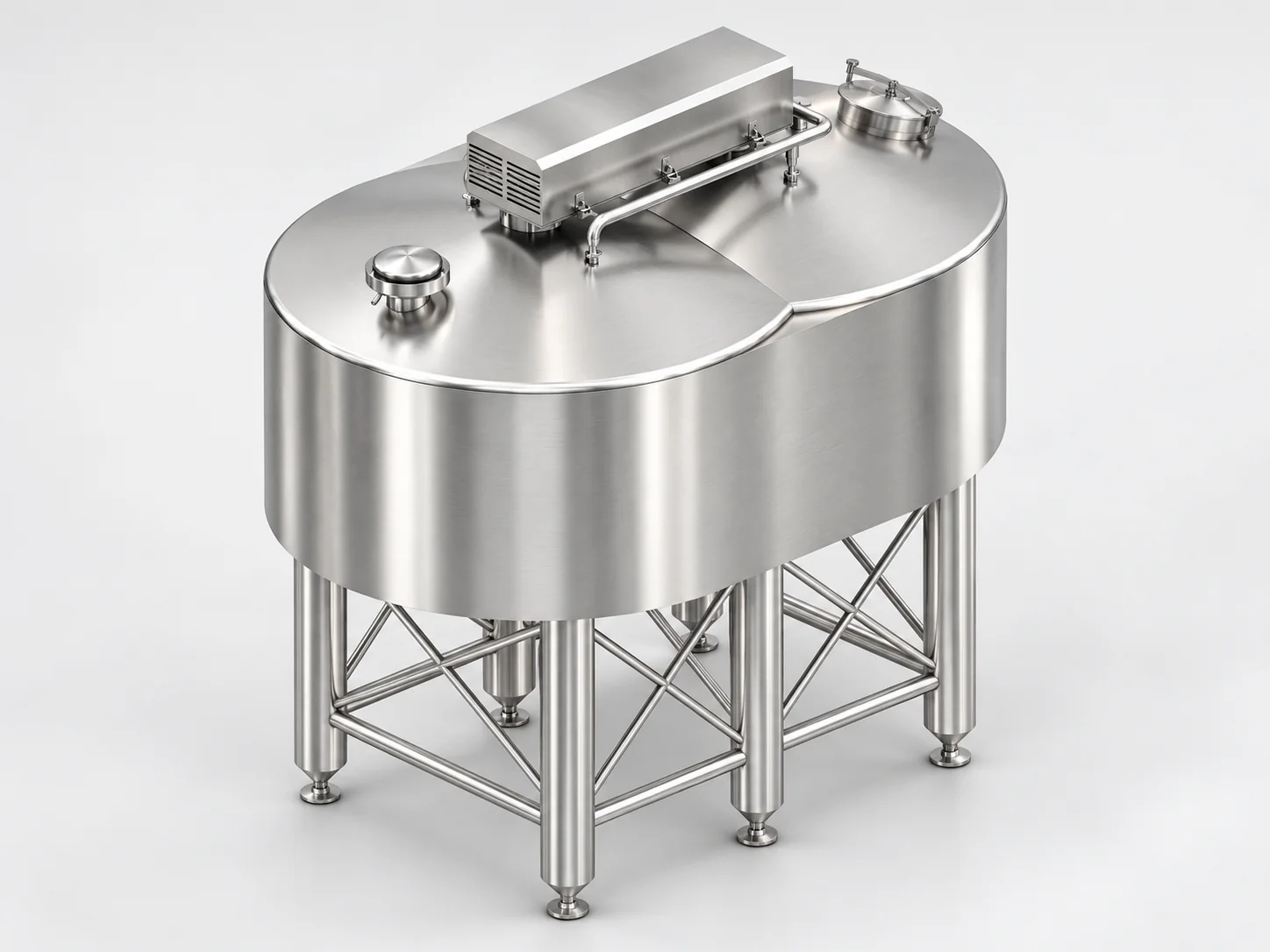
Protrus cheese vats: closed figure-eight, closed round and open vat (large image); figure-eight vat (inset).
Curd drainage · Steps 5–7
Curd Drainage and Texturing: Filtration Drums and Finishing Vats
Fast whey removal and exact acidity are the two levers that decide how well the curd will stretch.
After cooking in the vat, the curd still floats in about nine times its volume of whey. A filtration drum separates the two in seconds without crushing the grains. The curd then goes to a finishing vat, where it drains, knits together and acidifies until it is ready for the cooker-stretcher. Both steps are closed, pump-fed and cleaned in place, so the line stays hygienic and labor stays low.
Curd Filtration Drums
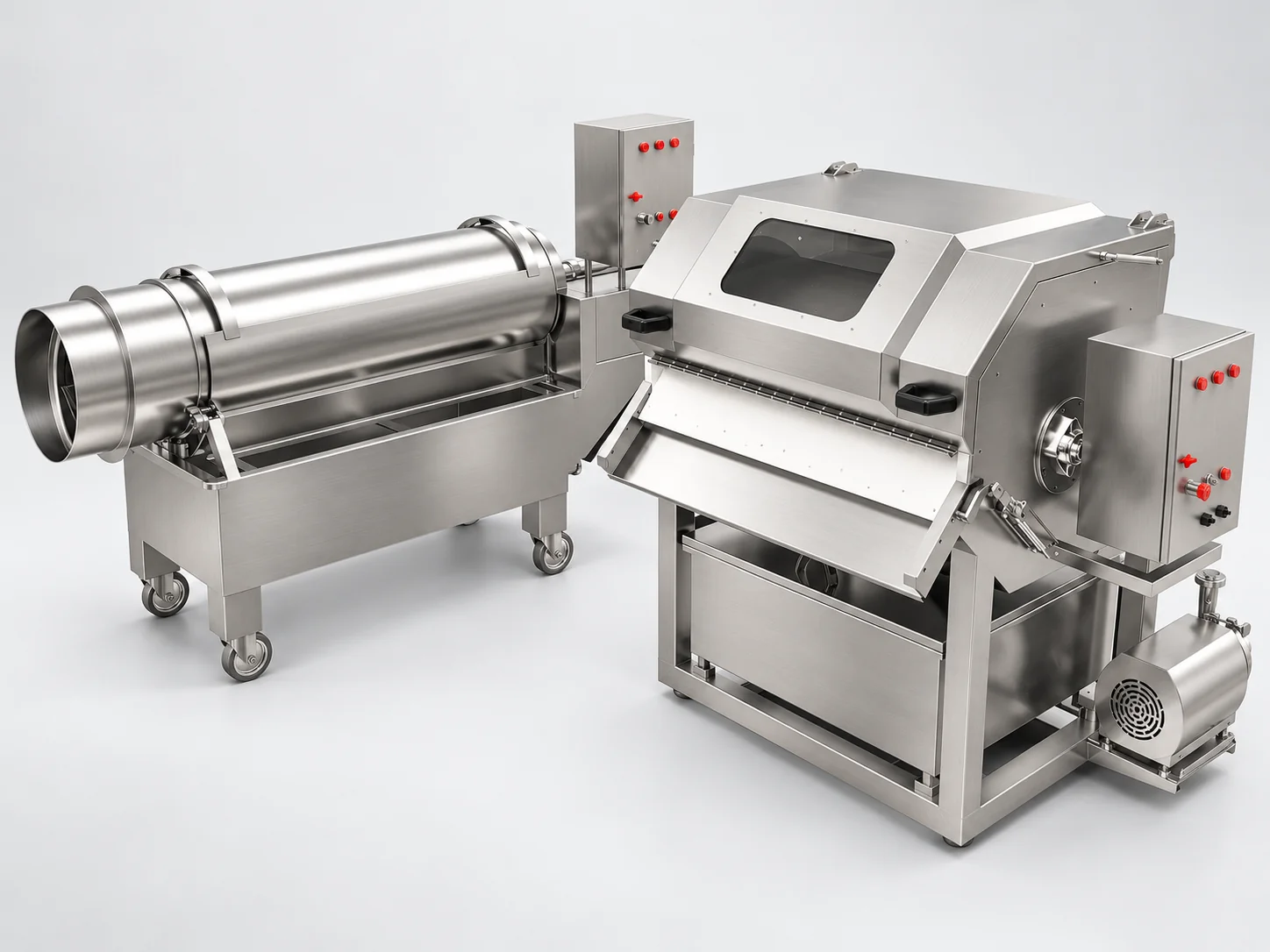
Internal and external drums
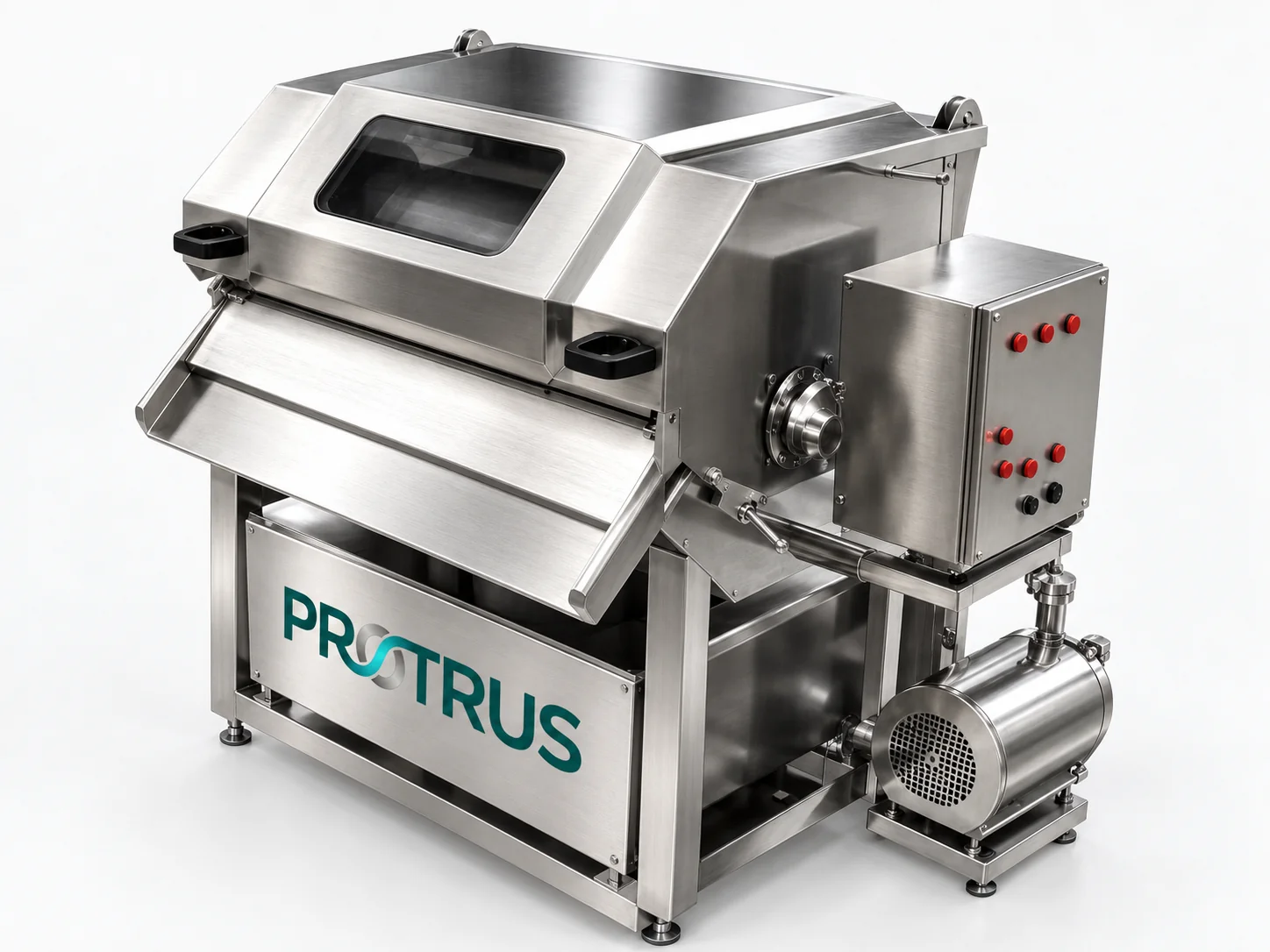
External filtration drum
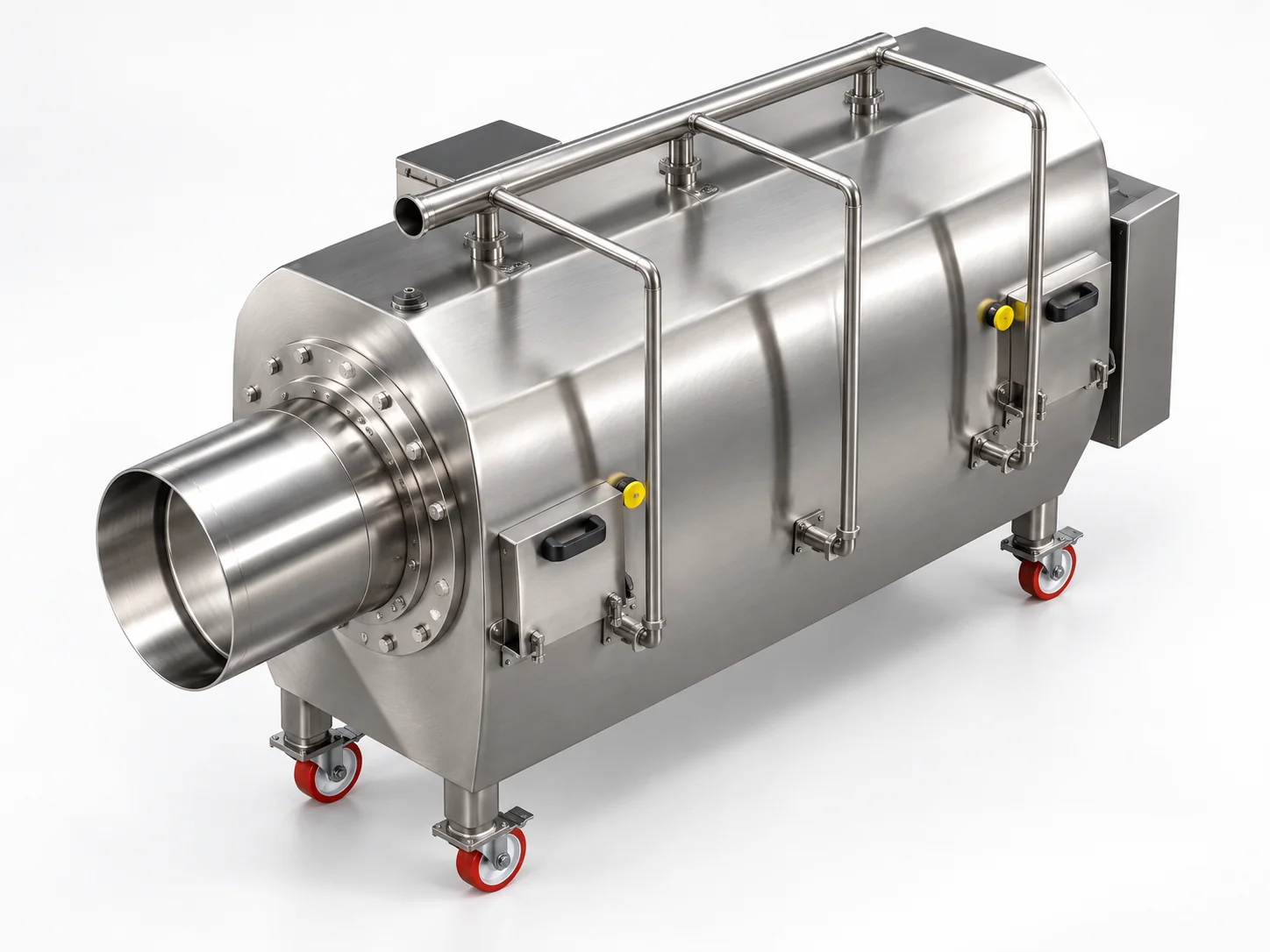
Internal filtration drum
Internal or External Drum?
| Internal filtration drum | External filtration drum | |
|---|---|---|
| Principle | Curd and whey enter the rotating screen; an inner auger carries the curd forward | Curd and whey flow over the outside of a rotating slotted drum |
| Screen | Perforated, about 1 mm holes | Wedge-wire slots 0.2–1 mm |
| Best for | Large curd, high flow, mozzarella and cheddar-type curd | Small or soft curd, fewer fines lost to the whey |
| Whey handling | Collecting tray and centrifugal whey pump | Collecting tray and centrifugal whey pump |
| Cleaning | Built-in spray pipes, automatic CIP | CIP spray balls, hinged covers for inspection |
Finishing Vats: Draining and Acidification
Drain. Whey runs off through removable perforated bottom screens while a travelling stirrer bridge keeps the curd loose.
Acidify. The curd rests and acidifies at 36–40 °C (97–104 °F). pH is checked until it reaches 5.1–5.3 for mozzarella, or 5.0–5.2 for kashkaval.
Discharge. A pneumatic front gate opens, a push paddle moves the curd mat forward and a screw conveyor feeds the mill or stretcher at a steady rate.
Size. Typical vats hold 1,000–6,000 kg (2,200–13,200 lb) of curd; two or more vats run in sequence for continuous stretching.
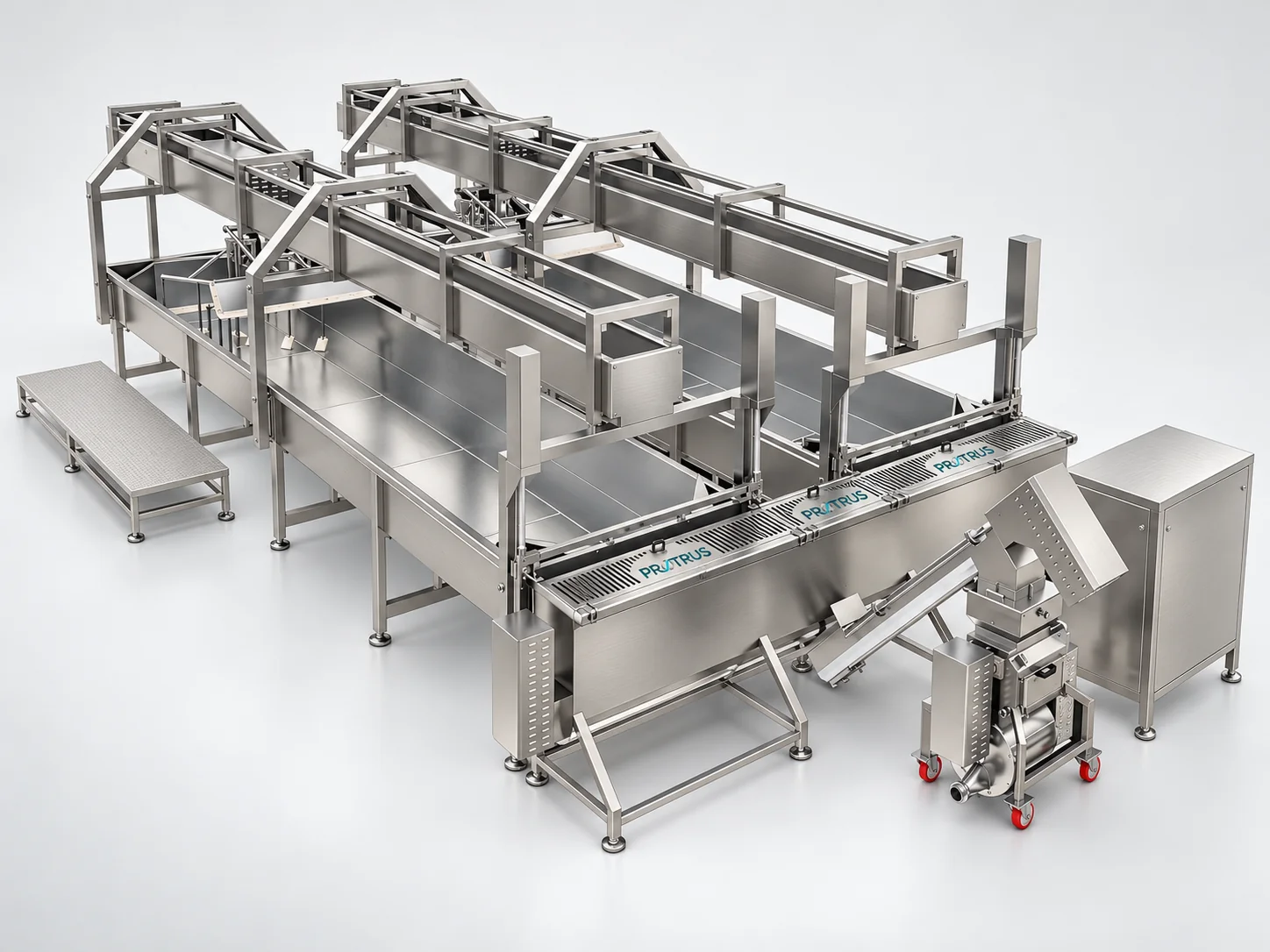
Twin finishing vats with stirrer bridges, discharge conveyor and inclined auger to the stretcher.
Why Acidity Control Matters
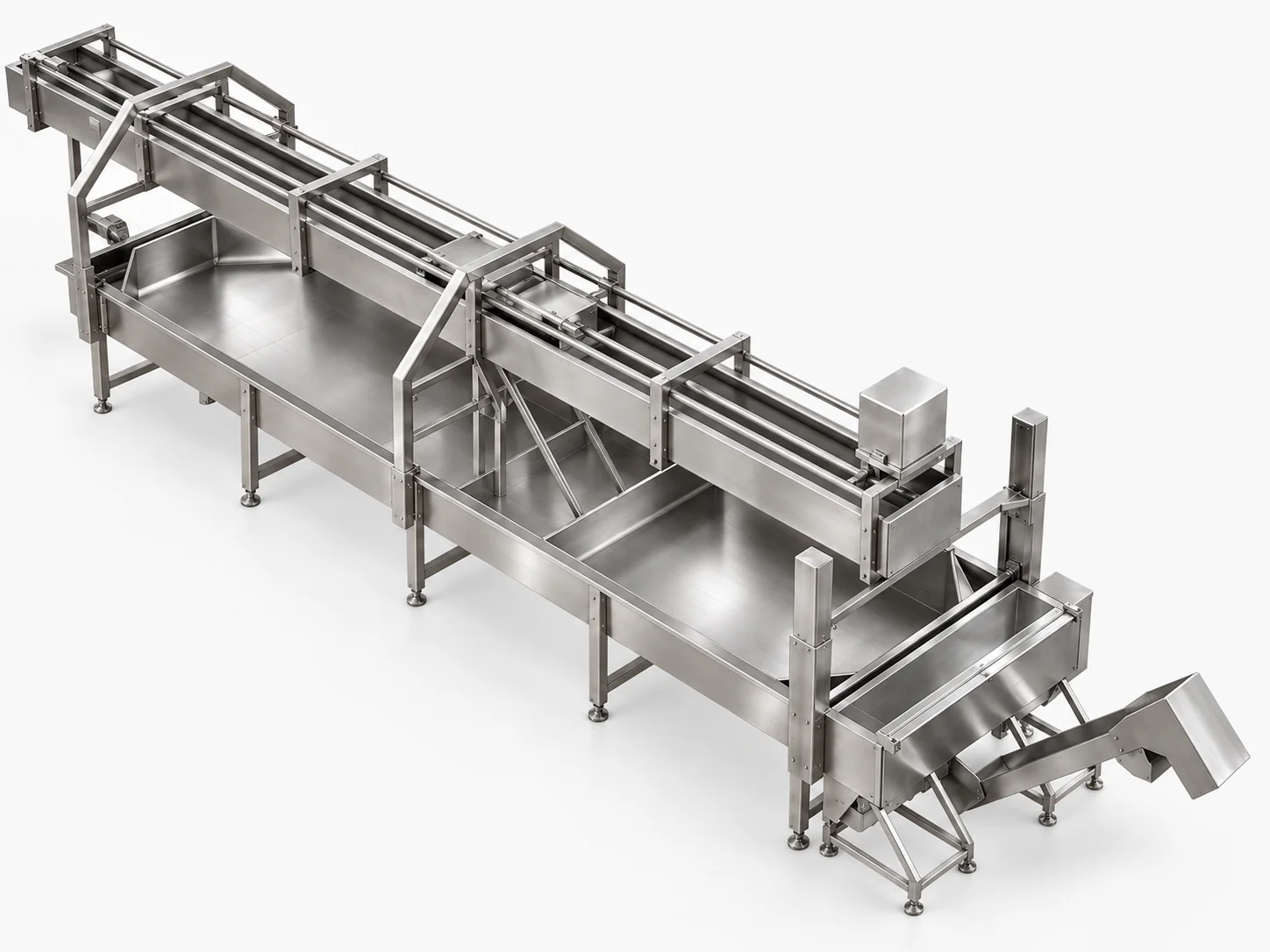
Open finishing vat with stirrer bridge and discharge chute.
Above pH 5.4 the curd still holds too much calcium: it stays tough, tears and loses fat into the stretching water. Below pH 5.0 it turns soft and sticky and the cheese melts poorly on pizza. Holding the curd inside the window, batch after batch, is the single biggest factor for stable yield and texture. Protrus finishing vats can be fitted with in-line pH and temperature sensors that send the values to the line PLC. Plants that separate curd making from stretching cool the acidified curd and store it for 1–3 days, then stretch it on demand.
Above pH 5.4
Tough curd that tears and loses fat
pH 5.1–5.3
Stretching window for mozzarella
Below pH 5.0
Soft, sticky curd that melts poorly
Stretching · Steps 8–10
Cooker-Stretchers: Steam and Hot Water Stretching Machines
The heart of every pasta filata line: heat, knead and stretch the curd into a smooth dough without losing fat or moisture.
A cooker-stretcher brings acidified curd to stretching temperature and works it with two counter-rotating augers until the protein forms long, parallel fibers. Protrus builds two types. Steam cooker-stretchers heat the curd with culinary steam, direct or through a jacket, in a closed chamber with little or no water. Hot water cooker-stretchers stretch the curd in circulating hot water or brine, the classic method for fresh mozzarella and kashkaval.
Steam Cooker-Stretcher
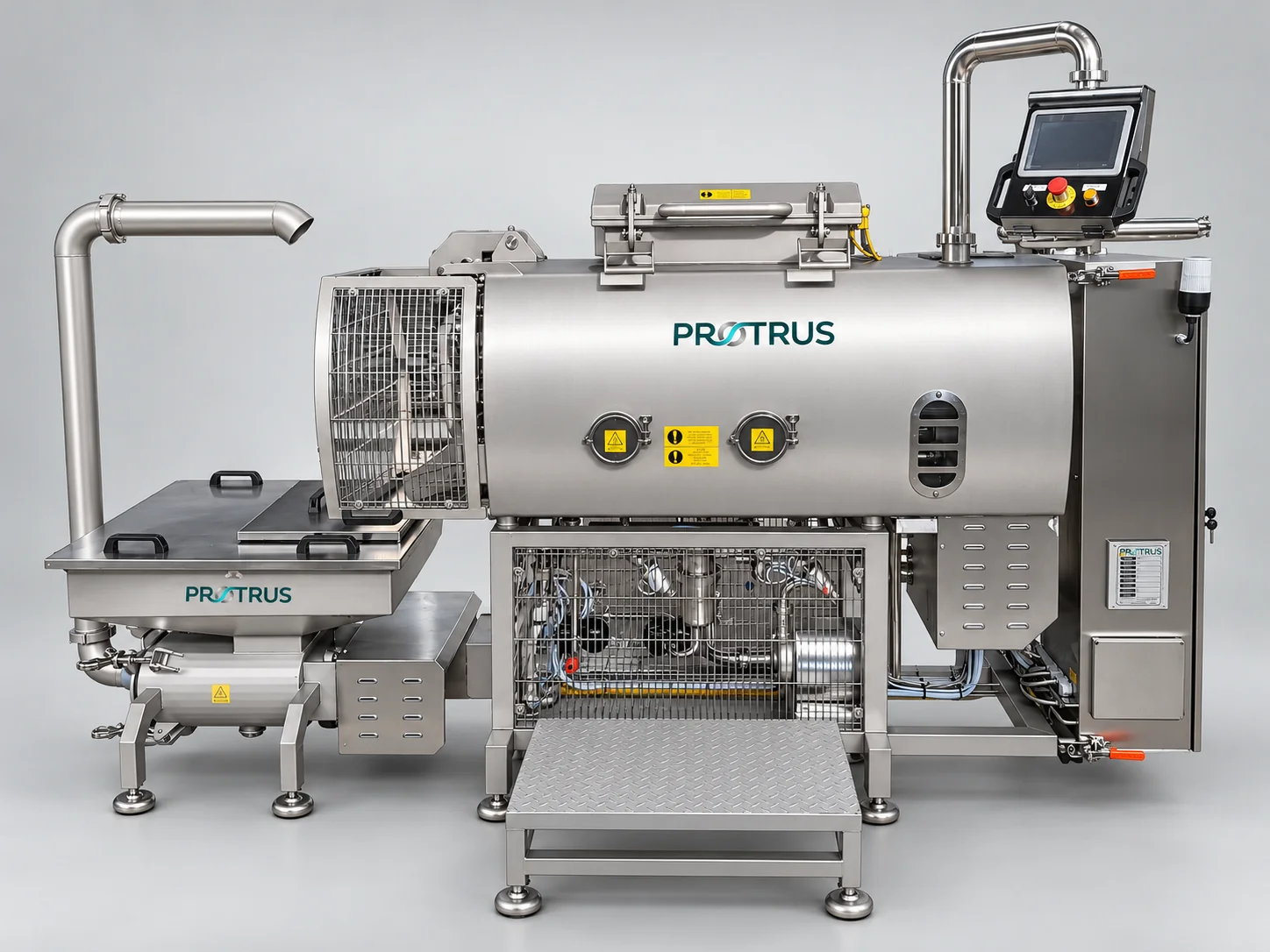
Protrus steam cooker-stretcher with heated transfer auger.
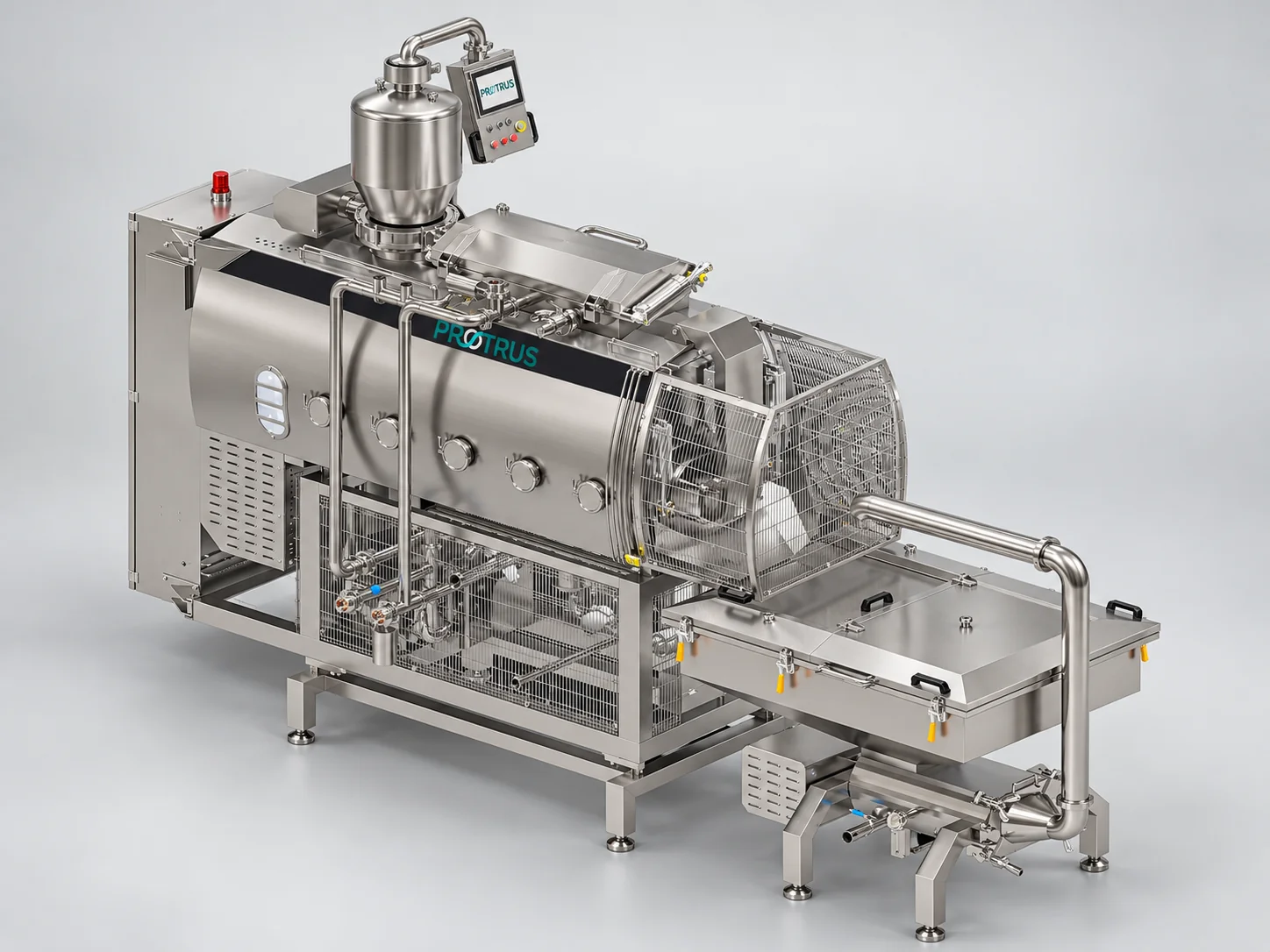
Steam, left view with vacuum hopper
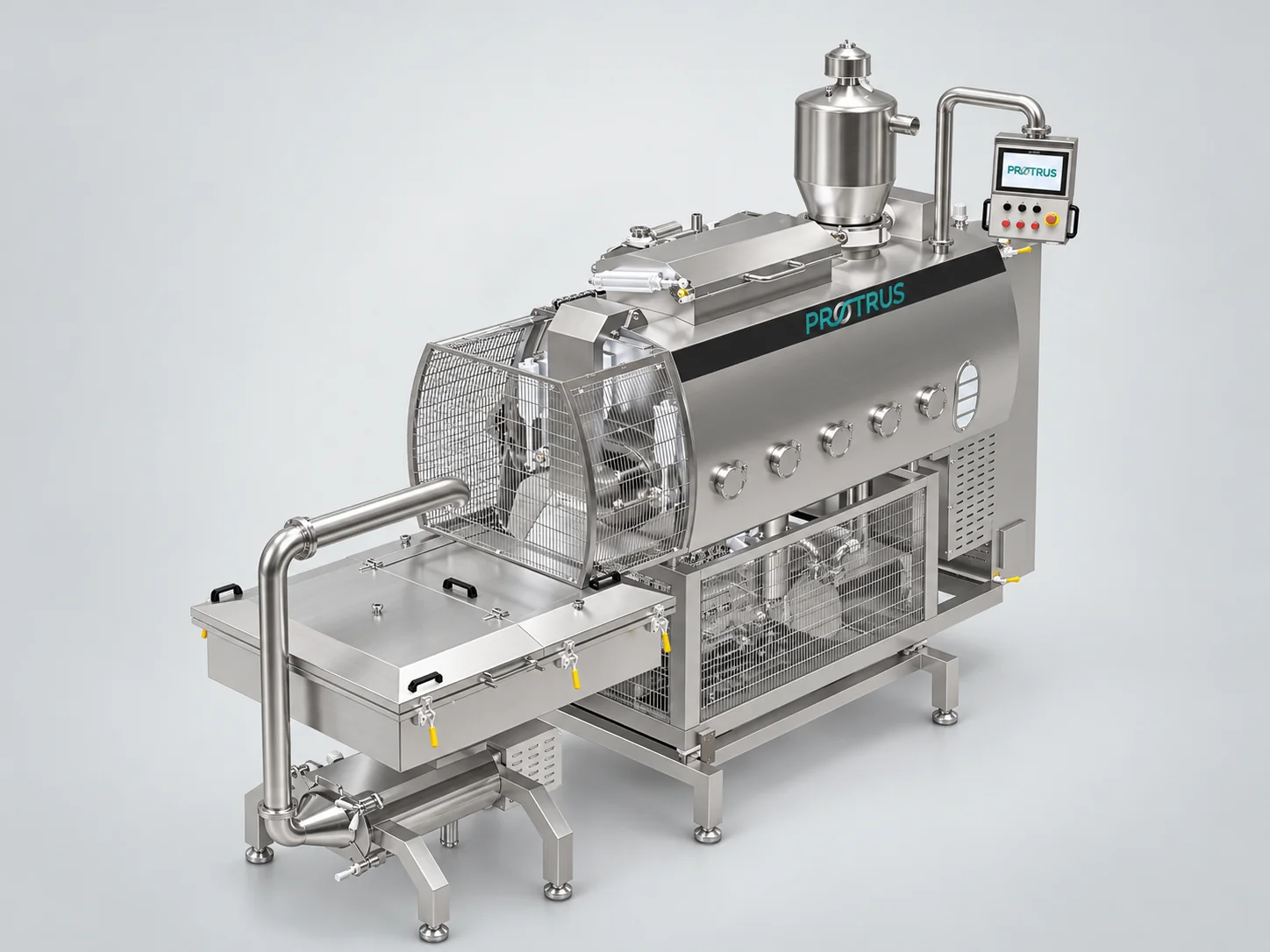
Steam, right view with control panel
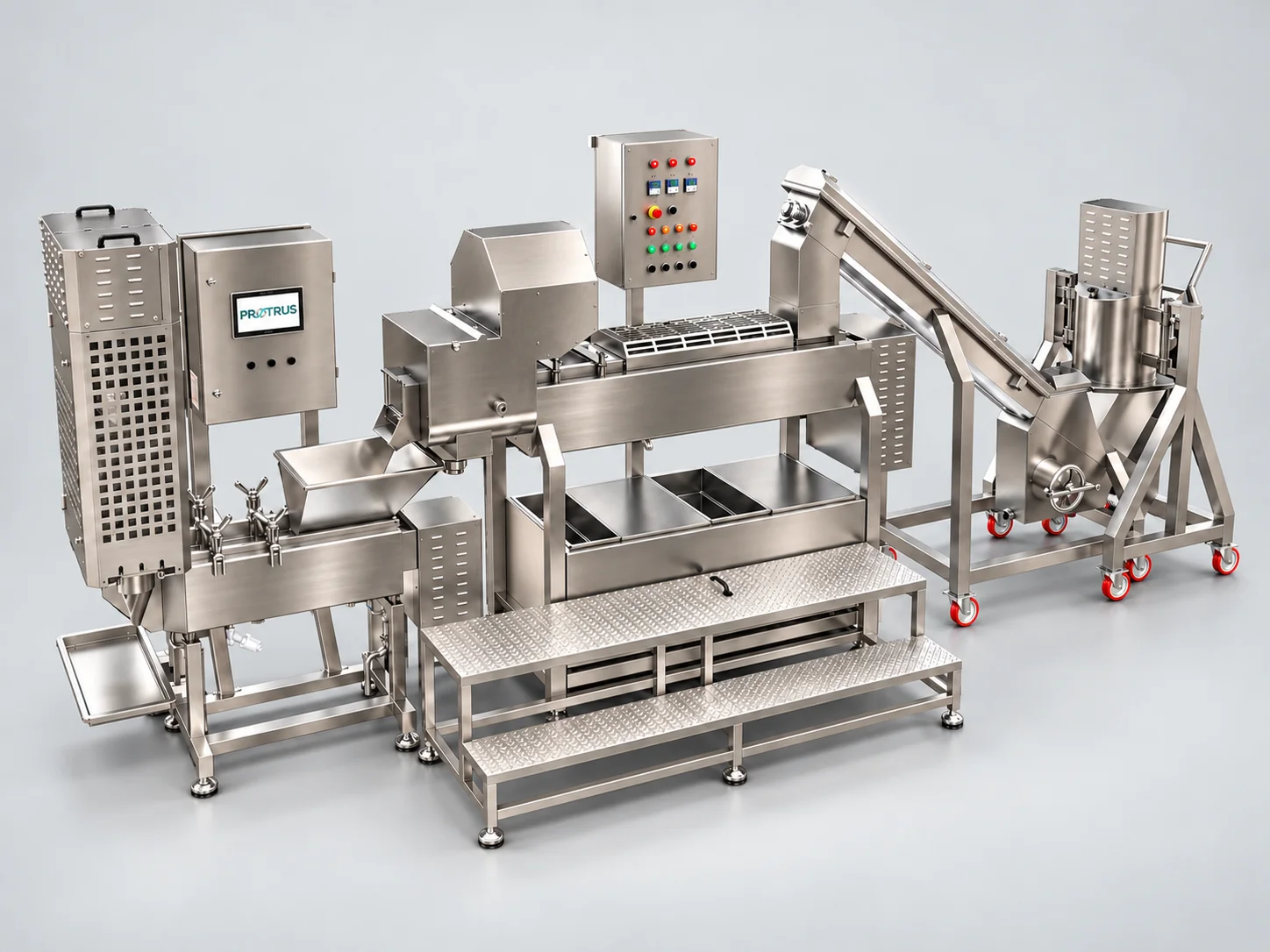
Hot water cooker-stretcher with portioning
Steam or Hot Water: Which Stretching Method?
| Steam cooker-stretcher | Hot water cooker-stretcher | |
|---|---|---|
| Heating | Culinary steam, direct or jacketed; little or no added water | Circulating water or brine at 70–85 °C (158–185 °F) |
| Losses | Very low fat and protein loss, no stretch water to treat | Some fat passes into the water; water is recycled and skimmed |
| Salting | Dry salt dosed into the dough, no brine room needed | Salt in the water, measured by conductivity and topped up |
| Best for | Pizza cheese, string cheese, analog and blended cheese | Fresh mozzarella, bocconcini, kashkaval, traditional textures |
| Capacity | Batch 100–400 kg; continuous up to 3,000 kg/h | 300–2,500 kg/h (660–5,500 lb/h) |
Stretching Parameters and Control
Dough temperature at the outlet is the main control value: 58–62 °C (136–144 °F) gives a soft, moist fresh mozzarella, 62–68 °C (144–154 °F) a firmer pizza cheese with better shred and melt. Auger speed sets how much the fibers are aligned, and kneading time decides how much moisture stays in the cheese. In the hot water machine, a temperature sensor and level control hold the water constant, and conductivity probes keep the salt content stable. Every parameter is stored as a recipe with traceable batch records, and the heated transfer auger keeps the dough at 60–65 °C (140–149 °F) on its way to the former, so there is no skin or cold spot before shaping.
58–62 °C (136–144 °F)
Soft, moist fresh mozzarella
62–68 °C (144–154 °F)
Firmer pizza cheese, better shred and melt
60–65 °C (140–149 °F)
Dough temperature in the heated transfer auger
Beyond Mozzarella: Analog, Blended and Pizza Toppings
The closed steam chamber and ingredient dosing also make the stretcher a cooker for analog (imitation) cheese and blends of curd with vegetable fat, starch and proteins. One machine then covers natural pizza cheese, cost-optimized pizza toppings and processed pasta filata products, with a CIP cycle between recipes.
Forming · Steps 11–14
Mozzarella Forming, Portioning, Hardening and Cooling
The hot dough is shaped while it is still elastic, then set in chilled water so every piece keeps its weight and form.
Forming decides how the product looks on the shelf. Protrus forming machines take the dough directly from the transfer auger and shape it into balls, pearls, plaits, sticks, loaves or blocks. A hardening and cooling section follows at once, because a warm pasta filata piece loses shape within minutes.
Steam Cooker-Stretcher with Forming and Portioning
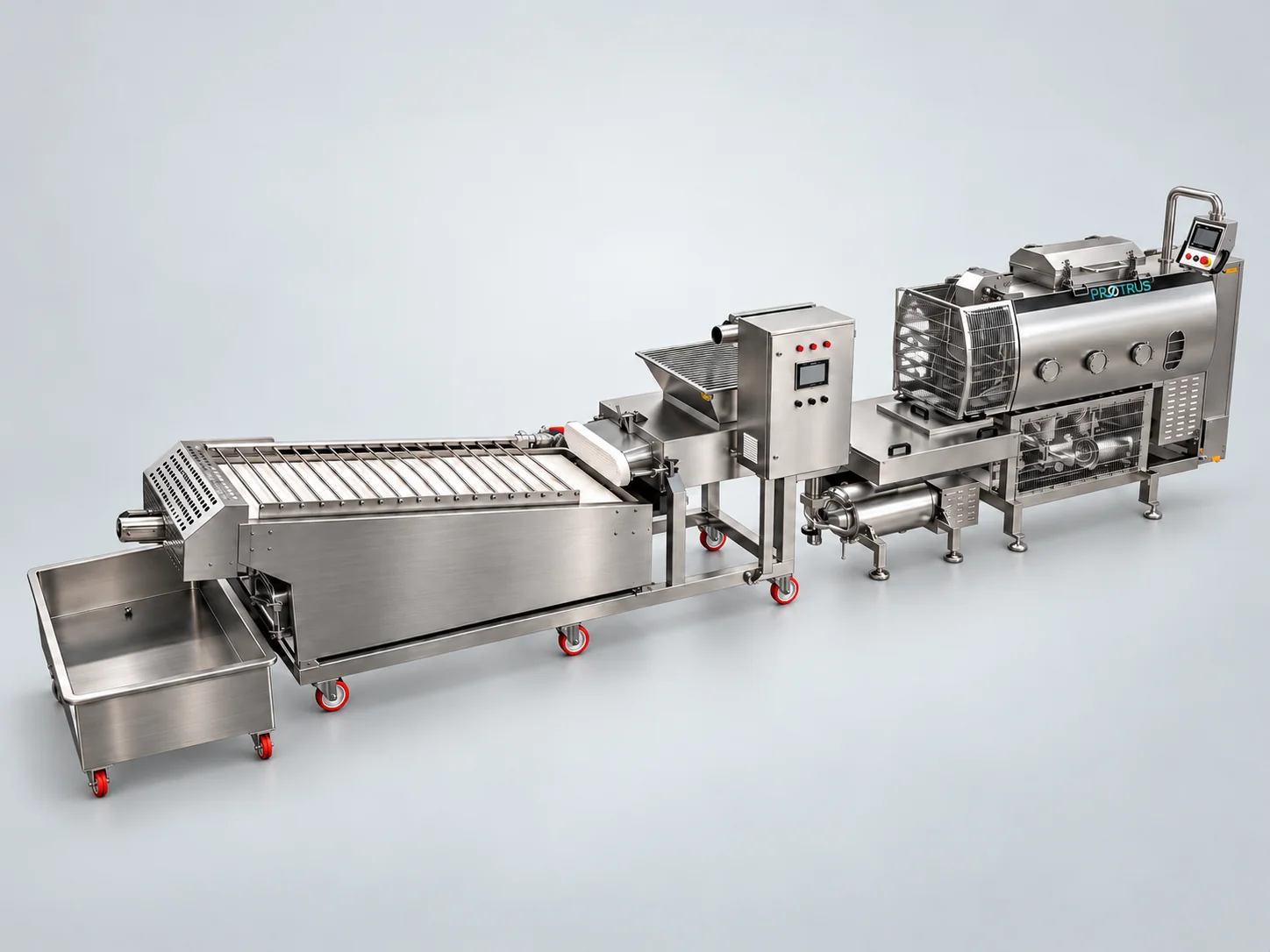
Stretcher, transfer and forming
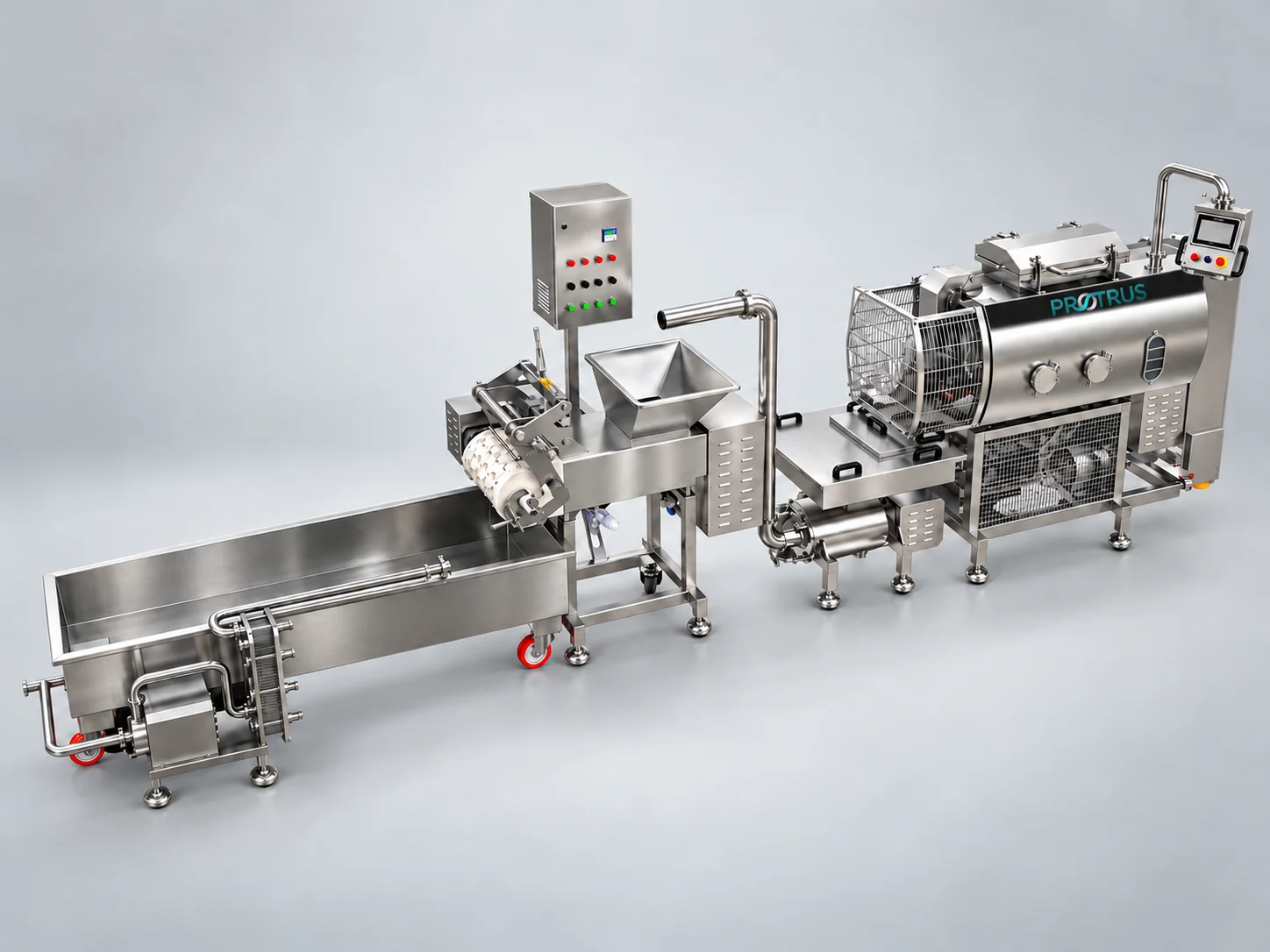
Drum former and cold water channel
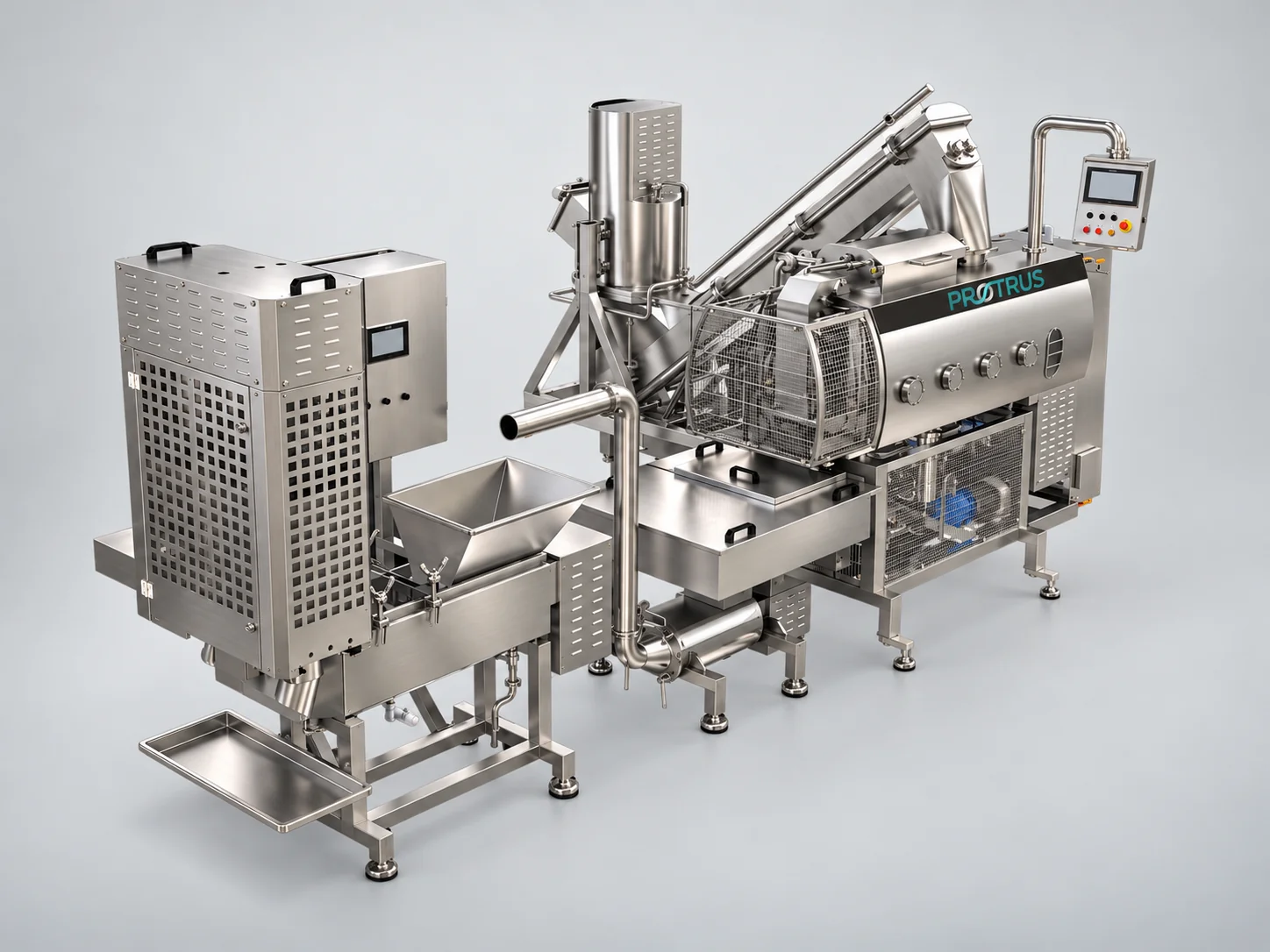
Stretcher with portioning machine
Forming Machines and Moulding Line
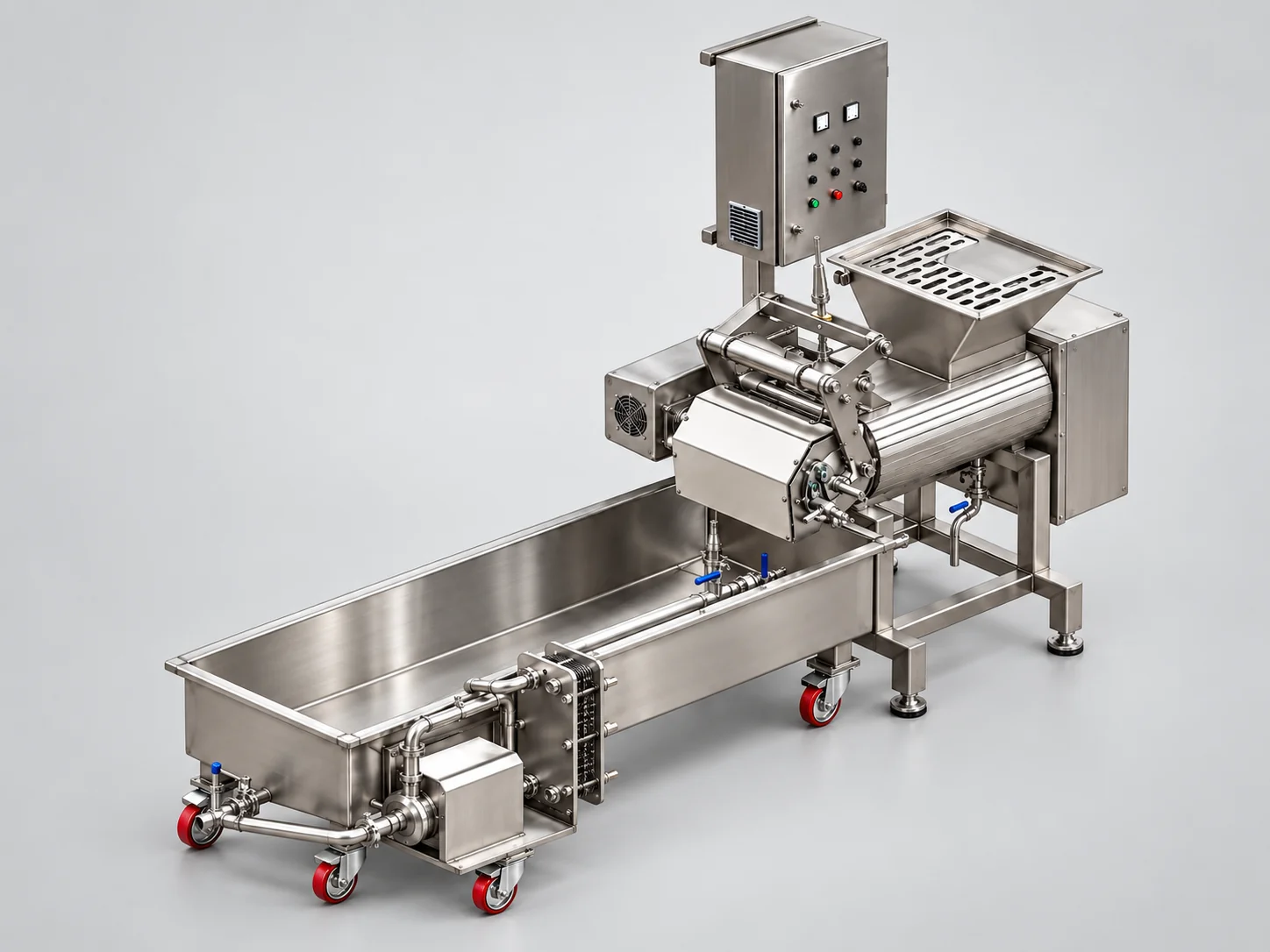
Mozzarella ball forming machine
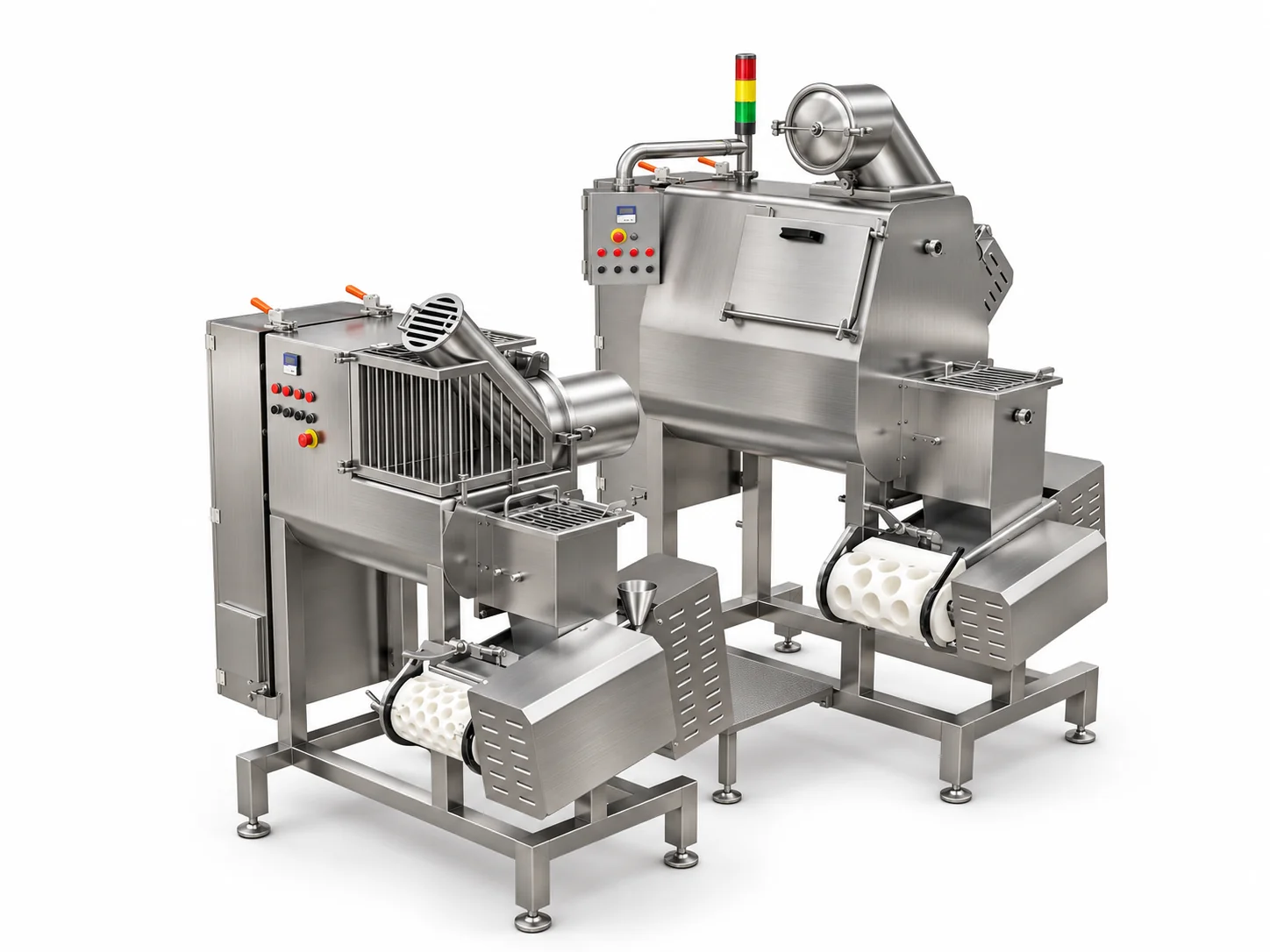
Mini mozzarella formers
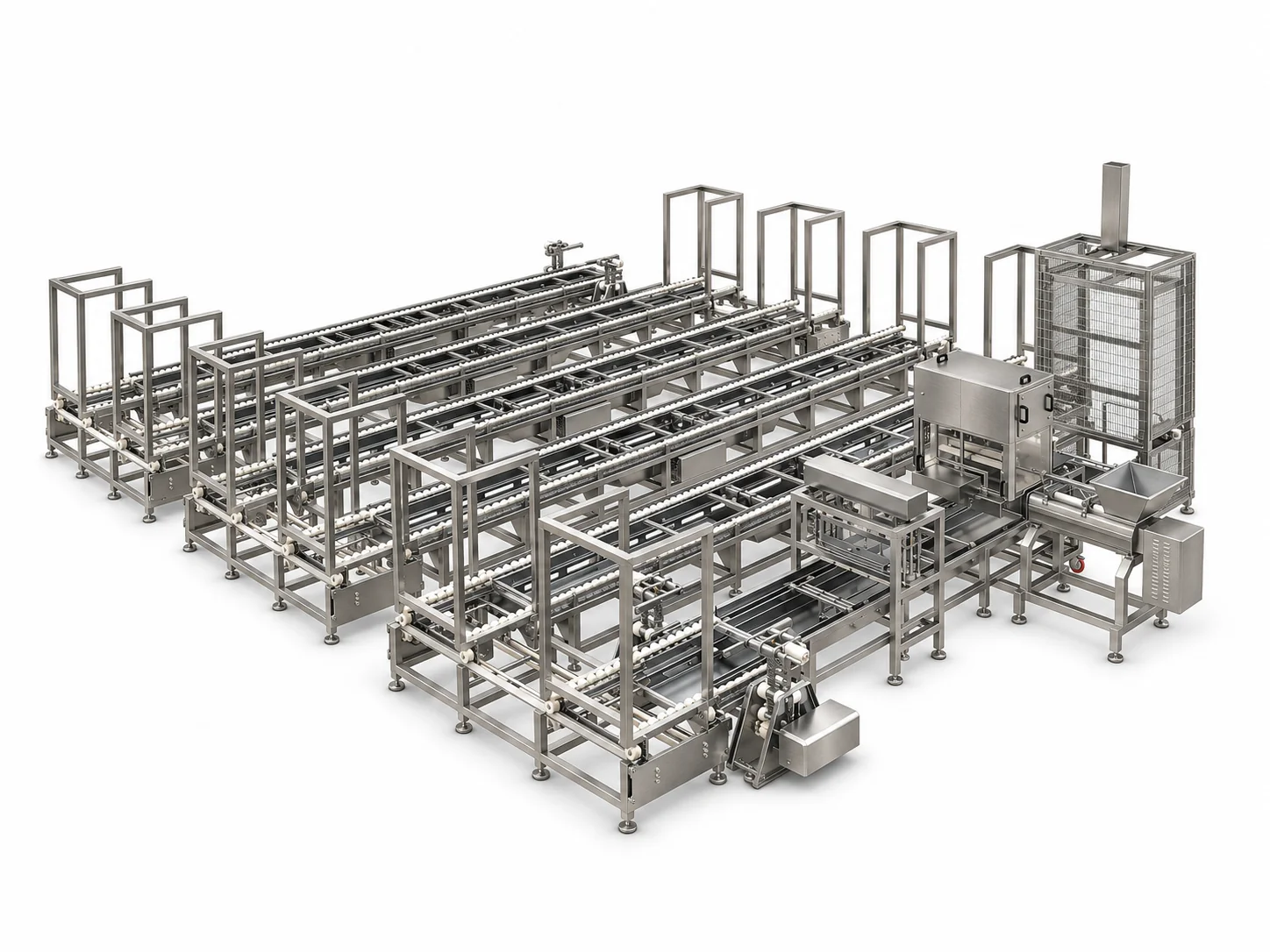
Block molding and cutting line
Forming Options by Product
| Product | Piece weight | Forming method | Hardening and finishing |
|---|---|---|---|
| Cherry, pearls, bocconcini | 3–30 g | Mini drum former, multi-row | Cold water 4–8 °C (39–46 °F), packed in whey |
| Fresh mozzarella balls | 50–250 g | Drum or roller ball former | Cold water channel, brine or salted whey |
| Pizza cheese blocks | 1–10 kg | Block moulder, mould conveyors, cutting | Mould cooling, brine or dry salt, vacuum pack |
| String cheese, plaits | 20–500 g | Extruder with nozzles, braiding | Brine cooling, cut to length, flow-pack |
| Kashkaval loaves, wheels | 0.5–10 kg | Volumetric portioner into moulds | Mould turning, drying, ripening |
Moulding, Hardening, Cooling and Drying
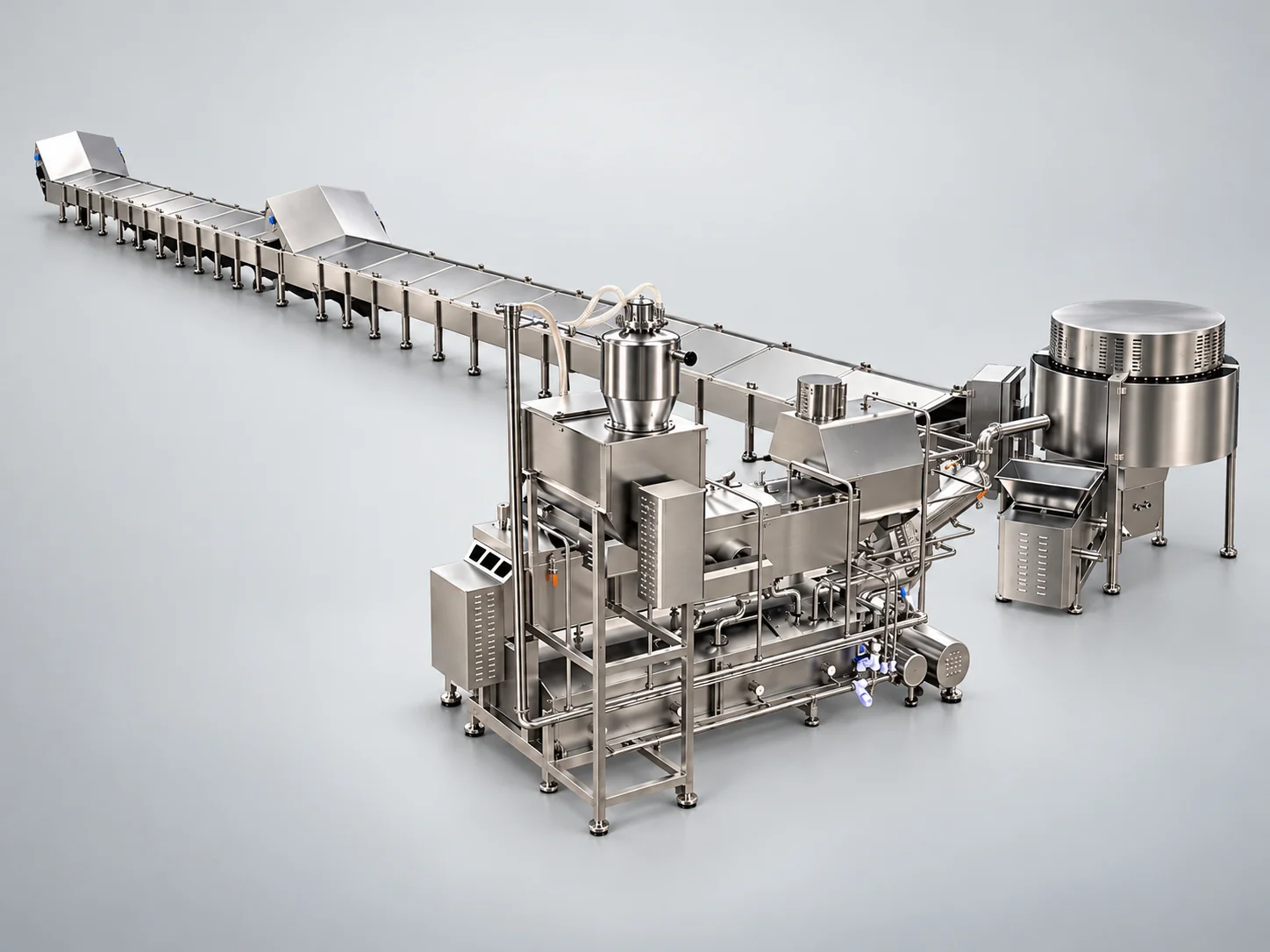
Mozzarella line: stretcher, rotary moulder, hardening and cooling tunnel, drying.
In a rotary moulder, augers press the dough into weighing moulds on a turning table; fill height sets the piece weight within ±1–2 %. The pieces drop into a pre-hardening trough and travel through a hardening and cooling tunnel with chilled water at 4–12 °C (39–54 °F). A plate heat exchanger holds the water temperature, separator curtains split the tunnel into zones, and a fresh-water rinse and air knives dry the surface before packing. Tunnel length follows piece size: small pearls set in minutes, 2.5 kg (5.5 lb) blocks need up to an hour.
±1–2 %
Piece weight, set by fill height
4–12 °C (39–54 °F)
Chilled water in the hardening tunnel
Up to 1 hour
For 2.5 kg (5.5 lb) blocks; pearls set in minutes
Fresh Mozzarella or Pizza Cheese: How the Lines Differ
Fresh mozzarella line
A fresh mozzarella line stretches softly at lower temperature, forms small balls, hardens them briefly and packs them in whey or light brine; the cheese is eaten within weeks.
Pizza cheese line
A pizza cheese line works a drier curd harder and hotter, dry-salts it in the stretcher, moulds 2.5 kg (5.5 lb) or 10 kg (22 lb) blocks and vacuum packs them for shredding, dicing or IQF freezing.
Both lines can share the same vats, drums and finishing vats.
Kashkaval · Process cheese
Kashkaval and Process Cheese Production Lines
Two classic products with very different technology: a ripened pasta filata cheese and a cooked, emulsified cheese with long shelf life.
Kashkaval (also kashar or kaşar) is a semi-hard pasta filata cheese from cow, sheep or mixed milk. Its curd is made on the same vats and drums as mozzarella, then stretched in hot salted water, moulded and ripened. Process cheese starts from natural cheese: it is ground, cooked with emulsifying salts and filled hot, which turns young cheese, trimmings and curd into high-value slices, portions and spreads.
How Kashkaval Is Made
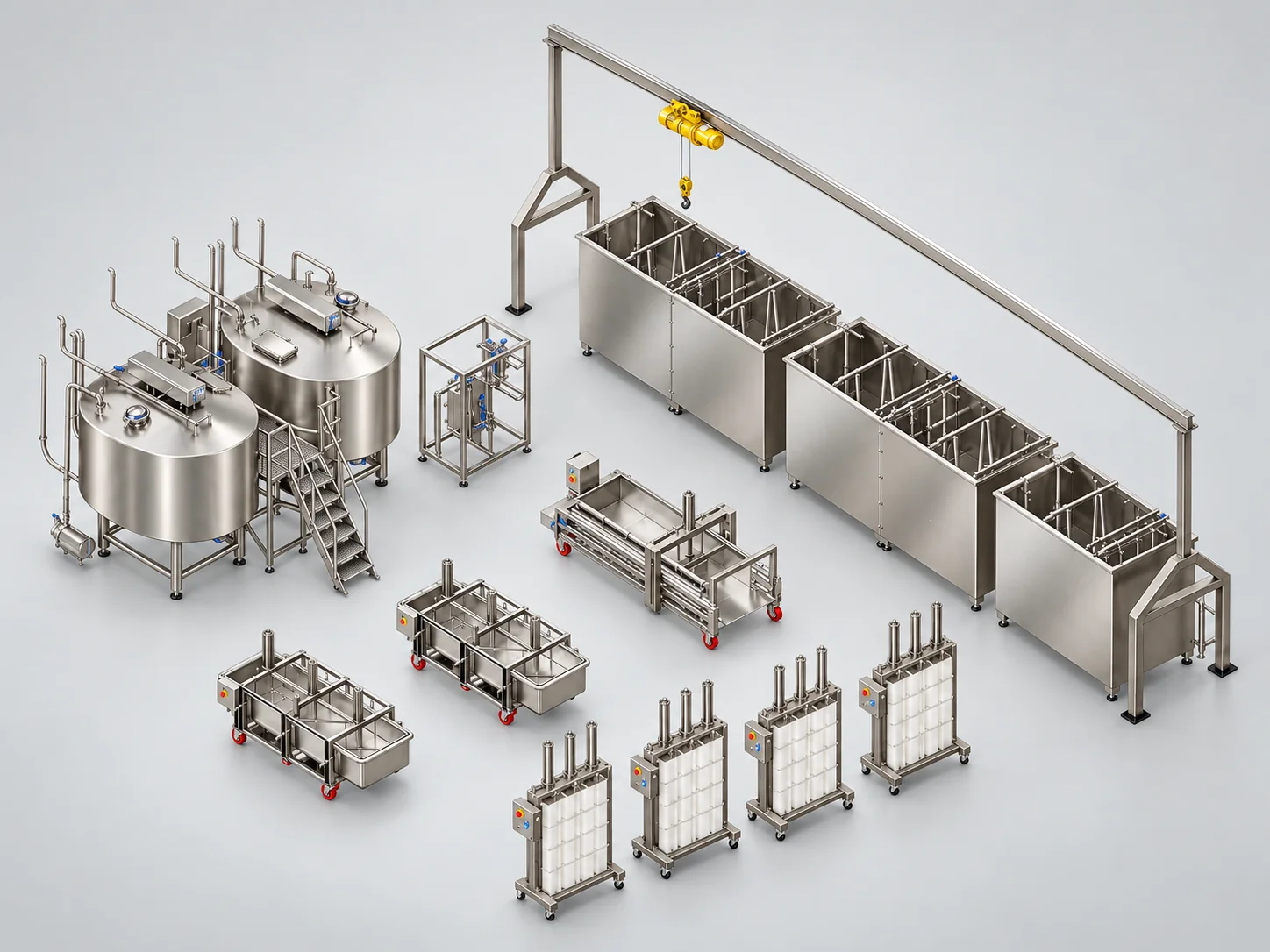
Hard and semi-hard cheese line: vats, pre-press vats with hoist, curd trolleys and presses.
Curd
Cheese vat at 32–34 °C (90–93 °F), cut to 5–8 mm, cooked to 38–40 °C (100–104 °F); curd pre-pressed and acidified to pH 5.0–5.2.
Stretch
Curd slices are scalded in 70–75 °C (158–167 °F) water with 8–12 % salt and kneaded in a hot water cooker-stretcher.
Mould
The dough is portioned into round or rectangular moulds, turned, cooled and dry-salted or brined.
Ripen
Wheels dry and ripen for 60–90 days at 10–14 °C (50–57 °F) and 80–85 % RH, then are waxed or vacuum packed.
How Process Cheese Is Made
Natural cheese of different ages is ground and dosed with emulsifying salts, water and optional butter, cream or milk powder. Heat and shear in the cooker-creamer turn the blend into a smooth, homogeneous mass; the salts bind calcium so the protein emulsifies the fat. The length of creaming decides whether the result slices, spreads or melts.
- 1GrindingCheese, rind-free; young + mature blend
- 2DosingSalts, water, butter; ES 2–3 %
- 3Cooker-creamerDirect steam, vacuum, 85–95 °C (185–203 °F), 4–10 min
- 4UHT holderOption: for spores, 140 °C (284 °F), ≥ 5 s
- 5Hot fillingTriangles, cups, blocks, 70–85 °C (158–185 °F)
- 6CoolingTunnel, cartoning, down to 4–8 °C (39–46 °F)
Process flow of a process cheese line. ES = emulsifying salts (sodium citrates and phosphates). Slices: hot mass cast on chill rolls, cut and wrapped (slice-on-slice) or individually wrapped. Spreads use more water and longer creaming; block cheese uses less water and short creaming. Values are typical ranges.
Process Cheese Line Equipment
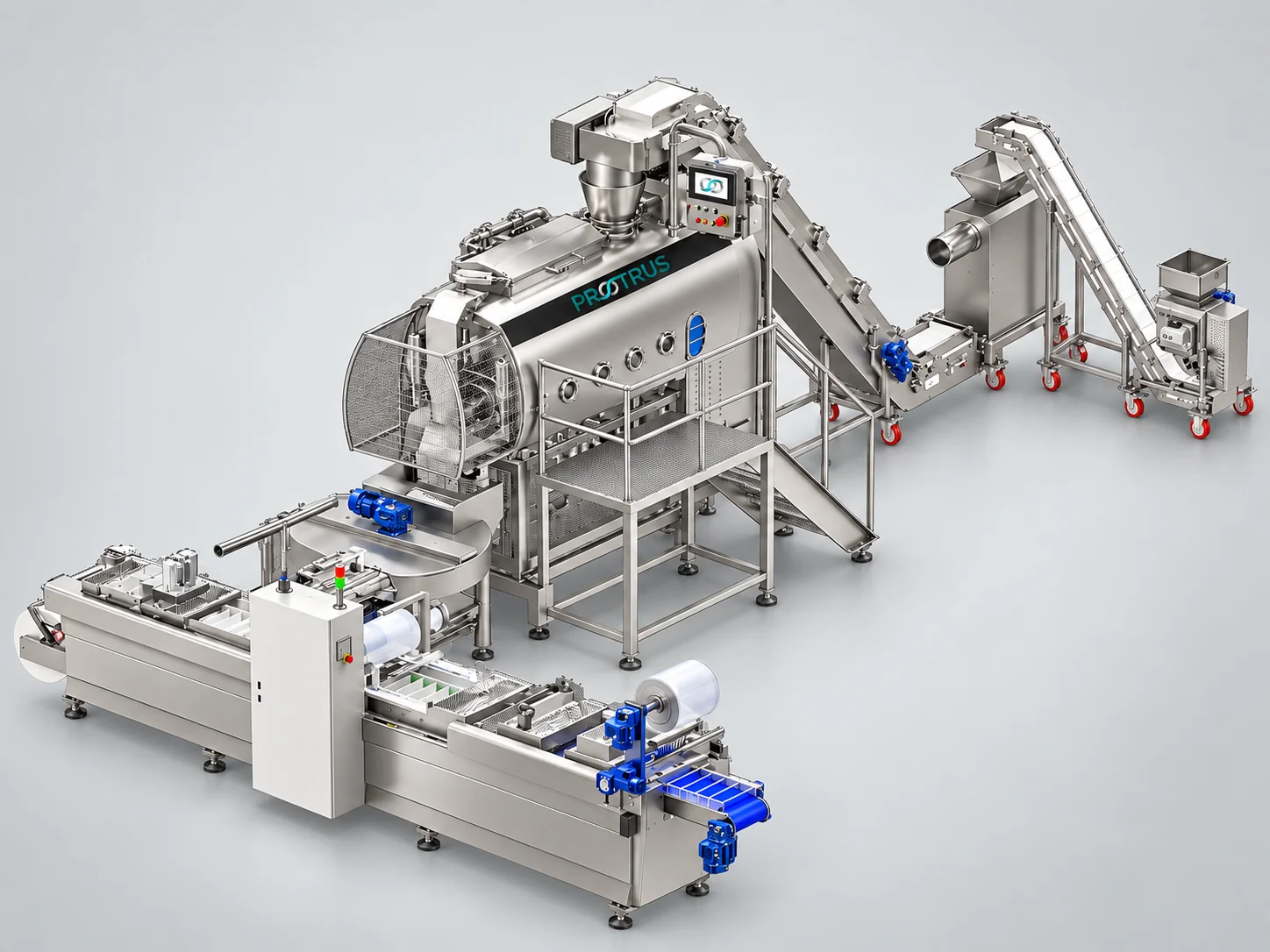
Processed cheese line: elevator, grinder, Protrus cooker-creamer and packaging machine.
Frequently Asked Questions About Cheese Lines
Have a question about your milk, capacity or product range? Ask our process engineers.
Get a Quote
Plan Your Cheese Line with Protrus
Tell us your milk type and daily volume, the cheeses you want to make, piece weights and packaging. Our process engineers return a flow diagram, a 3D layout, a machine list with capacities and a budget offer for a complete line or for single machines that fit your existing plant.
Prefer email? info@protrus.com